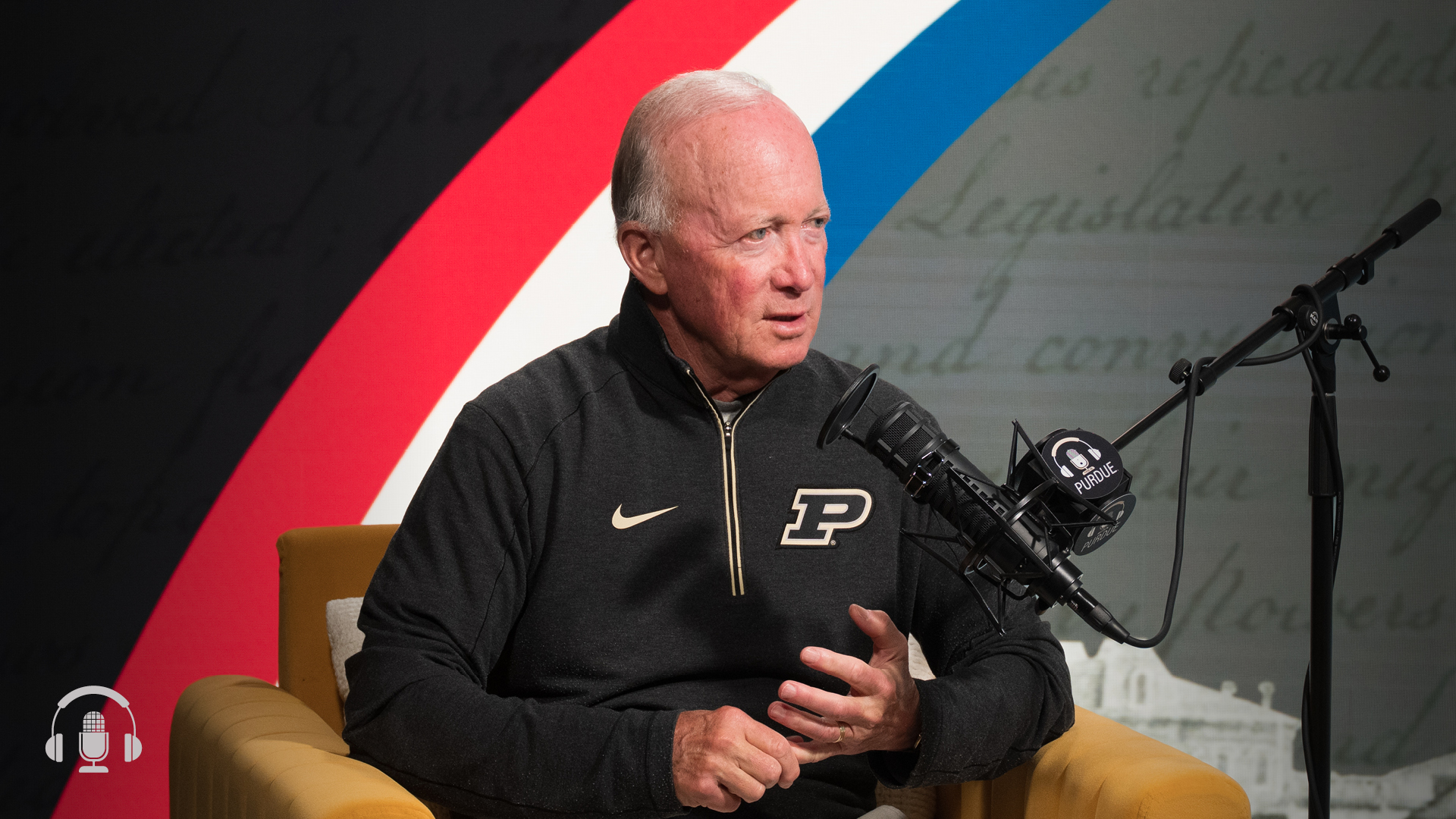
Episode 157: Peter Berg on Netflix’s ‘The Mosquito Bowl’ Movie and Boilermaker Tony Butkovich
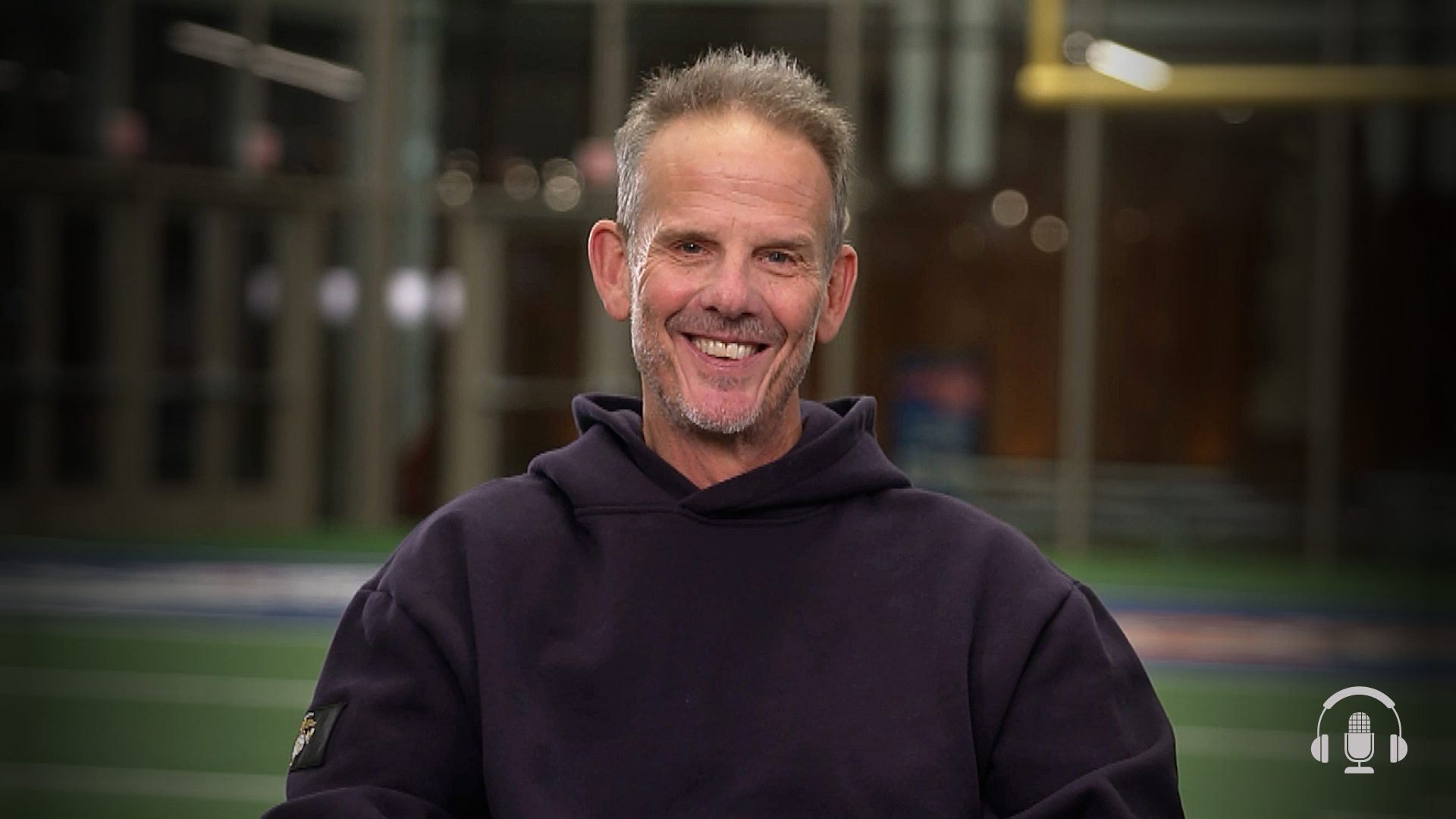
In this special episode of “This Is Purdue,” we’re talking to Peter Berg, director, producer and co-writer of the new World War II feature film, “The Mosquito Bowl.”
Peter’s critically acclaimed work, including films and TV shows like “Friday Night Lights,” “Lone Survivor” and “Patriots Day,” is surely well-known to our listeners and viewers. Today, he gives an exciting behind-the-scenes look at the creative and filmmaking process behind “The Mosquito Bowl.”
This movie tells the true story of four college football stars and Marines who fought in the Battle of Okinawa during the Allied invasion of Japan. One of those stars was “Touchdown Tony” Butkovich, a Purdue football legend and All-American fullback portrayed by actor Ray Nicholson (Jack Nicholson’s son).
Ahead of the film’s streaming release (Nov. 25 on Netflix), be sure to catch Peter’s fascinating insights into the filmmaking process, what Touchdown Tony means to him and why he believes themes in the film like grit and belief in a higher purpose will resonate with global audiences.
In this episode, you will:
- Learn more about Peter’s collaboration with Buzz Bissinger, Pulitzer Prize-winning author of books including “The Mosquito Bowl” (and Peter’s second cousin) — and why Peter was motivated to adapt the book into a film
- Hear more about Peter’s family’s military service and why it’s become important to him to acknowledge the costs of war and the brave men and women who serve across his filmography, especially in “The Mosquito Bowl”
- Discover more about Peter’s passion for “The Mosquito Bowl” story and his approach to capturing the brutality of World War II and the sacrifices of servicemen during that era
- Find out more about sports personality and retired Indianapolis Colts punter Pat McAfee’s role as a drill instructor in the film and why his passion for the Marines impressed Peter
- Get an inside look at the auditioning process for Touchdown Tony and why Ray’s passion for this Purdue legend made him the perfect actor to embody Tony
- Hear more about Peter’s key collaboration with Purdue Athletics’ director of broadcast services Cory Palm and why having access to archival Purdue football game footage helped Peter bring a true vitality and intensity to the games shown in the film
- Learn more about why Touchdown Tony is so meaningful to Peter and how he’s a real reminder of the tragic impact of war on young men and women
You don’t want to miss this episode with an award-winning filmmaker who’s honoring the incredible stories of our nation’s veterans — including that of a Purdue icon.
ICYMI: Want more details about Butkovich? Watch our interview with Cory, director of broadcast services for Purdue Athletics and author of “Perfect Warriors: Touchdown Tony Butkovich and the 1943 Purdue Football Team.”
- Watch our full video interview with Peter
- Learn more about Peter
- Watch “The Mosquito Bowl” film trailer
- Learn more about Ray Nicholson
- Learn more about Buzz Bissinger
- Learn more about Buzz Bissinger’s “The Mosquito Bowl”
- Read our story about Butkovich and the undefeated 1943 football team
- Learn more about Purdue Athletics
- Learn more about Purdue football
Podcast Transcript
[MUSIC PLAYING]
KATE YOUNG: Welcome to This Is Purdue, the university’s official, award-winning podcast. I’m Kate Young, your host and a proud Purdue alumna.
This Is Purdue is all about sharing big ideas that spark broad interest and get people talking. We’re passionate about highlighting notable Boilermakers who are powering innovation and working together to solve today’s toughest challenges.
Tune in to each episode as we have engaging conversations with Purdue alumni, faculty, researchers, coaches, and more who are inspiring change through small steps every day across timely topics like sports, well-being, emerging tech, and life-changing research.
Join us as we discover how these Boilermakers are taking their next giant leap.
PETER BERG: And he had this swagger and this charm. He set records and played very well for Purdue. And to think about Touchdown Tony Butkovich quitting football, joining the Marine Corps, and sacrificing his life before his life ever really got started. You can only imagine what glorious life this guy would have had.
KATE YOUNG: In this episode of This Is Purdue, we’re talking to Peter Berg. That’s right– the Peter Berg, director, producer, actor, and writer of iconic TV shows and films such as the Emmy Award-winning Friday Night Lights and Oscar-nominated Lone Survivor.
So why are we talking to this Hollywood legend? Well, Peter directed the upcoming World War II feature film The Mosquito Bowl, releasing on Netflix on November 25. It’s based on Buzz Bissinger’s best selling book, and it tells the true story of four college football stars turned Marines who played in a pickup football game on Guadalcanal Island during World War II.
One of those stars was Tony Butkovich, a Purdue football legend, an All-American fullback affectionately nicknamed Touchdown Tony.
Now, a quick heads-up before we dive in– if you haven’t already, be sure to check out our previous episode with Boilermaker Cory Palm.
Cory wrote a book called Perfect Warriors, which highlights Purdue’s undefeated 1943 football team, a squad packed with future Navy and Marine officers from across the country who came to Purdue to participate in the V-12 Navy College Training Program, including Touchdown Tony. His research actually caught Peter’s attention, leading to Cory contributing historical insights and footage to the movie.
After our interview with Cory, I had the privilege of watching an advance screener of The Mosquito Bowl and chatting with Peter during a press junket. Hearing his passion for honoring our military and seeing Purdue’s history brought to life on the big screen was incredible. So let’s get to it. Here’s my conversation with Peter.
PETER BERG: Is Cory with you?
KATE YOUNG: Cory is not with me, but we interviewed him last week and he wanted to be here. But I was like, I’m doing it in my house, so you’re welcome to come to my house.
PETER BERG: I’m sure he would not mind. He’s so passionate, he’s been a great partner to all of us– to me and the Buzz Bissinger when he was writing the book. Cory is a good dude.
KATE YOUNG: We are so excited because we’re going to feature Cory’s interview and we’ll feature yours separately, Peter, but he had just the nicest things to say about you. So the feeling’s mutual.
PETER BERG: I’m sure his interview will be more factual, interesting, accurate, and poignant than mine, but I’ll do my best.
KATE YOUNG: No, no, I’m sure you will do amazing. I’ve been listening to you on other podcasts, news outlets, et cetera. But let’s dive in–
PETER BERG: How am I doing?
KATE YOUNG: You’re doing amazing. I saw you on Bill Simmons’ podcast specifically. I listened to that. That was a long interview. It was great.
PETER BERG: I’ll go as long as you go.
[LAUGHTER]
When they tell me to stop, I’ll stop. I’ll just talk. I’ll open my mouth. I never know whether it’s going to be gold or shit. I’ll do my best.
KATE YOUNG: Peter Berg, we’re so excited to have you. Thank you for this opportunity. I got a chance to watch the movie last night. So incredible. So moving.
Let’s talk about The Mosquito Bowl and how– I know that your cousin Buzz Bissinger wrote the book, but how did you decide to turn it into a movie? Let’s talk about the origin story a little bit.
PETER BERG: Buzz Bissinger is my cousin. He’s one of my literary heroes. He’s a really, really talented writer who has this knack for capturing Americana in a very original way. He wrote Friday Night Lights, and I read that book a long time ago, and obviously it spoke to me, and I made the movie and then the TV show.
What Buzz can do is, he can take something like football and make it not about football. It’s about family and culture and society and some pretty deep themes that are uniquely American. But I find they translate surprisingly well and they play around the world. He really captures, I think, the soul of what it means to be American.
So I heard he was doing The Mosquito Bowl, and he started telling me about it, and he started telling me about this football game and about these All-American football players, like Touchdown Tony Butkovich, who played at Purdue. And the way he was talking about it, I could tell he was on to something– that it wasn’t really going to be a book about football or war, but it was going to be something bigger.
And Buzz’s dad, Harry, was a Marine, fought in Okinawa. My dad, Lawrence Berg, was a Marine, fought in Korea, and there was obviously an extra connection there because we were thinking about our dads.
At least I was– and I had a feeling that Buzz was going to write a story that would give me, if I wanted to make a movie, the ability to get into some pretty emotional territory and not just make big, loud war movie or another football movie, but something that felt as though it was touching the soul of our country at a specific time.
KATE YOUNG: Yeah, and I think even if you’re not a football fan, you will enjoy this film. Whether you’re into World War II, into football, it does touch all those areas for sure.
What is the collaborative process like between you and Buzz? You mentioned Friday Night Lights. Now we have The Mosquito Bowl.
PETER BERG: Really once he gives me the book, he steps back and says, “don’t F it up”. Can I say that?
KATE YOUNG: Yeah.
PETER BERG: He says that to me a lot– “don’t F it up”. I sent him like 30-page chunks as I was writing my draft, and he was supportive.
I brought him out to Australia while we were filming it, and I don’t know if you pay close attention to scene where Pat McAfee is in– where he’s a drill instructor. Buzz is the little drill instructor, because Buzz has a great voice and he’s very intense.
And he thought I was joking when I said, I want you to play a drill instructor. But we put him in the uniform. He’s much shorter than Pat McAfee, but he’s got the heart of a lion, so he’s screaming at some of the actors and some of the recruits.
But I just keep him close. He’s one of my favorite people on Earth. He trusts me to adapt his book, and I know how to keep him close enough so that– just for me being around Buzz, I’m reminded what the story should be.
He’s a really soulful guy, a very complicated, nuanced man who has a deep love for these young men, these young football players who went into the Marine Corps. And he fuels that and recharges that.
And if I’m ever looking for a North Star as I’m into the filmmaking process, I just call Buzz or I bring him out and have him be on the set with me, and just having him near is very comforting like a service dog.
[LAUGHTER]
KATE YOUNG: I love that he made a cameo. I got to go back and–
PETER BERG: Watch it again.
KATE YOUNG: OK. So you start the movie off with this super powerful quote about, “older men declare war. Younger men are the ones fighting it, and having to make these sacrifices”. What themes or messages from this World War II era did you really want to convey to the audience?
PETER BERG: I mean, that was a personal takeaway of mine. I don’t ever like to tell you what the theme is. I can maybe share with you what I looked at thematically or what touched me and reading the book.
And one of the things that Bissinger does is at the end of every chapter, he lists 150 dead Americans by name and by injury, and it’s brutal. And you want to skip over it and just get to the next chapter, because it’s not fun to read each name and think about how they died. But he made you.
And I wanted to skip it over, but I found myself feeling guilty about it. So I read each one and it hurt. It literally hurt to read it. I was getting angry.
And then I thought about it afterwards, and after I digested the book. And to me, one of the themes really is the cost of war, and the cost of human life– wasted of human life, forever wounded for human life, forever traumatized.
And I really do believe that for me, the movie gives us an opportunity to acknowledge the men and women who serve in our military, just in a very human way. Like I acknowledge you. Like I love my son. I feel protective over young men and women who serve. And this, I think story gives us an opportunity to push into those feelings.
And then you really start thinking about where we are today as a planet. And have we learned lessons? World War I, there were about 17 million global deaths. World War II, there were 75 million global deaths. Well, I don’t want there to be a World War III. I truly do not want that to happen.
And if I look at the world today, I don’t see a more peaceful world. I see a scary world with wars flaring in the Middle East, in Ukraine.
And when I went to research this in Okinawa, there are hundreds of thousands of American soldiers there right now– young men and women right now– military bases with aircraft carriers and submarines and attack aircraft.
And right above us, China is doing the same thing. And everybody’s circling around this little island, Taiwan.
And I’m up there and I’m looking around and I’m meeting all these military. I’m like, well, it just takes one Chinese plane to bump into one American plane, and who knows what’s going to happen? And I hope we never find out.
So the reason I put that quote in there is a reminder that we need to, as civilians, hold our leaders to the highest standard to make sure they’re very careful about when they decide to send these young men and women to go, because the consequences are really bad.
And I hope that people think about that a little bit, just a little bit. I don’t think one movie is going to change anything substantially, but I do think we need to think long and hard before we engage in war.
KATE YOUNG: How did between your father serving in the Marines and meeting these military people impact the process? Were there any parts that were particularly challenging to adapt for the film?
PETER BERG: I have a long history with military– with doing films and television that incorporated military themes. And I understand, I think, as well as anybody else in my business, filmmakers, the horrors of this, the intensity of it, the tone of it, combat.
And from spending as much time with military as I have, I wanted to make sure that in this movie, it was presented not in a glamorous way. I don’t think there’s much glamour to be found on the beaches of Tarawa, Iwo Jima, or Okinawa.
This was really brutal, horrific war. And I wanted to take what I’ve learned and what I’ve experienced as a person and as a curious filmmaker, and I wanted to make sure that that’s how we went after it– capturing it.
And I’m sitting here alone, but there are hundreds of people who are part of my team– cameramen and stuntmen and guys that blow things up and costume people and editors and sound guys and music guys– that were all in sync with that. We were not looking for a glamorous representation of war, we were looking to make it as intense as we could, and that was our North Star with that.
So that was all, I think, the result of the time I’ve spent with the military and trips I’ve taken abroad with military and trying to capture a part of the reality. You can’t get the reality. There are documentaries that do, and we put some of that footage in the film.
There’s a guy named Norm Hatch– if anyone listening is at all curious– he won an Academy Award for his combat photography in World War II, and he made a film called With the Marines at Tarawa. And I used to study that film when I was writing the movie.
And to think about this guy with the Marines with no vest, no gun. He had film canisters strapped to his body, and he felt it so important to tell these stories and capture the reality of combat.
We looked at that footage and we’re like, this is the direction we want AMR style and our tone. So all that came into play.
KATE YOUNG: I thought it was really powerful how it featured some of that old-time–
PETER BERG: Real footage.
KATE YOUNG: Yeah, real footage mixed with what you all put together definitely made you think. From a Purdue perspective, our audience, of course, cares about one of the central figures, Tony Butkovich.
PETER BERG: Touchdown Tony.
KATE YOUNG: Touchdown Tony.
PETER BERG: Touchdown Tony to you, ma’am.
KATE YOUNG: Touchdown Tony, which is mentioned multiple times in The Mosquito Bowl movie. What stands out to you about his role in this whole story?
PETER BERG: I’m at the College Hall of Fame now, and I’m surrounded by the spirit of Touchdown Tony Butkovich, and Dave Schreiner, Bob Bowman, and John McClory, and so many others. So I actually just got a tour of this museum. I found myself getting very emotional. There’s actually a Dave Schreiner exhibit, and soon to be a Touchdown Tony. We’re going to make sure there is one here.
To think about a young man like Tony Butkovich– and so many others, but we’re talking about Butkovich– who was just– if you look at his footage, which Cory sent me tons of, and there’s some of him running at the end of the film. I mean, this is just a beautiful man.
I don’t know if you saw, Christian McCaffrey wore a Butkovich jersey to the first game of the NFL season in Australia, where the Niners played the Rams. But Christian came down and trained Ray Nicholson. And I would show Christian footage of Tony Butkovich playing at Purdue, and Christian was just so fired up by the guy’s spirit and his gifts– his athletic gifts.
He was just a beautiful young man who came from a big immigrant family. His father was a coal miner. He had eight brothers, and they were just American immigrants.
And he loved football. And he had this swagger and this charm. He set records and played very well for Purdue.
And to think about Touchdown Tony Butkovich quitting football, joining the Marine Corps, and sacrificing his life before his life ever really got started. He wanted to play for the Giants. Got drafted back to the Browns.
You can only imagine what kind of glorious life this guy would have had, and the children he would have had, and the grandchildren, and by now, maybe the great-grandchildren of just Butkovich’s. And it’s fun to say Butkovich.
[LAUGHTER]
KATE YOUNG: We did have a debate on how are we pronouncing this, and it’s “Butkovich”. We got to go with it.
PETER BERG: “Butkovich”, or I just kept calling Ray “Butko”. I would imagine if I met Tony Butkovich, I’d just say, “Butko”, which a great athlete, beautiful human being, and a real tragic reminder of what war can do to young men and young women.
And again, we need to be ready for war. We need to be, I get it. But ma’am , we could use smart diplomats and people who know how to try and solve things without having to end lives, like Touchdown Tony Butkovich. So I hope everybody at Purdue takes a moment and thinks about Tony Butkovich every day.
KATE YOUNG: Yes, as a Boilermaker, I graduated from there. Now, I work for Purdue, but hearing the fight song on the bus, hearing the Purdue mentions, seeing the jerseys, the helmets, I was like, this is incredible. It’s so cool.
But speaking of charming and beautiful, Ray Nicholson stars as Tony Butkovich. He was incredible! He was incredible. How did he stand out to you in the audition process? Tell us about that.
PETER BERG: When you’re auditioning actors as a director, I like to joke and say it’s like I’m a super beautiful girl, because these guys are just coming at me, and they’re charming me, and they’re flirting with me, and they’re lying to me– which I used to be an actor, so I know that actors lie.
They all know how to play football, and they’re all great athletes. So it’s hard because they’re all really talented, charming people. So you have to find ways of filtering.
And I liked Ray, and when I met him and we had a couple of meetings, and then he wrote me a five-page handwritten letter– deeply personal letter talking about his passion for this story, his passion for Tony Butkovich. He had done all the research, really what he felt was so important about being in this film. It made me think about things that I hadn’t thought about.
And I just looked at that letter as evidence that this guy would really open up his heart and his soul to play this character– and he did. And I love him. Really proud of him. I think he did a Butkovich is solid. I think Tony Butkovich would approve of this performance. He’s a great guy, and I can’t wait to watch his career as he moves on.
KATE YOUNG: I can imagine that. Oh, it was incredible.
And then, of course, our This Is Purdue listeners are definitely going to spot a familiar face. You mentioned him earlier– Indy’s very own Pat McAfee, a Marine Corps drill instructor. How did this come about? What in the world?
PETER BERG: Well, so I was very friendly with Jim Irsay, the owner of the Colts, and spent a lot of time with Jim, particularly towards the end of his life. And through Jim and the Irsay family, I got to know Pat a little bit. We were some of the same events, and I liked him.
And he reached out to me when he heard that I was doing this film. And he said, listen, I love the Marine Corps. My best friend, whose also name is Pat, is a Marine who was a drill instructor. If there’s any way I can be a part of this, I would.
And then I said, OK, well, good to know. And I was actually thinking about it, and I knew we had a role of a drill instructor. And Pat McAfee looks like a drill instructor.
So I called him. I’m like, listen, you’re a busy guy. This is an important role. Would you take it seriously?
Said, well, what’s the role?
I said, it’s a drill instructor.
He said, well, what if I move down to Parris Island for a while and just live with the drill instructors?
I said, would you do that? You have the time to do that.
He said, I’m going.
So he went down there before we’d even had a deal, took his little bus that you can sleep on with his buddy Pat, parked it on the base, and spent a week just living with the drill instructors and the recruits, and he’d FaceTimed me from down there. He’s like, I’m dead serious about this.
And I felt his desire to be in this. And it’s like, he’s got a job. He doesn’t need the work. He certainly doesn’t need the money– not that we’re paying him much, anyway.
He wanted to be a part of a story that honored the Marine Corps. He felt very passionate about that. I said, you’re in. Thank you for your passion.
Then we had to get to Australia for three weeks. He’s, again, a busy guy. He’s shut down his show, moved to Australia, checked into this little hotel room with his buddy Pat, room next door. And for three weeks, he just gave it his all, and he took it really seriously.
I loved that man. Really proud of him. And I’m super happy that he’s in the movie.
KATE YOUNG: He was a total natural. I loved it.
PETER BERG: Oh, yeah, it comes easy to him. He was just dead serious. He had read the book. He understood that if you go to Parris Island– which I highly recommend anyone go into– you’re allowed to go there. You just have to get permission.
But you can go. There’s a great museum, Parris Island, and you can get pretty close to these drill instructors and these young recruits. And you hear the screaming and yelling and the marching, and it’s easy to get caught up in that, oh, wow, people get screamed at. And they do.
But when you really look at what’s going on and how these drill instructors feel, this incredible responsibility to train these young men and women to go into battle, and to be ready, and to learn about the brotherhood– and when I say the brotherhood, that’s the brotherhood, sisterhood, this bond that gets created between these young people where they are willing to die for each other, where they are willing to sacrifice for each other, where they believe in cultivating qualities.
Call me old-fashioned, but I believe in grit, sacrifice, self-discipline, belief in a higher purpose. And it’s not about killing, it’s about serving. And I think those are beautiful qualities.
And as I’ve said to so many recruits, I personally hope that these folks go through their entire military career, and they learn these values, and they make these friends, and they have this experience, and they never have to fire their weapon at another human being– and that they’ve served as a deterrence.
And now they can enter the world with this experience. And that experience is forged at Parris Island, where McAfee went and where I spent a lot of time. I think there’s a lot of beauty that’s happening down there.
KATE YOUNG: Absolutely. Well, we talked about Boilermaker Cory Palm helping with this movie. He talked about the email he got from you. He thought it was a joke at first.
PETER BERG: Yeah, he did.
KATE YOUNG: How did all these historical insights– between the archival game footage, the World War II history at Purdue– how did this help with the film making process?
PETER BERG: Well, I’m just laughing because I remember reaching out to Cory, and I could sense he thought it was a prank. And finally I said, Cory, trust me, if you engage with me, you will be surprised because sometime, probably around Thanksgiving– this is a while ago– of 2026, you’re going to see commercials on football games for a movie, and you’re going to see Purdue uniforms in those commercials. It’s going to be real.
And he finally started taking me seriously. I think Buzz Bissinger reaching out and saying that I was serious helped, but he started engaging.
And Cory is such a great advocate for Purdue, and more knowledgeable about this time, and more knowledgeable about Butkovich, and Purdue football program and The Mosquito Bowl– the football game that was played– than anyone.
And once Cory trusted me, he started sending me photos and video and calling me, and I’d ask questions, and we’d talk about what football was like in the ’40s and what the game was like. And that helped me film the plays and understand– if you watch football from the ’40s, it’s easy to not take it quite as seriously.
The guys weren’t as big. They weren’t as fast. The hits weren’t quite as vicious. The uniforms maybe look a little goofy.
But if you watch it– and Cory sent me a lot of games, and I’d start watching them– and as I watched them closely, you start seeing the nuance in those games and there are big hits. And there are 100,000 people in the stands for some of these games, and you see how passionate the fans were, and the bands, and the mascots, and what football meant to the communities– what football meant, as if you were part of the Boilermaker tribe. This was as real as it is today, and that helped bring a sense of vitality and intensity to the way we approached these football games that we filmed in the ’40s.
And Cory was making sure– and I’d be on the set in Australia, I think I had FaceTimed him a couple of times and sent him pictures– and as he started from the field with all the Purdue players, and I just loved the tone in his voice and the look in his eye as he realized, oh my God, this is really happening. And I could feel his emotion, and that gave me more emotion and charged me up. But yeah, Cory was a vital part of this process.
KATE YOUNG: Incredible. Well, I know he is. I know we have to wrap up here. The movie comes out on Netflix November 25. Any favorite scenes or any last takeaways for our Boilermaker audience that resonate with you?
PETER BERG: So let me just say, yes, it comes out in Netflix in the 25th of November. Do you guys have an AMC theater anywhere near you?
KATE YOUNG: Yes, I saw it’s playing in Indianapolis.
PETER BERG: It’ll definitely be playing in Indianapolis. So I recommend, if you can, go see this in a movie theater because it’ll immerse you even more. You want to see it in the movie theater.
And Netflix has been really nice to us. And they’ve bent the rules, which is no movie theaters, and they’re now leaning into movie theaters, which is awesome. So go see it in the movie theater, please, if you can. If not, watch it on Netflix, or do both– whatever you prefer.
KATE YOUNG: Sure.
PETER BERG: I just would encourage every Purdue student or alumni that’s listening to do a little homework. Take a look at who Tony Butkovich was. Look at the history around this event.
And I think it’s important, again, as citizens and civilians, to understand what these young men did for this country, and think about what we’re asking young men and women today to do for this country, and make sure that we are protecting them and care for them, and not just letting them go to a place that we don’t think about while we’re lucky enough to live our lives.
So go Purdue, onwards. That’s all I got.
KATE YOUNG: Thank you so much, Peter. It was such a pleasure. So exciting to talk to you, and we appreciate your time so much.
PETER BERG: Thank you.
KATE YOUNG: Wow, our whole team was so excited about this opportunity. We can officially say This Is Purdue has been part of a big-time Hollywood press junket!
You can watch video clips from our interview with Peter on our YouTube page, youtube.com/@thisispurdue. And remember, you can watch The Mosquito Bowl movie on Netflix starting November 25 as well.
We’ll be back in December for our final episode of our fall 2026 season, so make sure to subscribe on your favorite podcast platform so you never miss an episode.
This Is Purdue is brought to you by Purdue Brand Studio. The podcast is hosted and produced by me, Kate Young.
The creative team behind the show’s videography, design, and writing and research, includes Paul Zink, John Garcia, Jason Doty, Cheryl Glotzbach, Ashvini, Malshe, John Underwood, and Delaney young.
Social media marketing is led by Maria Welch, and our project manager is Ryan Gu. Thanks for listening to This Is Purdue.
For more information on this episode, visit our website at purdue.edu/podcast, and head over to your favorite podcast app to subscribe today so you never miss an episode. You can also check out all of our podcast video content on our YouTube page, youtube.com/@thisispurdue, and as always, Boiler Up!
[MUSIC PLAYING]