Before ‘The Mosquito Bowl,’ Tony Butkovich was a Purdue Marine trainee
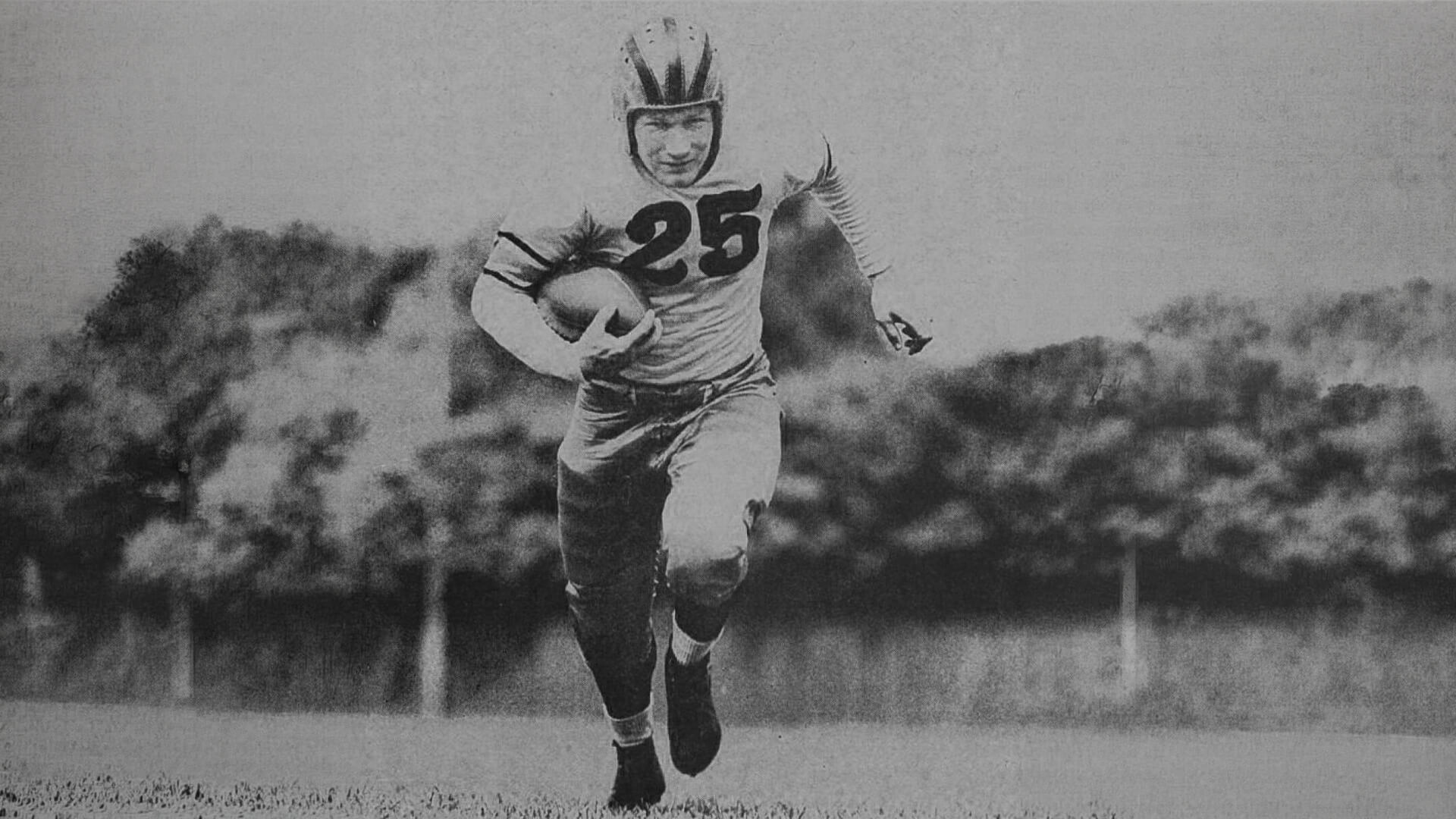
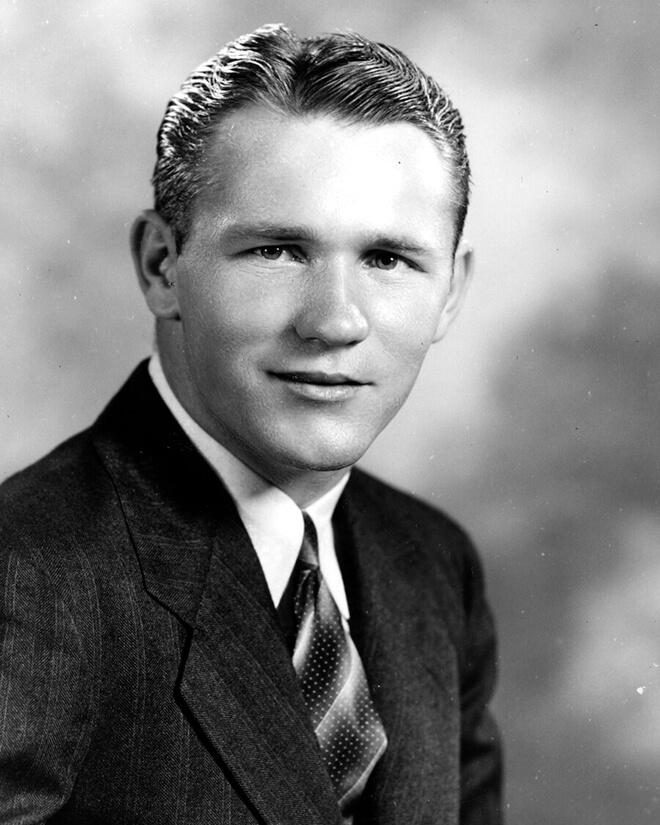
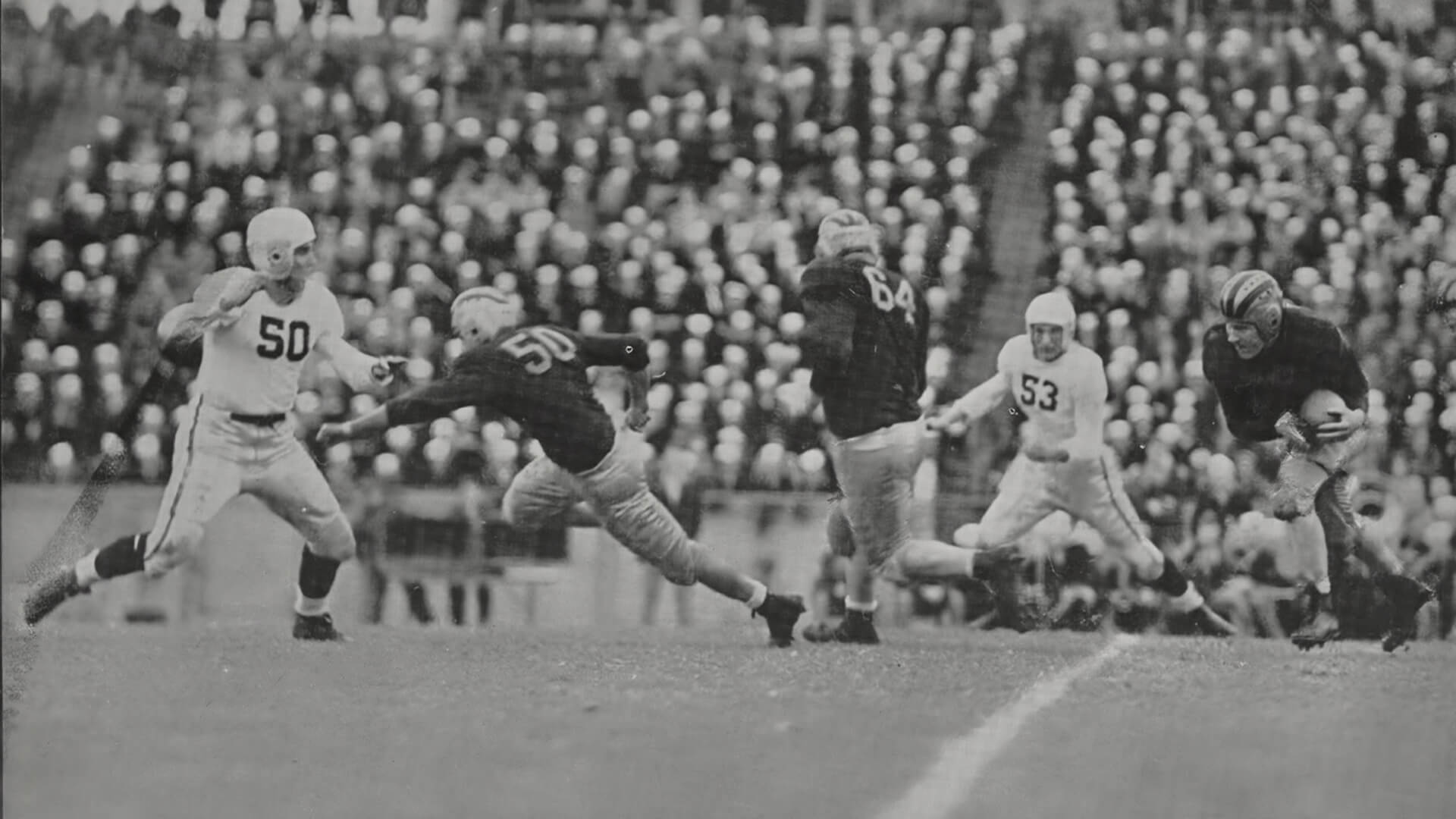
In his lone season at Purdue, Tony Butkovich helped the 1943 Boilermakers record the program’s most recent undefeated season. Butkovich led the nation with 833 rushing yards and rushed for 16 touchdowns in only seven games before being called up for military service. (Photo courtesy of Purdue Athletics archive)
A new feature film shares the story of four World War II Marines, including Butkovich, a star on Purdue’s 1943 football team
Tony Butkovich’s final game in a Purdue football uniform saw him break the Big Ten scoring record as his 1943 Boilermaker teammates continued their push toward the program’s most recent undefeated season.
But the story of that unusual October day at Wisconsin’s Camp Randall Stadium is not entirely about football. It’s also about the realities of American life during World War II — and the uniting purpose that brought much of that Boilermaker squad to West Lafayette in the first place.
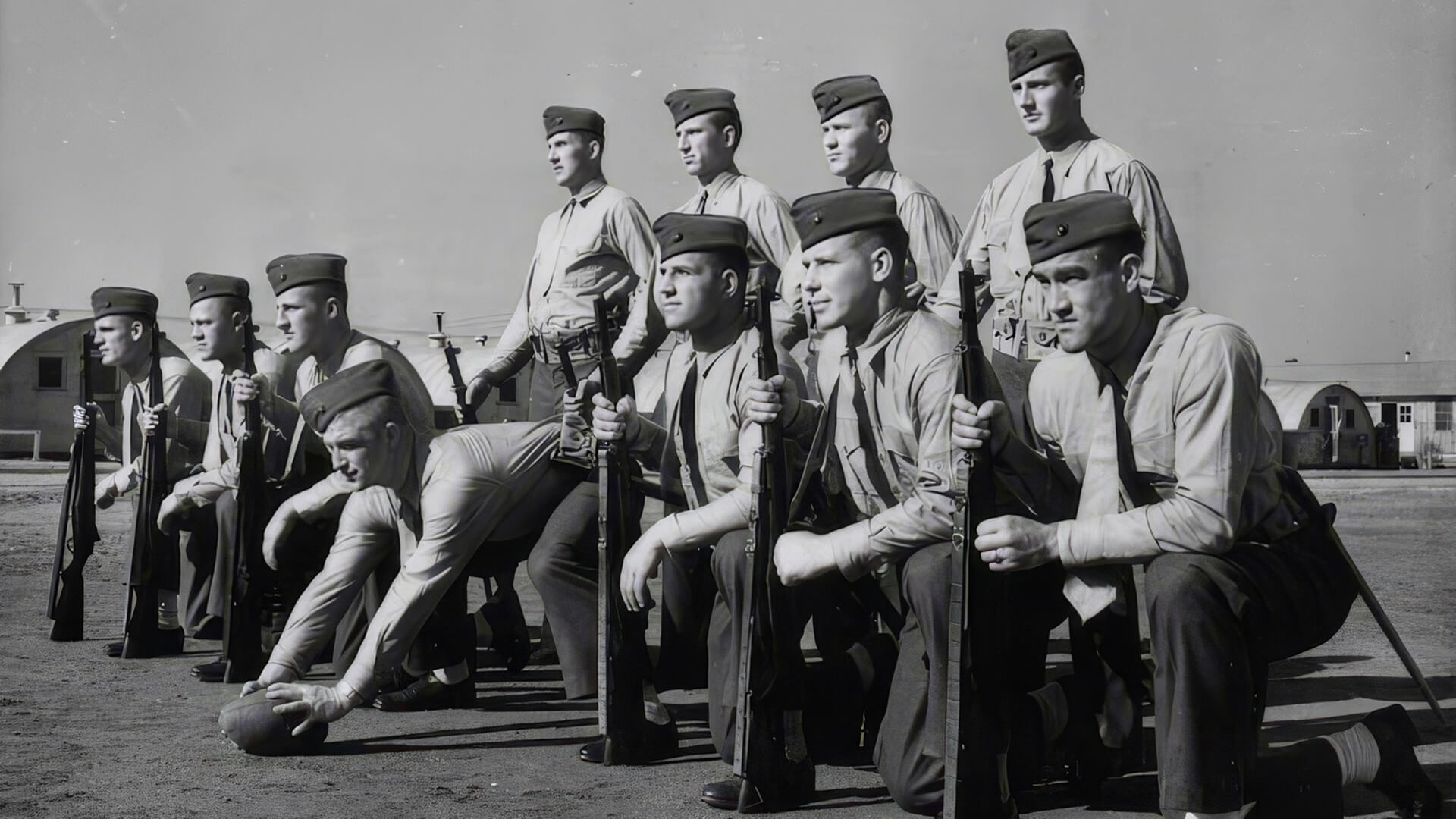
The day after Butkovich’s record-breaking performance, he and eight Purdue teammates boarded a train to Parris Island in South Carolina to begin advanced training as Marines before being shipped off to fight in the Pacific theater. Three more had been called to active duty a week earlier, removing a third of the Boilermakers’ travel roster with two games left in the season.
“They just went, no questions asked. That’s what it was,” says Cory Palm (MA public relations and sport management ’08), whose book “Perfect Warriors” tells the story of the 1943 Purdue team whose star player, Butkovich, is among four Marines who are the central figures in the upcoming feature film, “The Mosquito Bowl.” “I think there was a real sense of duty among these guys. They had their heads on straight and knew what the whole point of this was.”
The war-bound Boilermakers had known this time would come. They just didn’t know when.
As participants in the V-12 Navy College Training Program — 33 members of the 1943 team were at Purdue for that purpose — Butkovich and the others largely transferred in from other universities for a program built to supply a rapidly expanding U.S. military with college-educated officer candidates.
And when Butkovich’s group of call-ups learned a few days before the Wisconsin game, played on Oct. 30, 1943, that they were to report Nov. 1, suddenly individual and team gridiron pursuits became secondary. It didn’t matter as much that Butkovich was chasing records and All-America honors or that the Boilermakers were battling to become the only unbeaten team in the nation that season. The V-12 Boilermakers came to Purdue to serve their country, and they were duty bound to answer Uncle Sam’s call whenever it came.
“It’s such an important part of American history and such an important part of Purdue history,” says Palm, the director of broadcast services for Purdue Athletics. “It really makes you love Purdue a little bit more, I think, because these guys on this team stood for what we all hope that our institution stands for — that there’s something bigger than all of us that we’re working toward.”
And soon, Butkovich’s story of family, duty and great personal sacrifice will come alive for a new generation of Americans. Palm played a small part in sharing that story, as well.
Coming soon: ‘The Mosquito Bowl’
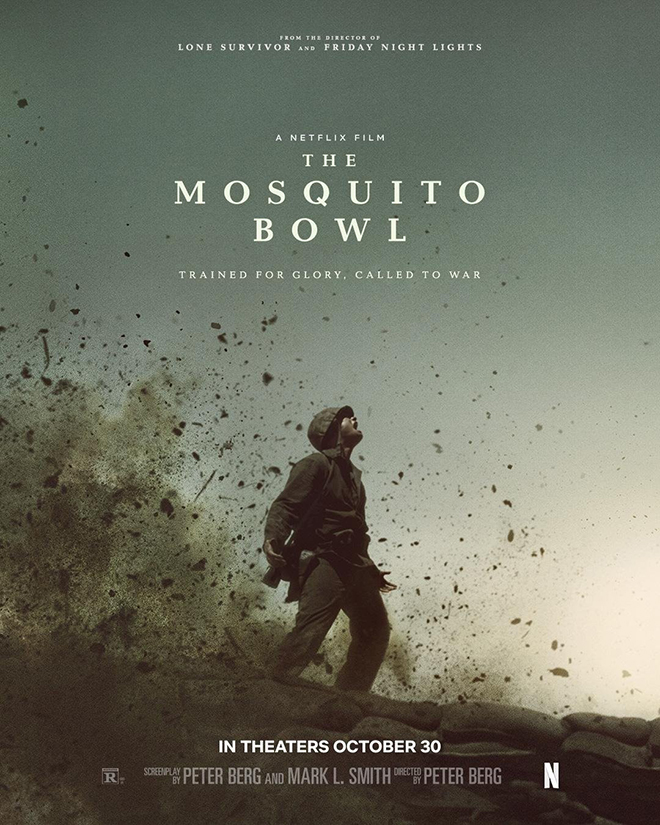
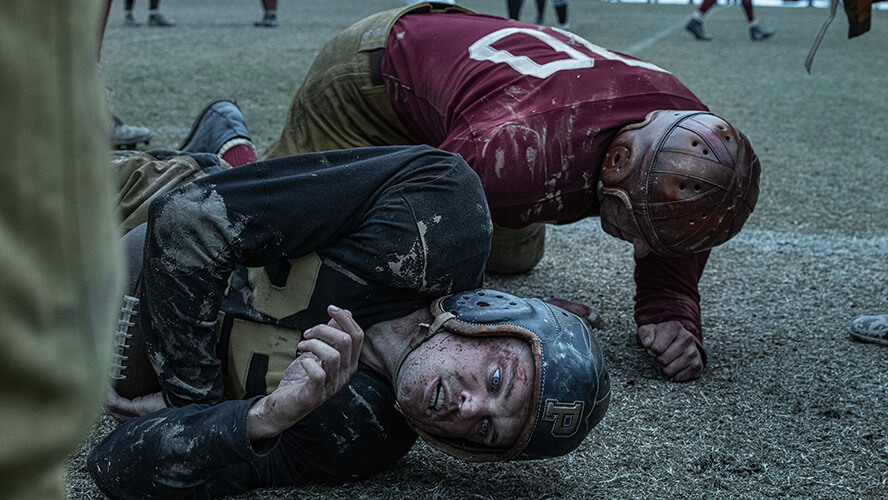
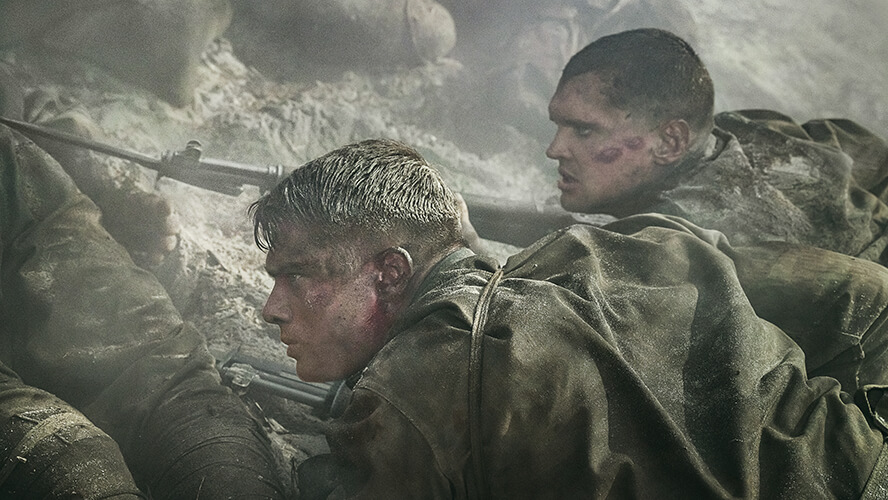
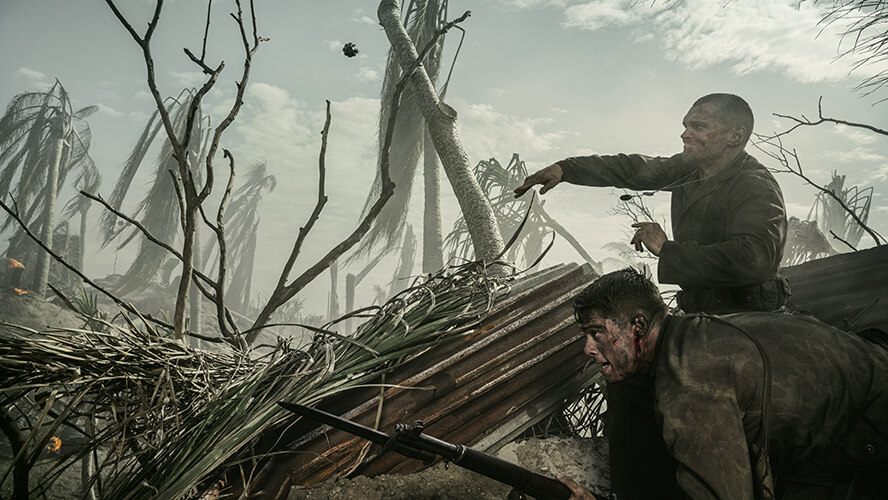
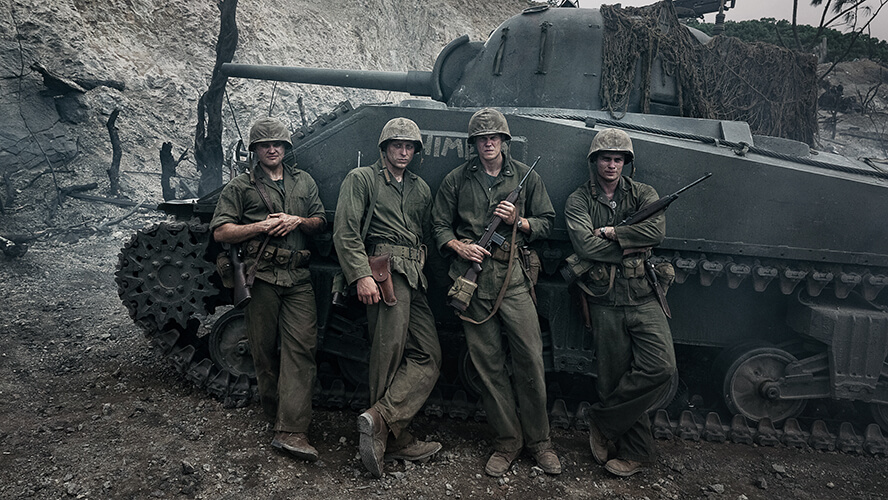
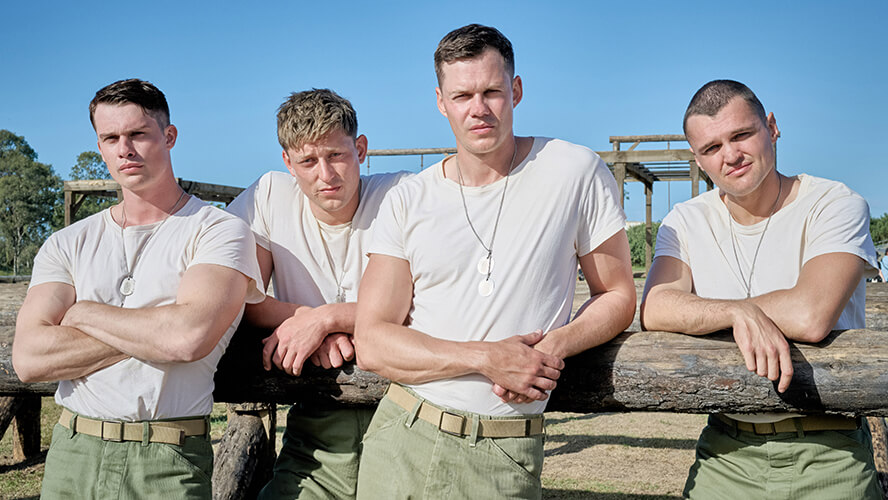
Butkovich is among the primary figures in director Peter Berg’s film, “The Mosquito Bowl,” based on the 2022 book of the same name by Pulitzer Prize-winning author Buzz Bissinger. Palm shared research and original game footage with Berg as he prepared the script for the movie, which will arrive in select theaters Oct. 30 (83 years to the day from Butkovich’s final game as a Boilermaker) and begin streaming Nov. 25 on Netflix.
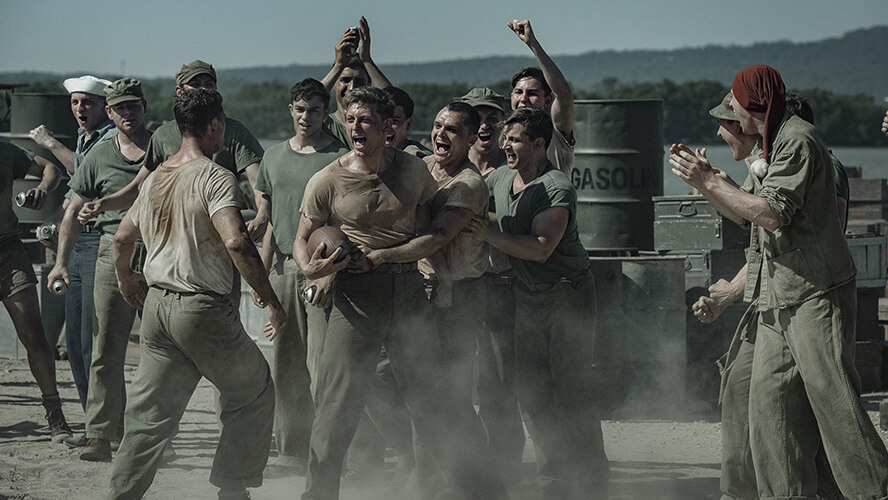
Starring Ray Nicholson as Butkovich; Nicholas Galitzine as John McLaughry, quarterback and team captain at Brown; Bill Skarsgård as Bob Baumann, tackle at Wisconsin; and Tom Francis as David Schreiner, defensive end and captain at Wisconsin, the movie tells the true story of brotherhood among a group of Marines — many of whom had only recently been college or professional football players — who played in a morale-boosting Christmas Eve 1944 football scrimmage on Guadalcanal island in the Pacific as they prepared for the bloody battles ahead during the Allied invasion of Japan.
During his media tour for the book, Bissinger repeatedly said that this all-star game between the 4th and 29th regiments of the 6th Marine Division was “the last time these guys were allowed to be boys.” For many, it would be the final football game they ever played.
By the end of the Battle of Okinawa in June 1945, 15 of the 65 Mosquito Bowl participants — including Butkovich, who was shot and killed by a Japanese sniper on April 18, 1945 — were among the nearly 250,000 people who died in the 82-day campaign. Approximately 20 more Mosquito Bowl players were injured, further illustrating the immense toll of the bloodiest battle in the Pacific theater.
“What we’re aspiring to do with ‘The Mosquito Bowl’ is take the audience on an immersive, visceral experience through the eyes of these four young men into the realities of war, the horrors of war — without politicizing it,” Berg told Esquire in an article previewing the movie. “I believe World War II was a very just war, certainly when you look at it compared to other wars, but it was a war. And it was an incredibly tragic and brutal experience that these men went through.”

A miraculous turnaround
Prior to the Japanese attack on Pearl Harbor in December 1941, Butkovich and his 1943 Purdue teammates were generally college athletes living traditional college lives.
Once the U.S. entered the war, some new college-going enlistees transferred to one of the 131 university campuses where the V-12 Navy training program was available, 40 of which also had detachments to train Marine officer candidates. The program allowed participants to complete military training in the morning, further their college educations during the day and then enjoy extracurricular activities (like playing football) afterward.
Thanks to the addition of 26 Marine V-12 trainees and seven more from the Navy, a Purdue team that had finished 1-8 and scored only 27 points in 1942 was suddenly brimming with talent. Eight players came from the University of Illinois, including fullback Butkovich, All-American lineman and future College Football Hall of Famer Alex Agase, and starting linemen John Genis and Mike Kasap. Seven more came from a 1942 Big Six championship squad at Missouri. And multitalented quarterback Sam Vacanti arrived from Iowa.
“The V-12 program, it revitalized Purdue football,” Palm says. “And on top of that was the fact that Purdue was one of the few that included Marine trainees, not just naval trainees. Marines are a different kind of guy, and a different kind of football player, so we got a lot of really good stars in that process.”
The breakout star was Butkovich, who led the nation with 833 rushing yards and ran for 16 touchdowns in seven games — still a Purdue single-season record that he now shares with Kory Sheets. Butkovich — known as Touchdown Tony — also scored 78 points in just four conference games that season, setting a Big Ten record that would stand until 1962.
Having viewed some of the 1943 Purdue game footage that Palm shared, Berg told Esquire that Butkovich was the “best college football player alive” that season, calling him “a man among boys.”
The Cleveland Rams had selected Butkovich with the 11th overall pick in the 1944 NFL draft, but he would never get the chance to fulfill his dream of playing professional football.
Some of Butkovich’s fellow Purdue Marines made it home to continue their football careers, however, and several of the Illinois transfers did so back in Champaign.
His best friend, Agase, was one of them, although he first earned a Purple Heart after being wounded in the Battle of Okinawa. Back at Illinois for the 1946 season, he won All-America honors for the third time in his college career. As a professional player, he won three championships with the Cleveland Browns before launching a 35-year career as a coach and administrator that saw him become head coach at Northwestern and Purdue and serve as athletic director at Eastern Michigan.
Joining Agase back at Illinois were 1943 Boilermaker linemen Genis, Butkovich’s “Mosquito Bowl” teammate on the 29th Regiment squad, and Kasap. They were joined by end Frank Bauman, whose brother Bob is among the central players featured in “The Mosquito Bowl” book and movie.
A lasting legacy
Purdue’s 1943 season was anything but normal, from the wartime circumstances that brought the team together to the lighthearted approach from Boilermakers coach Elmer Burnham — including that he allowed the departing V-12 Marines to go home and visit their families during the week leading up to the Wisconsin game since they would be boarding a midnight train to boot camp immediately upon their return from Madison.
“He had his head on straight, too,” Palm says of Burnham. “They would spend a lot of practices goofing off. He would run them through their paces but not really be on them to be perfect. Some practices, they would swap roles, and the backs would go play offensive line and the offensive lineman would be the running backs. Just get them moving around and having a good time, very loose. And I take from that that he knew what the score was with this team.”
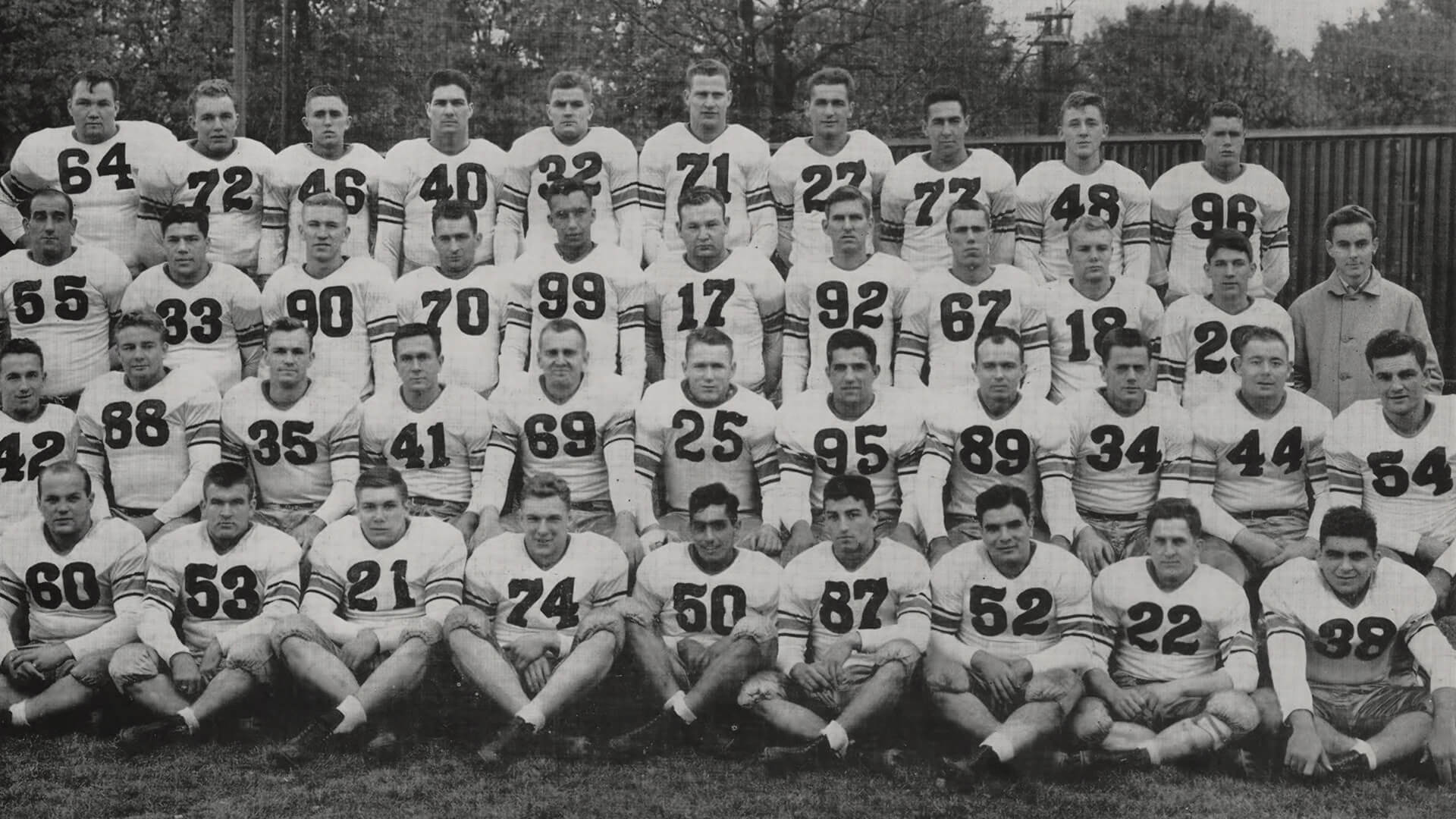
Burnham’s approach worked to perfection. Even after losing some of his most important players to military service, Burnham still cobbled together a starting lineup that was formidable enough to defeat Minnesota and Indiana in the final two games and finish 9-0 — the nation’s only unbeaten team that season.
With a 6-0 mark in conference play, the Boilermakers shared the Big Ten title with Michigan, meeting the challenge issued by Agase and the other V-12 Marines upon their departure after the Wisconsin game.
“You guys staying around here had better win those last two games,” Agase jokingly threatened at the time, according to a column in the Lafayette Journal & Courier. “We are expecting to open a little package in about a month and if it doesn’t contain those little gold footballs (charms presented to Big Ten championship teams), there’s going to be trouble.”
Their teammates made sure they got those footballs, just as they made sure that Butkovich got his scoring record. But even that came in an unconventional fashion.
As the seconds ticked down in the Wisconsin game, Boilermakers coach Burnham pulled out all the stops to help his star fullback etch his name atop the Big Ten scoring list.
Butkovich had already scored two touchdowns that day, giving him 72 points in just four conference games and tying the conference scoring record that Iowa’s Gordon Locke set in 1922. But time was running out for Butkovich to make the record his own. And Burnham’s creativity was getting him nowhere.
Twice he sent Butkovich out to attempt extra-point kicks following Boilermaker touchdowns. He missed both.
Burnham tried to force-feed him the ball on what would likely be Purdue’s final possession, only to have a penalty push the Boilermakers far from the goal line. They hit a touchdown pass on third-and-long.
Finally, with the Boilermakers comfortably leading 25-0 and virtually no time left on the clock, Burnham called for a successful onside kick. It may seem difficult to believe in this day and age, but even the Wisconsin fans at Camp Randall Stadium were cheering on the Boilermakers’ somewhat unsportsmanlike attempt to help their star player cross the goal line one more time with victory already well in hand.
Those Badger fans understood the situation. College football programs across the country, including Purdue and Wisconsin, were about to lose players to military activation within the coming days. They recognized that this was Butkovich’s final chance to break the record, and it was cause for hearty celebration when he finally did so on the very last play from scrimmage.
“The big story of the game wasn’t exactly Butkovich, but it was the enthusiastic unselfish efforts of his teammates to assist a pal,” according to a newspaper recap cited in the November 1943 issue of the Purdue Alumnus. “Tony, of course, was going well and trying his best to break the mark, but he wasn’t any more wrapped up in his task than the lowliest sub in a Purdue uniform.”
That, in essence, is both the story of the 1943 Purdue team and of a united nation that had much weightier concerns than college football records.
As the son of a Croatian immigrant who labored in an Illinois coal mine to provide for eight children, Butkovich embodied the American dream that he would soon fight to protect. An exceptional athlete, he could have starred professionally in multiple sports but never got the chance — instead making the same sacrifice that robbed more than 400,000 American World War II service members of the opportunity to fulfill their potential.
But he and his 1943 Boilermaker teammates left an unforgettable mark on the university they called home for a single season with both their perfect record on the field and the legacy they left away from it.
“I hope that what we take away from this story is one more reason to be very proud of our institution,” Palm says. “There have been so many stories and movies and books written about these men who went off and did these unimaginable things to preserve our world and to allow us the world that we’ve become. Whatever we can do to expand the knowledge of the selfless nature of the greatest generation, the most important thing is to tell their stories and keep their achievements alive.”