Beth Stubbings thought she was done flying. She’ll return to space on Purdue 1.
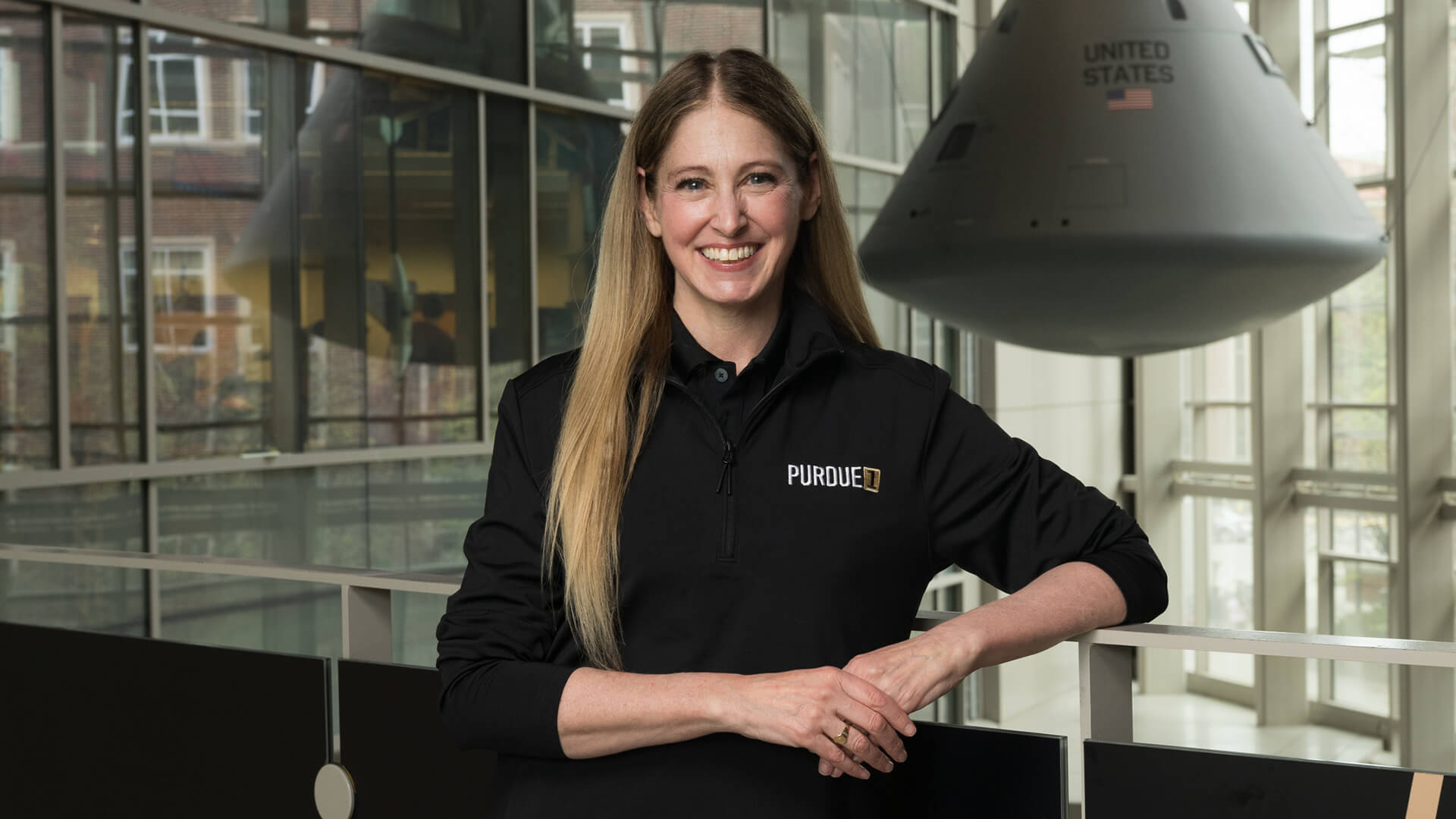
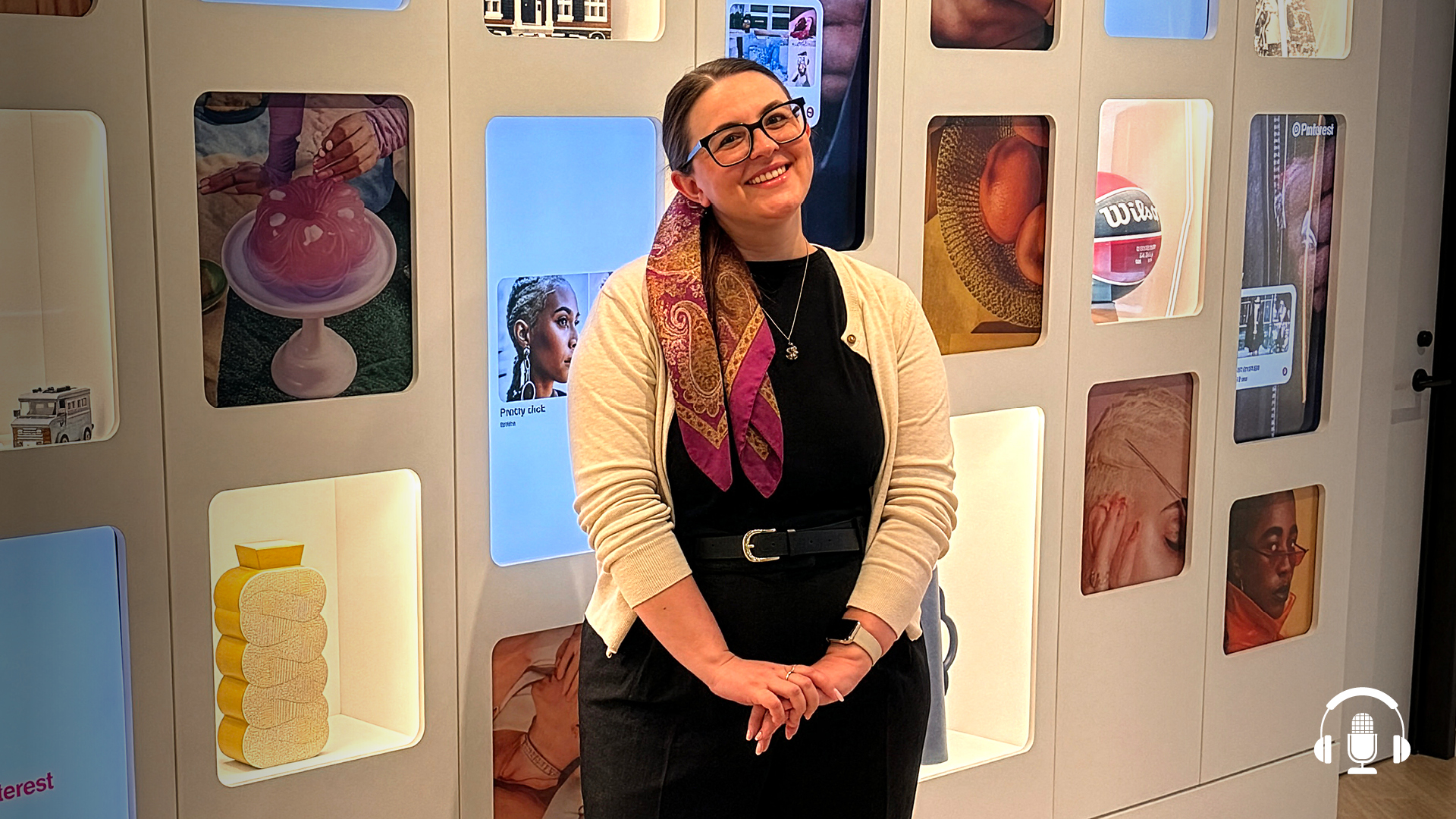
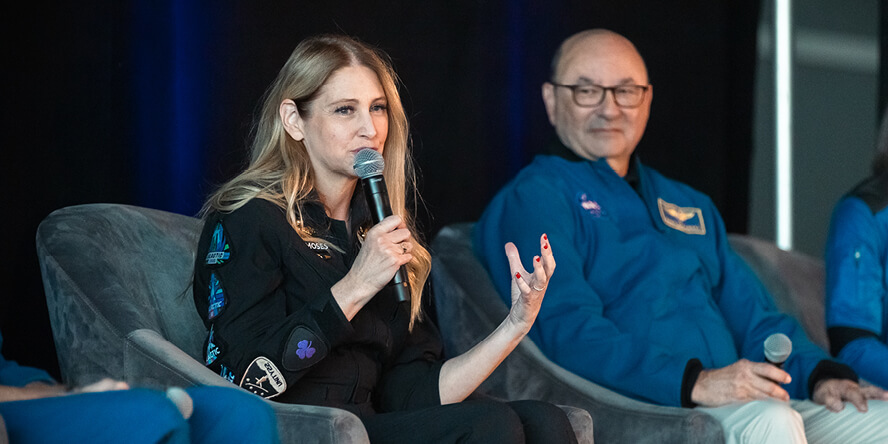
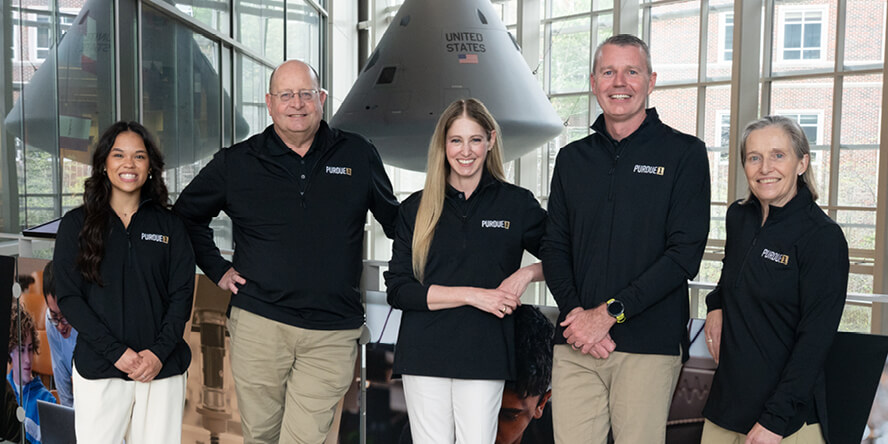
Purdue alum Beth Stubbings will participate in her seventh spaceflight as a crew member on the Purdue 1 research mission with Virgin Galactic in 2027. (Purdue University photo/John Underwood)
A veteran of 6 suborbital space missions, Stubbings brings experience that will influence multiple aspects of the all-Purdue flight
When she left Virgin Galactic, Beth Stubbings figured she had made her last spaceflight.
Stubbings had already traveled to space six times — a record for female space voyagers that she is somewhat reluctant to claim.
“I’m not one to draw attention to my gender. I’m an astronaut, not a female astronaut,” says Stubbings, who earned bachelor’s and master’s degrees in aeronautical and astronautical engineering at Purdue. “Not to mention that the flight time of all of my flights put together barely scratches the surface of any single orbital mission. So, it’s an awkward claim to fame. But then I’m told that it inspires young girls and is an achievement for humanity, so I should be proud of it. And I am.”
And that was only one of the many impressive bullet points on her résumé:
- First person to unstrap and float around the cabin in zero gravity during a suborbital flight
- First woman to work aboard a commercial spaceflight
- Cabin lead for Unity 22, Virgin Galactic’s first fully crewed spaceflight
- Key design engineer for both the International Space Station and Virgin Galactic’s first spacecraft
- NASA engineer who managed the extravehicular activity program for the International Space Station
So, if six flights proved to be her final total, Stubbings was perfectly content with what she had already accomplished in her field.
“I had no ambition to be a suborbital researcher, nor did I have any ambition to keep flying,” she says. “Certainly, I love it. Certainly, I missed it. Certainly, additional flight opportunities were more than welcome, but I wasn’t looking to fly again. I wasn’t saving my pennies to buy a ticket. I wasn’t trying to get hired by Blue Origin to fly with them. I retired when my ship was retired, and I was content with that. I was quite worn out at the time.”
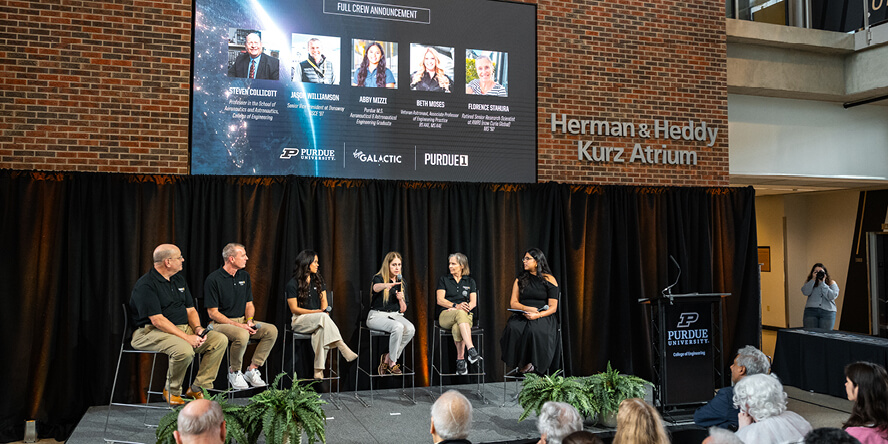
But then she learned about an opportunity to join Purdue 1, the 2027 Virgin Galactic commercial suborbital flight where all five crewmembers will be Boilermakers. When former Purdue engineering dean Arvind Raman approached Stubbings about the flight while she was visiting campus as one of Purdue’s 2025 Distinguished Engineering Alumni honorees, Stubbings immediately recognized how her wealth of spaceflight experience could be of great value to her alma mater.
After all, the most important aspect of the upcoming mission is its research focus — particularly the human-tended experiments that engineering professor Steven Collicott and graduate student Abigail Mizzi will conduct. Having a veteran flyer onboard could improve the chances that everything goes according to plan, and very few flyers have more experience than Stubbings.
“The fact that Purdue was asking for my services to help Purdue succeed in something this monumental for humanity and education, it felt like something I had to do if I could possibly do it,” says Stubbings, who also agreed to join the Purdue AAE faculty as an associate professor of engineering practice as part of her Purdue 1 arrangement. “I think it could be potentially very important to have a veteran on board. Not that I would anticipate anything going wrong. Certainly, if Virgin Galactic is true to form, it will provide an exceptional experience regardless of who’s on board. But I think it could prove, at minimum, helpful and, at worst case, crucial for a veteran to be on board. And that light bulb went on the minute Arvind mentioned the flight.”
But helping with flight logistics will not be Stubbings’ only contribution to the mission’s success. And once again, her wealth of spaceflight experience could prove to be an asset.
A movie, not a snapshot
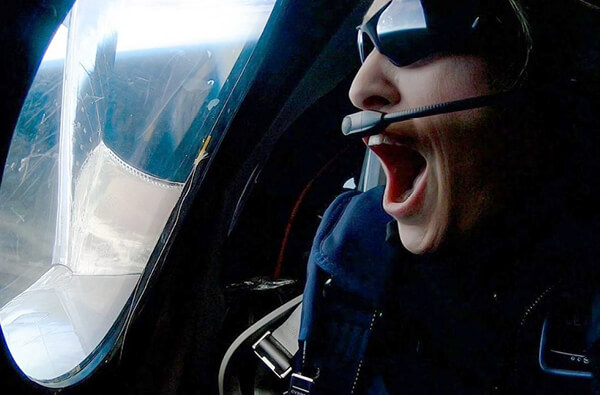
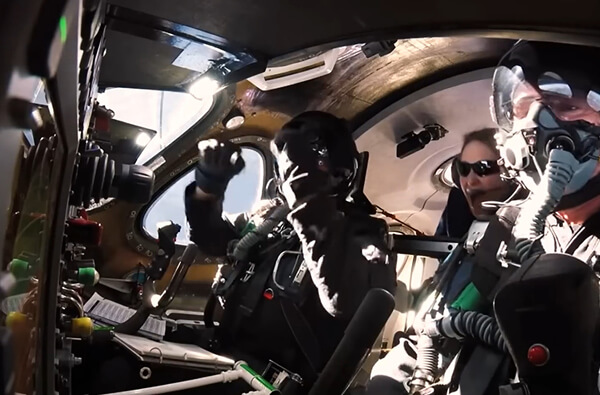
Stubbings wore body sensors during each of her previous flights, so there is already substantial physiological data showing how her body reacts to phases of space travel like acceleration, microgravity and recovery. She intends to share that data with a team of researchers from Purdue’s Weldon School of Biomedical Engineering while also providing new data by wearing sensors before, during and after the Purdue 1 mission.
Research team leader Matthew Ward compares this approach to creating a movie revealing the full scope of her bodily response versus the snapshot that typical in-flight sensor data provides. He believes collecting such data will be useful as the aerospace industry advances toward long-duration missions to the moon, Mars and beyond.
“Rather than collecting a spot check like, ‘OK, we’re going to measure heart rate once off Earth here and there,’ we’re collecting a physiologic movie, not a snapshot,” says Ward, assistant professor of biomedical engineering in the Weldon School. “We want to monitor before, during and after the mission, allowing each flight phase to be interpreted relative to Beth’s own baseline. This is distinctly different from comparing her with a population average or previous astronauts that have flown because they might be a different sex, different age, different everything else. And so that’s going to be very compelling.”
Stubbings hopes that her extensive existing bodily data might prove even more valuable to researchers who seek to understand how to tailor future space medicine to the needs of individual astronauts.
“What I hope is that having me as a veteran and having all that data will enable some type of insight that nobody predicted ahead of time,” she says. “I am very pleased that I can give all this data with my name behind it, because the more of that that exists, the more chance that one of these expert biomedical engineers will have that eureka moment, and then that will help other astronauts.”
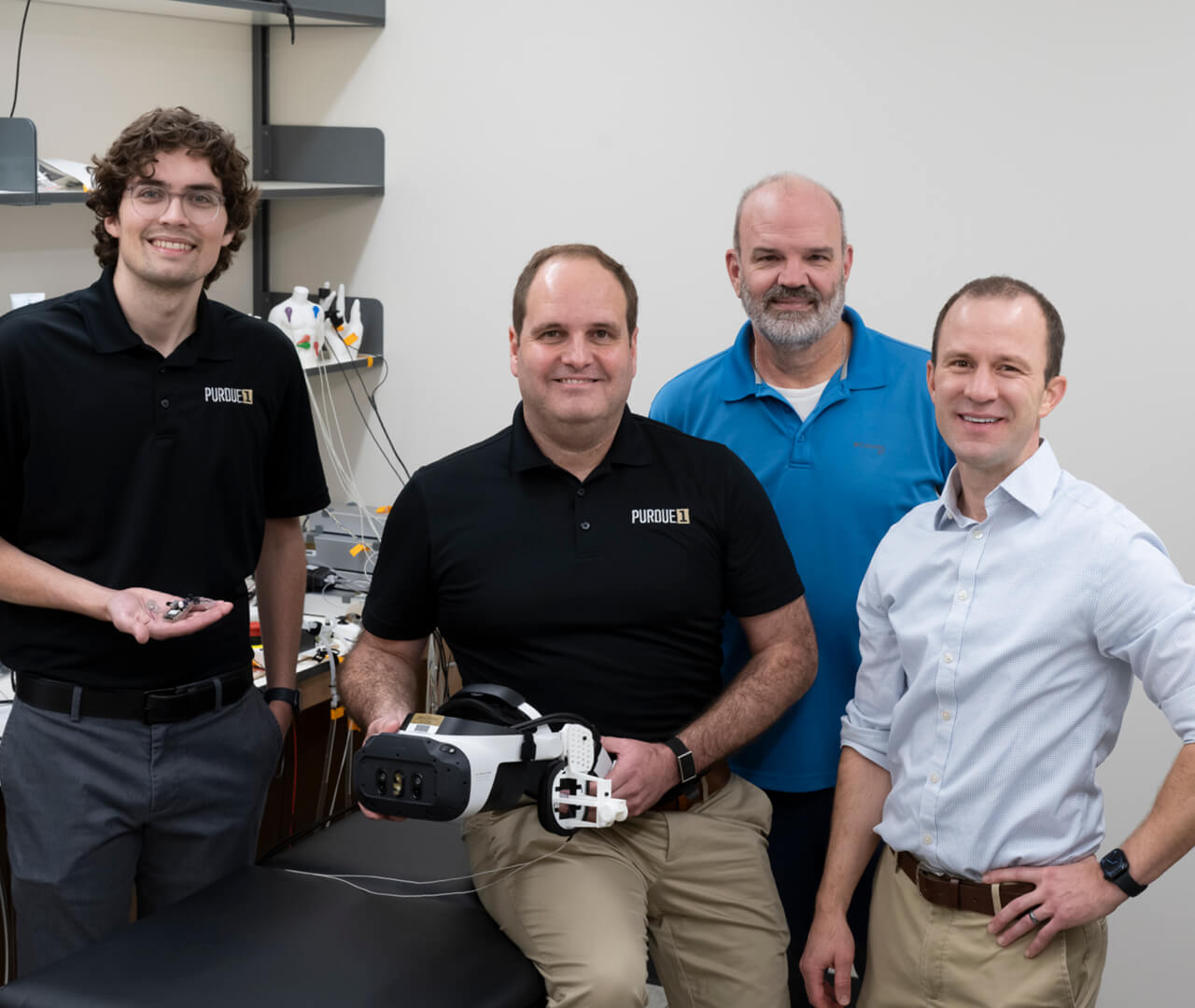
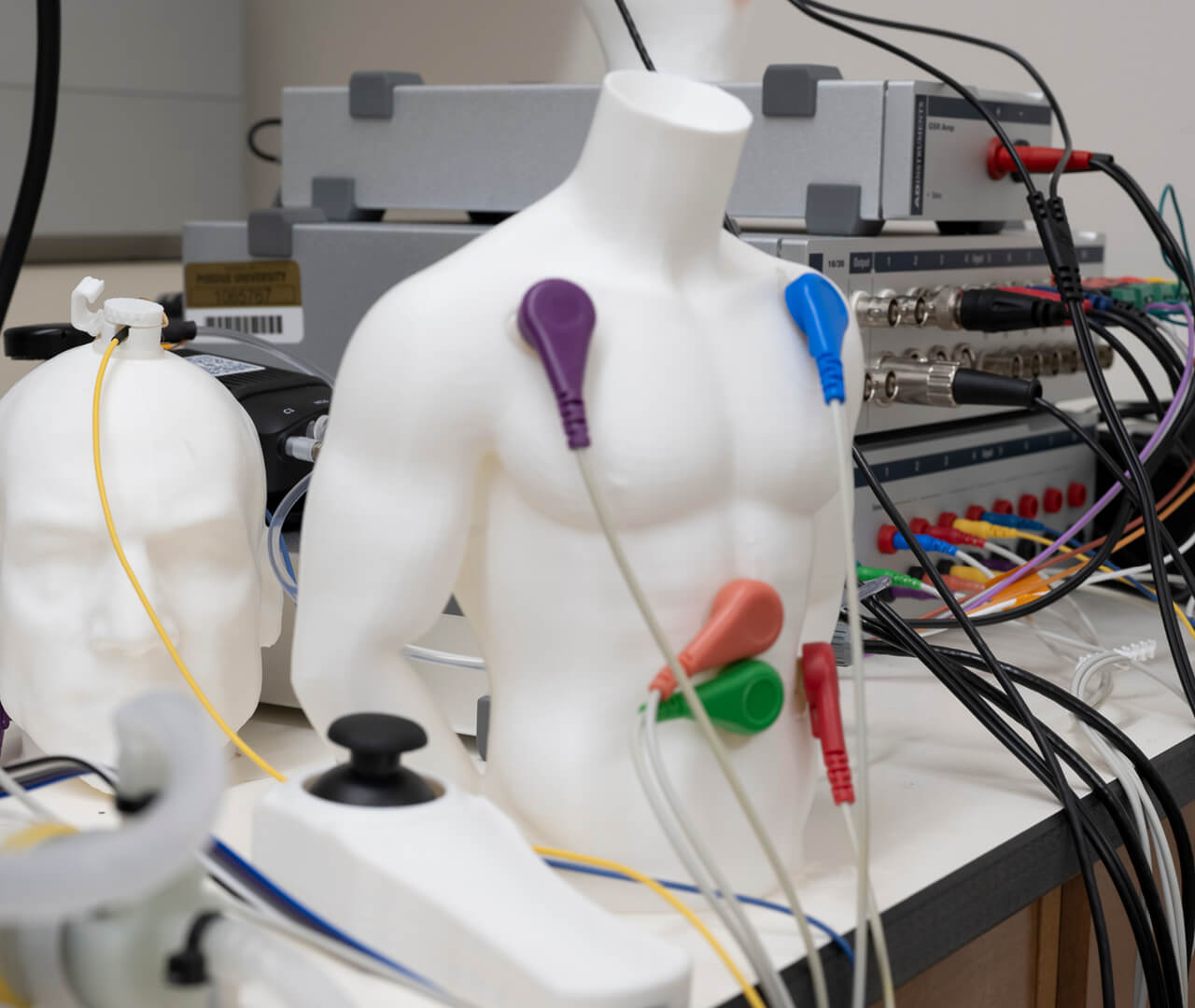
Ward’s team — which also includes professors Steven Steinhubl and Craig Goergen and PhD student Damen Wilson — has already shared a “goody bag” of body sensors for Stubbings to experiment with ahead of the flight. She will wear chest and wrist sensors as part of the research project, enabling the team to monitor her body’s cardiac function, breathing, temperature, activity and stress-related signals.
The team is also experimenting with the placement of the chest sensor, moving it slightly lower toward the stomach to also gather feedback from her gastrointestinal system — potentially enabling future study into the digestive issues or nausea astronauts might experience when exposed to the conditions of space travel.
“Essentially what we’re trying to do is monitor normal physiology: what normally happens in space, what’s a unique aspect of microgravity and all of the flight scenarios that have an impact on physiology,” Ward says. “But also, do we have a reliable lever that we can use to actually offset that stress physiology to help improve function in the extreme environments that spaceflight presents?”
That’s where the next element of the Weldon School team’s research project enters the picture — the part that Stubbings describes as “super far out there.”
‘The first bionic astronaut’
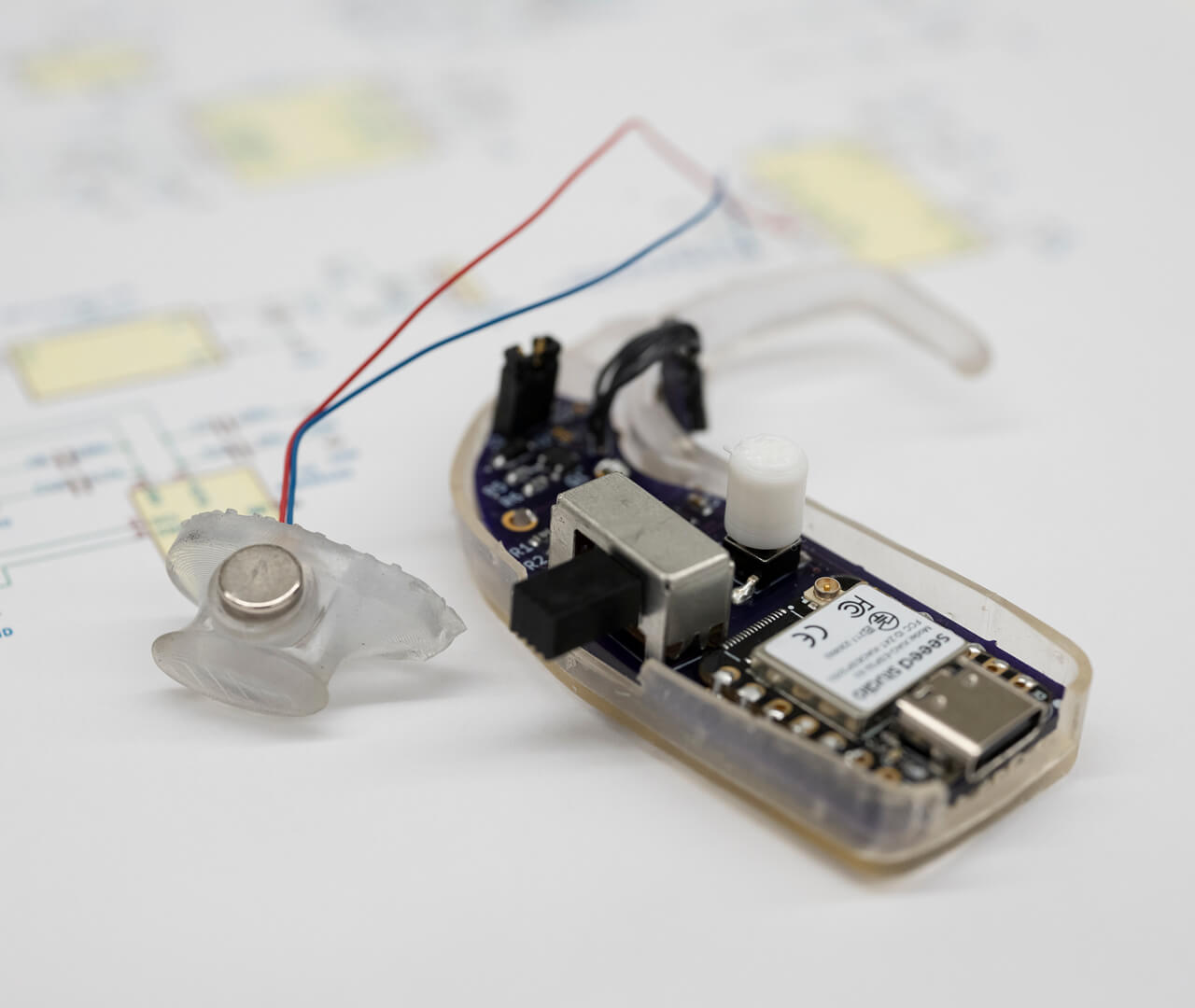
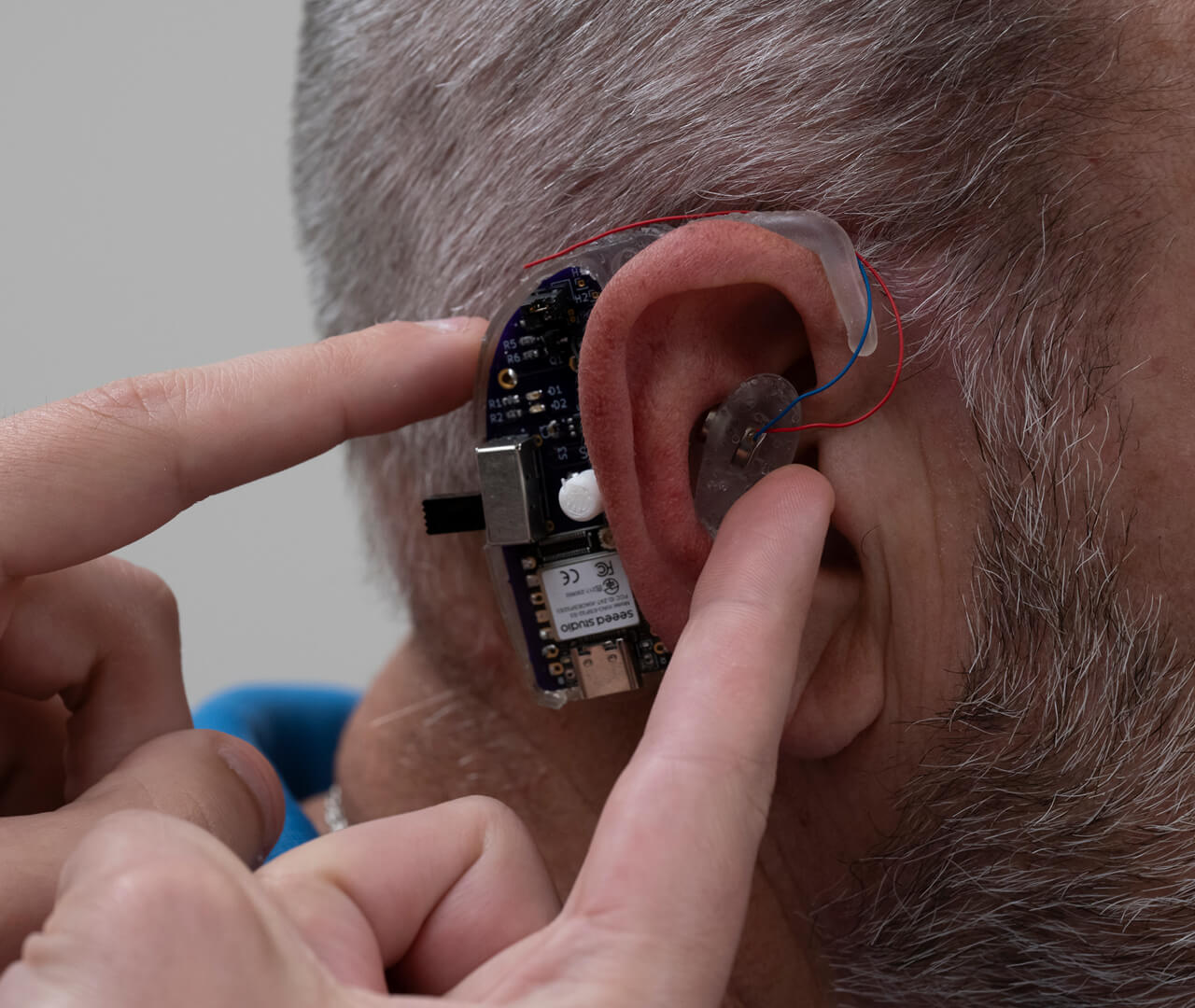
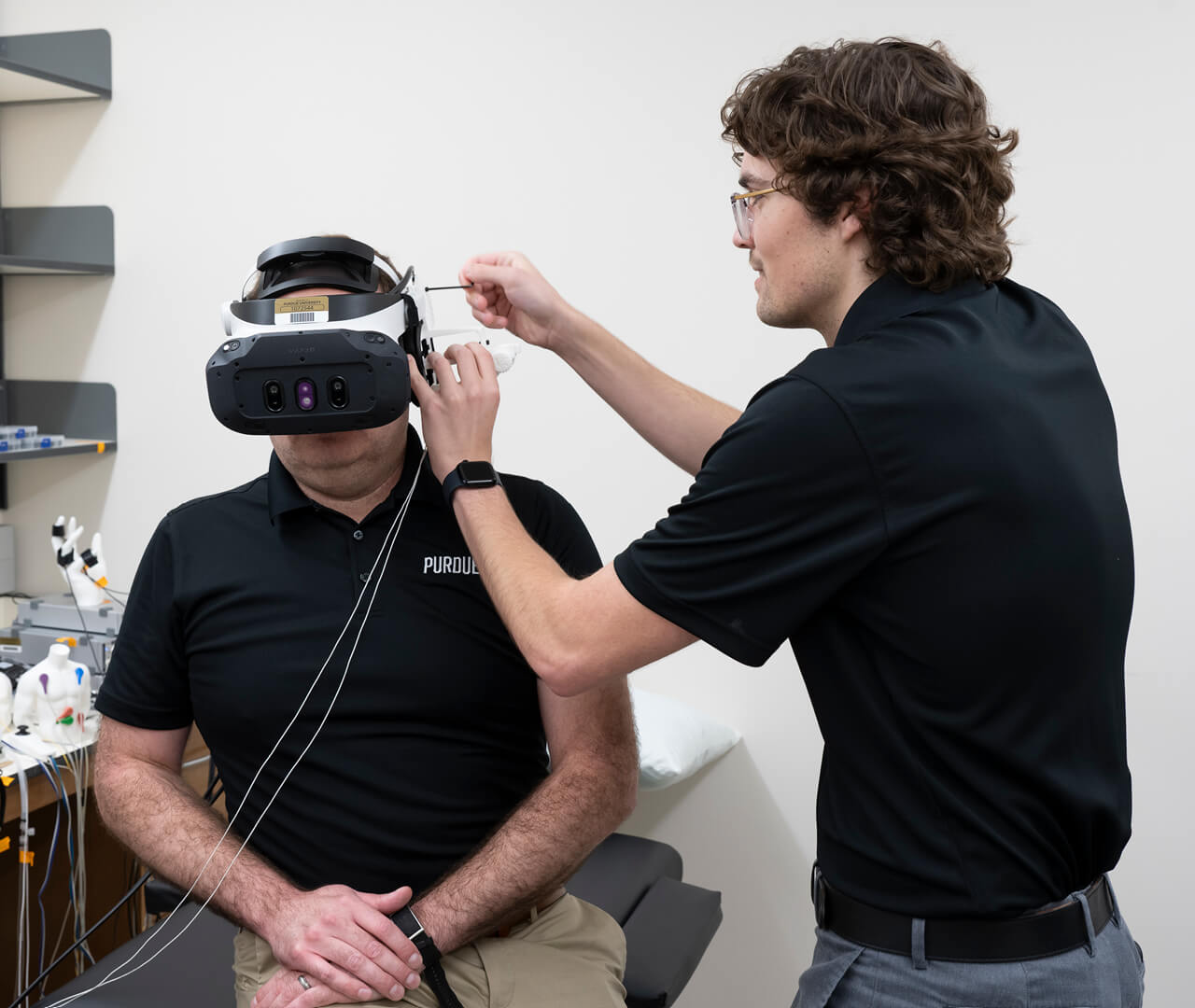
In addition to the body sensors, Stubbings will also wear noninvasive ear devices known as neuromodulators that will subtly vibrate to stimulate the auricular branch of the vagus nerve. The devices — the first of their kind for space researchers — will test whether ear stimulation affects Stubbings’ heart rate and other physiological factors like perceptual awareness.
“I like to joke that I’m the first bionic astronaut because I’ll have bionic ears,” Stubbings says of the device, which the research team refers to by the acronym TEMPO (Thermal, Electrical and Mechanical Parameter Optimization). “I’m going to wear these things that are going to, in real time, in theory, make me perform better. They put it on the table as, ‘Would you consider this? Nobody’s done this before. What do you think?’ And I’m like, ‘Yeah, of course. That’s the point of research. Why wouldn’t I want to try that?’”
Perhaps this research project, and the ones that follow, will establish that a certain degree of nerve stimulation will better prepare a space traveler to overcome the sensory saturation of space and focus or retain information more effectively. Perhaps it can be calibrated to help their body adapt to the hot and cold fluctuations they will experience at various stages of flight. The possibilities are endless, and the first insights will come from Purdue 1.
“If we can have her comfortably wear this, if we can show that we can modulate that autonomic activity in space, then this could open up all kinds of avenues for new technologies for long-term space travel,” Ward says.
And the technology could be especially suitable for remote missions, where space for supplies will be limited. Since the wearable device is compact, rechargeable, reusable and programmable, it could reduce travelers’ reliance on consumable supplies and the need for guidance from Earth, which would likely involve a communication delay.
In that regard, Ward calls Purdue 1 the “first step toward closed-loop space medicine.”
“It’s not a replacement for medicines, but it’s an augmentation or enhancement to medicines out there that also potentially could help reduce the payload needs and volumes that would otherwise be required to send 100 people to Mars or something like that,” he says.
An inspirational jolt
During Stubbings’ acceptance speech for her Distinguished Engineering Alumni award, she shared how walking past a Cradle of Astronauts wall display in Grissom Hall frequently gave her the inspiration she needed to grind through Purdue’s demanding AAE curriculum.
“I’d go, ‘OK, I have to try that problem one more time,’” she told the audience.
Now, she’s among the 30 alumni featured in the Cradle of Astronauts display — and she hopes that seeing the accomplishments of her fellow space voyagers provides similar inspiration to the Boilermaker engineers who are following in her footsteps.
“We are all so, so lucky to be living at this point in human history,” Stubbings says. “There’s all kinds of bad news all the time, but if you think about it, 120-ish, 130-ish years ago, there was no such thing as an airplane. It didn’t exist. And then if you go back 60, 70 years, there was no such thing as NASA or human spaceflight. And you go back, 30, 40 years, someone that looks like me would have never been in the rooms that I’m in now. And yet here we are.
“I’m sure students now are like I was when I was there: exhausted, trudging through Armstrong and griping about their teacher. It’s a slog,” she says. “But if you just take a breath for a minute, maybe (take in) the gaze of those pictures on the wall that you’re walking past, if they could just give you some excited energy for what you are actually able to engineer, that’s what I would want: just the sheer excited joy of how awesome it is that we all get to engineer these things now.”
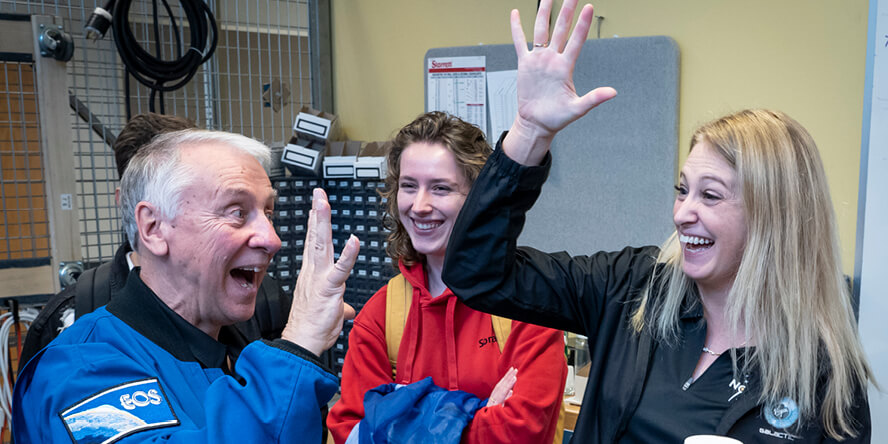
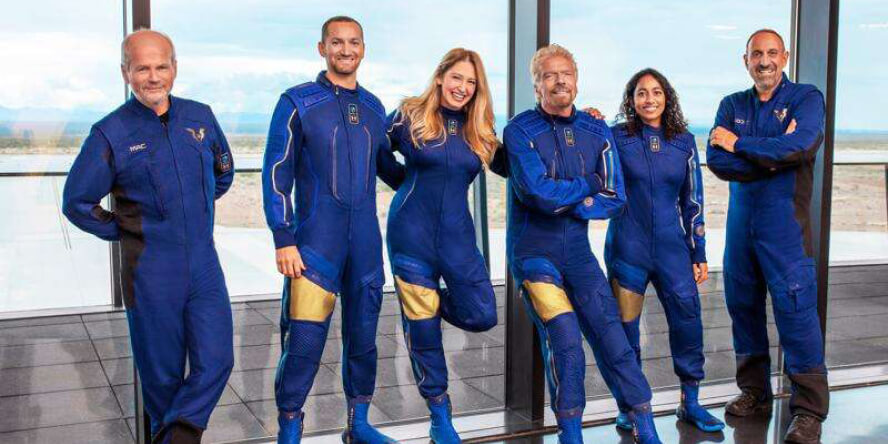
And she believes Purdue 1 should provide yet another inspirational jolt — especially among students who see the groundbreaking opportunity available to graduate researcher Mizzi.
“If there are other grad students in the world who are thinking of space applications for their research, I want them to be fixated on Abby and go, ‘Oh my God. My research could do that too. Isn’t that amazing?’” says Stubbings, who as a Purdue student won a National Science Foundation microgravity research award to conduct materials research during parabolic flight.
But Mizzi’s project is only one of many that will be aboard Purdue 1, allowing Stubbings and her alma mater to further contribute to the volume of knowledge necessary for humankind to someday travel deeper into outer space.
“These are foundational paradigms that need to be understood for humanity to progress,” Stubbings says. “This is truly a Purdue engineering flight. If that doesn’t continue the legacy of Purdue, I’m not really sure what does.”