Episode 155: Why Are Grocery Prices High? The Story Behind Inflation and Supply Chains
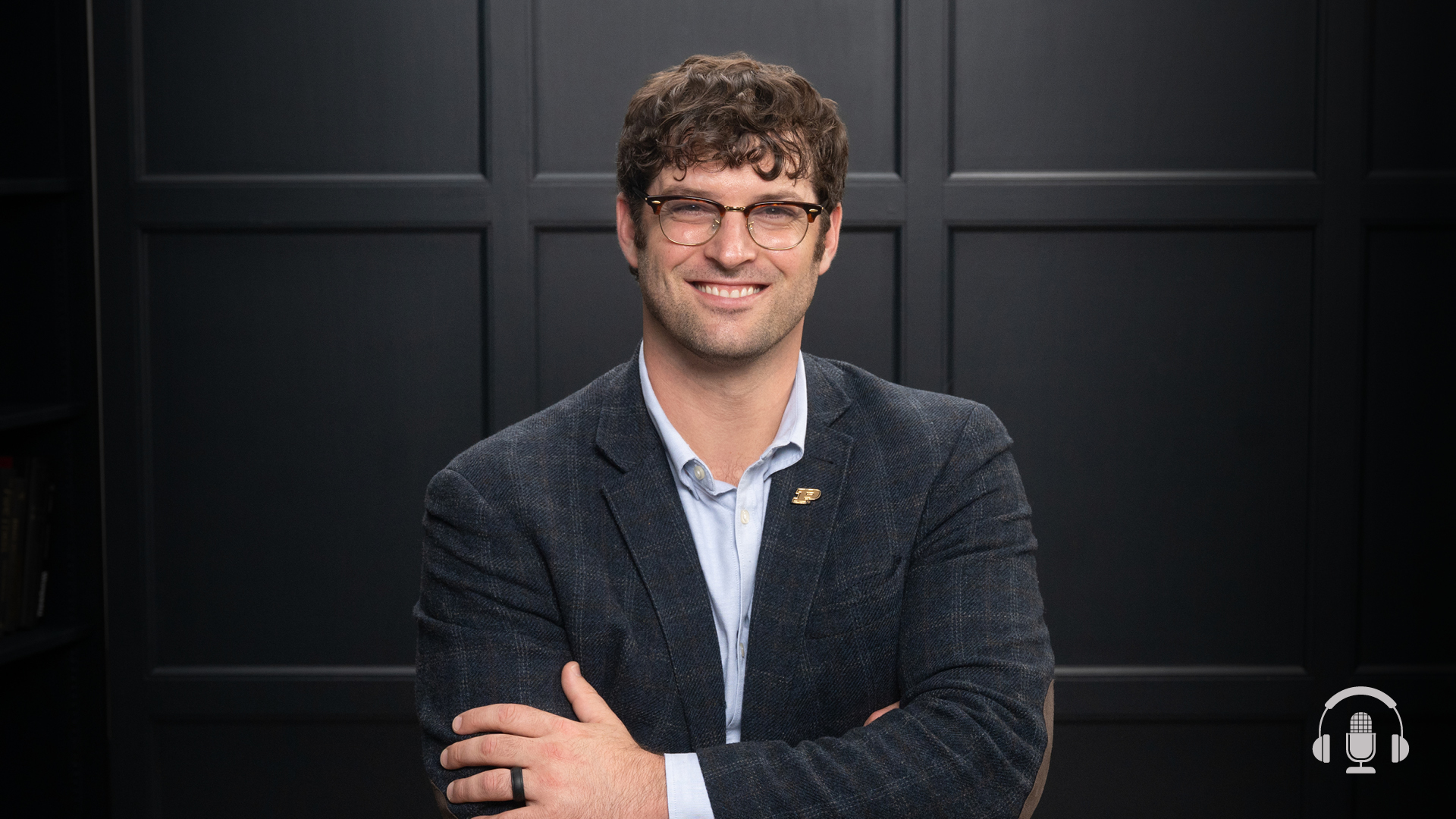
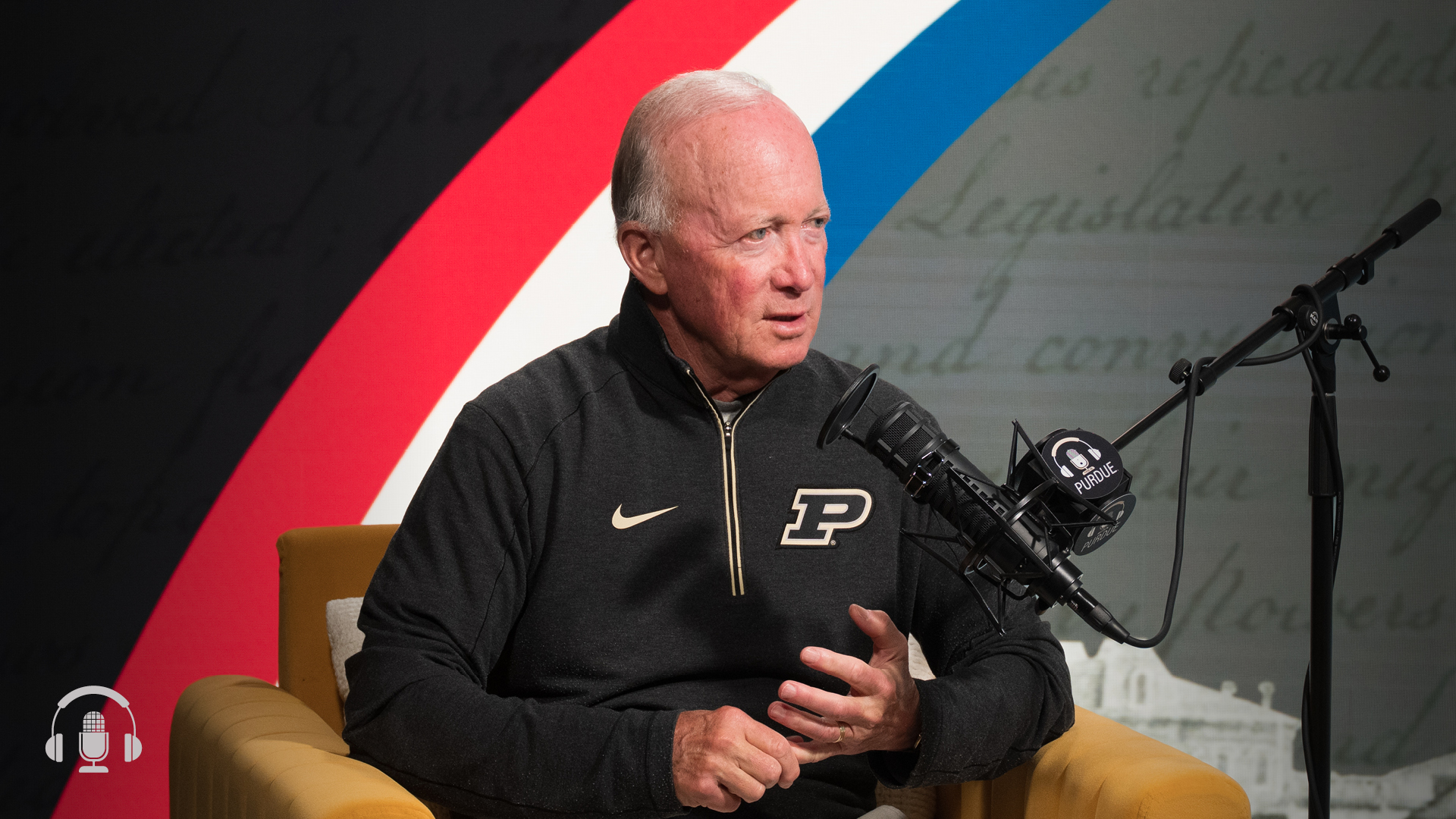
In this episode of “This Is Purdue,” we’re talking to Trey Malone, the Boehlje Chair in Managerial Economics for Agribusiness and associate professor of agricultural economics at Purdue University.
Trey is an award-winning and nationally recognized agricultural economist. His timely insights on food-system trends have been featured in major outlets like The New York Times, USA Today, Time and CNBC. Before joining Purdue’s Department of Agricultural Economics, he held faculty positions at the University of Arkansas and Michigan State University.
Today, Trey is breaking down topics that regularly grab headlines, especially during this holiday season: the rise in grocery prices and the overall state of the U.S. food system.
In this episode, you will:
- Learn more about the realities behind the U.S. food supply chain, including how multiple factors like inflation and price volatility can impact the price of cooking and meal staples like eggs.
- Hear more about how the salience (or importance) and familiarity of food in our everyday lives fuel common misunderstandings and fears around our food system.
- Discover more about the long-term effects of the COVID-19 pandemic on the price volatility of food and household staples like toilet paper — and why the U.S. food system is more resilient than we think.
- Find out how social media influencers and viral trends impact the food supply chain and how agricultural economists at Purdue use social listening data to predict future trends.
- Get insights into the current state and future of our food system, from the popularity of food delivery apps like Instacart and how they’re changing consumer decision-making to why agricultural economists like Trey are focused on food affordability and nutrition across income categories.
- Hear more about Trey’s upbringing and journey to Purdue, from his early years working at his family’s 1,400-acre cattle ranch in Oklahoma to gaining a PhD in agricultural economics from Oklahoma State University — and how this background motivates him to help farms and businesses thrive.
- Learn more about how Trey is preparing Boilermakers to lead and innovate in agricultural economics and how he’s creating opportunities for them to help farmers and agribusiness make key decisions.
- Tune in for tangible tips on how consumers can navigate rising grocery bills and save money this Thanksgiving — including avoiding impulse buys and finding deals at major retailers like Walmart and Aldi.
You don’t want to miss this episode with a Purdue professor and agricultural economist who’s expanding the way we think about our food — and the people who grow it.
- Watch the full video interview with Trey
- Learn more about Trey
- Learn more about the Department of Agricultural Economics at Purdue
- Learn more about the Center for Food and Agricultural Business
- Learn more about Purdue’s College of Agriculture
- Watch Trey’s TEDx talk on the COVID-19 pandemic and food system resilience
- Learn more about the “Agribusiness Blueprint” podcast
Podcast Transcript
TREY MALONE: This is Trey Malone, and you’re listening to This Is Purdue.
KATE YOUNG: Welcome to This Is Purdue, the university’s official award-winning podcast. I’m Kate Young, your host and a proud Purdue alumna. This Is Purdue is all about sharing big ideas that spark broad interest and get people talking. We’re passionate about highlighting notable Boilermakers who are powering innovation and working together to solve today’s toughest challenges.
Tune in to each episode as we have engaging conversations with Purdue alumni, faculty, researchers, coaches, and more, who are inspiring change through small steps every day across timely topics like sports, well-being, emerging tech, and life-changing research. Join us as we discover how these Boilermakers are taking their next giant leap.
TREY MALONE: Anytime the prices start crashing, your spidey senses should go off that something else is going on. This is recession 101 if you want to think about it. If the prices start coming down, it’s because the market is having to respond to something that’s pretty unique. The prices tend to rise like a rocket and fall like a feather is one way to think about it. I do think that at some level, we should see more stabilization. I would say that the key word for the next year or so is going to be uncertainty.
KATE YOUNG: In this episode of this is Purdue, we’re talking to Trey Malone, the Boehlje endowed chair in managerial economics for agribusiness and associate professor of agricultural economics within Purdue’s College of Agriculture. Simply put, Trey is a nationally recognized agricultural economist. And today, we’re unpacking a topic that dominates the headlines– grocery store prices.
It’s an especially relevant topic ahead of midterm elections. And as we’re getting ready for the upcoming holiday season, Trey is digging into what factors influence our food prices and how agrifood businesses respond to shifting consumer behavior, market incentives, and technological change. Plus, how are things like AI and GLP-1 impacting the food industry overall? Like Trey says, everybody eats, which makes food and this episode something we can all relate to. So let’s get to it. Here’s my conversation with Trey.
Trey, thank you so much for joining us on This Is Purdue.
TREY MALONE: Yeah. Glad to be here.
KATE YOUNG: Right now you’re a associate professor of agriculture economics within Purdue’s College of Agriculture. You’re a nationally recognized expert. You’ve been in The New York Times, USA TODAY, Time magazine, CNBC. But we’re going to dive into a topic that’s hitting the headlines now, and it’s prices at the grocery store and how they’re impacting people.
So with that being said, let’s kick things off by talking about the fairly recent rising grocery store prices and why food overall seems so expensive right now.
TREY MALONE: I think that in any discussion about food prices, we all notice food prices quickly because of how often we eat. How often we have to feed our kids, how often we think about how much egg prices are or whatever. And it’s true. They have been rising quite a bit in the last 10 years. Pre-COVID times to now, it’s a completely different ballgame when we’re buying food products.
I think that we also want to have one boogeyman that says, this is why food prices have gone up. And the reality is that every single food product that you have is a function of a completely different supply chain. The meta question that I think that your listeners ought to really consider is here at Purdue, we have a department called Agricultural Economics Department.
There is no concrete economics department. There’s no camera economics department. We have agricultural economics. Why? What is the reason why we have this unique department here at Purdue. And the reason is because food is so unique. And every single food product is unique in its own unique way. And so, why are food prices up? Well, it depends on which product we’re talking about. But it is true that yes, prices are pretty dramatic right now.
KATE YOUNG: Yes, NPR says that food prices are up 33% since 2019. So you’re saying there’s not just one factor behind this. There’s multiple factors.
TREY MALONE: There is inflation, overall inflation. The that economists usually measure inflation is they actually break out food because of the price volatility of food. And they talk about core inflation first. And core inflation has increased. Those are energy prices. Those interest rates. I don’t know if anybody’s tried to buy a house lately. Or diesel gas.
All of these things combined, labor costs are up. All of these things influence each supply chain differently. Input prices are one that people tend to talk about right now. That’s another one that is really moving the needle in terms of how much it costs to actually grow the food, whether it be fertilizer, herbicide, pesticide, et cetera. And again, uniquely enough, that’s why Purdue has an agricultural economics department. When I teach any of my food systems classes, I emphasize the systems, the plural part of it, because of how different they all are.
KATE YOUNG: Why do you think there’s so many misunderstandings and fears around our food system?
TREY MALONE: Whew. I think everybody eats. Food is a very intimate thing. Everyone has their preferences. I like to introduce my agribusiness entrepreneurship class with a question of what foods don’t you like. The example that I also give is the average grocery store in about 1975 had 8,000 unique SKUs. Unique food items in it. 8,000. Pre-COVID that number had jumped to 45,000. The structure of the food system is just so much more complicated than people give it credit for.
KATE YOUNG: You touched on this a little bit at the beginning, but when a pair of jeans go up, or if a shirt that I’m looking at, oh, that shirt used to be $30 and now it’s $50. But people are so personal about food. Like you said, everyone eats. Why do food price changes feel so much more personal and noticeable to consumers?
TREY MALONE: Well, if we want to talk specifics– and we can say jeans to eggs. That’s probably the one that people are really locked in on. And first of all, there’s a word called “salience.” Egg prices are far more salient than jean prices. I mostly just buy my jeans at Sam’s Club, but a fancy person would buy their jeans maybe every year or so. I don’t know how often people buy their jeans. But they generally buy their eggs maybe once a week.
KATE YOUNG: Sure. Makes sense.
TREY MALONE: Eggs go into all kinds of things. If you like cookies, you’re going to have to think about your egg prices. If you like baking anything, you have to think about your egg prices. Anything that you make is probably going to have some component of egg in it in the modern era. It’s a very salient product, and the price volatility in agriculture is so much more severe than the very rigid supply chains that exist for storable products like jeans.
KATE YOUNG: Why do we track egg prices so closely? That feels like a hot topic.
TREY MALONE: It’s a good question. Eggs, again, are at the cornerstone of so many different food products. So many different meals are built around eggs. But also, egg price volatility has been pretty dramatic. So the first paper I ever published in my entire life was on what happens to egg prices when new regulation goes into that market. It was relevant 10 years ago as is relevant it is today. So when we look at price changes across sectors, again, the price changes in ag and food are just so much more dramatic. So it’s a lot easier to notice.
KATE YOUNG: We’re approaching the mid-term elections, we’re approaching the holiday season. Will grocery prices ever really go back down?
TREY MALONE: Down is probably the wrong word. Anytime the prices start crashing, your spidey senses should go off that something else is going on. This is recession 101 if you want to think about it. Like, if the prices start coming down, it’s because the market is having to respond to something that’s pretty unique. The prices tend to rise like a rocket and fall like a feather is one way to think about it.
That said, I do think that at some level, we should see more stabilization, although I know we’ll probably talk about this later. If you were to ask me to look into my crystal ball, I would say that the key word for the next year or so is going to be uncertainty. And uncertainty will almost definitely prevent prices from coming back down to something that we were used to pre-COVID.
KATE YOUNG: Speaking of uncertainty, in the COVID era, you were an expert on how the pandemic impacted the global food system. What are the long-term effects that you’re still seeing from that?
TREY MALONE: There’s all kinds of effects. COVID was such a unique time in everybody’s life. I have a very weird life as a professor, so I was on TV probably four times a day talking to reporters about what are the food products that we need to be worrying about the most or the least. The lagging effects of COVID are something that maybe we’ve just bottled up and kept quiet about.
The thing about food is that there are long time horizons to create anything. There’s no spigot for turning on blueberries. When a dairy farm hits some type of disruption, you still got to milk the cows. The challenge with stabilizing post-COVID is that we’re also stepping into a world where there are, I would say, probably two buckets of uncertainty.
The first bucket is market uncertainty. That’s the changing demand for food products, in general, whether it be in the United States or abroad. The second piece is technological uncertainty. We talk about it all the time as AI, but also GLP-1s, Ozempic. All of these changes in the way that we actually consume not only our food, but our medications, and that uncertainty is also, I think, going to drive a lagging effect on COVID that we’re not going to get away from for a while. But again, I think everybody and their grandma’s really tired of talking about COVID, so we don’t want to talk about it as much as maybe we should.
KATE YOUNG: How does our food supply chain maintain resiliency throughout elections, severe weather systems, pandemics?
TREY MALONE: So I mentioned that during COVID I was doing all these interviews. If you come into my office here on campus, you’ll see a few things. One of the things you’ll see immediately is a big framed interview that I did that was front page news at the business journal in Detroit. And the front page was “AG economist says the US isn’t going to run out of food anytime soon.”
I look back at that a lot, often, honestly, to think about how crazy of a time it that that was front page news. The current environment that we’re in, I think, has doubled down on that uncertainty and led to heightened spikes in terms of what we pay attention to, what we don’t pay attention to in the food system.
KATE YOUNG: Sure. And when we’re talking about the overall supply chain, we’ve had a lot of things in recent months. The Cyclospora outbreak with lettuce, Salmonella. How does all of that impact the supply chain from the growers to the agrifood businesses?
TREY MALONE: So in supply chain economics, there’s a very popular concept called the bullwhip effect. The bullwhip effect is this idea that any small, unanticipated change in consumer demand creates massive ripple effects downwind. So if we go up the supply chain– so we go back from the bagged lettuce specifically, and then we pull back into what’s going on in California. And then we pull back into how the demand system works for labor there. All of these things are bundled together.
We talk about food price increases a lot. Ag price increases are like hold my beer volatility relative to food price increases. And so what we’ll see, I think, is a pretty nasty bullwhip associated with people having to shuffle around exactly what it is they’re going to eat. One good example of this going back to COVID is the toilet paper days. Do you remember all the memes?
KATE YOUNG: Oh yeah.
TREY MALONE: The memes of, oh, everybody’s going to stock up on toilet paper and we’re all panic buying and everything. Yeah, that is somewhat true. Toilet paper is shelf stable. I can buy a bunch of it and not have to leave my house. However, there was something else that happened right in that moment in time. Usually, you can predict what toilet paper demand looks like.
So you can say as a forecaster, a supply chain management, operations manager, or whatever it is, you can say, this is how much toilet paper Charmin expects to sell this month. This is how much toilet paper the industrial grade stuff expects to sell. So when COVID hit, there was this really crazy thing that happened where we all quit going to work on campus or wherever we were and we quit using the single-ply toilet paper. That’s a fundamentally different supply chain than the Charmin Ultra Soft or whatever it is.
And so that shift created this really weird bullwhip. Back to my comment about bullwhip effects. What you saw was more or less prices of Charmin went crazy. You could have walked onto campus here at Purdue and gotten as much single ply toilet paper as you ever wanted. Nobody did that. Nobody wants that stuff. It’s just how it happens.
That’s true in beer. People talked about, oh, we’re drinking more during COVID. Actually, believe it or not, we drank more or less the same amount of beer. It’s just we drank in different places. And so instead of buying off a draft, we’re buying cans. And that created another bullwhip.
KATE YOUNG: To drink at home.
TREY MALONE: Exactly. Eggs, same deal. Chicken wings. I don’t know how often you cook chicken wings, but you probably order them at restaurants more often.
KATE YOUNG: Yes, I do not cook that at home.
TREY MALONE: Nobody really cooks chicken wings, except for Buffalo Wild Wings or Harry’s. But nobody was going to Harry’s. And so chicken wing demand ended up with this bullwhip. When we think about this current demand shock associated with these recalls, I think that we’re going to see a lot of volatility for a while. It’s going to drive up prices to some extent, just because people are trying to figure out what makes sense to eat now.
KATE YOUNG: Speaking of these viral food trends, or looking back at the past at toilet paper and all of those fun times, how do things like Dubai chocolate had a moment? The fiber sodas like Poppi. How do social media influencers impact the supply chain?
TREY MALONE: So believe it or not, on campus we have probably the largest suite of food marketing economists on the planet. And most of what they do is to evaluate what distinguishes a trend from a fad. And this is not easy to do. Are you familiar with how restaurants are doing right now? Any idea on what one of the fastest growing restaurants in America is?
KATE YOUNG: No.
TREY MALONE: Chili’s.
KATE YOUNG: I have heard that.
TREY MALONE: Chili’s is having a moment. Their Triple Dippers–
KATE YOUNG: The Triple Dipper and the big cheese pull of the mozzarella stick.
TREY MALONE: Exactly. That’s influencers. That’s a restaurant that is fine.
KATE YOUNG: Yeah, it’s fine.
TREY MALONE: But it is having a moment because it’s figured out how to leverage those fads and trends, et cetera, on social media to create a more resilient brand than what they had in the past. I think that we’re going to see a lot more focus and interest in trying to identify how to pull that data back from influencers to understand exactly what’s going to drive the trends. Actually, our department chair, a lot of her research program is using social media listening data to try to unpack what’s going to come next from AI and agriculture to food trends.
KATE YOUNG: I just spoke to someone from Pinterest, and she said banana latte searches are up 900%.
TREY MALONE: Insane. I don’t even know what a banana latte is.
KATE YOUNG: It’s delicious. I’ve had one. But just the idea of this banana becoming popular in coffee, how does that also trigger that feeling of scarcity, though? Like if you go to the store and you want the Dubai chocolate bar and they’re all out.
TREY MALONE: It can work in your favor. I think that that’s the nuance of marketing. So the first paper I ever published out of my job market paper, so the second paper overall was on choice overload. The idea of choice overload is that if you have too many options, you panic. You don’t want to get anything. Economists typically say that that’s not a real thing, because if I have more options, I’m going to increase the chance that I find something I like.
Anybody that’s ever picked a movie on Netflix can tell you that’s not true. Like, you spend all this time figuring out what it is that you’re actually going to watch. What we thought was we would try to find some agrifood product that maybe is experiencing this choice overload problem and see if we can create it in the world, and then reduce it by using some type of market mechanism that a seller could engage with.
I convinced this wine bar in Oklahoma to double their number of beers to see what would happen to the likelihood that somebody would order a beer. It was kind of a fun study. We could actually reduce the chance that somebody would order a beer at the wine bar by increasing the number of beers, because–
KATE YOUNG: That’s what happened?
TREY MALONE: So people would walk in and they’d be like, I think I want a beer. But also, these are very confusing. I’m just going to have the wine that I usually get when I’m here. So we can actually decrease the chance someone would order off the tab. That’s part 1.
Part 2 is OK, if that’s true, how would I, as a marketer, as a salesperson, be able to help those people who get lost? So there were really a couple of different mechanisms that we used. One was just highlighting a special. All you have to do is just box one up, make it a little bit easier for people to find it.
Two, you could use third-party verification of some sort. In that world, it was RateBeer, a really popular app that helps you understand what the brewery is selling. And that third-party verification kind of leans into what you’re talking about with influencers, et cetera. It’s kind of crowdsourcing the information. And then the last one is really just structuring the choice in a way that would make things simpler for somebody to make a choice.
Now this study happened in– oh, well, I’m old now. About a decade ago. The thing that I couldn’t test a decade ago is what happens when everybody’s asking Claude or Gemini or ChatGPT what they should order at the bar. I haven’t seen a good study about that, but I can say that scarcity is part of this. But there are so many different wrinkles associated with how we choose to eat the things we do or drink the things we drink.
KATE YOUNG: I just went to a restaurant the other night and took a picture of their wine list and put it into Gemini. And I said, what’s the smoothest wine with the least amount of tannins? And that’s so funny that you said that.
TREY MALONE: Just a weird example too. I was looking at pickup trucks, and I asked Claude to give me a scorecard of how to evaluate whether or not I should buy this truck or this truck. And I work with farmers a lot. These are the nicest boots I own. Most of my boots are pretty muddy. In that evaluation, one thing that came up was that I was thinking about buying a Honda Ridgeline.
And Claude was like, if you drive a Honda Ridgeline onto somebody’s farm, they’re going to make fun of you. So be careful. And I was like, wow, that’s kind of harsh, but OK. Even though it’s the most American made vehicle. Yeah, I bought a Chevy Silverado instead.
KATE YOUNG: I’m sure farmers won’t judge you for that.
TREY MALONE: Sure. Well, the farmers judge you for everything. It’s just one fewer thing for them to judge.
KATE YOUNG: So farmers’ markets are increasingly popular at weekend activities, some weeknights even. How do people decide– buying local produce is ideal, but it’s oftentimes a lot more expensive.
TREY MALONE: Well, here’s the funny thing about buying local produce. Believe it or not, if you flash freeze a product, you actually lock in more of the nutritional content. So a flash frozen blueberry, for example, is going to have more nutritional value on average than the median blueberry that you can buy just randomly. Think about the edamame and the bags that you can heat up in the microwave. Believe it or not, that process, that very innovative scientific process, is one way that you can actually get more nutrition out of a product.
Now, when we think about farmers’ markets, what I really think we’re talking about with farmers’ markets is how wonderful it is to be a part of a community that supports its farmers. That’s, I think, where the value is for a farmers’ market. It’s not about the expense of the blueberry. It’s not even about the nutritional content of the blueberry.
It’s about the fact that we live in what is now probably the least social moment in American history, and that’s a great opportunity for us to interact with our neighbors. That’s the value of a farmers’ market. And that’s why I go to the one in Lafayette, like, every week. Have you been to that one?
KATE YOUNG: Yeah.
TREY MALONE: I love it. It’s awesome.
KATE YOUNG: I love that. That’s great. So I’m anti-app when it comes to grocery shopping. I want to be there in person, even if it saves a ton of time. I know people rave about it. But how do popular grocery store apps, Instacart, just simply ordering online, picking it up, how does that impact consumer decision making?
TREY MALONE: So there’s actually been some incredible research on this. Actually, one of my former students up at Michigan State wrote a study where she looked at what the nutritional composition of an online order was versus an in-person order. And what you find is, believe it or not, the online order tends to be healthier because you don’t have those like knee-jerk–
KATE YOUNG: Tempting.
TREY MALONE: You’re not picking up your Reese’s Pieces at the front. On average, that’s where you would see maybe some gain in terms of nutritional composition. However, a you’re losing the community aspect of going to a grocery store, which I already said how valuable I think that is just from a personal mental health perspective. But b, it’s a whole lot easier for me to tweak an algorithm and get you to buy different things too. So it’s not necessarily true that it will be cheaper, but on average, it will probably be more nutritious if you buy it online.
KATE YOUNG: Interesting. So it’s not necessarily I don’t need this. It’s that you’re making healthier choices.
TREY MALONE: Yeah. Well, you’re making healthier choices, but also they can tell you like, oh, you also got some marshmallows. Well, wouldn’t it be nice if you also bought the Hershey’s and the Graham crackers and made s’mores? And the next thing you know, you end up buying add-ons. But in general, I think that we’ve seen a pretty dramatic shift towards consumer acceptance of those online purchasing options. And that’s probably not going to slow down.
I moved up here from the University of Arkansas. If you want to see where the grocery store world goes, spend more time at Walmart and Sam’s Club, because that’ll tell you a lot about how that marketplace is restructuring itself.
KATE YOUNG: So you’re a thought leader in the future of food, industry innovation, what is the state of our current food system right now?
TREY MALONE: That’s a big question. I think that there is an overwhelming misconception that the system is broken. If I was to Google is the food system broken, odds that’s what everything is going to say. I would argue that COVID proved it, and we’ve seen it time and time again since, that the food system is far more resilient than people realize. Back to my comment about why we have agricultural economics departments, which, believe it or not, Purdue invented the field of agribusiness management.
This thing that we do that is now the third largest major in all colleges of agriculture started down the street here. And what we study is how nuanced and complicated and exciting and unique the food system is– or the agricultural economy is– relative to virtually every other industry. And so from that perspective, I think that there’s a lot of promise.
So we’ve actually, since the ’80s, have been conducting a study with the USDA here at Purdue, where we look at the number of jobs that are out in the economy, in the agricultural economy specifically, and compare that to the number of students that are graduating from colleges of agriculture. And what we find is there are usually about 112,000-ish jobs a year more in the marketplace than there are students that are graduating from colleges of agriculture.
All of this, to me, says that there’s a very exciting moment for anybody who’s interested in this space to get more involved in a system that will teach you so much more than you could ever realize. I’ve studied everything from chestnuts to blueberries to corn and soybeans, but also hops. Name a thing. I’ve seen it, and I can tell you that it is different from everything else, and it makes it really exciting to study.
KATE YOUNG: What does the future of food look like to you on that note?
TREY MALONE: I think to understand the future, we need to maybe think about how far we’ve come and how unique it is that we sit in the moment that we do so. Growing up, Santa Claus would always leave a Red Delicious apple in my stocking. Every year. Is Red Delicious your favorite apple? What’s your favorite apple?
KATE YOUNG: Probably like Gala.
TREY MALONE: Gala is a good example. It was not until a couple years ago that Red Delicious was dethroned as the most popularly grown apple in America. And yet, if I was to survey any undergraduate group, there are very few of them that will tell me that Red Delicious was their favorite apple. So why would Santa Claus bring me an apple that odds are I was probably going to throw away?
Because when my parents were growing up in rural Kansas, it was a really big deal to get a fresh fruit in the middle of winter. Those are my parents. I know that I’m not that old, but they’re not that old either. And it was unique to be able to have any apple. And so there has never been a time in the history of civilization, in the history of the world, that we had these same availability of food products and the same diversity of food options and items that we could get at any given moment anywhere in the United States that we have now.
And so I say that to, a, really hammer this idea that I don’t think the food system is broken, the food system is operating exactly how we want. But b, to say that the story at this point is going to be, I think, less about availability and more about in a lot of contexts, the affordability across income categories. I think that if there was something to worry about, it is how the lower income category consumer can maintain a healthy diet in the United States or anywhere in the world. If there was something to really be paying attention to, that’s the one.
KATE YOUNG: I can tell you’re really passionate about local farming.
TREY MALONE: Sure. I am.
KATE YOUNG: And you grew up on a farm, is that correct, in Oklahoma?
TREY MALONE: So the family ranch is in Oklahoma. I didn’t grow up on it. There were all of like 12 people in the whole county. And so there weren’t any jobs. But yeah, we have a ranch. We’ve got about 1,400 acres that we run. 50 head of cow calf pairs back in Oklahoma.
KATE YOUNG: How did that impact your career and what you’re doing now?
TREY MALONE: So I’ll be honest with you. After high school, I wanted nothing to do with rural or agriculture or anything. And so I thought I would go to college in the biggest city I could imagine. So I went to college in Kansas City. And everything’s up-to-date there and it’s a wonderful little town. But I graduated in the middle of the Great Recession, and I still didn’t really know what to do. There weren’t any jobs anyways.
So I took a year off and I lived with a community of religious life up in Colorado, in the mountains, taught environmental education, worked on a nonprofit there. Still really was not convinced that I wanted to do anything rural or ag, none of that, really. So it took a while for me to realize the frustration I was feeling about growing up in that rural place was actually a signal that said that my passion is actually trying to figure out how those places survive and thrive.
And so that’s what led me to local foods. That’s what led me to what I study now. Like I said, there are not many places in the world that study agribusiness at the level that Purdue does. It’s a humbling role to be here. But a lot of it is driven by this thought process that I have about, how do we maintain quality of life standards in rural places? That’s honestly my driving passion. And farms are part of this, but so are the businesses that support the farms. That’s what we spend a lot of our time on here.
KATE YOUNG: What brought you to Purdue? Because you were at University of Arkansas, then you were a professor at Michigan State, Oklahoma State. How did you become a Boilermaker?
TREY MALONE: They recruited me. I had done my time up North. You guys have crazy winters and stuff. And so we were ready to get out of the winters and we went back to Arkansas. Michigan, by the way, is the second most diverse ag state in the country. So outside of California, they grow more things than anybody. Then I get down to Arkansas and I get to see how Walmart, which is the world’s largest grocery store, how they deal with agriculture and food.
And so I got to see a bunch of different perspectives. So Purdue had this endowed chair that was donated by a guy named Mike Boehlje, which if anybody in your listening audience is familiar with Purdue agriculture, they should know the name Mike Boehlje. That is a very, very, very important name for the development of Purdue and agricultural economics.
When they recruited me for the role, one of my good friends down at Arkansas said, well, the Yankees don’t always call and you’re going to the Yankees of agricultural economics. This job at this university is as good as it gets for what I do. We’ve truly enjoyed being here so far.
KATE YOUNG: I love that. I want to touch on the Walmart thing because I grocery shop at Walmart.
TREY MALONE: I mean, you and most of America.
KATE YOUNG: So what kinds of things were you seeing there that you were observing that–
TREY MALONE: Walmart is, from a grocery retail perspective, as efficient as it can get. The thing that really sticks out to me about Walmart, though, is in my world of agriculture, ag is all about the community aspect. I mean, the word “culture” is baked into agriculture. And so we think about the end-all be-all as being a farmer.
When you engage with Walmart or Sam’s Club or Meyer or whoever, ag is an input. It’s a negotiation for an input for a thing that people need to eat. That perception or that perspective really did open my eyes a little bit to how these supply chain negotiations work or don’t. Walmart, by the way, is actually moving into milk processing in the last few years, which is crazy. I don’t know if you’ve noticed when you go to Walmart, have you seen that the jugs of milk look a little different now?
KATE YOUNG: No, I haven’t noticed.
TREY MALONE: Well, next time you’re in there, you’ll notice. But the reason is because they’re supply chain, they’ve decided to fully integrate. So Walmart at this point is really driving, I think, a lot of the decision making in the food system.
KATE YOUNG: Wow. OK. You get to work and mentor a lot of younger Boilermakers. How are you preparing them to be leaders and innovators in this special space?
TREY MALONE: When I was recruited up here, they said, we need you to teach two classes. One class is in our executive-level MS/MBA program, which is if any of your listeners are thinking about stepping into something that is elite, our MS/MBA program is something that no one else in the world can have.
We’ve launched venture capital funds out of this thing. There have been breweries that started because of their capstone in the project. We have helped firms set strategy for a bunch of different things through our capstone program, through the MS/MBAs. So I’m the director of art, so I get to engage these are executive-level folks.
But then they said, we want you to teach an undergrad class, and we want you to engage with the undergrads. And I’ll tell you, Purdue has the best undergrads I’ve ever seen. So they actually challenged me more than any other program I’ve ever been around. So they said, we want you to invent a class. Whatever you think is the right thing. And so, believe it or not, they’ve never had an agribusiness entrepreneurship class here. And so I said, well, let me do this.
And so we have a class of intentionally small 30 students, where we actually build ideas that might turn into solid pitches in an entrepreneurial venue. And actually, just this year, I don’t know if your listeners are familiar with Beck’s Hybrids, Sonny Beck gave us a bunch of books from his memoir that is not actually released that the students are going to read, and they’re actually going to fund a lot of the pitch competition. And we’re going to try to launch this into something that’s even bigger, thanks to support from incredible alumni that you have here at Purdue.
I am immensely impressed with the way that the alumni engage with your students, and the way that your students engage with Purdue is just very different. I also run something called the Cab Lab. So the idea is to give more student opportunities for research. So through that program, we work with probably eight-ish a semester on specific research programs and ideas that would publish and help farmers, help agribusiness managers make decisions. And it’s all embedded into what these students are already thinking about.
I’ve taught in a lot of places. My wife’s a psychology professor here. She teaches, I think, the biggest class on campus. And every day after we get done teaching, we talk about how incredible the Purdue students are. One of the greatest joys of being here is working with the kids.
KATE YOUNG: I love that. As we wrap up, let’s dive into some tangible tips. If people want to lower their grocery bills, navigate the fluctuating prices, be smarter consumers, what are you going to tell them?
TREY MALONE: The first tip is to avoid impulse buying as best as you can. At the end of the day, any planning is going to be helpful. The second tip is to be more diverse and accepting with what you’re actually going to eat. We get locked into some specific food item and we think this is all we want. Remember that the average grocery store has 45,000 unique things you can buy. Get off the beaten path a little bit and try something else.
A, it’s going to challenge you in a way, emotionally and personally, that you might not have had, but b, you also might be able to find some good deals. And then c, be open to shopping at Walmart. There’s no reason to apologize for that. Be open to shopping all day.
KATE YOUNG: I didn’t apologize.
TREY MALONE: I know. I’m just saying like I love Walmart. Be open to looking at different things. Go to the farmers’ market if you want to. But remember that this is a part of a larger system in a larger community. I think AI can also help. If you have a bunch of things in your pantry and you’re like, I don’t know what to do tonight, you can just take a picture of your pantry and say, help me think about something to do with this. And Gemini is going to be pretty impressive with helping make some recommendations.
KATE YOUNG: Absolutely. What about buying in bulk? When we’re looking at a Kroger or Walmart versus Costco, Sam’s Club, are you actually saving money?
TREY MALONE: It depends. Buying in bulk only has value if you use all of it. It is very common that if you buy in bulk, you actually bought more than you needed and you end up throwing it away. So be thinking about the waste side of this quite a bit. That said, my wife and I go to the club every week, Sam’s Club.
KATE YOUNG: Every week?
TREY MALONE: Of course. You don’t go to Sam’s Club every week?
KATE YOUNG: It’s like a once-a-month trip.
TREY MALONE: Oh, no. If I could, I would go to Sam’s Club every day. The hot dog alone is worth it.
KATE YOUNG: I go to Costco. I’m a Costco–
TREY MALONE: Well, of course, you are. I only wear clothes from Sam’s Club. So I basically wouldn’t have work clothes if I shop at Sam’s Club.
KATE YOUNG: I think you’d like the clothes at Costco, too.
TREY MALONE: I probably would.
KATE YOUNG: So what are you buying once a week?
TREY MALONE: You act like that’s a crazy time. So we’ve got two kids. So we rotate through Go-Gurts pretty hard. And I’ll freeze the Go-Gurts because they’re going to last longer. Also the samples. Like, just eat on the samples. It’s great. The rotisserie chicken. I don’t know if you know the story of the rotisserie chicken. It’s truly fascinating.
KATE YOUNG: No, but it stays the same price.
TREY MALONE: So the idea is you have this product that spoils, which is a chicken, a raw chicken. So these companies, Costco, Sam’s Club are looking at this thing and they’re like, well, we don’t want to have to throw it away. What if we just cook it right before we throw it away and then we sell it. It’s one of those things where they’re looking for a second set of revenue to reduce food waste. So I think that the rotisserie chicken program in most of these places is probably one of the most remarkable food waste-reducing strategies at a grocery retailer.
KATE YOUNG: Now that you say that, I read an article that they put them all the way in the back, which they do, so that if you just want to go there for the rotisserie chicken, you have to walk all the way through the store and you’re going to be tempted by other things.
TREY MALONE: I think that people really struggle with thinking about where their food comes from. I know that we all think about this to some extent, but we watch a documentary, we watch a TikTok about a documentary and think that we’re experts. But think about baby carrots. Do you think that they grew as baby carrots? No, they were regular carrots that we just cut down into being something that’s more bit-sized because they didn’t look perfect.
So we have a center for food waste on campus that my colleague Brenna Ellison runs. And so many different strategies are out there to try to reduce food waste, because I know that there’s a pressure to reduce food waste. But believe it or not, these food supply chains are shockingly resilient and not wasting anything as best as they can. I think Sam’s Club is at the front of that.
Have you ever noticed when you go into– probably Costco does this too. But my preference Sam’s Club– there’s a robot that drives around?
KATE YOUNG: Yes.
TREY MALONE: So that robot is not only cleaning the floor, it’s got sensors and cameras on it, and it’s checking all of the shelves as it drives to see where the stocking levels are on all the different products in the Sam’s Club. And so again, it’s just a far more efficient way to make sure that things are on the shelf at any given time than having to have somebody walk around and check because that robot is always going.
KATE YOUNG: If that robot sneaks up behind you, it is a little bit scary.
TREY MALONE: So when I lived in Fayetteville, they had a robotic burger flipper. So literally you walk into the Sam’s Club and there’s a robot that was flipping your burgers and stuff. Fascinating. If you want to see where the grocery retail world is going, spend some time at Sam’s Club.
KATE YOUNG: Or Costco.
TREY MALONE: Well, maybe.
KATE YOUNG: As the holidays are approaching, what can we do to save money there? It’s usually you’re cooking for more people. What can we buy and stock up on, freeze as well. Maybe what cuts of meats should we be looking at.
TREY MALONE: So I think that it’s all about planning. So understand exactly what you want. And don’t get lost in the hustle of trying to buy last minute. One of my Thanksgiving traditions is to answer phone calls from reporters asking about a turkey shortage, because I think every journalist thinks there’s a turkey shortage every year.
And the interesting thing about that phone call is it’s like they think that the ag system forgot about Thanksgiving or something. I don’t know if you knew this, but Indiana is like a top four largest turkey producing state. We’ve been thinking about turkeys this Thanksgiving turkey, your turkey. Even though you might have thought about it the day before, we’ve been thinking about that for years. We’ve been thinking, I promise.
Usually, there are going to be deals. Just be paying attention to the deals. My go-to move is to have something that is my staple choice for what I’m going to make, and lean into that staple choice, but be paying attention as we move toward the time. My wife makes a chocolate chip cookie that’s like world famous, at least to me. And she’s been paying attention to what all of the butter prices are already because you can have the butter for longer. This is one other strategy is just make sure that you know what you’re going to get and then plan ahead.
KATE YOUNG: Sure. That’s great. Well, I’m so thankful our mutual friend Frank Dooley introduced us. I appreciate it.
TREY MALONE: I mean, you mentioned supply chains. That guy, believe it or not, like before he became the famous Frank Dooley, he really pioneered a lot of the research on supply chains in ag and food. What I do today probably wouldn’t happen without him. I said it before, and I’ll say it again. I cannot overemphasize the contribution that Purdue University has made to the study of ag and food systems. This is the Yankees of ag and food systems. I don’t care what Davis says.
KATE YOUNG: Well, it’s been a pleasure. Did I forget anything? Is there anything else you want to leave our listeners with?
TREY MALONE: Because of how interesting this place is, we’ve spent about the last year between a colleague of mine and I interviewing all of the people, mostly from Purdue University, who contributed to the study of ag and food systems. Think like Radiolab, but for agriculture or agribusiness. It’s called Agribusiness Blueprint. It breaks everything down from– are you familiar with Lillian Gilbreth?
KATE YOUNG: Yeah.
TREY MALONE: From Lillian Gilbreth, Cheaper by the Dozen, and the first female engineering professor at Purdue who pioneered an innovated kitchens to Mike Boehlje, who donated the funding for the chair that I have. Before him, nobody talked about uncertainty in agriculture. That was him. To Jay Akridge, who was the longest serving provost at Purdue University, who was basically the better version of me but in the ’80s.
All of these people make an appearance in this podcast that we’ve been putting together. If you don’t believe me that this is the place for agribusiness management, go listen to the podcast because I think it will change your mind.
KATE YOUNG: We’ll link that in our show notes for everyone. Well, thank you again, Trey. It was awesome talking to you.
TREY MALONE: Yeah. Good talking to you too. Thanks.
KATE YOUNG: We can’t thank Trey enough for joining us. He’s a natural on the mic. Make sure to head over to our YouTube page, youtube.com/@thisispurdue to watch Trey’s bonus content in our podcast studio, he shares his food for thought, if you will, on food trends and predictions for 2027. And as always, be sure to subscribe to This Is Purdue on Apple Podcasts, Spotify, YouTube, or wherever you get your podcasts.
This is Purdue is brought to you by Purdue Brand Studio. The podcast is hosted and produced by me, Kate Young. The creative team behind the show’s videography, design, and writing and research includes Jon Garcia, Cheryl Glotzbach, Ashvini Malshe, John Underwood, and Dalani Young. Social media marketing is led by Maria Welch and our project manager is Rain Gu. Thanks for listening to This Is Purdue.
For more information on this episode, visit our website at purdue.edu/podcast And head over to your favorite podcast app to subscribe today so you never miss an episode. You can also check out all of our podcast video content on our YouTube page at youtube.com/@thisispurdue. And as always, boiler up.