Episode 153: Why Focus Feels Harder Today and How To Train Your Brain
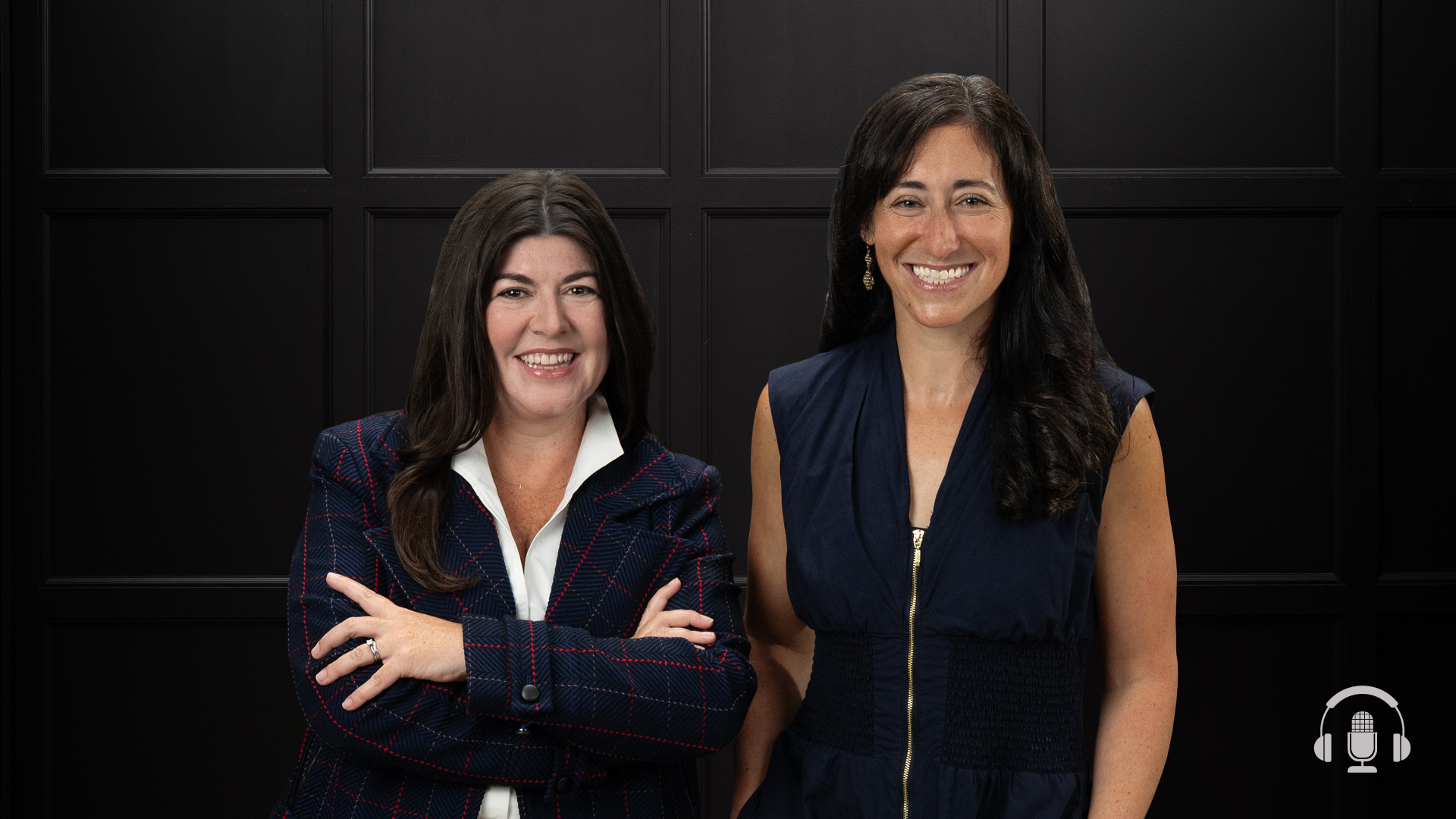
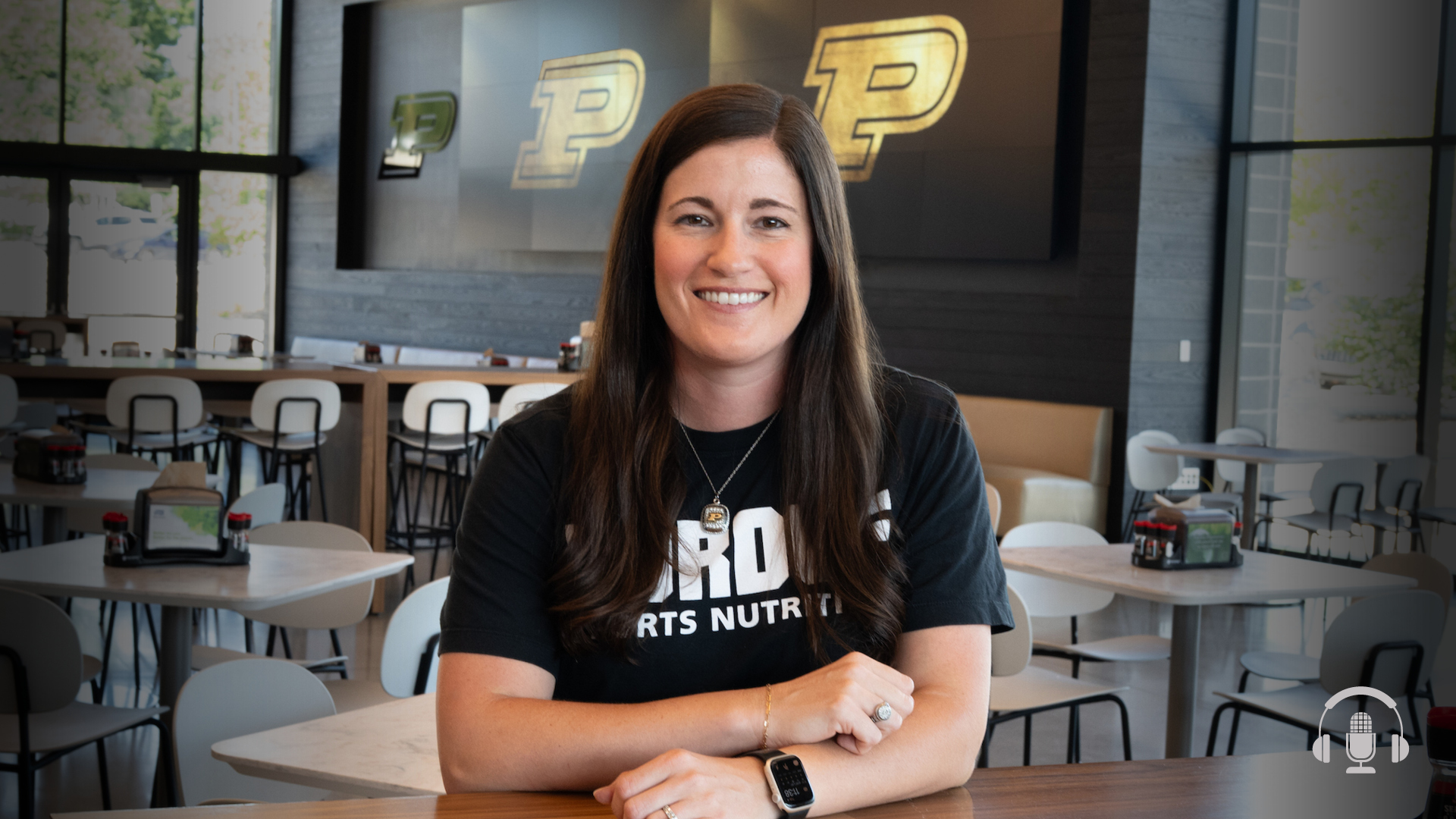
In this episode of “This Is Purdue,” we’re talking to two professors in the Daniels School of Business: Allie Gabriel, the Thomas J. Howatt Chair in Management in the Organizational Behavior and Human Resource Management Department and director of the Center for Working Well, and Kate Zipay, associate professor of organizational behavior and human resources.
Allie and Kate are leading experts and researchers on employee well-being, work-life balance, performance and motivation. They were recently nominated for the Thinkers50 Radar Class of 2026, which recognizes 30 emerging management strategists from around the world.
This award-winning duo joins the podcast for a thought-provoking conversation about how professionals can retrain their brains to master productivity and focus in today’s digital age — at work and home.
In this episode, you will:
- Learn more about the difference between productivity and activity — and how “doomscrolling” on social media and constant email, Teams and Slack notifications can undermine our daily work tasks.
- Discover more about focus and cognitive stamina, like what these buzzwords really mean and how professionals can build their capacity for deep, meaningful work.
- Hear Allie’s and Kate’s tangible tips for retraining your brain to conquer digital distractions — like locking down your phone — and how they’re teaching their students to improve their digital well-being.
- Find out how to build a balanced “work diet” and why deep-thinking and low-stakes tasks are both vital parts of a healthy professional lifestyle.
- Dive deeper into how organizations can better support employee well-being and productivity and why leaders should start normalizing rest and recovery.
- Hear more about how “early bird” and “night owl” labels can inhibit our self-growth and how to plan your work schedule around the times that work best for you while still being collaborative.
- Explore why high performers are more susceptible to burnout and how rethinking your identity as a “doer” and setting boundaries can help improve your overall well-being.
- Learn more about Allie’s and Kate’s goals for the future and how Purdue is at the forefront of performance, productivity and well-being research.
- Gain insights into using AI to enhance productivity — and why it can give users a false sense of efficiency due to a lack of psychological ownership.
You don’t want to miss this episode with two innovative Purdue business professors and researchers who are transforming the way we work — and how we take care of ourselves.
- Watch the full video interview
- Learn more about Allie Gabriel
- Learn more about Kate Zipay
- Learn more about Purdue’s Center for Working Well
- Learn more about the Daniels School of Business
- Learn more about Allie and Kate’s Thinkers50 recognition
ICYMI: This is the second time we’ve hosted Allie in our “This Is Purdue” studio! She was previously featured on a fascinating episode about workplace well-being and burnout recovery — which was one of our most popular episodes of last season. Be sure to give that episode a listen or a watch if you haven’t already.
Podcast Transcript
This is Allie Gabriel.
And this is Kate Zipay.
And you’re listening to This Is Purdue.
Welcome to This Is Purdue, the university’s official award-winning podcast. I’m Kate Young, your host and a proud Purdue alumna. This Is Purdue is all about sharing big ideas that spark broad interest and get people talking. We’re passionate about highlighting notable Boilermakers who are powering innovation and working together to solve today’s toughest challenges.
Tune in to each episode as we have engaging conversations with Purdue alumni, faculty, researchers, coaches, and more who are inspiring change through small steps every day across timely topics like sports, well-being, emerging tech, and life-changing research. Join us as we discover how these Boilermakers are taking their next giant leap.
We are really overconfident in how good we are at multitasking, how good we are at switching, how good we are at being on the meeting, but also trying to edit a document at the same time. You’re like, oh, of course I can be on the Zoom meeting, camera on, and still edit this really other important thing and look like I’m paying attention. It’s like, no, you don’t.
In this episode of This Is Purdue, we’re talking to Allie Gabriel and Kate Zipay. Allie is the director of the Center for Working Well within Purdue’s Mitch Daniels School of Business, and a nationally recognized expert on employee well-being. You may recognize her voice from a previous This Is Purdue episode, where she discussed workplace well-being and tips on avoiding burnout.
Kate is an Associate Professor of Organizational Behavior and Human Resources at the Daniels School of Business. Her expertise focuses on how people develop a healthy relationship with work, including how experiences outside of work shape well-being and performance.
Now you all are in for a treat with today’s episode. Allie and Kate are not only Boilermaker colleagues, but friends in real life as well. And you’ll be able to tell, trust me. Their collaboration and communication is effortless. These two are digging into the difficulty of prioritizing deep focus time while remaining productive in today’s digital day and age.
Between the constant distracting pings of texts and Teams notifications to the subtle trap of popcorn brain, have our attention spans been systematically taken over by technology? These two are sharing tangible takeaways to help us reclaim our cognitive stamina.
Whether you’re fighting attention residue from a flooded inbox or just looking to build a better deep work routine, this episode is your blueprint for retraining your brain for larger, deep-thinking tasks, outsmarting the temptation of your precious phone, and finding your focus again. Allie and Kate kick things off by tackling productivity and what it actually means. So let’s get to it. Here’s my conversation with Allie and Kate.
Allie and Kate, thank you so much for joining us on This Is Purdue. We are so excited to get into today’s topic. Allie, you’re a returning guest on This Is Purdue. Thank you so much for coming back. I’m glad. I guess I didn’t ruin it the last time.
No.
In fact, you were one of our most popular episodes of 2025. So you specialize in employee well-being, workplace well-being, and you are the Director for the Center for Working Well within Purdue’s Mitch Daniels School of Business. And, Kate, welcome.
Hi. Thank you!
So you are an Associate Professor of Organizational Behavior and Human Resources within DSP. And we are going to get into how we can retrain our brains. It’s a world full of pings, and dings, and distractions. So how can we really focus on productivity and having a healthy work life?
Yeah, I think one of the first things we can think about is making sense of the difference between productivity and activity, feeling really busy. With all of the pings, and emails, and meanings that can fill our day, we can be really, really busy and still not actually very productive. And so we can think of that activity as quantity, like we’re doing a lot. But then productivity is that value. Like, are we actually making progress towards our goal and actually adding value to our organization or working towards our own goals?
Sure. And then it’s an American trend when we’re talking about we have to stay on top of to-do list. We have to be productive. So, Allie, do you think it’s been harder for working adults lately in these past few years, especially with all the doomscrolling, and TikTok, and Instagram, and YouTube?
Yeah, it’s really interesting. And I feel like we actually talked about this the last time I was here, of just like that constant connectivity that people have. And it’s all forms. So you’re constantly connected to a phone that’s giving you your email, but also your Teams channel, and your Slack, and whatever other method you’re using to communicate. And then right over here on the other side, you have YouTube, or TikTok, or Instagram. Like, my guilty thing is Instagram and LinkedIn. I’m on LinkedIn an unusual amount, just scrolling through things.
You guys are are rock, stars on LinkedIn.
Oh, thank you.
[? They’re ?] [? like ?] a puzzle.
Yeah, yeah, yeah. But I feel like there is that– we have gotten really bad at sitting still and not constantly doing something. And these social media platforms, they were designed to be addicting. There are people actually working in these platforms and these entities to make you scroll more, to pull you back in.
So I think because of that, the doomscrolling and this constant connectivity to work is all feeding into the same problem, which is people are not taking time to rest, to recover, to sit still. And that can create even more pressure than if you are doomscrolling and you’d be like, oh, I just did that too long. Now I’ve really got to be busy and I’ve really got to take on more to make sure I’m catching up and I’m keeping on top of things.
And obviously, people who work from home or in an office, they can end a meeting and start scrolling, right? Are there any industries today that you feel are protected from this digital distraction?
No. We had coffee this morning to puzzle with this. And I did think really, really hard. I had a dentist appointment today. That’s a lot of time in a chair to just think there while [? they’re ?] grabbing something.
A dentist?
Yeah, my dentist. So I think there are some professions where you will get larger chunks of time where you naturally will be away. But then how quickly do you get back into that? There’s actually really interesting data coming up on even like doctors, healthcare providers, maybe they’re doing a procedure, but then they actually are side hustling on these online medical platforms where they’re giving advice or they’re doing social media.
So I think certain industries maybe make it easier to do it more constantly. But even the ones where you have a larger chunk of time. Like, obviously when we’re teaching here at Purdue, we are not in the middle of a lecture being like, you know what, guys, let me see what that video is on my Instagram feed. That won’t be on Kate’s Instagram feed.
But then immediately after, what do I do if I’m walking out of the classroom and I’m walking to the elevator? I’m definitely on my phone. I’m scrolling LinkedIn. I’m catching up. I’m seeing who texted. I think it’s less about what industry and maybe more about the structure of work, which is something I think we’re going to talk a lot about today.
Yeah, let’s get into focus versus productivity. How would you define the deep focus and cognitive stamina, Kate?
OK. So focus is really where are we guiding our attention. And we can certainly picture up times when we’re losing that ability to really focus. But then when we’re thinking about that stamina of how long we can focus, how long we can endure a mental challenge or a puzzle. And I find myself doing this too, right? I’m stuck on a problem, I’m writing for my research, and I can’t quite figure it out. And then suddenly I think oh, the answer must be in my Instagram scroll.
Right?
It’s got to be there.
No, it’s sourdough. It is. How to fit in 40 grams of protein before 10:00 AM. It is parenting hacks. What is not there is really sitting through that struggle and allowing myself to think and practice that struggle that I can stay in the work and continue persisting through.
I think the other puzzle piece there is that not everything requires that level of cognitive focus. And so starting to really think about what type of work we have that requires that and how do we build up that stamina, and then what parts of our jobs just do not need that level of focus or cognitive stamina to keep persisting.
My emails, I do not need to pore over them and grapple with them. A few typos, it’s going to be fine. We can keep moving in a productive way. And so starting to discern where to put your focus, if it is on the highest priority. And for the things that require deep focus or deep work, that you are building that skill and practice of sitting there and persisting through, instead of tending to those pings instead of sitting with the discomfort.
That makes sense. That’s great. Allie, according to a 2026 survey from the Pew Research Center, 41% of US adults say they’re constantly online, which we were just talking about. Have our attention spans just been systematically taken over by technology, in your opinion?
I think so. And there’s some really interesting data coming out of– Microsoft has a work trend index. And they are documenting through those data points how so many working adults are waking up to full inboxes, full Slack channels, full Teams messages. I don’t even look at my Teams. That’s just not a place for joy [CHUCKLES] because it’s just piling up.
And so when you think about waking up first thing in the morning and you pick up your phone, not only do you have social media notifications, but now you’re also waking up to the fact that your colleagues maybe were working throughout the night or they beat you in the morning, and they’re up earlier than you, and they’re already flooding your inbox.
And so it is creating this sense of everybody is working all the time. It starts to breed this sense of, therefore, I can never stop working. And that’s really the puzzle. That’s the bad place when you get to the point that you think, hey, everybody else around me must be working like this. Therefore, I must work like this. This is the only way to work like this. And I don’t want to deviate from that because then I’m going to look like I don’t care or I’m not as committed as the folks that are firing off these teams messages at all hours of the day.
Do you have any tangible tips on how we can retrain our brains? Maybe putting your phone in another room or just getting out of that temptation of reaching for it and scrolling?
Yeah. Kate has some really cool practices. I do think you can train your brain to do this. Technology, it mimics an addiction. It’s why we all find ourselves– none of us right now have our phones. And I bet when we walk out of here, maybe we won’t do it because we’ve been talking about it, but the odds are high. If we were, we’d probably all would flip our phones and immediately be on it.
And so having docking stations away from places where you’re supposed to unwind. I’ve actually seen on Instagram, which is maybe a bad place to have this conversation, but people having this movement of getting shelves or even cords that they can plug into their kitchen to leave their phones and mimic the phones from when we were growing up that were attached to the wall and trying to remind ourselves that this is just a phone. It’s just a device.
So I have a few practices that I implement my own life to model these things. So one is I use a device that locks down different apps at different times of day. I am one of those people that if I wake up in the night, will reach for my phone, and I cannot ignore that red circle that says I have an email and check it out. And so for me, if I do reach for my phone at night, then I can’t access those apps, I go back to sleep. That is great.
Another practice I have is that I do not do any work until I finish all of my coffee. And so I read a book.
I love that.
I sit and stare. I water my plants, whatever it is. And there’s lots of evidence that building in these rituals and practices make it easier for us to maintain it. So if I had this kind of ambiguous goal to not get into work until I’m feeling ready, that is harder. But when I have the metric of when my coffee is done, then I’m ready for my day.
And then the other thing is, I’m a hobbyist of all varieties. I’m not good at hardly any of them. But I carry around a bag of a lot of different types of analog hobbies, sketchbooks, a Sudoku puzzle, a Rubik’s cube. I’m a puzzle gal. But those things are tempting to me, too. And so then when I have downtime, if that is just as accessible to me as my phone, or even more accessible, then that desire for entertainment, or activity, or interest is fed by something that might be healthier for me.
The other piece, I was thinking about the boxes that you were talking about. I brought that into the classroom in my leadership class. And so part of being an effective leader is starting to understand how our own habits are affecting our own productivity and how we relate to people, but also helping others better manage these things.
So they have a box that locks their phone in, and they set an amount of time. And during the week that they check out this box, they have to use it in at least one social setting, one academic setting, and then this year, I added by themselves. And then they write a reflection and we talk about it in class each week.
And it’s been pretty profound for the students. They don’t like it uniformly, but they feel the discomfort and the growth. And so I have some really positive stories from it. A student kind of started her reflection, “this was the best week of my college experience.”
Oh, my gosh.
Right. But such an awareness that she had spent more time with her roommates, and socializing, and she got more of her work done and so she had more time to socialize. But then other students have talked about the time alone and putting it in the box there, that it was a bit disturbing to just be with their thoughts and be with themselves.
And one said they had not spent that much time by themselves since they were given a smartphone in middle school. And so having these small moments of awareness and practices changed the culture in my class. Hopefully planted a seed for when they are in organizations or there are so many of them are working remotely, that they are thinking about that box and how they can simulate it. Maybe they’re not locking it in a box, but they’re plugging it in another room and really thinking about the benefits that it had to them.
As soon as you said, when you’re by yourself, I think that’s my most guilty offense, is when I’m by myself is when I’m doing my most scrolling and being on my phone. And even when I go for walks, I’m listening to a podcast. I have something.
Yeah. And it’s interesting, though, I think when you build in some of these practices and habits, you realize like, nothing was that urgent. I locked my phone away for an hour or I left my phone in a different room to charge and I didn’t look at my email from 8:00 PM onward. And you come back to it and you’re like, oh, this was fine.
For most jobs, that is the reality. That nothing is truly that urgent that needs or requires that please respond ASAP kind of level of urgency. But I think because we’re so used to being busy and we’re so used to being productive, everything starts to hit that decibel, and we don’t have a lot of good mechanisms to turn it off.
For sure. When we talk about deep thinking and focus, like you were saying, Kate, how are these deep thinking tasks different from these more low stakes tasks? Sending an email, maybe cleaning up your calendar. Is there anything that you recommend at the beginning of your day, maybe you’re knocking out those low stakes tasks, or any science or research behind that?
There’s two ways to tackle this. One, Allie and I have been having a lot of fun using some kind of food analogies to make sense of our relationship with work. We have a lot of language about our relationships with food. And we can use those analogies to make sense of these in surprising ways.
So one is building a balanced work diet, if you will. And we can picture that there are tasks that are more nutritious, if you will. They maybe require a lot of energy and focus, but they are rich in what they give back. They are kind of core to your task. You really want to prioritize those in your diet. But we can’t just eat plates and plates of avocados all the time.
Like, this is an avocado. We can’t podcast all day. We would collapse and be like, that was not a good use of our day.
And so you’ve got your, like, iceberg lettuce, if you will. This is your emails. The basic tasks do not build a whole career of responding to emails, but certainly it has to be done. We can have plenty of that on our dish. And if there are other things in there that are low effort but high value, I mean, acai berries or something, I don’t know.
But then there’s also the a bit more indulgent category, kind of fills you up but doesn’t really move things forward, and Allie and I have dubbed those work Cheetos.
No disrespect to the Cheetos brand.
I love Cheetos! OK. But you know when you’re just filling yourself up on junk food and it’s not what you need. It is very tempting. You feel full. And the goal is not obsessive diet of no Cheetos. It’s knowing which parts of your work tasks are those parts of your work. Sometimes it’s like, for me, meetings before meetings and meetings after meetings, and there’s a little utility in there and a lot of waste or–
Like gossiping, politics, things where on the surface you’re like, no, this is productive because I’m learning, I’m learning who’s in the room. I’m trying to understand. But still, maybe there was some small piece of utility, but also, it’s consuming a lot of energy. It’s filling you up. And you’re still going to walk away from your workday being like, what? And we’ve all had that feeling.
What did I do today?
Yeah, what did I do today.
But I’m exhausted.
Yes.
And then on the other side, now I’ve popped in Allie’s office before and said, “hey, do you have some time for some Cheetos?” And it gives her some autonomy and a chance to discern whether today she does have space on her plate for something that isn’t as productive or right now, she really needs a nutrient-rich day and she can move forward like that.
So these tasks are different depending on your job. But starting to think about which tasks are doing what for you. And then if you’re thinking about the morning, to the extent that it’s in your control– I learned the hard way, when I teach, I am a bit brain fried in the afternoon. And so it is unrealistic for me to teach all morning and then block deep work time to solve a really critical research problem.
But then previously, I probably would have done that because I was worried that I needed to work on my research every day and that I needed to seem like I was making progress, instead of recognizing that it was not really productive hours. And so starting to scaffold or sequence your tasks in a way that is more productive.
For me, that means that actually teaching in the afternoon, I can teach a bit brain fried. It’s a different kind of movement and energy. The students bring great energy. And I could get research done in the morning. Or more realistically, I spend that afternoon on some other types of tasks and teeing up a really productive, focused day on that heavier cognitive work the next day.
Yeah. Allie, let’s dig into the early birds versus night owls. How do you know which one you are?
Yeah, I think I was like, I think I’m a night owl, but I don’t work late at night.
She’s a sleeper.
Yeah, I just go to bed. I will say, there is some science behind this, that some people are more oriented towards working really easily in the morning or feeling like they work their best in the evening. I will say there is a trickiness to labels. I think people can lean into them too far.
And so something that makes me nervous when we think about work from this lens of, oh, well, I’m an early bird, so that means I need to work from 7:00 AM till 3:00 PM. And then you have somebody who’s a night owl and they’re like, well, I am really great from 11:00 AM till 8:00 PM. And now you put those two folks on the same team. And they’re really leaning into this part of their identity. They’re like, no, I just cannot. Yeah, this is how I am. It’s fixed. It’s set.
And I worry about labels like this because we do need to find ways to collaborate, to not let our decisions of how we approach our work create burden for other people. And so instead of being like, well, I’m a morning person, I’m an evening person. What if we flipped it and just said, when do I feel like I’m at my best and how can I facilitate tasks that best align with that, right?
So maybe it’s less of, I’m only going to work now and I’m only going to work now, but more of, well, we have a common set of hours and I really know that that’s what I’m good at collaborative work. Because I think that’s what people are saying when they say that, is they’re like, well, I’m good at the deep work, I’m good at doing the writing during this particular time.
And so I caution folks, and this is a caution for any type of label we can put on things, whether it’s the night owl, early bird, whether it’s a BuzzFeed survey, or whatever it is that you’re taking to try to diagnose and make sense of it, is to remember that it’s not as much the label but more about how can you tune into what feels most adaptive and productive for you. And also, this is a good reminder to remind folks like should just go to sleep. A lot of things in our world, I think, could be solved by drinking water, probably eating protein, and just going to bed, and just taking care of those basic instincts.
And a lot of these statements, like I am an early bird or I am a night owl, for me, bells are kind of sounding on a really fixed mindset. And what is really going to help people navigate being well and being productive is a much stronger growth orientation.
And so when we claim that one identity, it has kind of an implicit, and that’s just how I am and I’m not going to change. And that’s not really how our brains work either. We have defaults. And then we also can override those things with practices, and habits, and flexibility. And so cautioning that if we use that as a cop out for some really adaptive behaviors, we might be missing the point.
And I think that labeling, it just doesn’t work the way most work is structured. You don’t get to be so autonomous in what you do that you don’t have to think about the consequences.
Nobody’s having a Teams meeting at 7:00 PM. That’s now how our days are structured.
Right. And so I think that’s the part that always makes me nervous. And we’ll see it in the classroom, too, with students, like, well, this is how I have to work. And it’s like, well, if that’s your approach, how are you going to be coachable, receptive to feedback, resilient when other people need you to work in different ways? And so I think parts of the conversation today and our thinking has been less of labeling people and more of how can we help you shift and flex the mindset and the approach you’re taking to work.
I love that. Kate, what’s the trade-off between well-being and productivity? Is it possible to center both of those in our lives?
So we see this trade-off is really adopted without really challenging it or problematizing it. And in the short term, it often is, right? I’m going to keep working and shorten my lunch. Or for me, my workouts are quick to go in favor of trying to wrap something up. And so we create these structures where we are treating them like trade-offs. That in order to perform better, I must sacrifice some other aspect of my well-being. And that mental model is really what reinforces that trade-off. It reinforces it in organizations. And we build a lot of cultural language around making those trade-offs and sometimes celebrating those trade-offs.
And so there’s a different way to think about it that would be more adaptive or adopting a mindset where you are thinking about how those are synergistic, and interdependent, and working together. There’s actually a lot of research that would support those things.
Burnout is not a great performance strategy. Yet that is the one that we often adopt because we assume that that trade-off is really the only option. And for me, this looks like putting myself in that mindset of understanding what that relationship between my well-being and my performance looks like, and am I making choices that allow both to sustain in a meaningful way and override that system that says, I must be performing well because I have a late lunch. And thinking that actually I need energy to persist, and I probably could perform better, faster, and with more clarity if I tend to those well-being aspects of my life and consider them systems that are working together.
What organizational policies or workplace practices make it easier or potentially harder to sustain productivity and well-being?
I empathize with our HR practitioner colleagues that are often kind of bounded in the offerings that they can give to employees. And these are great things, like more PTO, or flexible work arrangements, or mindfulness apps. But a lot of these are predicated on the idea that work is going to be challenging, and depleting, and wear you down. And then we are going to give you things outside to try to fix those things on the outside, either allow you to better cope with it or take a break from it. But the assumption is that it’s still going to be rough when it’s there.
And so Allie and I are asking a little bit different question or nudging organizations to ask a different question. It’s like, what can we do about the work itself, how people relate to the work, engage with the work and manage their work so that we don’t need to just focus on all of these reactive solutions, and we could actually use that PTO for fun, and enjoyment, and creativity and not just recovering from something that was really rough.
Yeah, because the tricky thing with policies and practices is it’s one thing to have them in place, but it’s another of how they’re used, how they’re reinforced, what the values are. A story or an experience I had that always will stand out to me is it was right before I was about to have Evelyn, our youngest, which I said, I’m having flashbacks sitting here because she was like five or six months old. Now she’s almost 18 months old.
But I remember talking to my colleague right before my leave and she was like, “how are you feeling?” And I was uncomfortable, not enjoying this anymore. And he said to me, “I just want you to know how important it is what you’re about to do.” And I thought he was talking about having a baby. I’m like, “yeah, I’m aware.” I got the– yeah, I got the– yeah, yeah.
And he’s like, “no, no,” like, “what you’re about to do with your leave. That you’re about to, as a senior faculty member here in the Daniels School, take the leave, take it fully, and mean it.” He’s like, “because you’re now signaling to other people that when they have a baby, if they are more junior, if they don’t have tenure, if they feel like they’re in a more precarious spot in the school, they’re going to look to that and say, ‘no, that is allowed, and it’s encouraged and supported. ‘ ” And you could put other well-being practices in that bucket.
I do think that leaders underestimate how much their language and what they reward explicitly or implicitly shapes how people approach their well-being. We have data that essentially, if you take time away from work, if we don’t fix work and we just say, well, you’ve just got to recover outside of it, if leaders send signals that good employees are the ones available 24/7, that they respond very quickly, it does not matter what your company’s PTO policy is.
What happens is that people who do recover now feel a lot of guilt. They feel a lot of shame. It takes something that should be restorative and actually hijacks it and says, no, I’m being deviant. I’m doing something now that is so antithetical to how this place works and now I actually need to do more. And what do they do? They burn themselves out. They report poorer work-life balance. They’re less engaged.
And so thinking not just about, hey, we have this great policy and practice, why is no one taking it or why isn’t it working. It could be lots of things, but I would suspect it is about the cultural norms, and the conversations, and how people use it, and talk about it, and then what cues they get back after they do so.
So PTO policies, good. A manager that takes PTO, great.
And talks about it and says like, oh, man, that was great.
Flexibility in your work day, nice. A manager that says, I’m using that flexibility to take my child to a baby music class in the morning and still is getting all their work done, even better. We need examples in normalizing and celebrating that people can work in that way and not have to either do it secretly or not do it at all.
Yeah, and I imagine if you saw your boss taking Friday, Mondays off and never taking a full week, you’re not going to take a full week.
Right.
Right. you’re going to be concerned about it. And particularly for folks who– because there is– and I am puzzling with this, like the privilege of getting to have more, quote-unquote, “balance,” which is the term that I despise. I think it sets really unrealistic expectations. And we should probably say that the goal of what we’re talking about here is not this perfect pendulum where your work and your non-work lives and your performance and your well-being are perfectly in balance with each other. But rather you are able to flex those differently and in sync with each other, knowing that some days work may need to be more prioritized. Other days, you may have an easier time with well-being.
–healthy and it feels like you are in control. And that you are living your life. And life is not just happening to you, [? where ?] [? your ?] life is happening to you.
Yeah, I actually used that phrase to Kate last week. We were talking. And I was reflecting on the spring. And it was really busy. I was teaching all my classes. One was new. We were planning a conference for the Center for Working Well. And I said, “wow, last semester, it felt like work was happening at me.” That I wasn’t having autonomy or really able to think about that. And that was startling. I think it startled both of us to say it out loud.
To that point, so Allie and I have several different buckets of work we’re doing together. And that led to a conversation that we stopped something for months. And because it’s not actually urgent, even though we could have convinced ourselves that it was, and that there was inertia, and we could not possibly not do it, but we said, well, why don’t we take back control? Let’s just not work on this piece for eight weeks.
How freeing was that?
It was great. We relaunched yesterday.
Yesterday. It was great. It synced up with vacations and really meaningful pauses. It allowed me to pivot to this new role that I have at Journal of Management, editing. It allowed Kate to lean into really meaningful research projects that she was getting out into the world.
And it was a conversation that needed to happen and maybe didn’t feel comfy all the time, because we care about it and we had to name it, saying, hey, this is not the moment and what will it look like when it comes Back. And now I think we both feel more energy because we knew when enough was enough and we were at the point of enough.
This is the perfect segue because we’re talking about high performers and burnout. And so you both presented a session at Uplift 2026, which is a conference hosted by BetterUp. But it was all about how high performers are the most susceptible to working the long hours, and being available, and not eating lunch. So why is this?
I’m pausing because I think we are high performers. I think we’ve allowed it.
We come to it in very different ways. One thing that stood out from that talk that we did together and conversations we’ve had since then, is that for high performers, all of these ideas– we talked about policies and structures– are really only part of the puzzle. They have what researchers call a doer identity. That this is kind of an identity issue. People see themselves as high performers. They see themselves as a people that are willing to say yes, to do more, to stay late, and that–
Your elementary report card probably said this.
These identities are deeply embedded from us far before we get to the workplace. And so we are asking people to do some deep identity work when we are asking them to rethink what it could mean to be a high performer. And that that might look more intentional. It might look more discerning. And you might need a new identity.
It’s hard to lose an identity. And so perhaps, it’s replacing that doer identity with an identity that you are known for somebody who is incredibly discerning with their choices. That are really healthy. I’ll go with that, that option, healthy and discerning. And so perhaps there are better things to be known for than just doing and doing and doing.
If we go back to the first part of our conversation, separating doing from creating value. And so maybe it’s the value creation identity. And that allows for high performance and rest, fun, well-being, interests outside of work. There’s a lot of space if we give room for productivity to be interpreted differently.
Are there any specific tips, hey, all the high performers are out there listening and watching, how can we set some boundaries, just one or two ways?
I think we can each speak from personal experience. I think we both approach this. I’ve gotten better at this, like thinking of how this got ingrained from a really young age. And I just became really identified with being the person who has a lot of capacity and who can take it all on. And I’ve had to get better over time of waving the flag, saying, actually, I miscalculated. [CHUCKLES] I didn’t calibrate this correctly.
And so what are some things that this looks like day-to-day for me now? It looks like an inbox that always has emails in it, which sounds really silly to say. But I would have such pressure and almost a compulsion to look at my inbox as something that had to be fully cleared every single day.
And we’ve already talked about this a little bit. Some of that meant I was spending time on things that truly weren’t urgent. Some of it was expecting myself to handle things that took a lot of cognitive load. Read this draft of a manuscript, make a decision on this paper, evaluate this student for this really critical milestone. And I’m thinking that staying up till 10:00, 11:00, midnight is the way to achieve that so I can go to bed and have 3 minutes where there’s not something in my inbox.
So I think for high performers, you might look at your inbox and say, oh, this is my to-do list for today. And instead, it’s really required taking a step back and thinking about my week, the arc of my whole week, in case you have a different variation of how she manages her week, and saying, OK, what do I think are going to be my high energy days, what might be some of my days where I need to bank on being a little less attentive or having less capacity.
And let me then not be bothered by the fact that there’s these seven-eight emails, knowing that I will get to them when I’m at my best and I feel at my best, and that there’s nothing that urgent in there. Now, certainly, things can come in and hijack your day. We need to respond to that sometimes. But I think viewing it less as a to-do list and more of this is the realm of possible things I could choose from is a much healthier approach.
And there are very, very few emergencies in academia. And just reminding, at least our own colleagues that, not that kind of doctor.
Yes, we’re not that kind of doctor. No one’s calling for us on the plane.
[LAUGHTER]
So I have a practice that was coming out of this research that we’ve been working on. And so on Sundays, I take a look at my calendar and I am trying to cancel at least two meetings. And when I say this often, like–
She’s done this to me, I want to be clear.
Like, how could we? How could we cancel two meetings? Here’s the thing, I’m not looking for Slack or just bandwidth. I’m not just looking for more space. I’m actually using that as a practice to add discernment where I hadn’t added discernment before.
So I think this is a universal issue. Somebody reaches out, wants to meet or have a conversation, it’s probably not the best fit for me and what I need to focus on. So instead of saying, no, thank you or have you met this person, that might be a better fit. I look at my calendar– and I’m kind of running on a three to four week busy cycle. So I look at my calendar, and you know what, four weeks from now, I’m wide open. And so I schedule them as if I’m going to have a totally different job four weeks from now and it’s not going to get filled with a bunch of other stuff.
And so I’m looking for those meetings that I need to do the more courageous thing to say that this isn’t going to be the most high priority thing for me and go ahead and actually cancel that. I’m also looking for opportunities that I need to rethink who needs to be in the room.
And so sometimes, it is our ego wrapped up in, they need my opinion, of course, or those colleagues or co-authors need me to make certain decisions. And so this is an exercise in remembering or reminding myself who do I need to trust to do this without me.
So maybe I’m not canceling the meeting, but I’m canceling me being at the meeting. I’m also looking for meetings that actually just need to be decisions and work done. And so sometimes if we have a little bit of decision delay, then we put meetings, like, oh, we’ll decide in two weeks. But really, maybe it’s my decision and I need to make the decision, sit down, and communicate what that decision is. And so recalibrating with more clarity.
Now it’s getting harder because I’m getting better at saying no or yes. But then the surprising thing for me is that I’ve had a lot of years where I’ve thought about well-being and performance without a really discerning practice. And sometimes that meant that I had too rigid of boundaries and that I actually did have time, resource, and energy to do more.
And so my youngest is in grade school now, and I am finding myself with more parenting is less cognitively demanding, but it’s also less time demanding. And so I’m also thinking about ways I can amplify my performance so it’s not always a less. Sometimes it’s a, where I can do more, where I can enjoy staying a little bit later.
My husband and I have agreed this year to try fully owning mornings every other day. And so this morning, I was out of the house on a walking meeting before 8:00 AM, which before I would have thought that was maybe too early and that I was kind of keeping it in work hours. But that felt really good.
Yeah.
I love that. That’s tangible tips right there. OK, so let’s get into some of these productivity-centric buzzwords we have. We have popcorn brain. We have attention residue. Allie, walk us through these.
OK. We are really overconfident in how good we are at multitasking, how good we are at switching, how good we are at being on the meeting, but also trying to edit a document at the same time. You’re like, “oh, of course I can be on the Zoom meeting, camera on, and still edit this really other important thing and look like I’m paying attention. It’s like, no, you don’t. We all know.
What do you think, Allie? And you’re like–
Yeah, yeah. You’re like, oh, I think that’s a great idea, and now you’re on a committee, right, because [CHUCKLES] you agreed. And we just overestimate how good we’re going to be at this. And that’s where the attention residue comes in. Because if we are rifling through things, you’re like– so go back to my inbox. I’m trying to rifle through this and I’m trying to do multiple things at once, the last thing that I worked on sticks around for a little while.
Think about the last difficult conversation you had with somebody, whether it’s a family member, a friend, a coworker, you didn’t get out of that conversation and then say, OK, that’s done. No, your brain is still spending some time spinning. You’re like, is that, was that, did I sound like that? Is that what they meant? Did they mean to be mean? Was I mean?
Same thing with our work tasks. I’m notorious, if I am multitasking, I’ll send an email and then 30 seconds later I’ll be like, [GASPS] who did I address that to? Oh, my gosh, was that the right person? And then I’m going back and I’m panicking. And I have a very traumatic story of one time where it was not the right person. And I was like, oh, boy!
And so we need to turn off, and I have to wonder, how much is this correlated with how much we are constantly connected and our brains are getting used to having multiple apps, multiple tabs open. But we have to understand that we have limited capacity on a day-to-day basis. Our capacity to multitask is low. You’re not as good at it as you think you are. People know. [CHUCKLES] They can tell. And that these things are going to stick with you.
And so wouldn’t it just feel better to try and discern and turn that noise off and say, you know what, this is not the time. This is the time to sit in the Zoom that I did agree to and I decided that it is important for me to be in this meeting and pay it the attention that it deserves, right? As opposed to thinking that you can use that space to check off other things off of your to-do list. You’re just going to burn yourself out and be a bad colleague. Yeah.
I love that. That you’re not as good as you think you might be. So pivoting to your role at Purdue Center for Working Well, how would you say that Purdue is at the forefront of this employee well-being and productivity field?
Yeah. One of my favorite things about the Center for Working Well, besides getting to do this work with Kate. You’ve also had Kasie Roberson on this pod. Like, the whole team, the whole gang has been here. Yeah, yeah, yeah. I think one of the things that I like the most about the Center for Working Well and why Purdue is at the forefront, is we are creating spaces to have conversations like this, to invite students and faculty, but also community members, organizational partners of Purdue to really challenge these assumptions.
I think it’s a really beautiful thing that folks want to sit down and really puzzle with how they have been working. The most frequent client, so to speak, that the center works with on these issues is Purdue. It is. And that is the group we hear from the most saying, hey, we really need somebody to come in and talk to one of our development meetings or can you help lead a workshop? We need language around this, right?
The other thing that I love and that I get to see from my vantage point is that we have so many folks across campus doing this important work and approaching it from a very different lens. So I think we have an embarrassment of riches in the Daniels School of folks like Kate and others, myself, who are studying these issues, teaching them, generating the next generation of scholars through our doctoral students, through a program we just ran the last two days called The Emerging Scholars Program, where we are identifying pre-doctoral students to start talking about these challenging issues.
But we also have folks then from public health, and sociology, and hospitality who are saying, no, this is not just a business school conversation. This is a human conversation. And if you are in a discipline where you have to interface with people, which is pretty much everybody, even the vet school– they have folks affiliated with our center, too– that this is a conversation that’s worth having. That this is not a badge of honor to just decide that as a profession or a discipline that it’s OK to burn out. But rather there’s a better way of doing things. And I’m just really grateful that Purdue believes in that and is creating platforms and opportunities to talk about it.
Kate, you and Allie were selected in the Thinkers50 Radar Class of 2026. Congrats. That’s exciting.
Thank you!
And this recognizes the world’s top management strategists. So how does this achievement inspire you and Allie’s future work?
Oh, gosh, it has been an awesome opportunity and a reminder that our ideas are worth sharing. And that with that maybe as a responsibility, I think it went from, oh, my gosh, us to yes, and. This feels important to make time to get out of our academic spaces and have these conversations. That there is an appetite or even a hunger for evidence-based conversations around performance and well-being.
And it gave us a little bit of a boost to say, we’re going to throw our names in the hat for different rooms to have these conversations, to represent Purdue, to have conversations with you on this, and just recognizing that there’s a lot of spaces we can have these conversations and a lot of ways that we can make impact. And that part of the value of being a professor and a researcher is really embracing that responsibility and pursuing those opportunities.
And deciding to do it together.
Oh, gosh.
Yeah. Yeah. It’s way more fun. It can be lonely if you’re puzzling with these things. And Kate and I were doing research separately for a really long time and naturally came to this sort of of work together. Came into it from very different approaches. I think it’s made it way more fun because it forces us to challenge each other’s assumptions. It’s helped us, I think, hold each other to account. Saying like, hey, you’re not being discerning right now or hey, you are working at really bizarre hours again. Is that intentional? And I think it’s been nice to have somebody who gets it, who wants to do it together.
Yeah, it’s just way more fun. Not totally surprising as we’ve been having this conversation, but we’re not just kind of colleagues and research partners, but we are actually best friends. We integrate our work and non-work lives in all of the ways. And for me, it’s just such a reminder of showing up authentically, challenging how work is supposed to feel and maybe what being a professor is supposed to feel like. And that, sometimes, it’s not that serious. That we can be really good at our jobs, and have a lot of fun, and do it with a friend.
And that for Allie and I recognizing there’s room for everyone. That the first time when we took a stage together in this capacity, there was about maybe 5 minutes in, and we looked at each other, and we could just communicate with our eyes, that there’s room for both of us here. And I hope that for so many more people, that there is so much space to collaborate, and have more fun, and be really generative in that way.
Well, and you two are so comfortable together. I imagine it would be much more comfortable presenting to hundreds of people with each other.
–having a chance to think right now while Allie’s talking.
Right. It was funny, though. So the first time we got to speak together as a duo was at Uplift, which was such a fun opportunity. It came from work that we got funded by the Center for Purpose and Performance at BetterUp, the seed funding, honestly, for some of these early ideas. And it was just so nice having a trust fall moment of, OK, there’s somebody on– like, if I fumble, she also knows me well enough to understand what I was probably trying to say.
And I remember after that experience, yes, there was physical space, there was psychological space, all the spaces available. And we love a good pre-mortem and postmortem on something. Although, we did it a little too soon to this talk, where 30 minutes before, Kate’s like, let’s talk about all the ways this could fail. Like, how could we fail? How could we flop?
–downstairs and I said, I forgot to do this before, but if this goes poorly, why, which is an important conversation in so many organizations. It is standard practice in many spaces when something fails to have the conversation of why did it fail and maybe less common to have the conversation of forecasting into the future, allowing yourselves to imagine the failure, and really naming what it might be. So we did that, but with only 20 minutes…
Yeah. So I wouldn’t advise that. I’d give yourself a little bit of an emotional buffer. But then after, we were able to sit with it and say, OK, now let’s talk about it again, and what went well, and now what are we afraid of, what are we nervous about, and what didn’t we like. And the only thing I could say is like, oh, the thing I didn’t like is I don’t know if we’ll get to do this again together. That was so special. So I hope that’s true.
And so extra thank you for inviting us.
Yes, yes, yes. Because I was like, oh, god, like–
[LAUGHTER]
We are here together.
The dynamic duo is back on This Is Purdue. Let’s get into AI. Super hot topic. We’re bringing it up in pretty much every episode. So trend reports indicate that searches for AI productivity have exploded since 2023, naturally. So when you look at the future of productivity, how is AI at the top of mind for both students and professionals, Allie?
It’s so complicated. And I think it’s giving a false sense of productivity. You can feel really smart, really fast through AI. You can say, hey, I need to do this report, or maybe you were me five years ago and you’re thinking, I need to really clear my inbox, so I’m going to use AI to be so productive, and get all these answers, and get all these drafts.
But there’s no psychological ownership of that work. It’s giving a false sense of productivity. If you were called in the room then and someone said, hey, tell me more about your thinking about this, how did you come to this decision, it would feel really bad to say, oh, I didn’t. Claude did. My chatbot did in 30 seconds and I gave it a quick proofread and said, sure, that sounds productive. That sounds accurate.
And so I think we’re always interested in finding the next quick fix. Right now, it’s AI. Previously, it was something else. There will be something after AI, too. So I guess stay tuned. Five years from now, there will be something new that has come up.
And my word of caution to folks would be, really think about how you’re using AI. And I know that’s been something that has been talked about on this podcast before by Kasie and others, and really think about, why am I doing this? Am I having AI help me be productive by pressure testing ideas. Like Kate and I love a good eye pressure test of, hey, we’re thinking about framing something this way. Take the approach of this type of audience. How would they respond to that? Getting an answer. But then sitting back with it. Again, not just being like, oh, that’s the solution.
Sit and think. The conversation here is not that different than when we were thinking about how to manage productivity and well-being, in that, for us, it really comes back to this idea of discernment. That we get out of autopilot and we really make intentional, discerning decisions. And so coming up with whatever your questions are before you use and how you use AI for whatever task you have.
So something like, is this good for my kind of value creation, is this good for me, and is this good for the people around me, that would get me to a lot of clear answers. Because sometimes, it’s pushing that deep work to somebody else, not good for others. And sometimes, it’s just less fun. A lot of things are not that serious. And if we try to augment, and leverage, and optimize, and whatever other “izing” feels good in the moment, then we are taking away some of the pleasures without a real gain. So let your personality be in your emails. Be human.
Have a typo.
I was just thinking, as you were talking, and I’m thinking about the whole arc of this conversation, I was like, oh, I think AI is the new work Cheetos. Because I think people are just hammering them, being like, oh, I could use AI to be so efficient, and so productive, and blah, blah, blah. And you walk away being like, I was busy today, but I have no ownership over anything. I don’t understand what I contributed. Now I’m going to have to keep up with that act tomorrow. What is that going to feel like?
If you were able to make really effective decisions as a team without a 10-page guide that an AI agent created, then when you show up with that 10-page guide, it’s kind of false productivity, probably. If it didn’t actually give a meaningful change in how you created value, then you might puzzle with that. And maybe it did. But really, asking a lot of questions around it, and making sure that you’re staying in control, and that you are the primary agent involved.
Yeah, don’t let AI make all your big decisions for you. That’s probably a bad day.
Well, we’ve covered so much today. And it’s clear that the modern worker is stretched in so many ways. You all feel it. We feel it on our end. What’s your best advice for us all to keep in mind when we’re trying to do our best?
Yeah, we have felt like we fall back to this question. We came up with this 2022, I think. When we first started, when Kate called me, two big phone calls with Kate. One was asking me if I wanted to move to a cornfield with her, which was the impetus for how I got here. But the second was around this idea of rethinking our connections to work. And she described how she was really puzzling with this idea of when have I done enough?
Like, what if we all asked ourselves more recurringly, when have I done enough? Have I done enough? And if that’s all that somebody listens to this and remembers, I think that’s such a powerful act, a powerful reminder that your enough is going to look different day-to-day. That your enough is not going to be the same as the person next to you, who maybe has different demands and different capacity, a different work-non-work life structure. And stop letting work really happen at us and instead say, when have I done enough, when can I step away, when is it the right time to step away.
And so many people are like, never. Or when my to-do list is done or when these external forces force it on me, I never feel like I’ve done enough. And so then for those people, it’s like, ask again tomorrow and keep asking yourself this until you start to build some clarity.
Because we’re not only asking you to then try to stop when you’ve done enough. Because past enough is the type of depletion and burnout that is really hard to recover from. And so we’re kind of working to train ourselves to be protective of our long-term performance. And so keep asking that question until you start crafting an answer that feels more aware, and more aligned, and more attuned to what’s really going on in your work life.
I love that. Well, I feel like I was chatting with my good friend Allie last year. And now I have two friends. So that was so amazing. And you guys have such tangible tips for people to take away. So anything else that I missed? Any last advice for our listeners?
I know. I feel like it’s like drink water, go to bed. But really think about, like, when have you done enough? Put less pressure on yourself to do it all and to get everything in perfect equilibrium because that’s not unattainable, and why would we want to exist in a world where we’re just striving for something that feels unattainable and makes us feel kind of guilty all the time?
Yeah, I just want it to feel joy-filled, and healthy, and productive, and that those things can all move together, and how wonderful when they do.
And practice discernment. I like that one.
Yes, be discerning.
I love it. Well, thank you both so much. It was a pleasure.
It’s been awesome.
Thank you!
We can’t thank Allie and Kate enough for joining us. What a fun and extremely educational episode. You can check out additional video clips with both of them on our podcast YouTube page by heading over to youtube.com/@thispurdue. Watch as this dynamic duo rate common productivity hacks and give a few pointers on what to do with a short 20-minute window in between meetings. And stay tuned, because This Is Purdue is launching something special on Monday, September 28. Be sure to subscribe to This Is Purdue on Apple Podcasts, Spotify, YouTube, or wherever you get your podcasts.
This Is Purdue is brought to you by Purdue Brand Studio. The podcast is hosted and produced by me, Kate Young. The creative team behind the shows videography, design, and writing and research includes Thad Boone, Jon Garcia, Cheryl Glotzbach, Ashvini Malshe, John Underwood, and Dalani Young.
Social media marketing is led by Maria Welch. And our project manager is Ryan Gu. Thanks for listening to This Is Purdue. For more information on this episode, visit our website at Purdue.edu/podcast. And head over to your favorite podcast app to subscribe today so you never miss an episode. You can also check out all of our podcast video content on our YouTube page at youtube.com/@thispurdue. And as always, boiler up!
[STIRRING MUSIC]