Grad student grateful for mentors’ role in her all-Purdue spaceflight
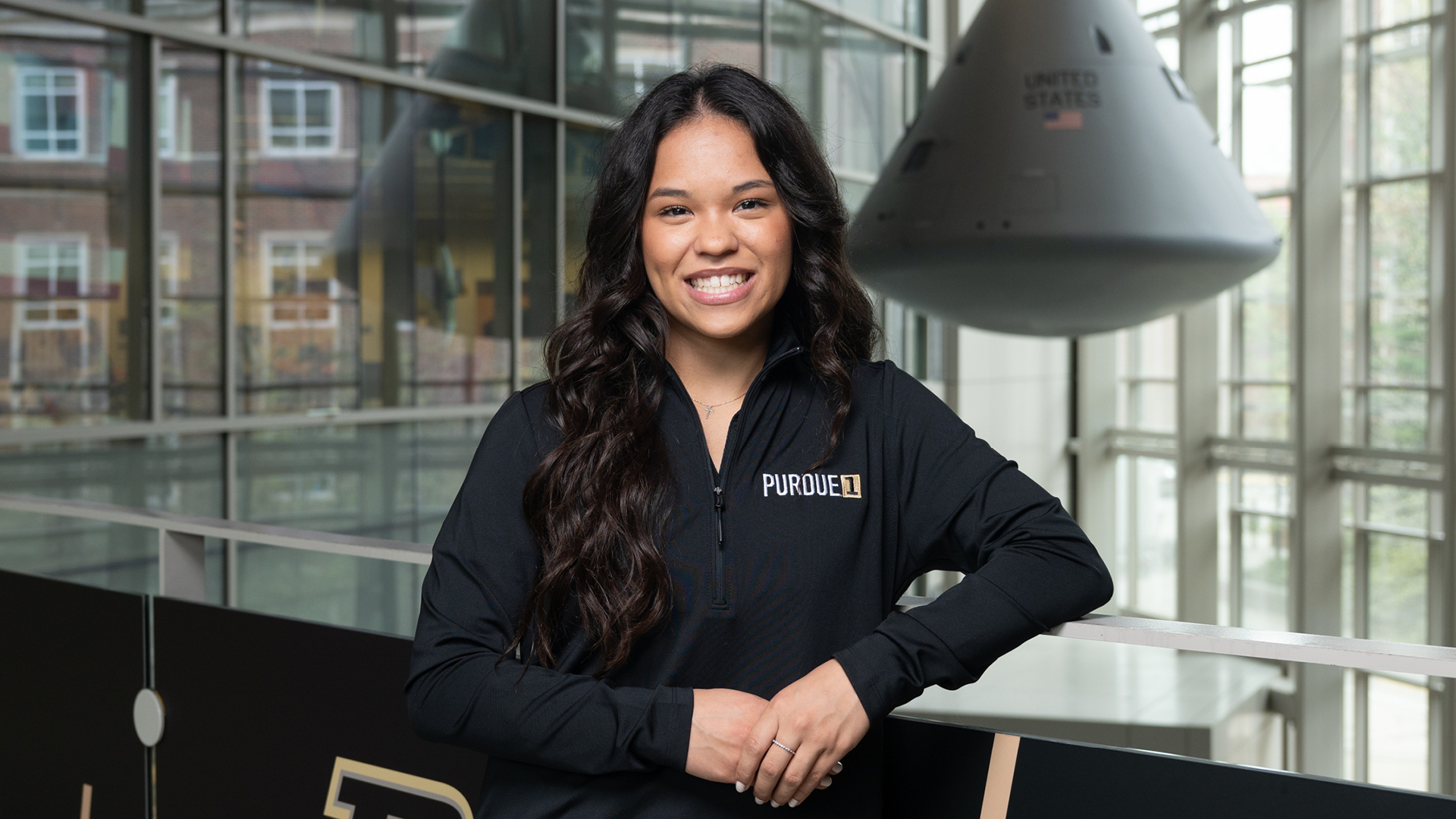
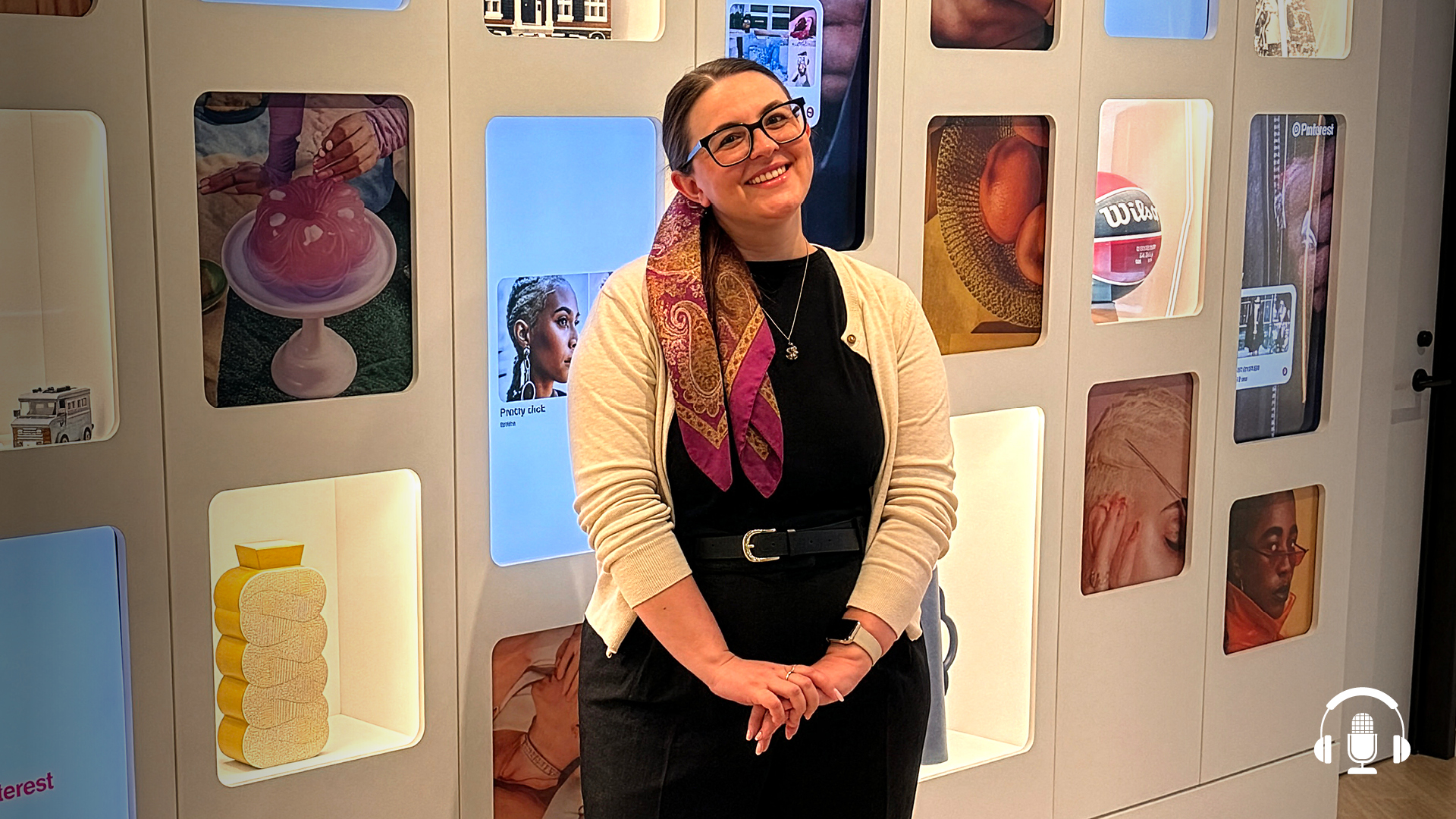
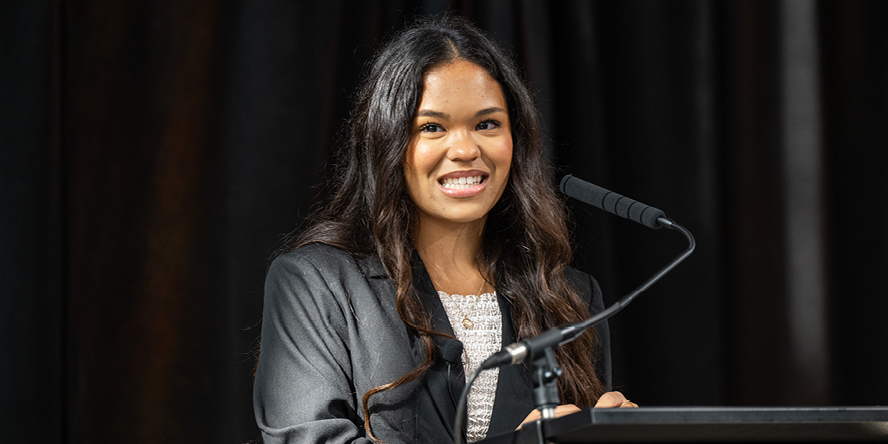
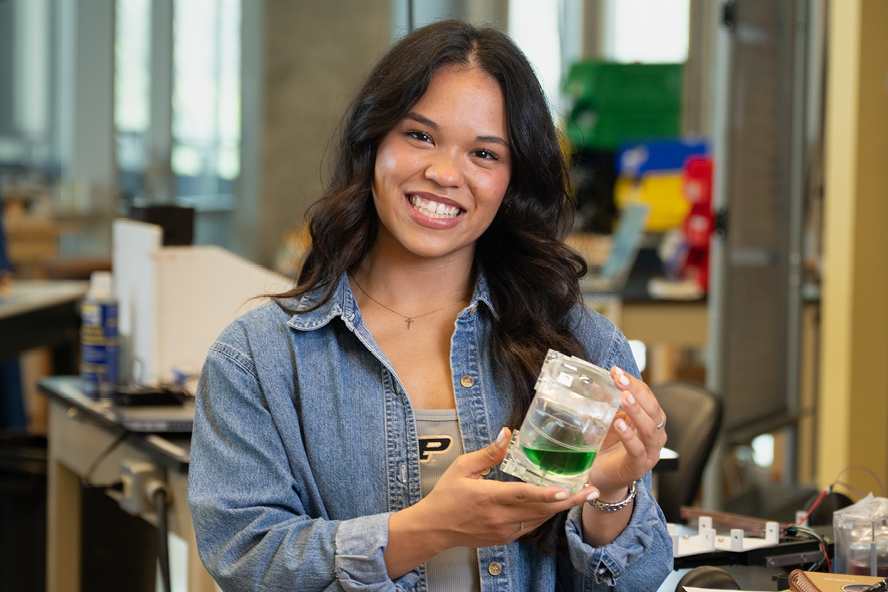
Purdue graduate student Abigail Mizzi is thankful for the many Boilermakers who helped her build the skills and knowledge necessary to participate in the Purdue 1 commercial suborbital spaceflight in 2027. (Purdue University photo/John Underwood)
On the Purdue 1 mission, Abigail Mizzi will become the first grad student to conduct research on a commercial suborbital flight
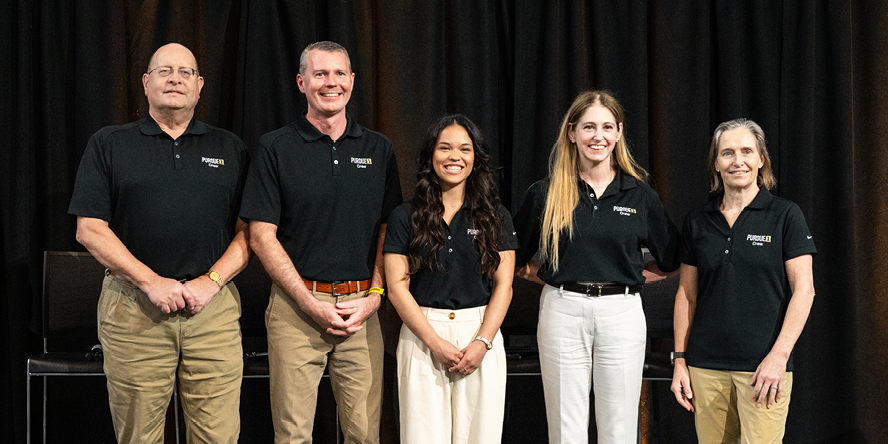
Note: This story is part of a series that will introduce each member of the all-Boilermaker crew who will participate in Virgin Galactic’s historic Purdue 1 suborbital flight in 2027.
Sometimes when Abigail Mizzi thinks back on the moment Steven Collicott invited her to join the Purdue 1 mission, she still can’t believe it happened.
“He said, ‘Do you have any concerns about going to space?’ Mizzi recalls of the life-changing conversation with the Purdue professor who will serve as the mission’s lead researcher. “Any concerns about going to space? That’s not something a graduate student has ever heard. I was just in shock and also trying to hold back tears because it was so incredible.”
But it was an honest question — and the offer was very real.
“The selection committee found her to be our best choice for this unique opportunity,” says Collicott, now Mizzi’s graduate thesis advisor in Purdue’s School of Aeronautics and Astronautics (AAE).
Mizzi (BS AAE ’25) was interviewing with Collicott on the recommendation of Dan DeLaurentis, whom she assisted in his research lab before he accepted a new position as Purdue’s executive vice president for research. DeLaurentis suggested that Collicott might have a promising opportunity for her, but Mizzi never fathomed that it would be this.
Not only did Collicott invite Mizzi to join him on the 2027 Purdue 1 mission — the first university-chartered commercial suborbital spaceflight, where all five crew members will be Boilermakers — he was also offering an opportunity the likes of which had never been extended to someone like her.
When she initiates her human-tended experiment studying fluid dynamics during the Virgin Galactic flight, 23-year-old Mizzi will become the world’s first graduate student to conduct research on a commercial suborbital flight, as well as one of the youngest people ever to travel to space.
“This is truly the best opportunity that I ever would have imagined because I’m getting to do engineering and science, and I’m getting to do something that’s never been done before,” Mizzi says. “Hopefully it will allow even more people like me — more students and learners — to go do research in space.”
A secret revealed
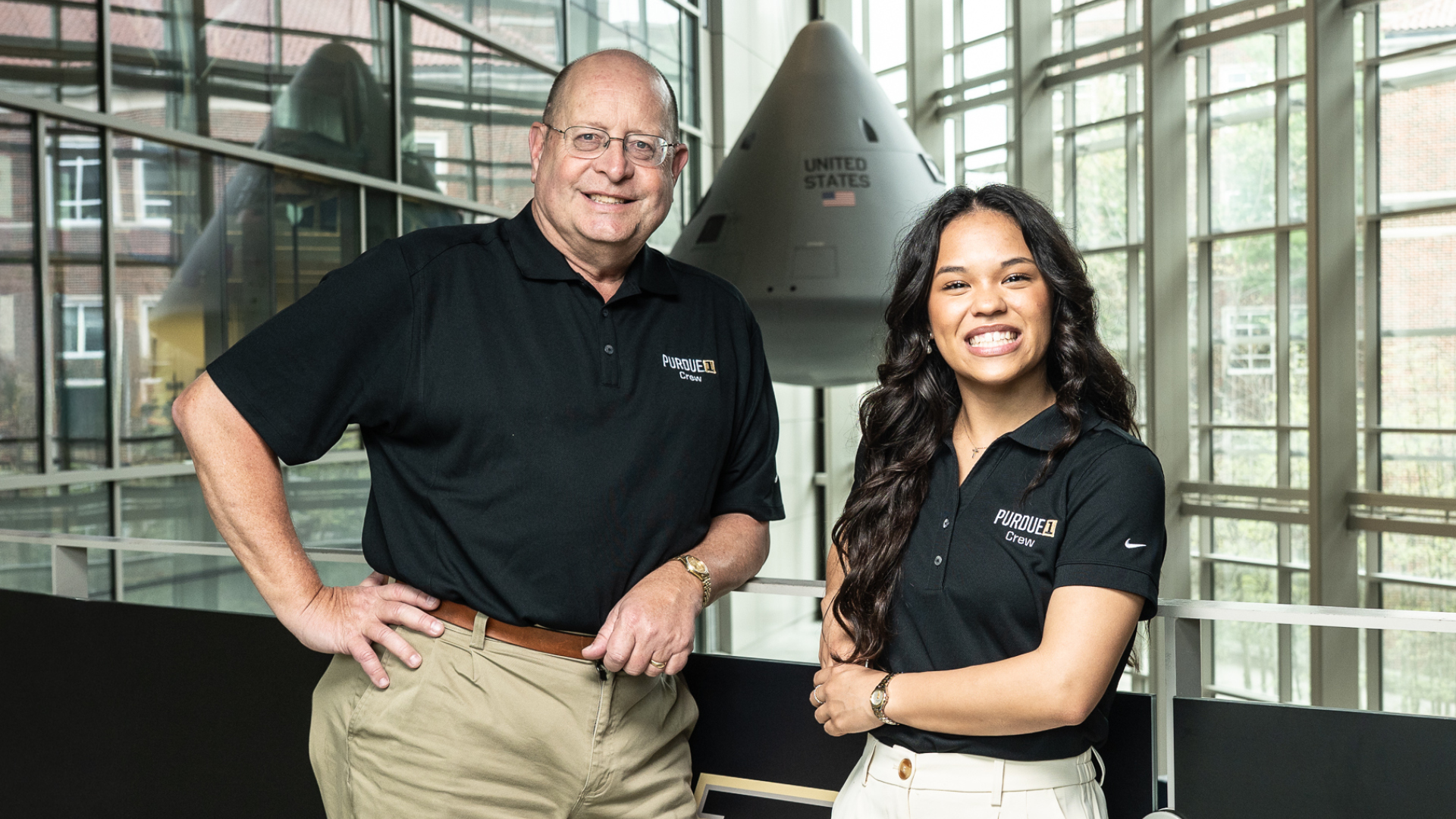
Mizzi was not the only Boilermaker who was shocked by the news that a Purdue student could fly aboard a research mission like Purdue 1.
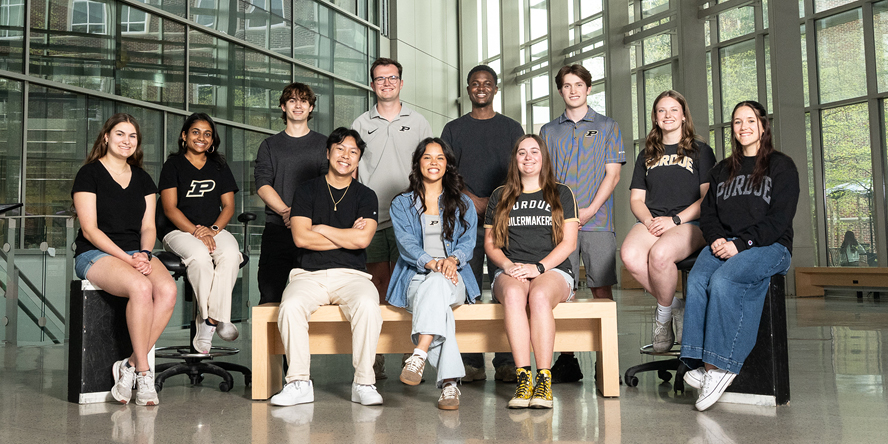
By the time the all-Boilermaker spaceflight was announced on Sept. 23, 2025, a dozen undergraduate students from Collicott’s famous AAE418 (Zero-Gravity Flight Experiment) class had already been assisting graduate assistant Mizzi for a month, working to upgrade Collicott’s autonomous experiment from Virgin Galactic’s Galactic 07 mission in 2024. At the university’s launch party, the students learned about the secret that Mizzi had been unable to share with them until that moment.
“We had no idea about Purdue 1 or Abby going to space when we joined the project, and I think that is a major key to our team’s strong connection,” says Alayna Miller, a spring 2026 graduate in aeronautical and astronautical engineering. “Everyone joined this team with true passion and interest in the experiment, not with an ulterior motive of being part of Purdue 1.”
But their lack of clarity about the scope of the experiment did create some communication hiccups that now amuse the researchers as they look back on their first few weeks on the team.
“It’s funny because a lot of us would say something like, ‘We should change the system to do this,’ and Abby would say, ‘I don’t know about that,’ which confused us,” says Kyra Charters, another of the team’s spring 2026 graduates. “She wanted us to add a control panel and all of these characteristics that weren’t going to be autonomous, and we were still focused on making a new autonomous version. So when we learned that Abby was going to be up there and flying with this, a lot of these times where she was pushing back on our ideas made a lot more sense.”
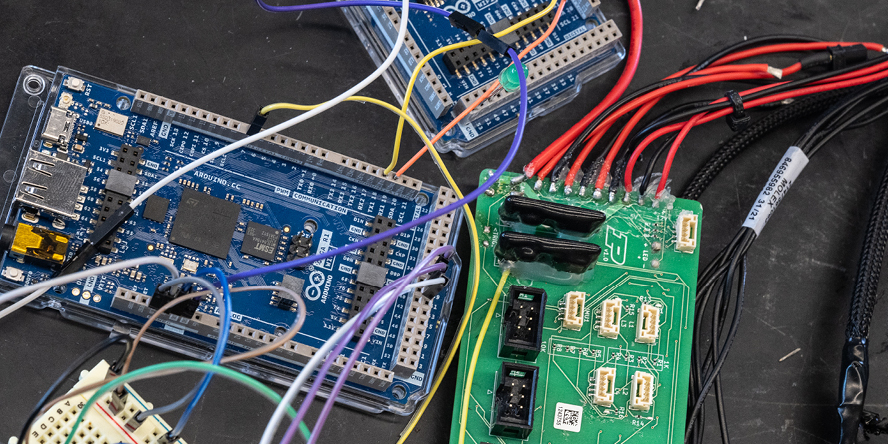
Their experiment aims to collect critical data about liquid behavior in zero-gravity environments, which could have a wide-ranging impact on future long-haul space missions — from fueling rockets and spacecraft to developing life-support systems.
“When I chose to go to Purdue for my undergrad, I couldn’t have imagined that this is something that I would be working on my senior semester,” Charters says. “There are so many incredible opportunities here at Purdue to participate in hands-on design or research, or a lot of different things where you get actual experience.”
The student researchers were already excited about their work even before the Purdue 1 announcement, but learning about their team’s unique role in the mission shifted the group dynamic. Miller described the vibes in the first class after the announcement as “electric,” once the teammates finally understood the stakes involved.
“It wasn’t until the Purdue 1 announcement where it finally clicked,” Miller says. “We weren’t just designing an experiment — we were designing a piece of Boilermaker history.”
And they’ve built invaluable experience in the process, giving Mizzi an opportunity to pay it forward to a group of younger Boilermakers in the same way that so many students, professors and mentors invested in her during her time at Purdue.
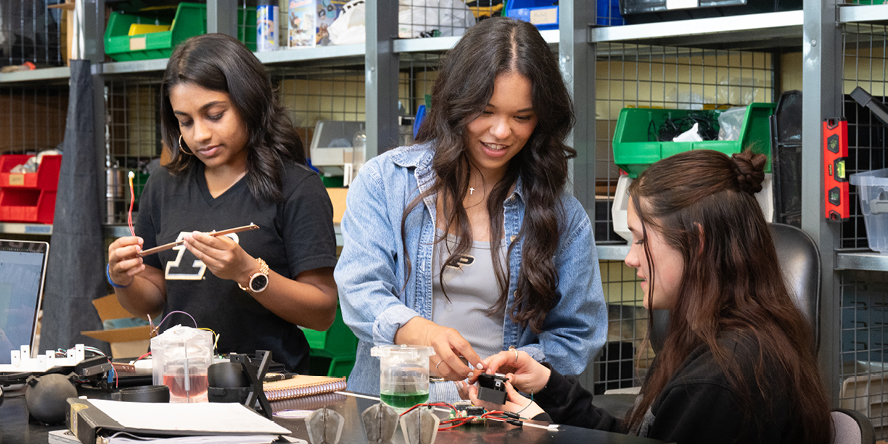
“They’re getting to CAD (computer-aided design) things. They’re getting to design our control panel. And they’re getting to have ownership and be able to say, ‘How can we make it more intuitive? What’s the best way for a human to interact with the system? How do we make this easy for a high-pressure, three-minutes-of-microgravity situation? What are the different aspects that we need to consider as designers to make a product that is easily usable by a human?’” Mizzi says.
“That’s all engineering. I think it’s so exciting that I’m getting to support their learning and their development and they’re getting to work on a real project that’s going to do something really cool,” Mizzi adds. “I’m so glad that I get to help them learn and help them grow, and they’re helping me grow.”
Mutual growth and support
In many ways, that theme of mutual growth and support has been a constant throughout Mizzi’s Purdue experience — and even before it started.
She attended an on-campus Women in Engineering outreach session as a high schooler and became comfortable with Purdue’s campus, the types of students she’d interact with and the learning opportunities that would be available. Later as a prospective student, she recalls attending an informational session on Zoom where Angie Zhang, then the president of Purdue’s section of the Society of Women Engineers (SWE), was among the speakers. Years later, Mizzi remembers the thoughtful gesture that Zhang extended to the total stranger who had expressed an interest in becoming a Boilermaker.
“She gave me her phone number and said, ‘After this event, reach out to me if you ever need something. I’m in aero, I do these research things and I’ve done these jobs.’ And everything she did just seemed cool,” Mizzi says. “I thought, ‘That sounds like what I want to do in aerospace engineering.’ It struck me as very kind and welcoming and supportive of her.”
Mizzi soon took Zhang up on the offer, trading texts about how to best prepare for becoming a Purdue engineering student. Their exchange was so encouraging that Mizzi sought out the SWE table when she attended the university’s annual B-Involved Fair as a brand-new Purdue student exploring which student organizations she might like to join.
After joining SWE, Mizzi engaged with older students like Zhang who took a genuine interest in her success, whether they were helping her create her first résumé, offering interview tips or helping her navigate the ups and downs of the Purdue engineering experience.
“They really made me feel like, from Day 1, I had somebody to go to if I got an interview and didn’t know what to wear or had this event and didn’t know what to do,” she says. “There were always people who had done that. And I think that’s why SWE and the Women in Engineering program are so important. They give you a person who says, ‘Yes, I will help you. I’ve been there before, and I want to fill you up and make you feel supported and confident. You can nail this interview. You can do this.’”
Mizzi received similar support from upperclassmen in research labs and when she joined the Purdue Space Program’s hybrid rocket team as a freshman.
She had a limited understanding of how rockets worked when she joined the club, but she peppered team mentors with questions about how the engines functioned and what technologies are used for the challenges they faced. Over time, she expanded her knowledge base and practical skillset by working with the team each Saturday morning at Purdue’s Maurice J. Zucrow Laboratories, where they tested their designs.
“I’d never built a rocket before, but stepping onto that team was completely mind-blowing,” Mizzi says. “We got to go from assembly of our plumbing system to then hot firing the engine at the end of my freshman year. It was really cool just to be like, ‘OK, I did something small in this, and it took a lot of knowledge from the upperclassmen on the team to get us here, but I learned a lot from them.’ It was an incredible experience.”
Mentorship didn’t come solely from Mizzi’s professors and classmates, however. It also came from Purdue alumni like Jeri Lynn Metzger (BS AAE ’05). Mizzi reached out to Metzger — a deputy program manager at Northrop Grumman who remains active in the national SWE organization — before attending the 2023 SWE conference in Los Angeles. The two connected in person at the event, and Metzger soon became another trusted source of guidance, helping Mizzi navigate SWE membership and introducing her to a high-ranking executive at Northrop Grumman prior to her summer internship at the aerospace and defense giant.
“The connections through SWE are one of my favorite things that I continue to enjoy as an adult and as a volunteer,” Metzger says. “It helps me connect with current students, with my roommates from college and with other people that inspire me — and it was a fantastic way to meet Abby.”
As she looks ahead to the Purdue 1 spaceflight that will help her join the university’s prestigious Cradle of Astronauts, Mizzi understands the foundational role that these many Boilermakers played.
The way she sees it, she won’t be the only person occupying her seat on the Virgin Galactic Delta-class spacecraft when it lifts off. She’ll be bringing along all of the Boilermakers who helped her get there.
“With every single one of these people, the analogy I like to use is that they’ve all given me a feather to put in my wings to now fly,” Mizzi says. “They truly have all supported me every single step in the highs and the lows. When I didn’t get into different opportunities that I wanted, when I got rejection emails or letters of not being accepted, they were still supporting me through all of that. I’m so grateful that I’m here.”
With every single one of these (mentors), the analogy I like to use is that they’ve all given me a feather to put in my wings to now fly.
Abigail Mizzi (BS AAE ’25)
Who during the Purdue 1 mission will become the first graduate student to conduct research on a commercial suborbital spaceflight
Paying it forward
Mizzi’s Purdue experience has hardly been a one-way transaction where she only reaped the benefits of attending one of the world’s top aerospace engineering universities, however. She also uplifted many fellow Boilermakers along the way.
She has worked in research labs, helping professors bring next-gen technologies to life. She has represented the AAE program, the College of Engineering and the John Martinson Honors College as a student ambassador. And as she rose through the ranks with SWE, she held multiple leadership positions before ultimately serving as section president in 2024-25.
“It was exciting to be on the other side of things and be like, ‘Hey, I’ve been at Purdue for a few years and I learned these things from these people. How do I continue that because they’ve graduated and left Purdue? How do we continue making sure that the way they helped me continues to be passed down? And how do we continue to expand upon the community-building, the technical development and the professional development and really make sure that we’re supporting students in all the ways they need? The mission is to make better engineers and leaders, so how do we make sure that we’re doing that?’” says Mizzi, who was recognized as one of the SWE global organization’s Outstanding Collegiate Members in 2025.
Seeing students like Mizzi display that leadership is among the primary reasons why Northrop Grumman’s Metzger — herself a SWE award winner — continues to enthusiastically support the organization years after graduating from Purdue.
“I don’t know if it’s intrinsic, if it’s understanding the privileges that we’ve had and wanting to make sure others have them as well, but I do see it in Abby. I absolutely do,” Metzger says. “She wanted to make sure that SWE was there, that it continued to thrive, such that current classmates and future classmates had the same opportunities or more.”
And now, as Mizzi prepares for her historic trip to space, she’s leading a group of students whose work will improve her chances of success during the Purdue 1 mission while simultaneously helping them build skills and credentials that will surely pay off in their budding aerospace careers.
“Her ability to level with each of us on the team has made us feel comfortable sharing our thoughts and has encouraged us to try new things,” Miller says. “I feel strongly that good leaders lead people, but great leaders make leaders of their people. The strongest leaders are those who encourage independence and empower their teams to believe in their individual strengths.
“Abby embodies this fully,” Miller says. “I believe that good things happen to good people, and Abby’s opportunity to fly aboard Purdue 1 is just one of those many blessings she is well deserving of.”