Purdue biomedical engineering professor helps Boilermakers in Indianapolis connect and practice
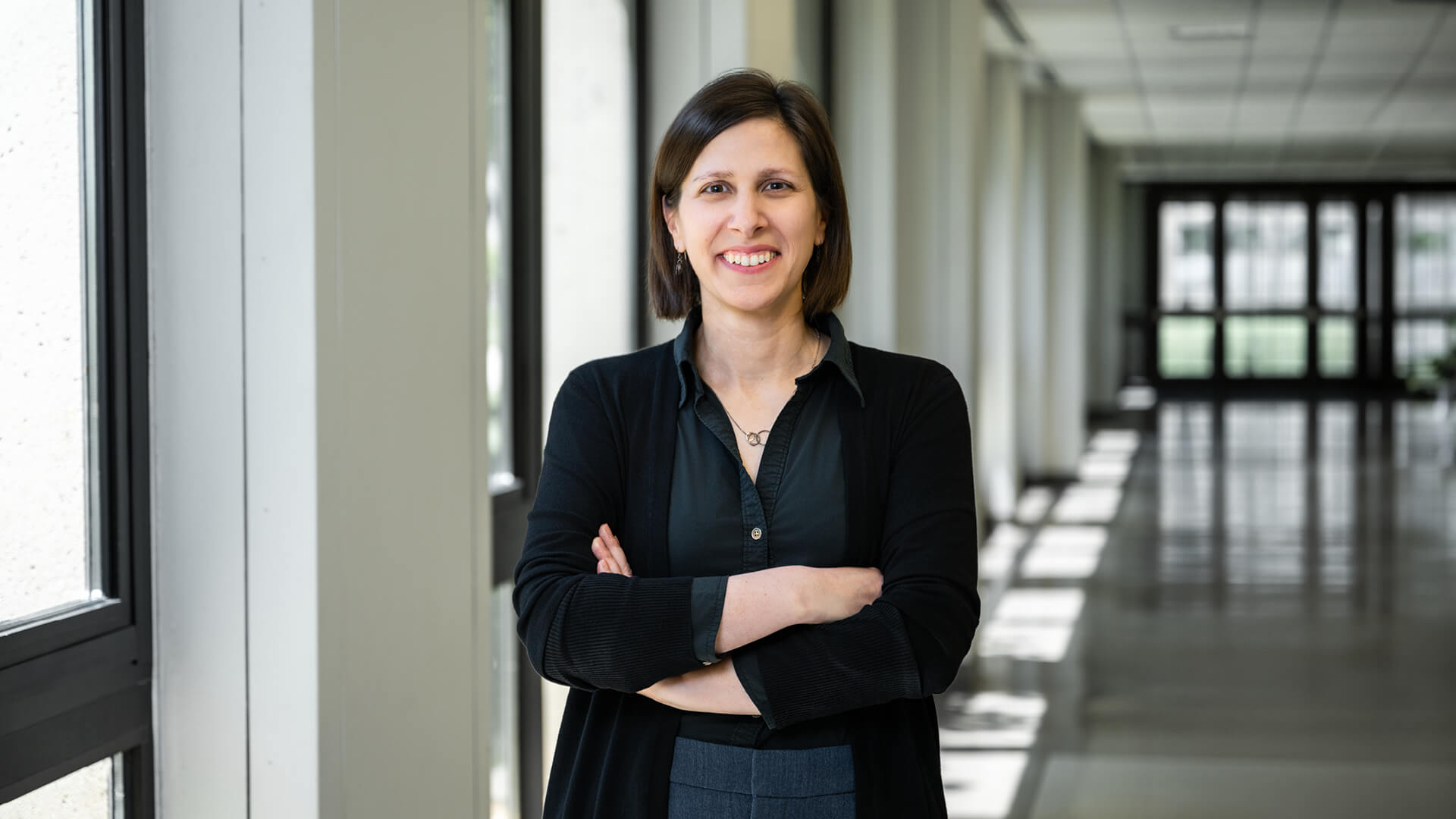
By connecting with faculty and industry partners, Purdue professor Sharon Miller creates experiences that help students gain the confidence to make an impact in the healthcare industry.
Sharon Miller designs experiences to help students gain real-world skills
For Sharon Miller, being an educator isn’t just about passing on technical knowledge — it’s about giving students the tools to recognize their strengths and gain confidence in settings that help turn theory into practice.
“I love helping students understand their superpowers,” says Miller, associate professor of engineering practice in the Weldon School of Biomedical Engineering (BME) and assistant vice provost in Indianapolis. “I think each student has a super strength — and sometimes they don’t know what it is. I get to discover what that is in my conversations and work with students. Figuring out what aspects of themselves they can lean on makes them better people.”
Miller applies her research in engineering education to design experiences that help Boilermakers practice what they learn in teams and real-world settings. Whether she’s planning courses, attending faculty meetings or connecting with local healthcare industry partners, Miller focuses on creating environments where students can succeed in the classroom and beyond. These experiences include immersion in hospitals and local clinics, job shadowing, internships and senior capstone projects.
“We especially see gains in performance when students have to do something over and over,” Miller says. “We design those experiences so they don’t feel rote, and they instead feel confidence-building.”
With hospitals and clinics just steps away from campus, Purdue students in Indianapolis have access to the kind of real-world learning opportunities that are hard to replicate in the classroom. Miller has used this proximity to build connections with clinicians who serve as partners for immersive experiences and help BME students practice what they’re learning while getting an inside look at the healthcare industry. For many students, it’s their first look at how engineering can impact patient care every day.
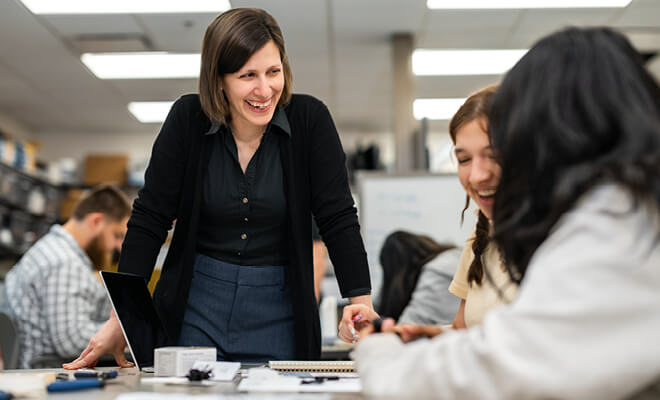
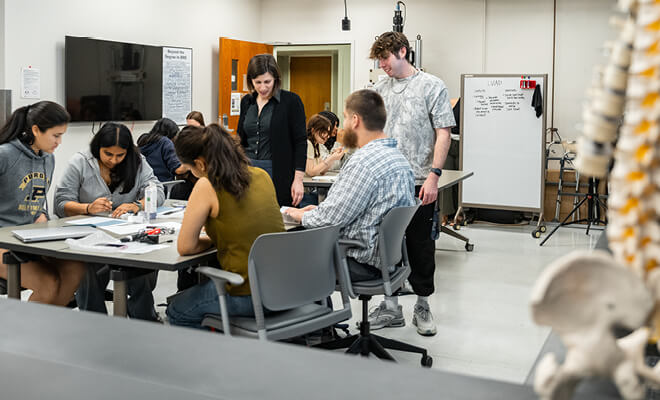
In support of this mission, Miller led the creation of the INdiana Summer Clinical Residency in Innovation for Biomedical Engineers, also known as (IN)SCRIBE. Funded by the National Institutes of Health, this paid, six-week experience places BME students in clinical settings for immersion and team-based design work totaling approximately 30 hours per week during the summer. Participants complete an innovation camp and clinical rotations, then design solutions based on what they observe.
“There’s a level of ownership, investment and innovation that these students build over the summer,” Miller says. “We have examples of them taking what they’ve learned into their capstone projects.”
Capstone projects in Indianapolis are unique in that they take place over two semesters, giving students more opportunities to fully develop their designs while building relationships and gaining valuable feedback from medical professionals. For example, one student group is currently working on a training tool that can be used to simulate emergency surgeries designed to relieve eye trauma caused by blunt force.
“When the eye starts to swell, there is a need to relieve pressure built up on the optical never — else, the patient may go blind in that eye,” Miller explains. “Someone in the emergency department has to be trained to snip a tendon. Our students are working on a tool that can replicate that procedure, and during capstone, they can meet the people who are going to use it and get feedback in real time. They were able to go in and get the input of 25 surgical residents.”
The strong connections built with the local medical community extend to the camaraderie Miller fosters within the BME program. Beyond the immersive experiences are smaller moments — an extra email or message to make sure every student is informed of an upcoming opportunity, encouragement for undergraduates to support their TA at a presentation, an introduction to an alum or even a discussion about the best place to get a pizza.
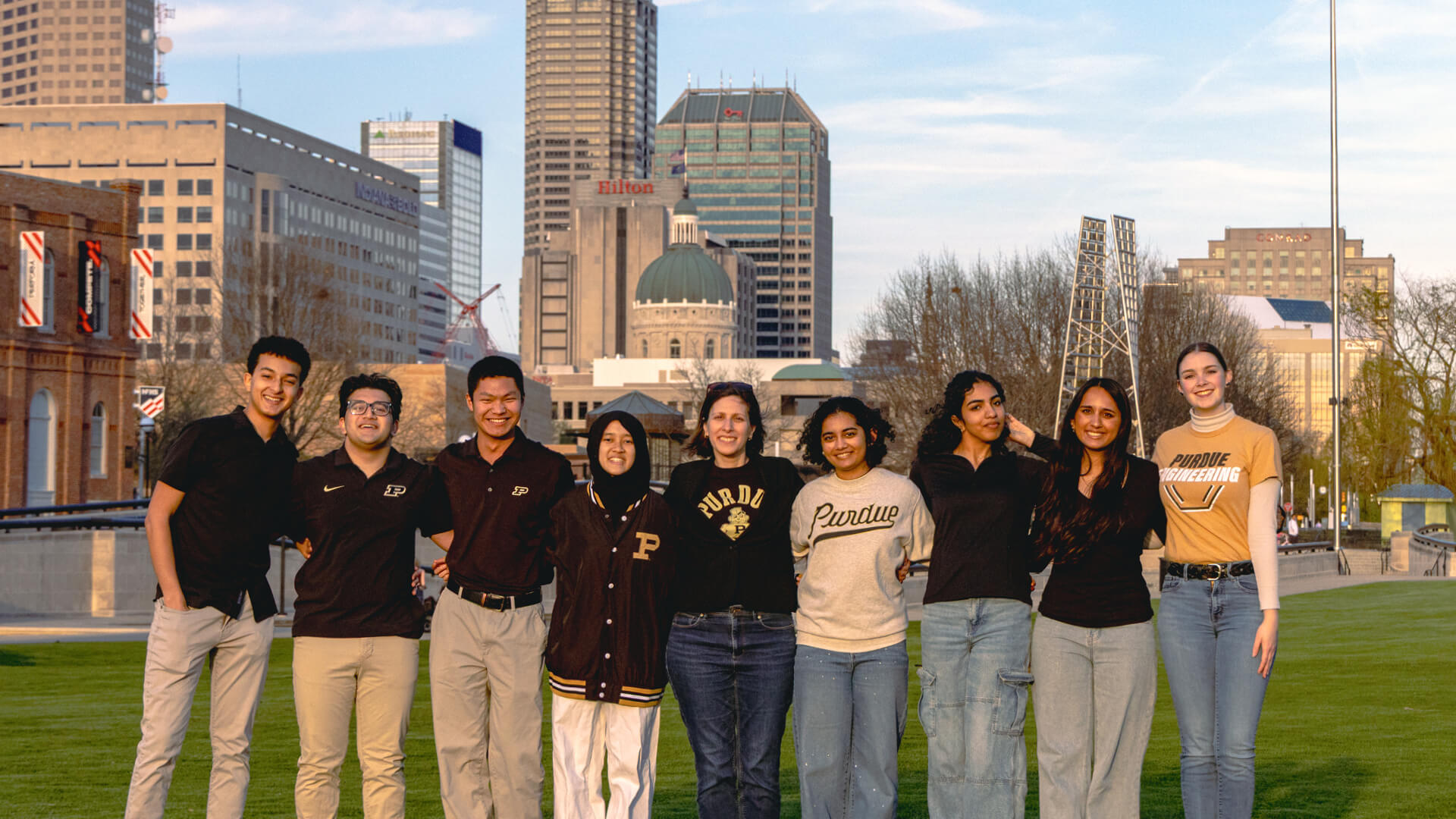
“We’re here to help students explore data and help them build the confidence and technical depth that get them the job or interview,” Miller says. “But we’re also here to introduce students to new people. It’s more than faculty and staff — it’s a whole ecosystem they get to be part of.”
Miller can feel the closeness of the program when she walks around campus.
“When I’m in Indianapolis, I literally can’t walk from building to building without running into someone I know,” Miller says. “The size of our program in a big city really makes it feel like we can provide everyone with the ability to be part of it and have access to our partners, industry and the city.”
For Miller, these everyday connections are a reminder of how far BME students can go — and how personally she takes their success.
“The most energizing part is seeing students walk across the graduation stage,” Miller says. “When that happens, it means all of Purdue’s systems have worked in a way that allows those students to have success. No matter what their journey in BME has looked like, I know every single name. The end of every semester brings many smiles when I get to see everyone who has made it.”
I love helping students understand their superpowers. I think each student has a super strength — and sometimes they don’t know what it is. I get to discover what that is in my conversations and work with students. Figuring out what aspects of themselves they can lean on makes them better people.
Sharon Miller
Associate professor of engineering practice in the Weldon School of Biomedical Engineering and assistant vice provost in Indianapolis