Listening still: Purdue Agriculture’s enduring method
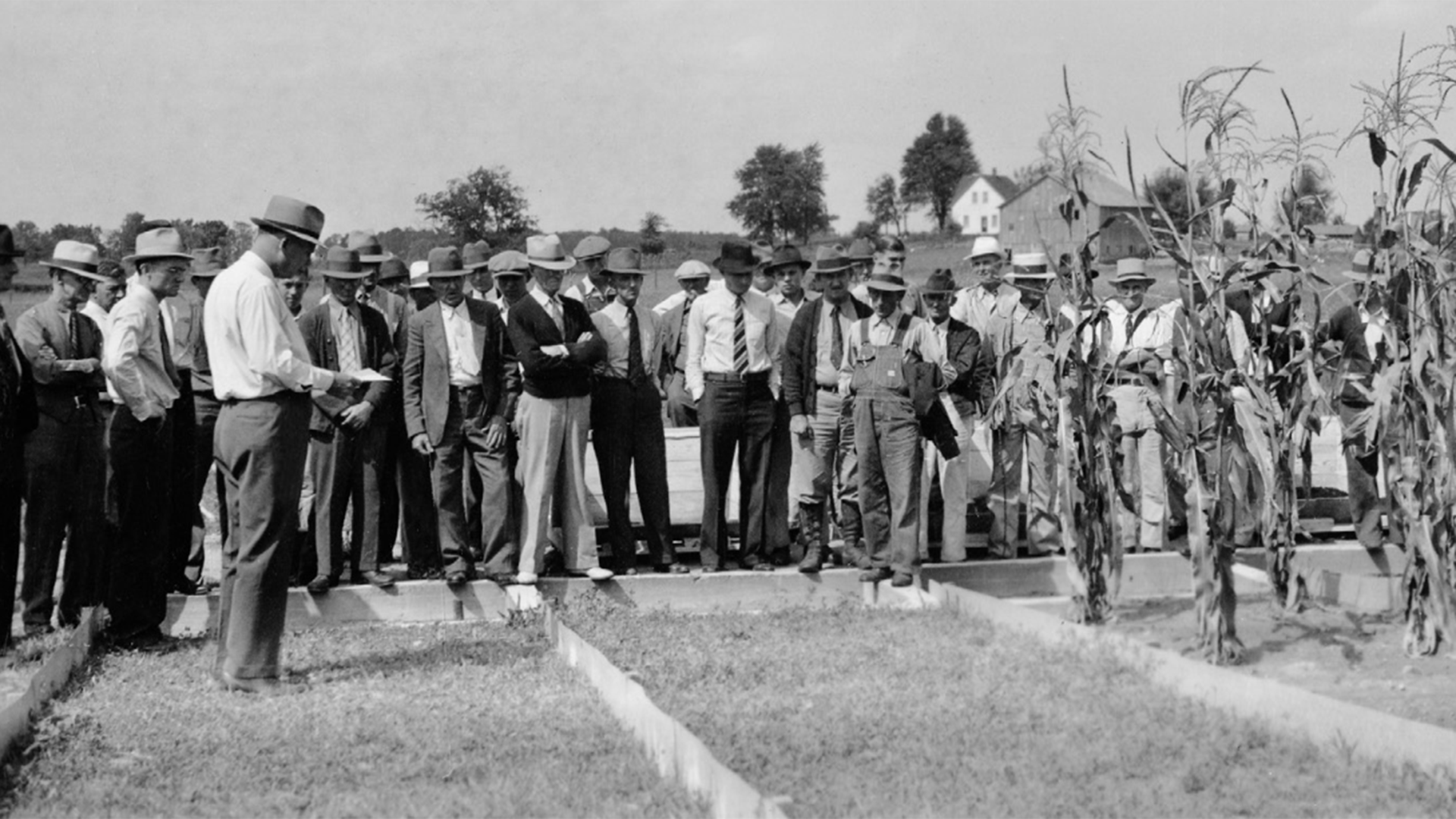
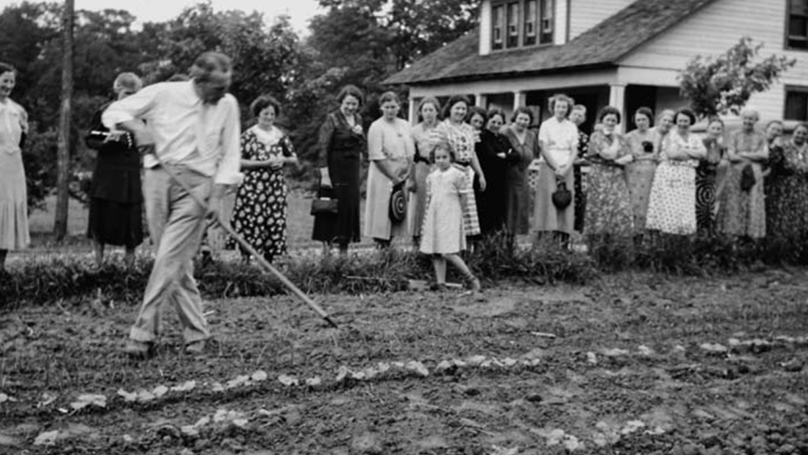
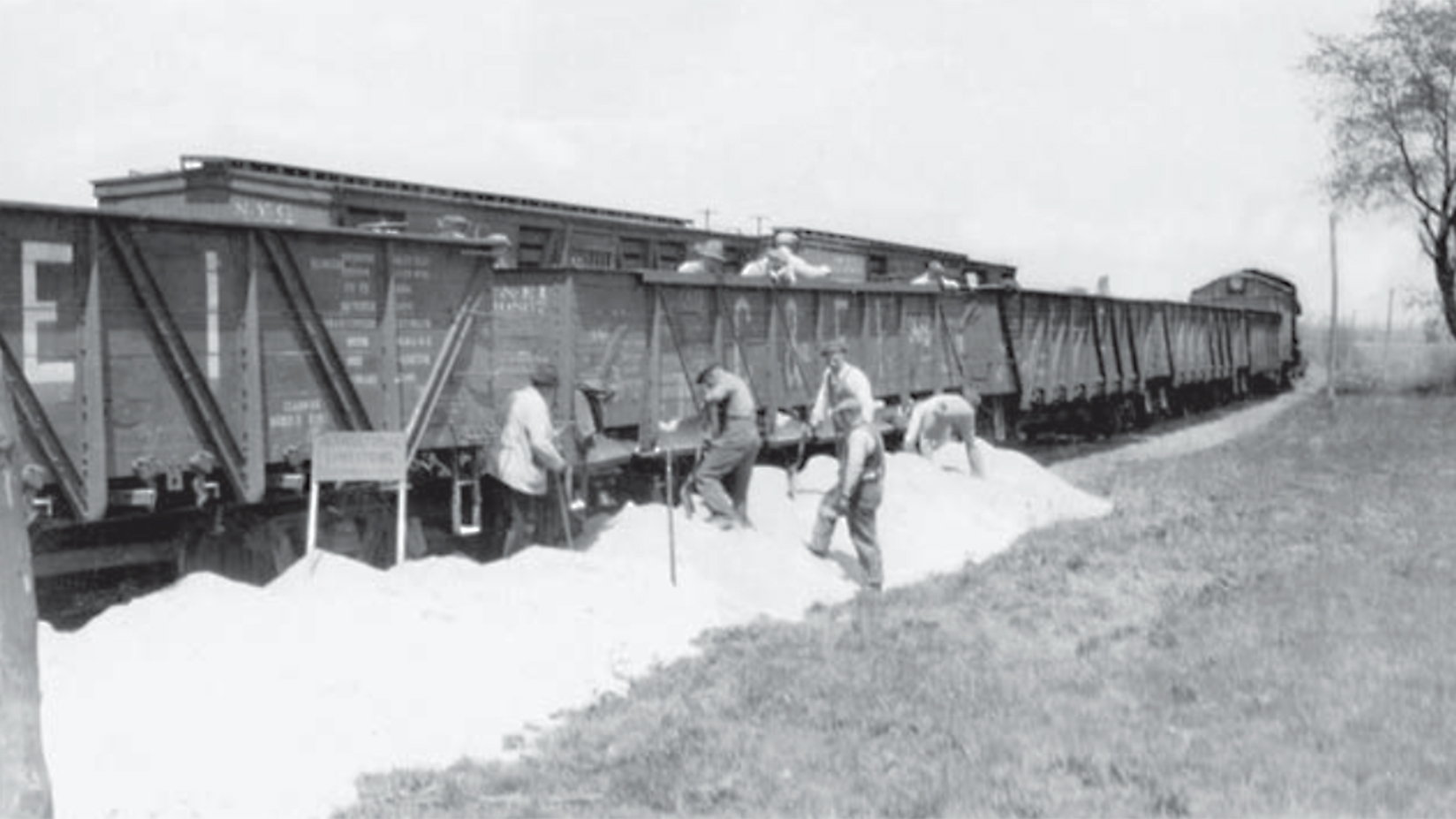
Down-to-Earth answers: Indiana farmers gather at Purdue's Henry County Soil Conservation Demonstration Area in 1938 to get guidance on how to reduce soil erosion under various conditions by planting ground cover. (Photo courtesy of Purdue University Archives and Special Collections.)
As America turns 250, Purdue Agriculture marks over 150 years of responding to the needs that shape food, land and life
Before it became a leader in the agricultural sciences, Purdue University was built on the idea that knowledge should not flow in one direction.
The land-grant model was created to benefit everyday people by offering practical, research-based knowledge, especially in agriculture, science and engineering.
Research was meant to be planted in fields and put to work in communities. The priority was first to listen and then respond. From the beginning, the Purdue College of Agriculture has treated listening as the foundation for everything it does.
“Historically our efforts have been boots on the ground — eyes, ears in every community,” says Bernie Engel, the Glenn W. Sample Dean of Purdue’s College of Agriculture. “Then we do the work to deliver science-based answers for all residents in the state and beyond who can benefit.”

Historically our efforts have been boots on the ground — eyes, ears in every community. Then we do the work to deliver science-based answers for all residents in the state and beyond who can benefit.
Bernard EngeL
Glenn W. Sample Dean of Purdue’s College of Agriculture
The feedback loop
The foundation formed through listening became tangible in the early 20th century with Purdue Extension, the statewide network that placed educators in every county. The educators were intermediaries between rural communities and Purdue researchers. They brought questions and concerns to researchers who could respond to the needs expressed.
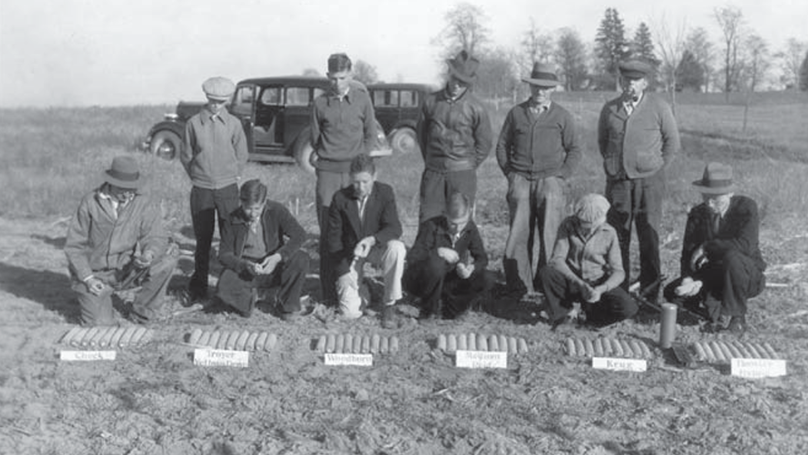
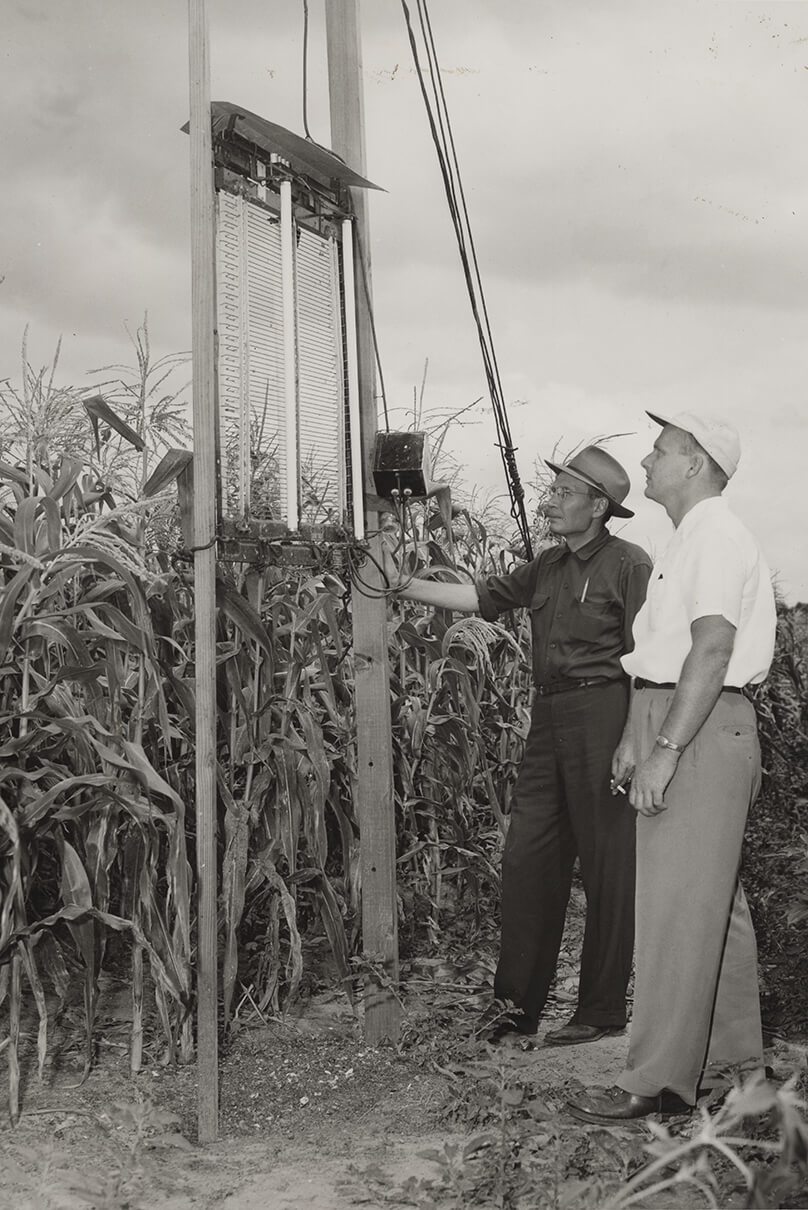
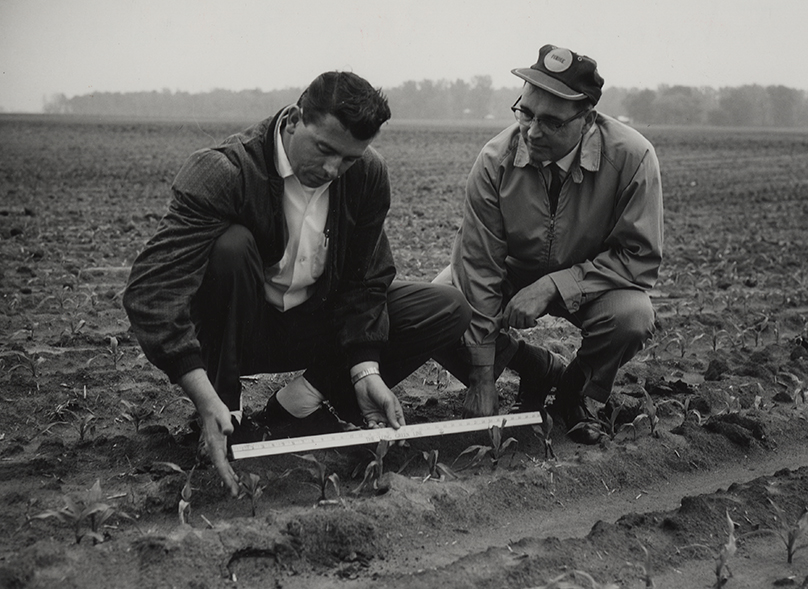
In the late 19th century, farmers needed to know which wheat varieties would survive Indiana conditions. To find out, Purdue began formal crop trials in 1880 and spent decades building comparative data. After that, farmers asked how they could be sure the seeds they bought were trustworthy, so Purdue helped establish seed certification in the early 20th century to ensure a named variety would perform as advertised.
Farmers also needed to better understand why crops failed, so Purdue researchers took soil testing into the field — literally — by train. They did on-farm demonstrations in the 1930s. Each advancement followed the same cadence: listen, test, return.
Crop farming, which historically had been based on family traditions and farmer intuition, now involved deliberate decisions based on Purdue-guided testing and evidence.
When listening grows
As the country grew and changed, so did the questions. By the mid-20th century, farmers were no longer asking only how to grow a crop, but how to grow it better and grow more of it under the pressures of diseases, insects, weeds and uncertainty. Purdue’s wheat-breeding research reshaped entire regions. At one point, hardy varieties developed through Purdue collaborations covered more than 80% of soft red winter wheat acreage in the eastern United States.
The conversation had widened from individual farms to large farming systems.
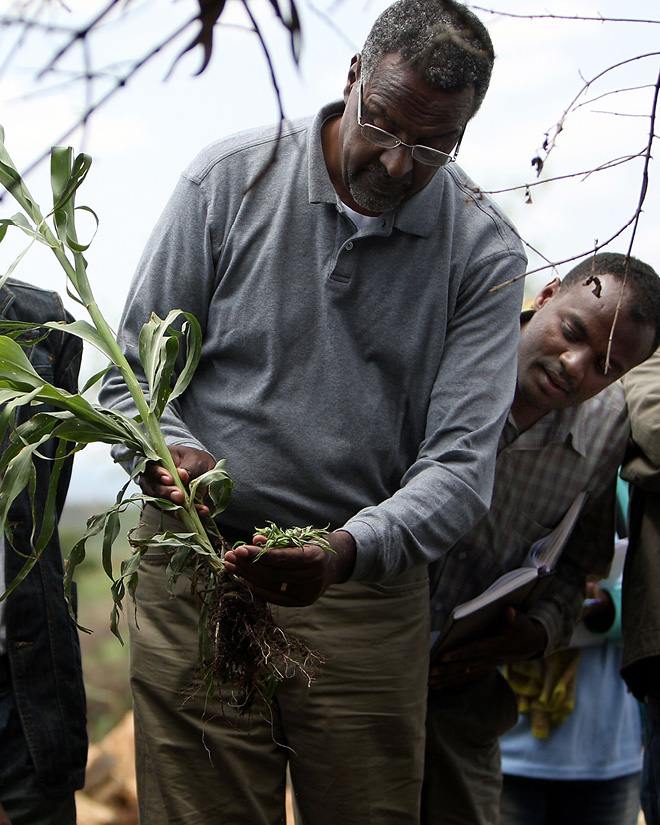
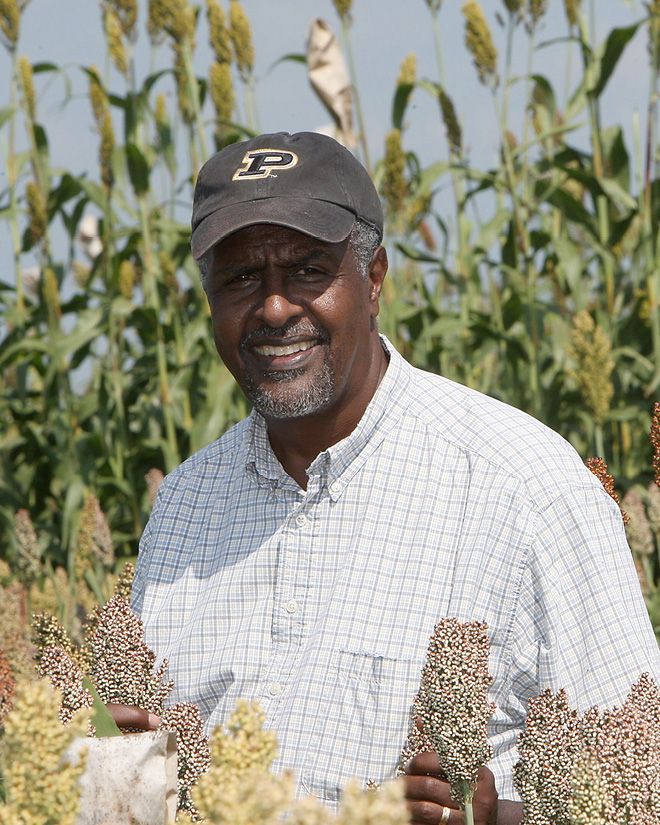
It got wider still as Purdue’s influence went global. When Gebisa Ejeta, Distinguished Research Professor and Presidential Fellow, developed drought- and Striga-resistant sorghum, he was responding to the needs of farmers thousands of miles away in Africa.
Sudan, which has faced chronic food insecurity driven by drought and economic instability, now plants an estimated 1 million acres of Ejeta’s drought-tolerant, disease-resistant sorghum hybrids. The 300% increase in yields has bolstered food security for millions.
Similar patterns of Purdue agricultural research have guided work in managing forests, protecting water systems and strengthening food supply chains, all areas where the questions are just as urgent if less visible than a failing crop.
No matter where, the constant has been listening to, and responding to, expressed need.
Hearing what can’t be seen
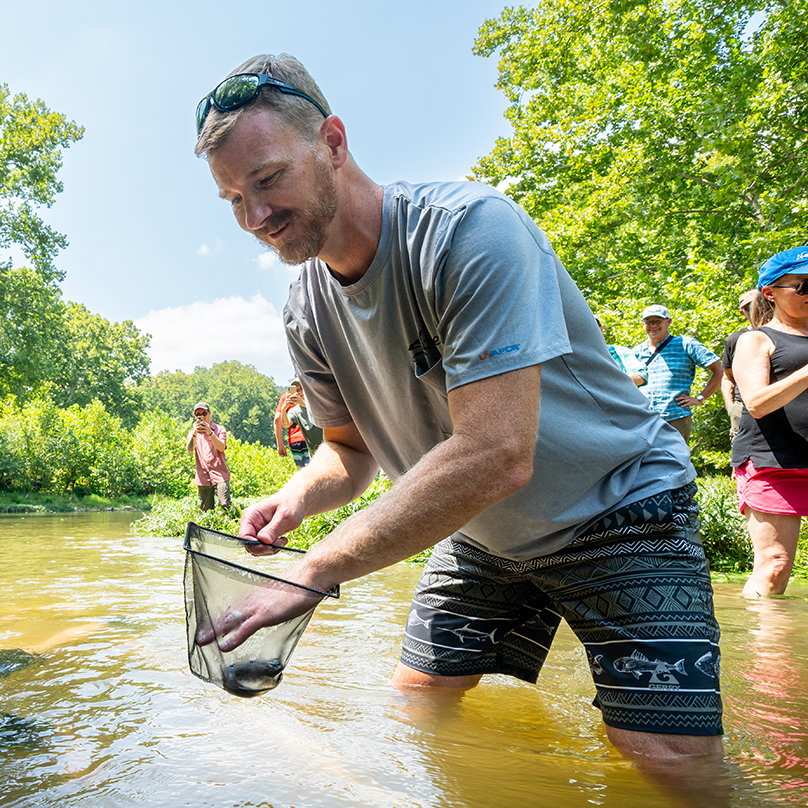
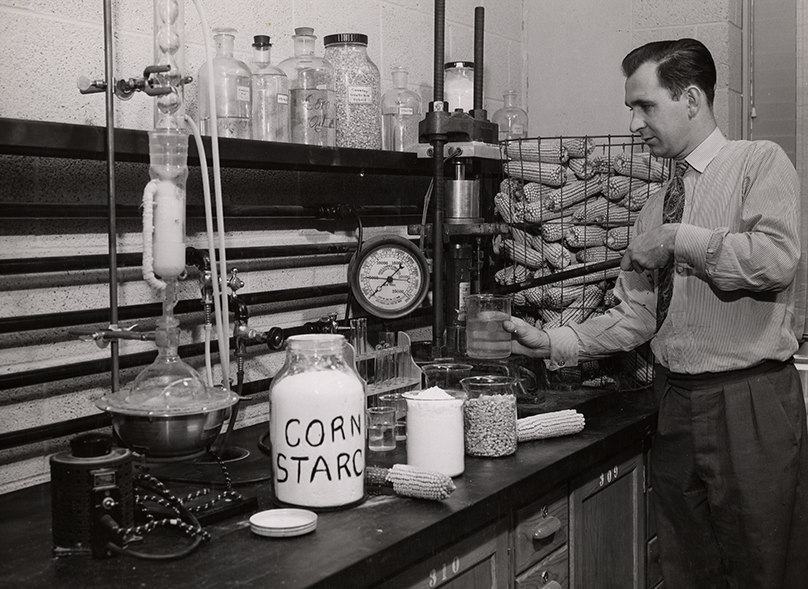
Purdue agriculture also has a duty to devote attention to the natural world itself, researching soil chemistry, plant biology, and the molecular language of growth and resilience. The questions here are complex, but no less essential to answer.
This vital work happens in labs where searches for answers happen on a microscopic scale, and the quests are so complex that they can take decades to answer.
In Purdue’s Department of Biochemistry, this kind of work also has been underway for generations. It doesn’t always produce immediate results or make headlines, but it underpins nearly everything that does.
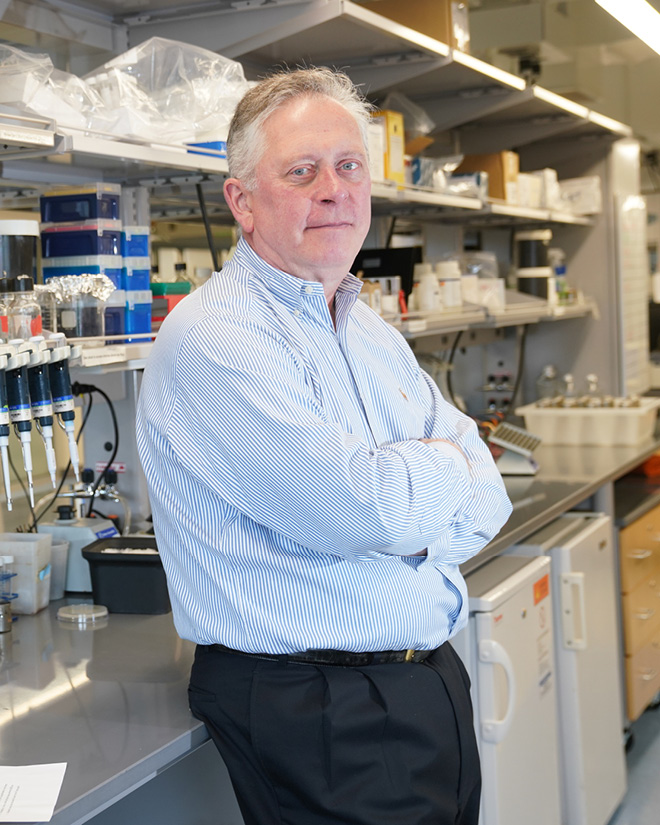
“Basic research feeds into all other research and provides the foundation for it,” says Clint Chapple, Distinguished Professor of Biochemistry. “Without that fundamental understanding, you can’t begin to know what’s happening or how to improve it.”
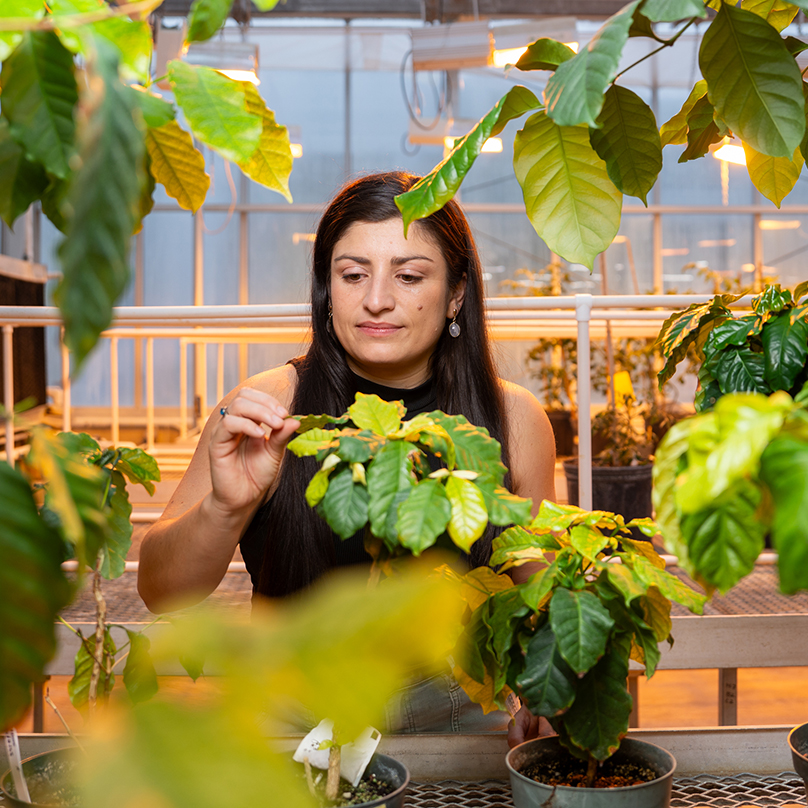
For more than 30 years, Chapple’s lab has focused on a single, deceptively simple question: how plants build themselves at the molecular level. The work is meticulous, iterative and often far removed from the urgency of the marketplace or the immediacy of the growing season. It is also essential.
“What my lab has done over the past 30 years is understand how a biochemical pathway works — the kind of deep problem that takes decades to figure out,” he says.
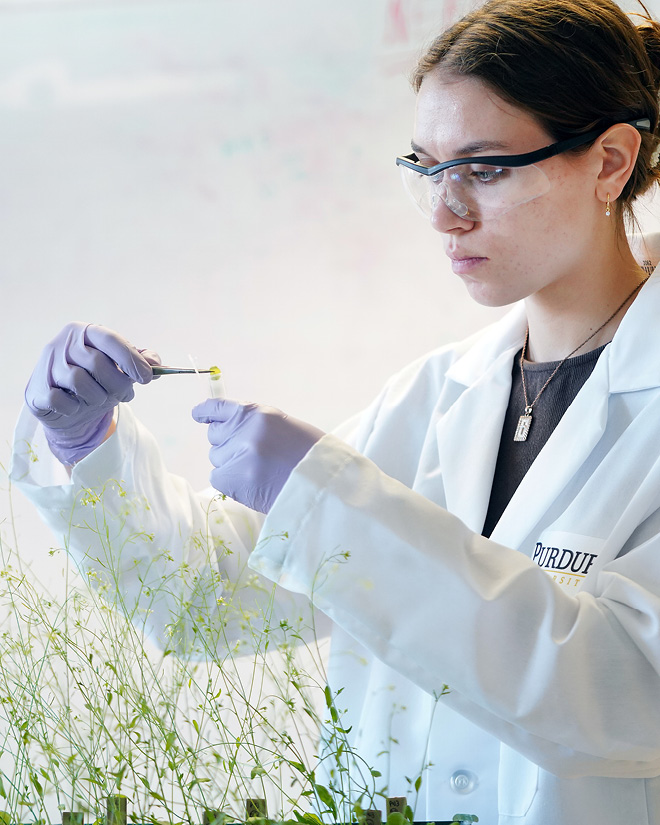
That pathway governs how plants produce compounds to protect them from ultraviolet light, strengthen their cell walls and help them survive drought and disease. It is the kind of knowledge that does not immediately translate into a new crop variety or a higher yield. Instead, it rewrites the underlying rules.
“When you can help rewrite what’s in the textbooks, you’ve done something foundational,” Chapple says. “Something that others will build on for years to come.” And they do.
Across Purdue — and far beyond it — researchers rely first on that foundational understanding to ask more applied questions: how to breed crops that require less fertilizer, how to make plants more resilient to a changing climate, how to unlock new uses for plant-based materials. Without the basic science, those questions would go nowhere.
“It is the engine that drives forward everything else,” Chapple says.
It is, in its own way, another form of listening — not to farmers in a field or communities in need, but to the quiet logic of the natural world. To molecules assembling themselves and pathways unfolding.
At Purdue, that kind of listening has long been part of the agricultural mission. While less visible, it is wholly indispensable.

You’re not going to have a healthy agricultural system if you don’t have resilient rural communities.
Nicole Widmar
Head of the Department of Agricultural Economics
A broader definition of need
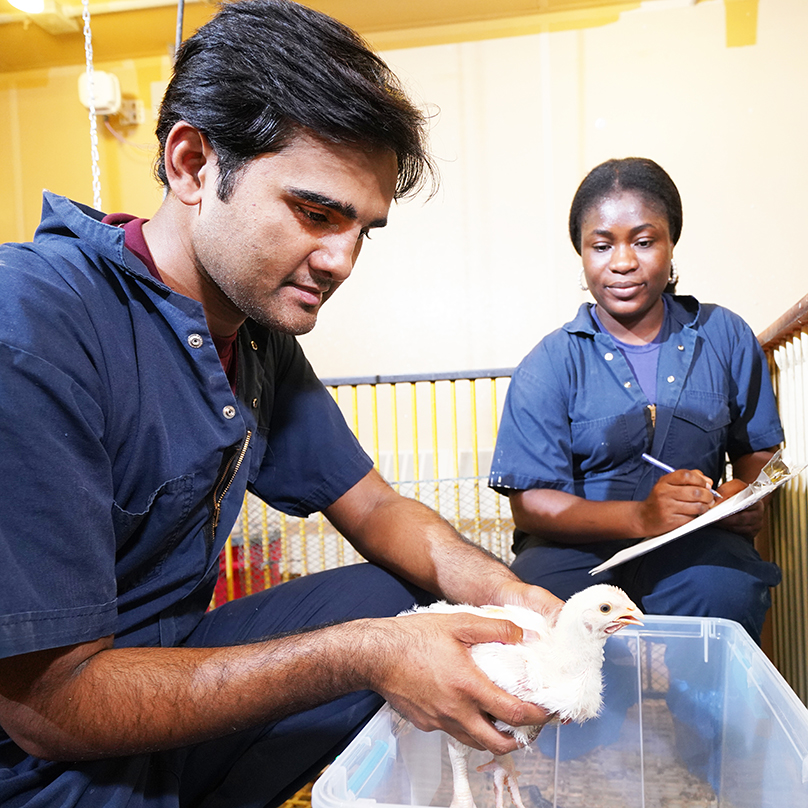
Today, the act of listening has expanded even further — beyond farms, crops and livestock, into the broader fabric of rural life. That includes how animals are raised, how food is developed and delivered, how healthcare is accessed and how ecosystems are sustained.
Nicole Widmar, head of Purdue’s Department of Agricultural Economics, describes agriculture not as an isolated sector, but as something inseparable from the communities that sustain it.
“You’re not going to have a healthy agricultural system if you don’t have resilient rural communities,” she says.
The needs that Purdue agriculture responds to now go far beyond yields and inputs to include healthcare access, broadband infrastructure, education and economic stability. Without those, agriculture can’t function — not because crops fail, but because people leave.
Listening, in this context, means understanding systems: how a hospital that closes affects a farming community, how internet access shapes a market, how policy decisions ripple through supply chains.
Given all of these interconnected and constantly moving parts, the influence of Purdue agriculture is seldom obvious.
“When people have kids in 4-H, when they’re learning about nutrition, all of these aspects come back to the college,” Widmar says. “It’s supposed to fit seamlessly into your life.”
And that works. The goal is not to be recognized but to be relevant.
Listening forward
If Purdue’s past is defined by its ability to hear, it is keenly aware that its future depends on what it listens to and responds to next.
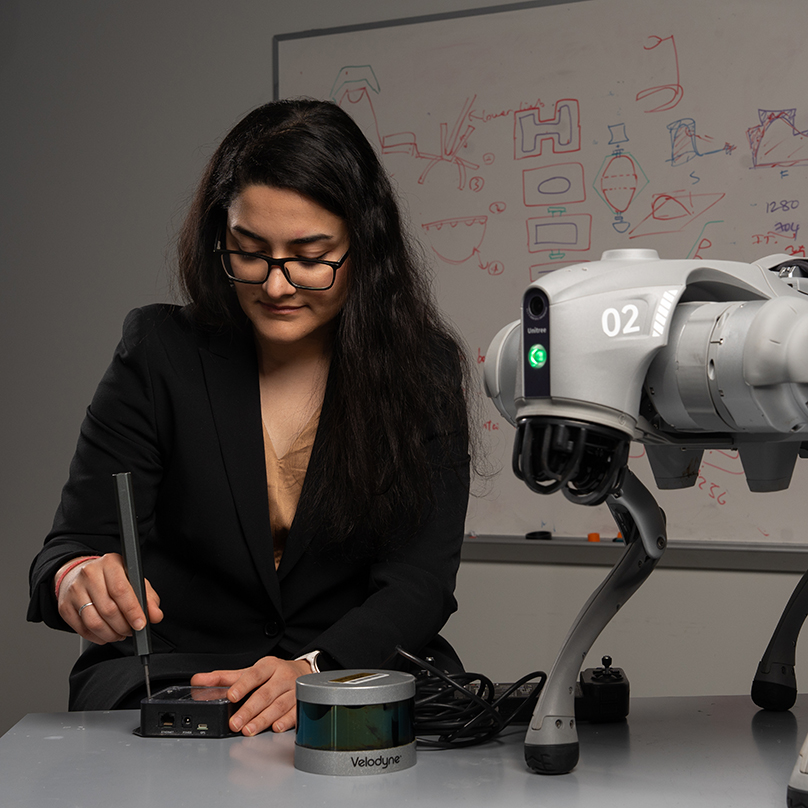
Data — vast, constant and increasingly precise — is now a big and growing part of the conversation. Artificial intelligence is pervasive. It is beginning to interpret patterns that humans alone can’t. Sensors monitor crop fields, forests and supply chains in real time. They also track animal health and environmental conditions, widening the scope of what can be heard and understood.
“Some of these are shorter term, and some are much longer term,” Engel says of current research efforts to design better crops or fully exploit AI. “There are things we’re doing that will be 10, 15, 20 years and beyond before they grow up and have the impacts that we might envision.”
A different kind of student
The students entering Purdue’s College of Agriculture today reflect the growth and change around them.
Most are no longer raised on farms and have little direct experience in agriculture. Inheritance doesn’t draw them; intention does. They want to contribute to systems that matter — food, health and sustainability. They are less tied to a single academic pursuit than to their determination to get an education that will enable them to make a difference for the better.
In that sense, they are being trained not just to learn knowledge, but to recognize what knowledge is needed. To listen, think critically and respond.
The work of the next 250 years
Anniversaries like America’s 250th invite reflection. They prompt institutions to take stock of how they’ve done.
Purdue’s College of Agriculture understands that what matters is what questions have been answered and what questions remain.
For more than a century, Purdue agriculture has operated on a simple premise: that the best solutions begin with attention — attention to farmers, attention to communities and attention to systems, visible and invisible.
At 250 years, America remains a work in progress, as does the Purdue College of Agriculture. The conversations that sustain both are progressing, too. And Purdue is still listening.