Steven Collicott’s Purdue 1 challenge: Don’t look out the window
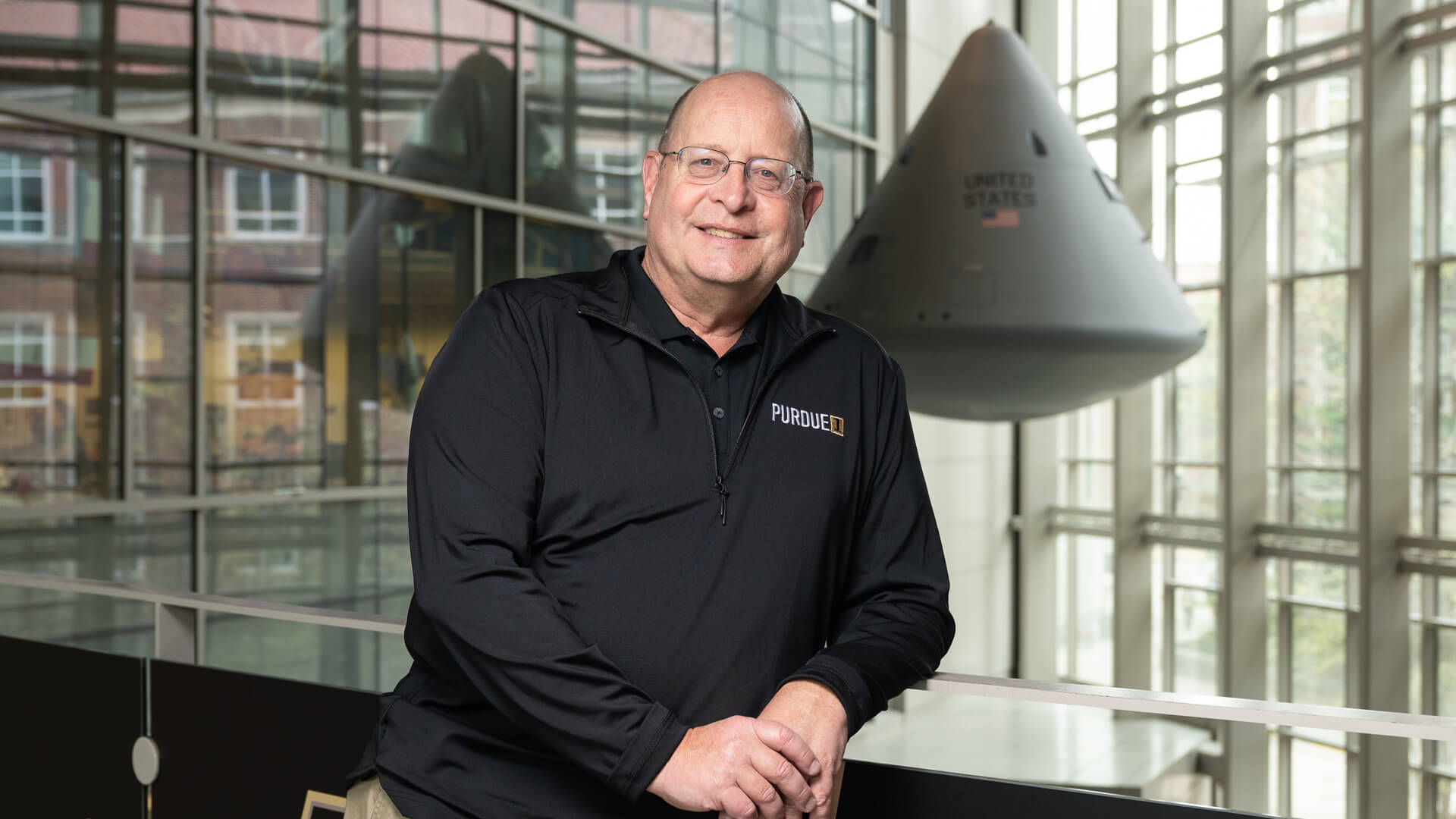
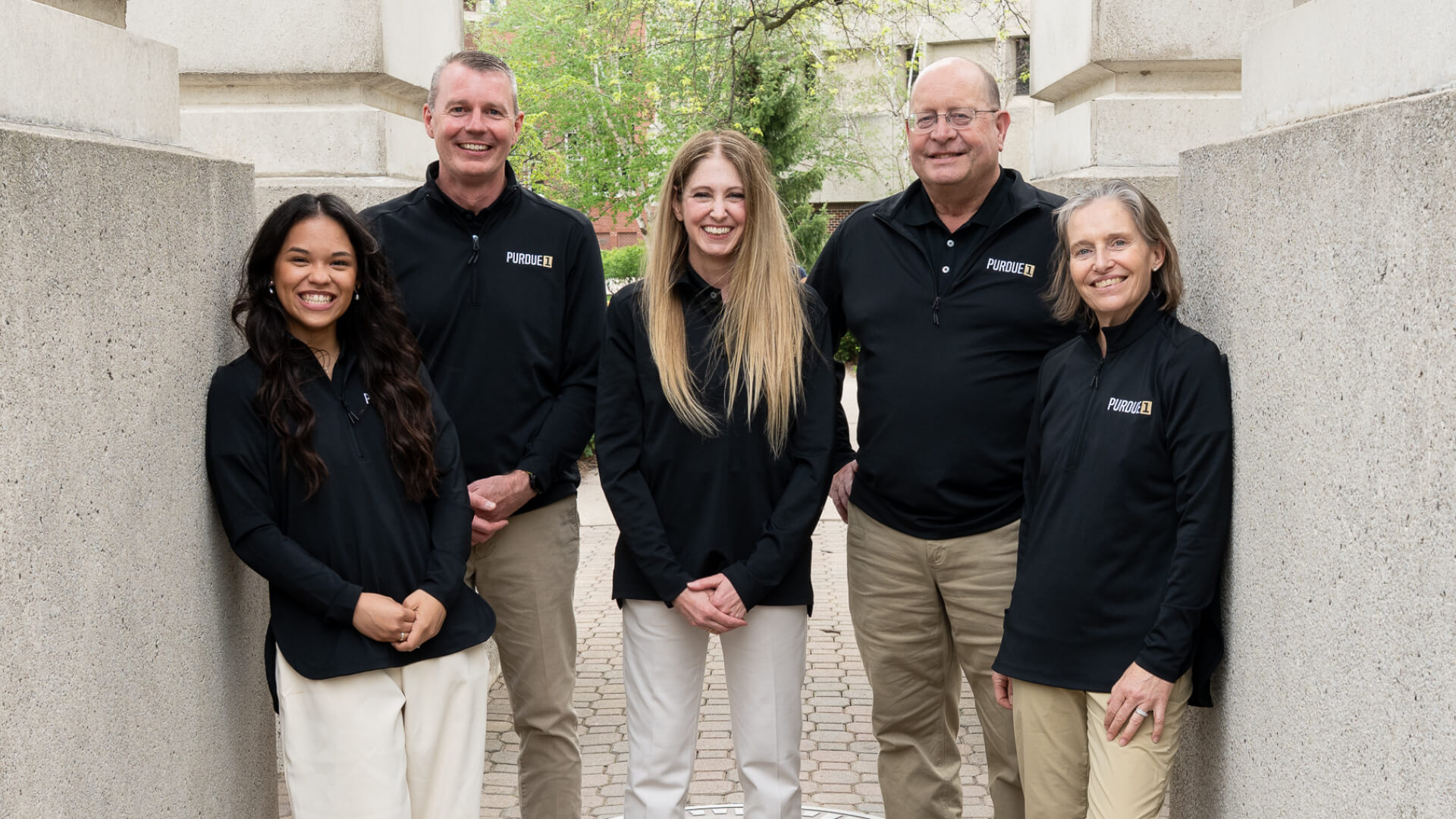
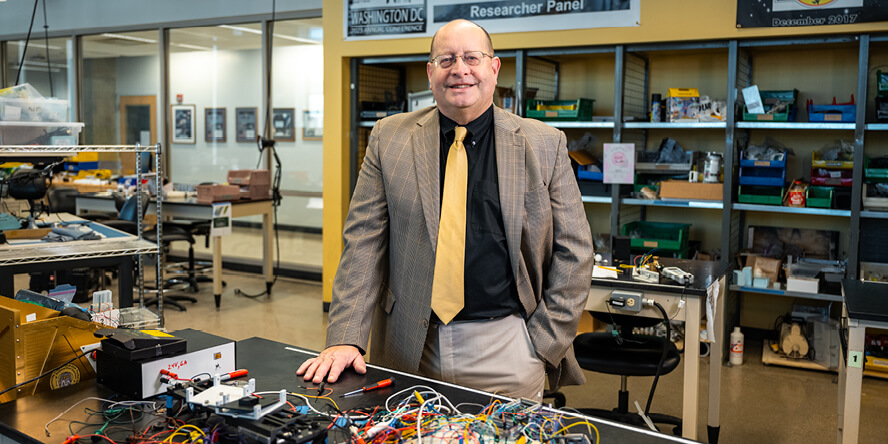
During the Purdue 1 mission in 2027, Steven Collicott will become the first engineering professor to conduct research during a commercial suborbital flight. (Purdue University photo/Kelsey Lefever)
Purdue professor’s research responsibilities will leave little time for sightseeing during the historic spaceflight
Note: This story is part of a series that will introduce each member of the all-Boilermaker crew who will participate in Virgin Galactic’s historic Purdue 1 suborbital flight in 2027.
Steven Collicott recalls thinking to himself that he’d never have a chance to look back at Earth from space like Purdue astronaut Greg Harbaugh did when he described the wondrous vantage point of a spacewalk to an audience of fellow Boilermakers.
“He said, ‘The Earth is sitting there right below you, and it’s the most beautiful thing you’re ever going to see,’” says Collicott, a professor of aerospace engineering in Purdue’s School of Aeronautics and Astronautics. “And I thought, ‘No, it’s the most beautiful thing you’re ever going to see. I’m stuck down here.’”
That will no longer be the case when Collicott and four other Boilermakers launch aboard Virgin Galactic’s historic Purdue 1 suborbital spaceflight, scheduled for 2027. However, the out-of-this-world view that will finally be available to Collicott will present a unique challenge that virtually no one in human history has ever encountered.
Unlike most of the roughly 700 people who have traveled to space before him, Collicott will barely have any time to sightsee. As one of the first researchers selected to conduct their own experiments aboard suborbital flights, Collicott has more important things to do.
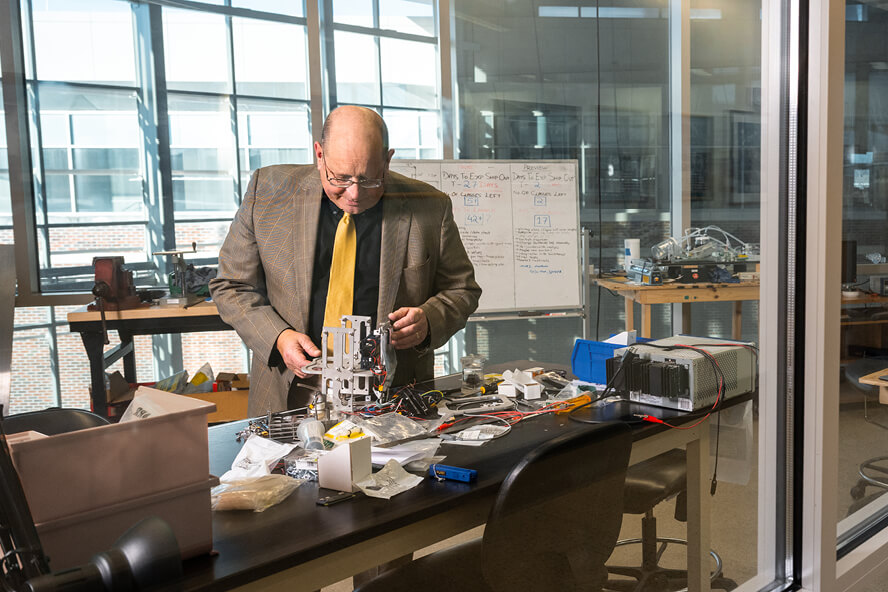
“I’m going up there to do an experiment, not to look out windows,” says Collicott, whose research proposal won a NASA Flight Opportunities award that will fund his trip.
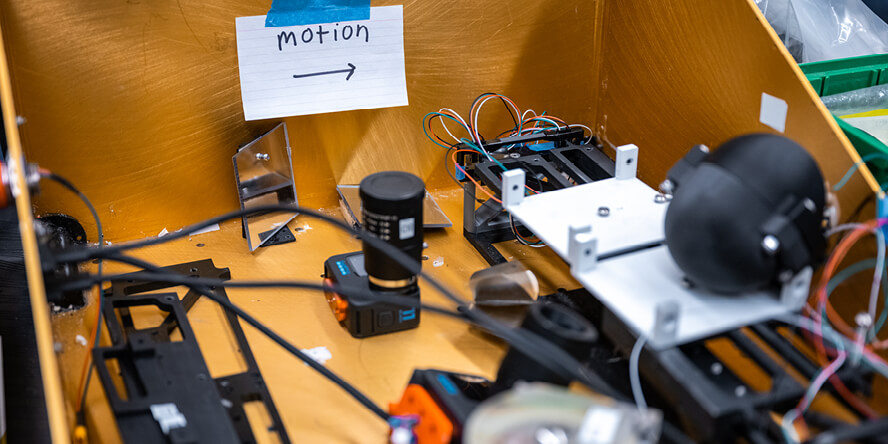
After all, time will be of the essence, and the stakes are high. The Purdue 1 flight is expected to last approximately 90 minutes round trip, but Collicott and graduate student researcher Abigail Mizzi will have only about three minutes to conduct experiments examining fluid dynamics in zero-gravity environments.
“When you fly as a researcher, you’re flying for a third party: someone who’s paying for it and who expects you to get the goods — to accomplish the objectives with the experiment and return with the data,” explains Alan Stern, a planetary scientist and executive at the Southwest Research Institute, who became the first commercial company researcher to fly aboard a commercial suborbital flight during Virgin Galactic’s Galactic 05 mission in 2023. “That third party is judging whether you succeeded, and that in turn affects whether your project will receive further funding going forward, because no one wants the black eye of a flight that didn’t accomplish its objectives.
“So with the clock ticking and work to do, you have to really be disciplined to get the job done, which means not looking out the window.”
Thankfully for lifelong space enthusiast Collicott, he will at least have brief opportunities to enjoy his surroundings. His research will explore liquid behavior when touching solid surfaces in weightlessness — a phenomenon that could impact a wide variety of activities on long-range spaceflights. There are a few 10-second periods in his experiment plan where he must wait for the liquid motion to settle to equilibrium, and those breaks will give him chances to see for himself what he once heard Harbaugh describe.
Otherwise, he views this voyage as a business trip — not just for himself, but for the researchers who hope to follow him aboard commercial spaceflights someday.
“I feel that having a successful mission will make it simpler for others to do the same — many others, hopefully,” Collicott says. “If I make a complete mess of it, it could be many years before the next attempt is made. So I feel a real responsibility to deliver my best work on this project.”
Justifying the presence of the person
Purdue astronaut Charles Walker understands better than just about anyone else why it makes sense for researchers like Stern and Collicott to conduct their own experiments in space.
In 1983, NASA confirmed Walker — an employee of the McDonnell Douglas Corp. — as the first industry commercial astronaut to fly aboard a space shuttle. Walker flew on three shuttle missions simply because he was the best possible choice to conduct experiments using the McDonnell Douglas continuous-flow electrophoresis device he helped develop, in the unique environment where it was designed to operate.
“Space is a field laboratory,” Walker says. “And the most that we humanly can learn from any inquiry and experiments put forward to answer questions is by going where the environment is around you, where you are immersed in the environment of the intellectual inquiry, the application inquiry, the scientific or basic knowledge inquiry. So that’s the crux of the point that Steven is out to pursue and that all investigators should pursue.”
But up until now, few space researchers have been able to collect firsthand data like experts in many other areas of scientific study. The expenses and complicated logistics associated with space travel simply didn’t allow it.
“Take an oceanographer: They go out on ocean research ships,” Stern says. “Similarly, a volcanologist goes to volcanoes. Atmospheric scientists fly on high-altitude airplanes. Geologists go on field expeditions. Astronomers go to telescopes. But space scientists sit in mission control and operate by remote control some automated gizmo that has many failure modes that we can eliminate when we fly the human instead of having to pay for the design and build and then all the testing of automated equipment.”
The main objective for trips like his, Collicott explains, is to “justify the presence of the person” instead of automating the experiment where no human with specialized knowledge would be present to manipulate the experiment or adjust on the fly. Not only does this new opportunity require the researcher to ignore the distractions that exist outside the spacecraft’s windows, but also to prove that they can complete the experiments without falling victim to the acceleration, microgravity or other unique conditions that accompany a suborbital flight.
Stern is confident that’s exactly what will happen as more researchers benefit from the opportunities that he and Collicott have been granted.
“If automation was so great, every university and industrial research lab would be automated. Every oceangoing NSF research ship would be robotic. Every geological field expedition would be performed by something like a Mars rover,” Stern says. “None of that has happened because humans are so much better and cheaper and more reliable than present-day automation technology, but we have not had the ability to fly humans in space — the actual researchers — on a routine basis, and therefore we’ve had to pay for all this automation and suffer the failure modes it brings.
“Those of us at the beginning of this new researcher-in-space era are in agreement that it’s our job to show how much easier, less expensive, quicker, more reliable it is when you just operate it like you would any laboratory on the Earth or on an oceangoing ship. We’ll normalize spaceflight to be more like any other research endeavor where the researcher goes in the field with their experiment.”
‘Steven, you’re gonna love it’
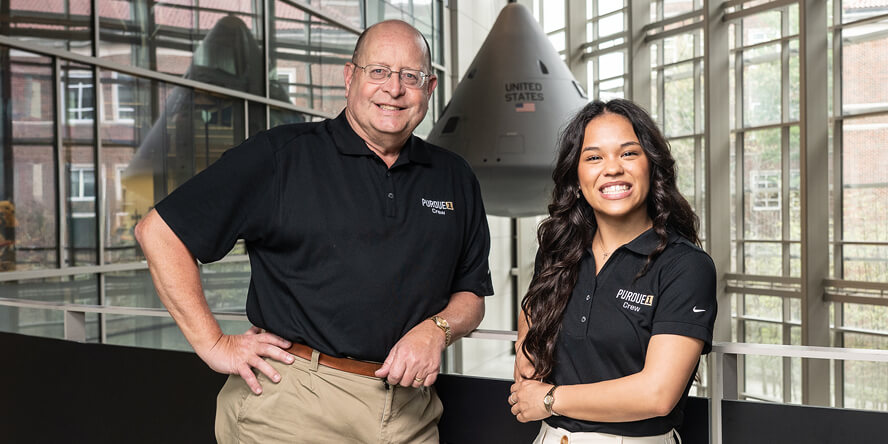
Collicott was a seemingly obvious choice to handle the research responsibilities that NASA will support during the Purdue 1 mission.
As a leader within organizations like SARG — the Commercial Space Federation’s Suborbital Applications Research Group — Collicott has spent many years advocating for the scientific and educational potential of suborbital flights.
As a world-renowned researcher, he has flown dozens of experiments — most of which also involved fluid dynamics — aboard parabolic and suborbital flights. A dozen of his automated experiments have already flown aboard commercial spaceflights: 11 on Blue Origin’s New Shepard rocket and another on Virgin Galactic’s Galactic 07 mission in 2024.
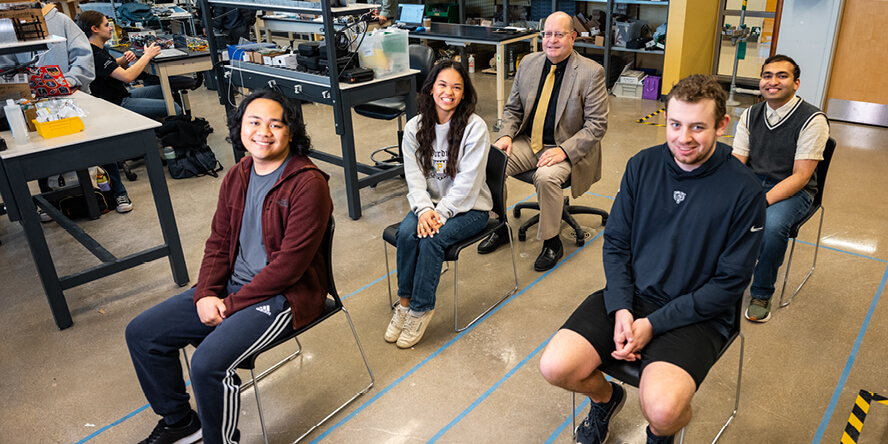
And as a professor, he has helped countless Purdue students chase their own space dreams. For more than 30 years, he has taught a zero-gravity flight experiment course that culminates with Collicott and some of his students experiencing weightlessness aboard a parabolic aircraft — nicknamed the “Vomit Comet” — while conducting their own experiments.
“I never really set out to do what I’m doing,” Collicott says. “It was just kind of a 30-year evolution of a good idea and good support from department heads and deans, and then it just kind of snowballed. And here we are, 30 years after starting this kind of teaching and going from one experiment with four students to, right now, I think in my class we have 11 experiments and 80 students. It’s been very rewarding to see how, in addition to more traditional classes, this hands-on, team-based, real-world project class really can impact the students’ future.”
For quite some time, Collicott probably thought that was as close as he’d ever come to fulfilling his own childhood space dreams.
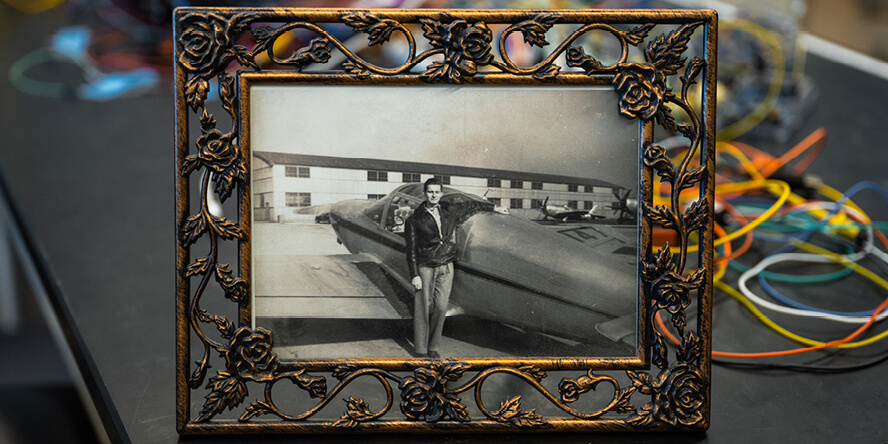
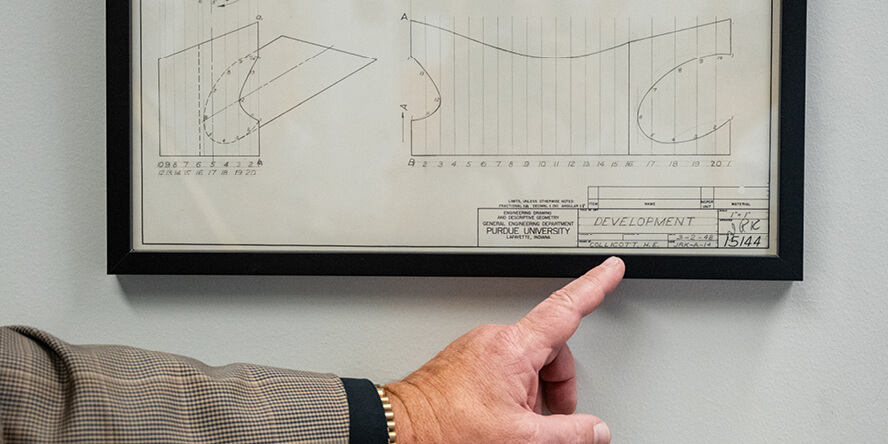
He has vivid memories of sitting in front of the TV on July 20, 1969, as Purdue astronaut Neil Armstrong took humankind’s first steps on the lunar surface, with Apollo 11 crewmate Buzz Aldrin following close behind. Collicott had a familial connection to the historic moment, as his father, Purdue engineering alum Howard Collicott (BS mechanical engineering ’51), worked for one of the legions of American contractors whose combined efforts made Armstrong’s giant leap possible.
“I was 8 years old watching Armstrong and Aldrin step on the moon,” Collicott says. “I really don’t know how anybody my age — as a child during the moon race — grew up to be a doctor or a banker or a lawyer or anything else. To me, it was just fascinating being immersed in that.”
But as was the case for many space enthusiasts across the decades, a physical shortcoming — in Collicott’s case, it was poor vision — made it apparent that a future as a NASA astronaut or Air Force pilot was probably not in the cards. Instead, he found a different way to contribute to space exploration, never expecting that he’d also travel beyond the Earth’s atmosphere someday.
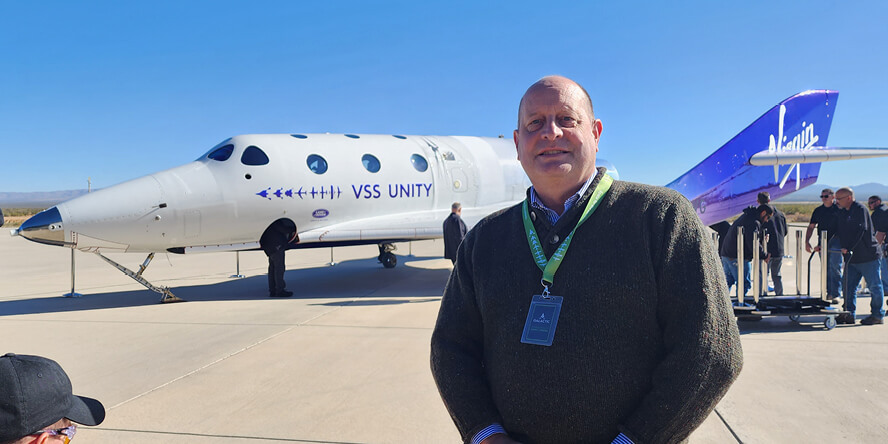
That opportunity now exists for preeminent researchers like Collicott and Stern, who invited Collicott to join him as his guest at New Mexico’s Spaceport America during his Virgin Galactic flight.
“I remember he came out of the spacecraft and said, ‘Steven, you’re gonna love it,’” says Collicott, who has worked alongside Stern since 2008 at organizations that examine commercial spaceflight research applications.
“I wanted him to be there, in part because of his very great service to the application of these suborbital vehicles for research, but also because Steven was the second person that NASA selected to be funded to fly with an experiment,” Stern says. “I thought that it would be valuable for Steven to be on the ground and see what happens during the researcher’s flight when I flew, and that it would be of interest to him and better help him plan his flight.”
I’m going up there to do an experiment, not to look out windows.
Steven Collicott
Professor of aerospace engineering and lead researcher for the Purdue 1 mission
Leading the next phase
In truth, Collicott started planning for this mission long before Stern’s flight or when the university officially announced his research would be part of Purdue 1 in September 2025. NASA selected his research proposal for funding in 2021, six years before the all-Purdue mission is scheduled to take flight.
The wait is all part of the process, Collicott says.
“I was aware that these things take time and they never go as quickly as the companies want or the customers want. I think I had a very realistic point of view going into it that the schedule would have great uncertainties,” Collicott says. “But frankly, I’ve been waiting since 1969, so what’s another couple of years?”
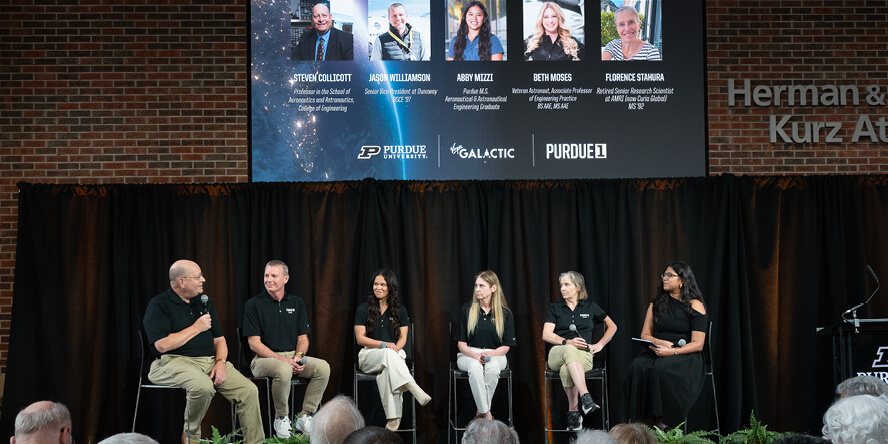
Once the time finally arrives, Collicott, grad student Mizzi, alumnus Jason Williamson (BS civil engineering ’97) and two more Boilermakers (to be announced at a later date) will set a new precedent that fits Purdue’s reputation as one of the leading institutions for space travel and research.
In addition to Collicott’s work — which will make him the first engineering professor to conduct research on a commercial spaceflight — Mizzi’s real-time experiment will build upon Collicott’s findings from his 2024 Virgin Galactic research. And two more autonomous experiments, prepared by Purdue researchers including Ajay Malshe and Shengwang Du, will focus on quantum technology and in-space chip manufacturing.
All of these experiments, and many more, are essential as humankind prepares to venture deeper into the endless frontier that is space, Collicott says. Just as his father and thousands of other American workers laid the groundwork for Armstrong to land on the moon, Collicott and his fellow researchers are now doing work that will help us go back on a long-term basis — and eventually travel even farther.
“There’s a lot to do,” Collicott says. “I tell people the International Space Station is the biggest thing we’ve ever put in space, but it’s not big enough. We have a lot of science that needs to be done that needs weightlessness, and it can’t all get up to the space station. So these other options like suborbital rockets, parabolic aircraft flights, drop towers on Earth, they’re all very needed laboratories.”
Boilermakers are conducting landmark research in all those environments, so it makes sense that Purdue would break new ground with the all-Purdue spaceflight, which has inspired envy among researchers from other institutions.
“Individuals from other universities are hungry to do what Purdue has been out in front to accomplish,” says Walker, the pioneering commercial astronaut who has heard as much while participating in teleconferences with other members of SARG.
Not only does Walker believe Purdue 1 is the natural next step for Purdue to contribute to the new era of space exploration, but he offers a prediction about the step that will follow.
“I’m so bold as to suggest that when — not if, but when — Purdue succeeds mightily with Purdue 1 suborbital, that there will be a Purdue X orbital (mission), probably not on ISS, but on Vast or Orbital Reef or one of the other commercial space stations, later this decade or beyond,” Walker says.
At most universities, Walker’s prediction might seem bold enough to border on absurdity. At the alma mater of 30 astronauts (and counting) and home base for the Purdue 1 mission, nothing seems out of the question.