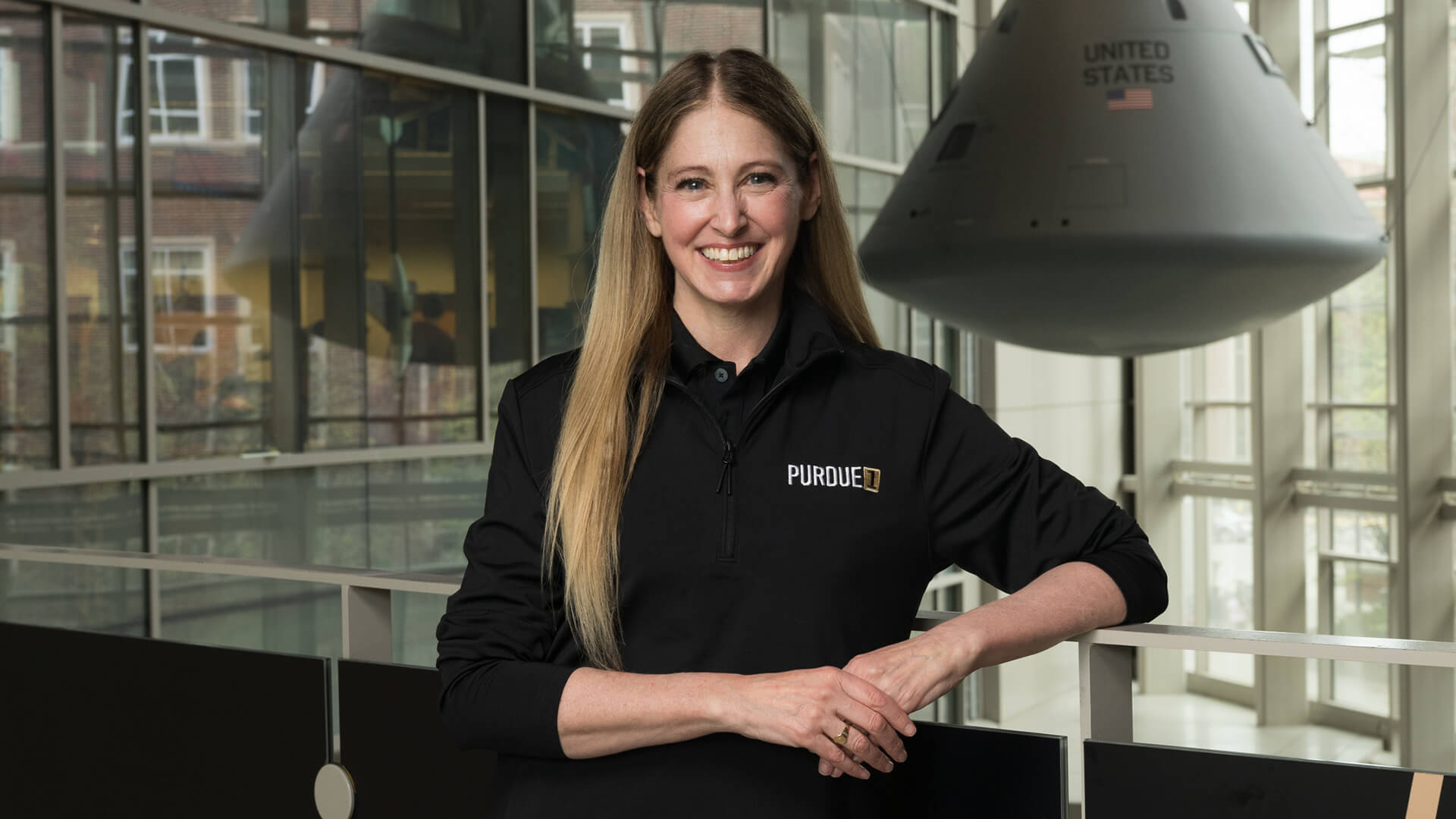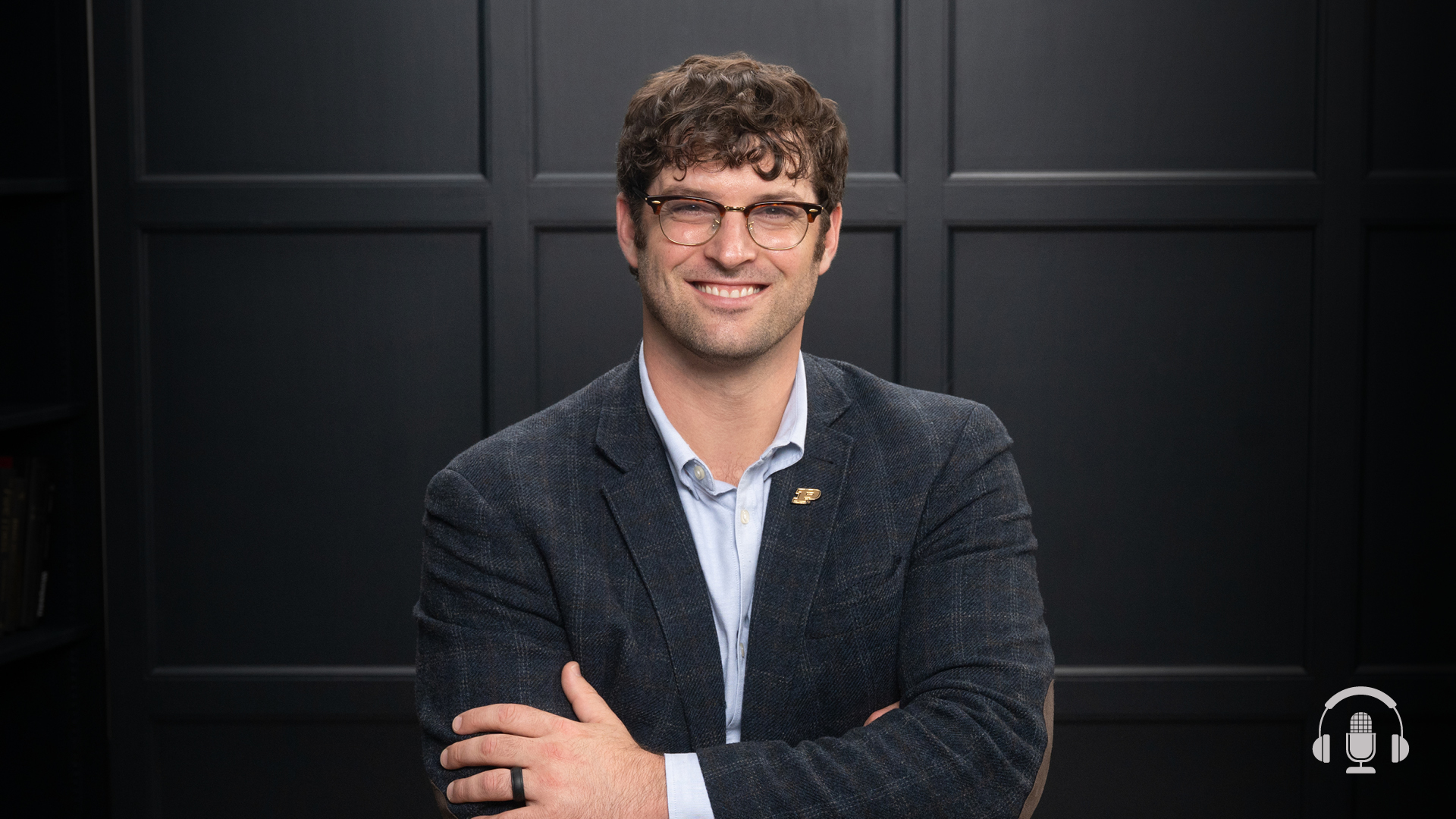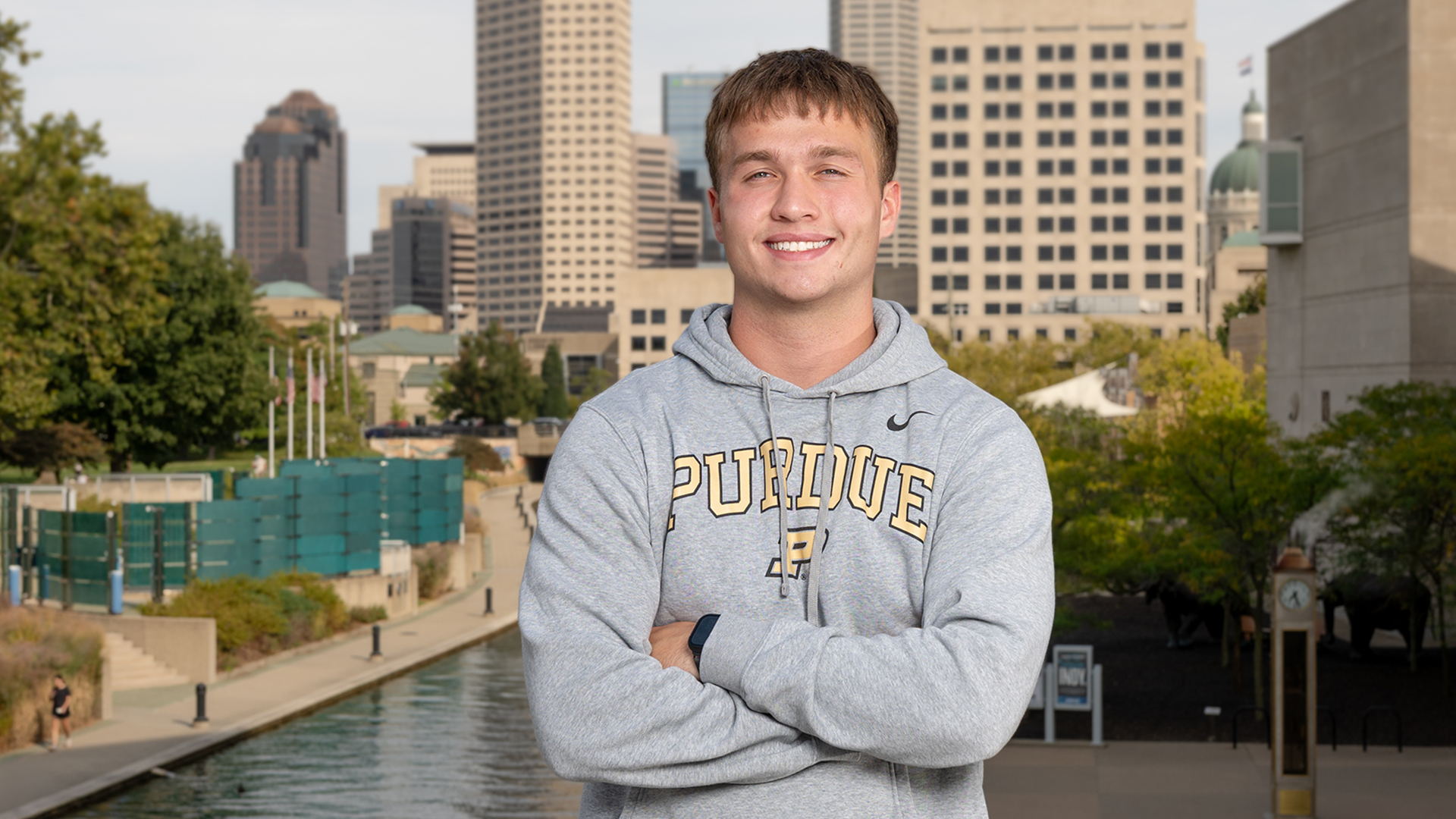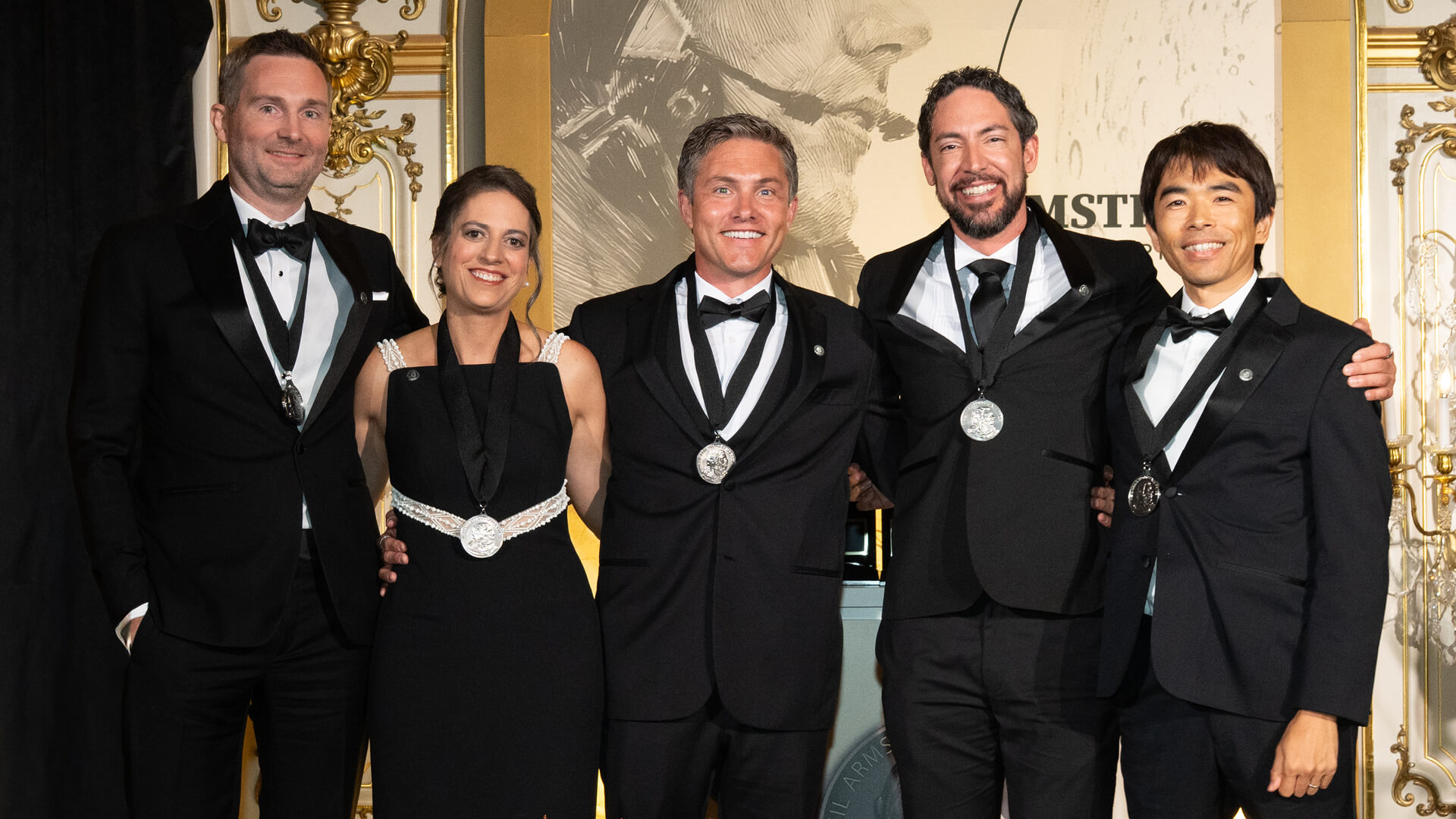
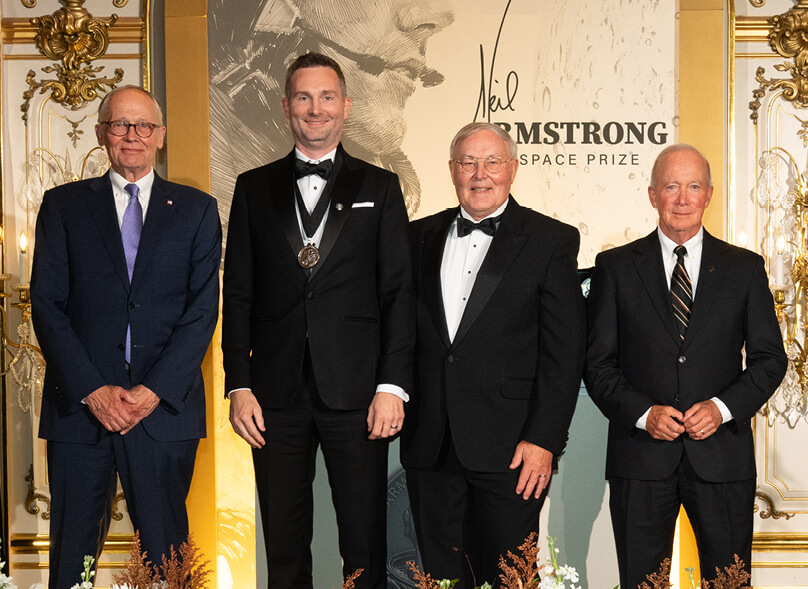
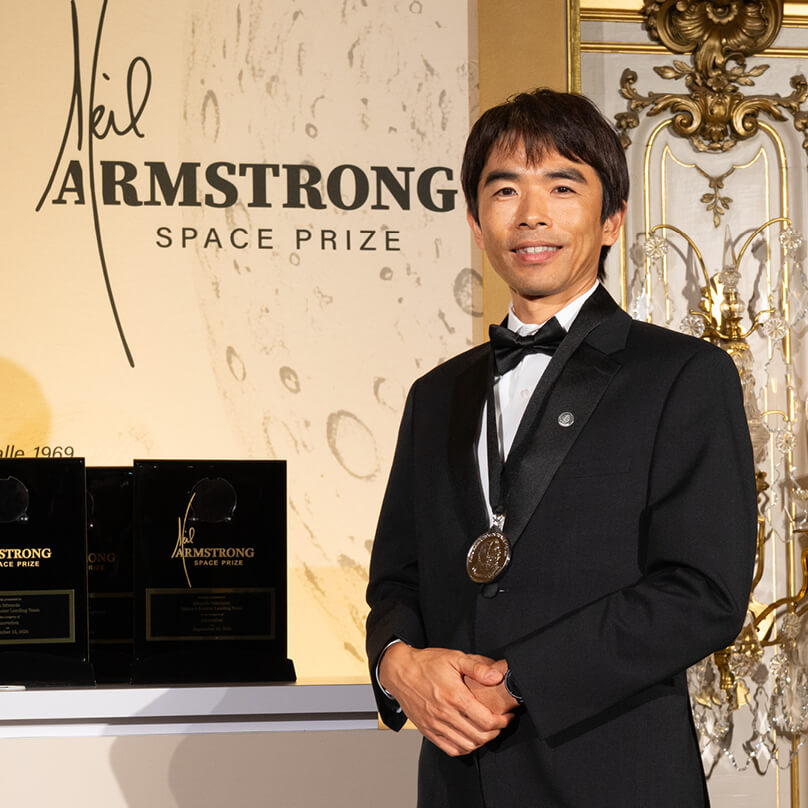
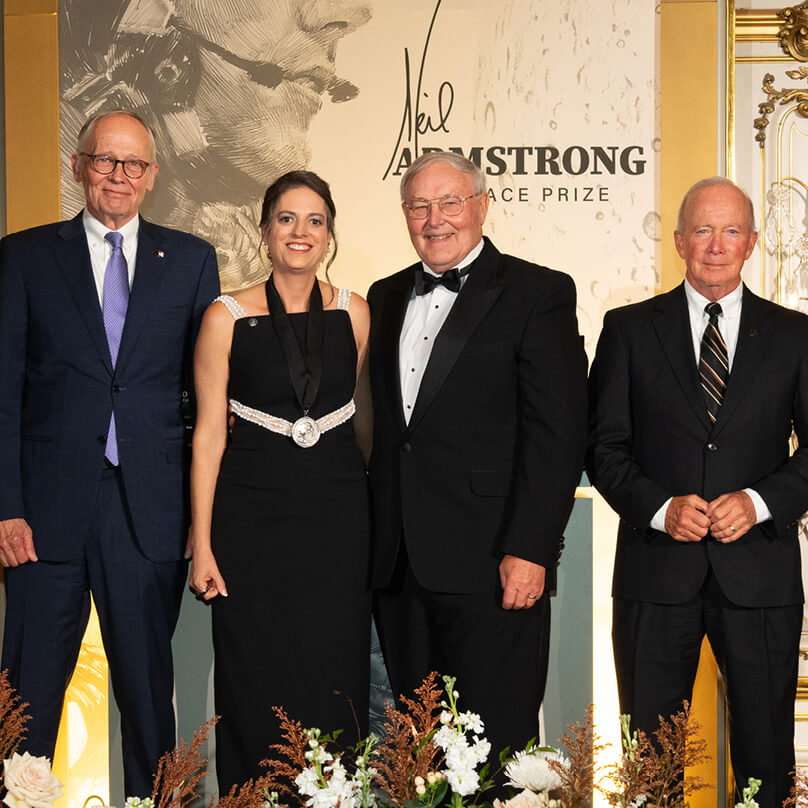
Five leaders from SpaceX’s Falcon 9 Booster Landing Team — from left, Lars Blackmore, Shana Diez, Jon Edwards, Eduardo Velazquez and Yoshiaki Kuwata — accepted the inaugural Neil Armstrong Space Prize for their contributions to the company’s vertical first-stage booster landing that proved orbital rocket reusability is achievable. (Purdue University photo/John Underwood)
SpaceX innovators draw inspiration from Neil Armstrong and Apollo era
The Neil Armstrong Space Prize winners see parallels between their triumph and the breakthroughs from the early days of the space program
At a Glance:
- Five leaders from SpaceX’s Falcon 9 Booster Landing Team received the inaugural Neil Armstrong Space Prize for helping make reusable orbital rockets a reality.
- The honorees see their work as a modern parallel to the Apollo era, when ambitious teams pursued technical breakthroughs without an established blueprint.
- The Falcon 9 team overcame skepticism, setbacks and repeated testing before successfully landing a first-stage booster in December 2015.
- Purdue alumnus Jon Edwards drew inspiration from astronauts Neil Armstrong and Jerry Ross before following in their footsteps by attending Purdue, which launched his career at SpaceX.
- Team members believe reusable rockets have transformed spaceflight and will ultimately open the door to human exploration of Mars and beyond.
Although Neil Armstrong became an icon by landing a spacecraft on the moon and taking humankind’s first steps there, he famously insisted that he was only one member of a team of thousands.
His achievement was NASA’s achievement — a product of the combined efforts of engineers, scientists, technicians and plant workers who conceived and built the vehicles that carried him to the lunar surface and back home safely.
Armstrong (BS aeronautical engineering ’55) would have found a kinship with the inaugural recipients of Purdue University’s international space prize bearing his name: five team leaders from SpaceX’s Falcon 9 Booster Landing Team.
Just as Armstrong’s Apollo program revolutionized space travel, so too did the SpaceX team’s breakthrough innovation: a vertical first-stage booster landing that proved orbital rocket reusability is achievable, thereby changing the economics of spaceflight and potentially enabling future travel deeper into the solar system.
Following Armstrong’s precedent, the five recipients of the 2026 Neil Armstrong Space Prize — Lars Blackmore, Shana Diez, Jon Edwards, Yoshiaki Kuwata and Eduardo Velazquez — happily acknowledge that hundreds of colleagues contributed to their interdisciplinary team’s success.
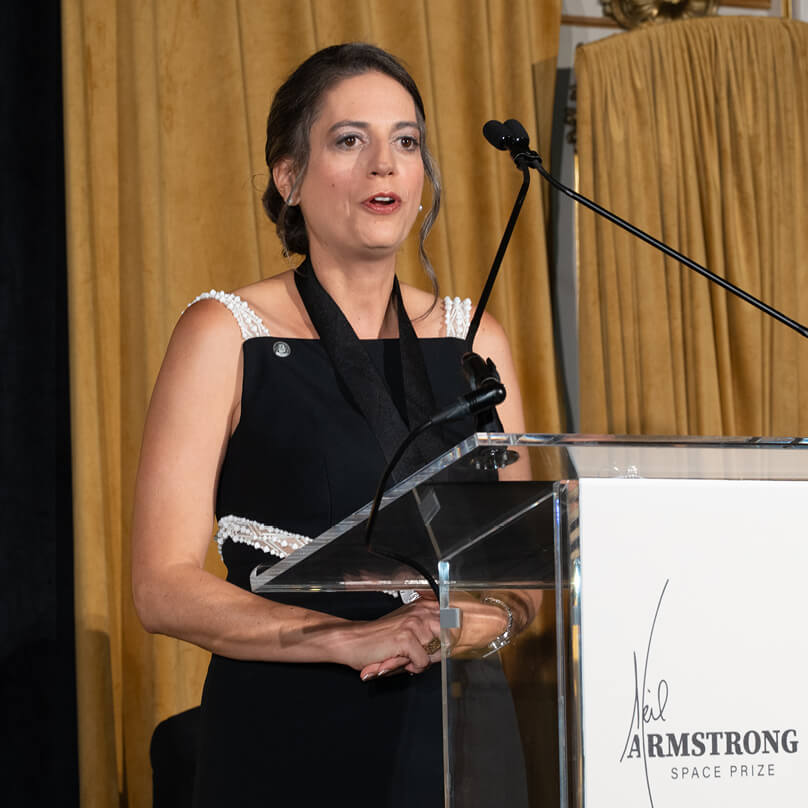
“I remember (Armstrong) in a documentary talking after the landing mission, and he’s so familiar as an engineer,” Blackmore said at the award ceremony, held Sept. 15 at the Cosmos Club in Washington. “He’s just kind of a nerdy guy like the rest of us, and he’s sitting there saying, ‘This is the interesting thing about it, and thanks to everyone who did all the work, and ultimately it was a really difficult technical problem that had to be solved. It’s not one person who did all of that.’
“I think the same thing is true of the Falcon landing,” Blackmore said. “You could give a separate award for the experimental rocket that came before, which was called Grasshopper. For the first landing in 2015. The first reuse in 2017. The 100th reuse. And the 600th reuse. Because they’re all completely different teams.”
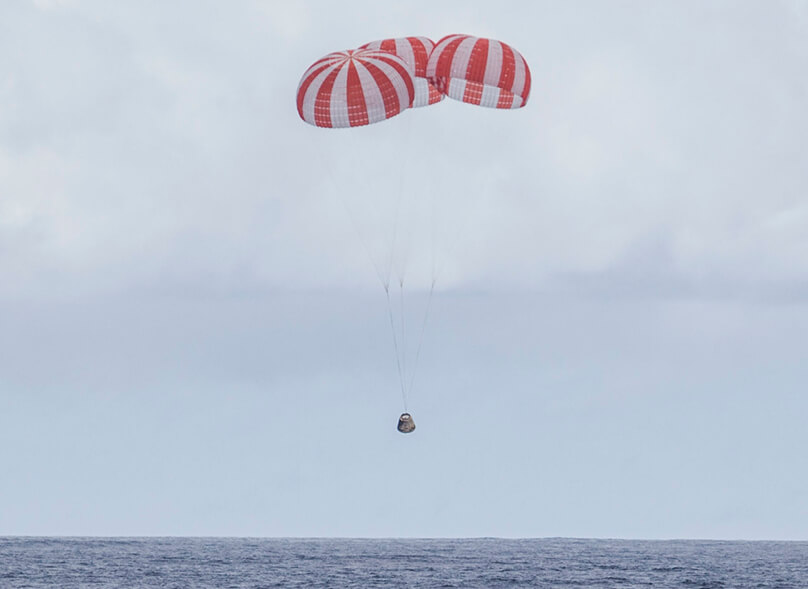
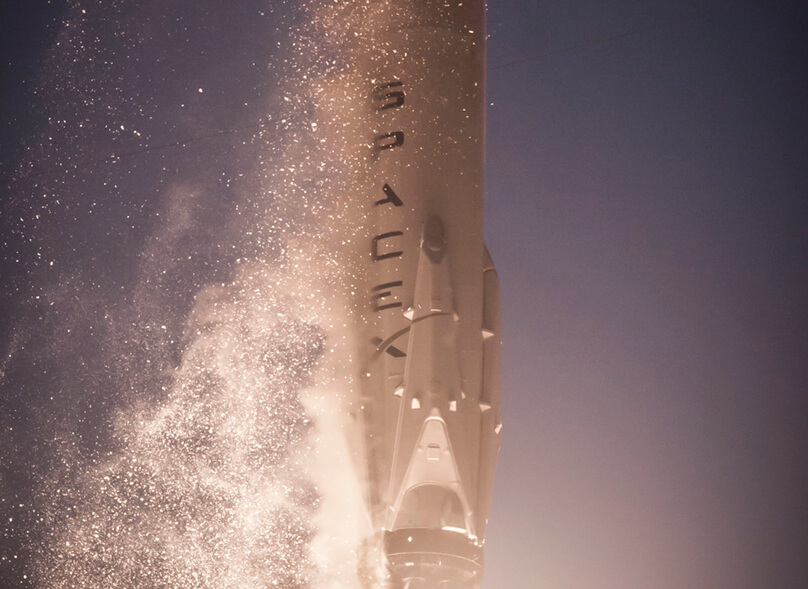
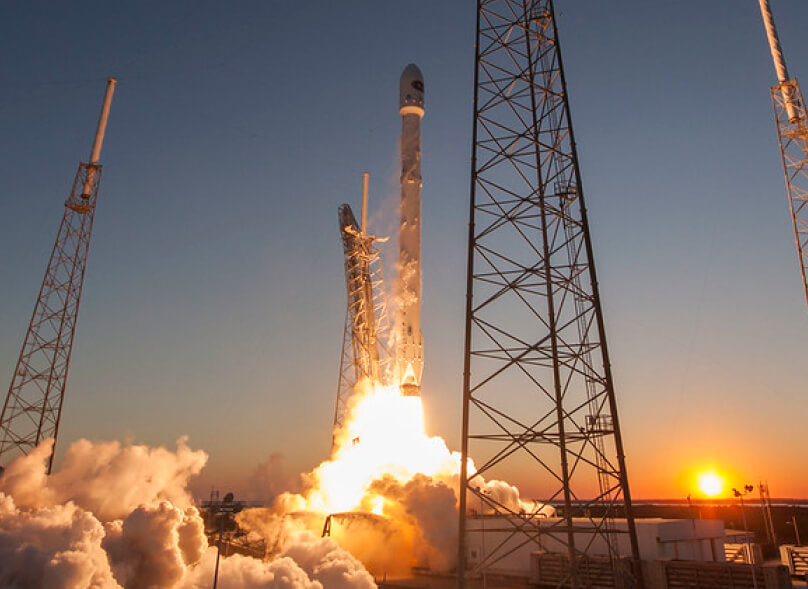
After significant trial and error, those interdisciplinary teams ultimately introduced solutions that aligned on the night of Dec. 21, 2015, when the Falcon 9 successfully launched 11 commercial satellites into low-Earth orbit, and then its first-stage booster returned to make a pinpoint landing on SpaceX’s Landing Zone 1 at Cape Canaveral Air Force Station in Florida.
It was a moment that the SpaceX colleagues will never forget, but Purdue alum Edwards predicts that it was only one step out of many to come. Up next: full and rapid reuse, which SpaceX intends to achieve with its new Starship rocket.
“That’s going to be the revolutionary moment,” said Edwards (BS aeronautical and astronautical engineering ’01, MSAAE ’04).
And after that?
“It means our dreams are going to come true,” Edwards said. “Anyone who is an enthusiast of space exploration has dreamt about exploring space, exploring the planets and moons, the solar system and beyond. There’s a freeing feeling, not being trapped on Earth anymore. When that finally happens, I think people will maybe collectively feel free.”
Should that time come, it will be in part due to the SpaceX team’s landmark accomplishment that laid the foundation for advances in space exploration.
“My hope is that there will be people that are living and working on Mars,” Diez said, “and they’ll realize that there was no way that was ever going to happen if it wasn’t for reusability and if it wasn’t for SpaceX’s commitments to being able to make these rockets reusable, large enough, able to fly multiple times and able to really capture the capability of a spacecraft.”
The meeting that turned the best day of his career into the worst
Blackmore looks back on one of the most pivotal days in the development of Falcon 9’s landing capability with an equal mix of pride and anxiety.
Landing the first stage was his team’s responsibility, and he had been lobbying for a year to add grid fins to the rocket to help it maneuver during descent. But the company had pursued alternatives that had not succeeded.
As CEO Elon Musk noted the failures during a meeting, Blackmore seized the opportunity to make his case once more.
“Elon said, ‘Look, we clearly are failing at this. We don’t know how to land this rocket,’” Blackmore recalled. “And I was just like, here’s the moment. I said, ‘We do know how to land it. It’s fins. I have the simulations showing that this is the secret sauce that you have to add.’”
Point made. Musk agreed to give it a shot.
An elated Blackmore left the meeting thinking he had about a year to implement the grid fins. But an hour later, Musk called Blackmore and Diez into his office to lay out a very different timeline.
“He said, ‘You’ve got 30 days,’ and what had been the best day of my career, ever, then became the worst day of my career,” Blackmore said.
It wound up taking about a year — a whirlwind of guessing, theorizing and repeated testing until Blackmore and his colleagues arrived at a solution that worked.
Today, he sees a parallel between that period, which involved plenty of failure before ultimately achieving success, and the early days of the space program.
“What the Apollo era had was, ‘Here’s the goal. We have no idea how to get there right now. We are going to land a person on the moon. We don’t know how to do it, but we must do it faster than our competitors. And you guys have to figure it out. And whatever you need and however many times you have to fail along the way, you’re going to figure it out,’” Blackmore said. “And that’s exactly the ethos that we had with the Falcon landing program. Elon just said, ‘We are going to land this rocket. We are going to make rockets reusable. Go figure it out.’”
And Blackmore’s neck was on the line for suggesting the grid fins in the first place.
“I was enemy No. 1 in the company for a while because you have to imagine that this was a company where people had been promised for years that if they just worked another 100-plus-hour week, we would get to a stable business and the company wouldn’t go bankrupt. And then I was buzzing around saying, ‘Hey, fins are coming. You’d better get ready,’” he said. “I was personally sitting on all of this risk where if my guesses are wrong, then this entire army of people that have worked on this thing, we’d come up at the end and I’d be like, ‘Whoops, sorry, guys.’”
In the end, he didn’t have to apologize. The leap of faith paid off — and Blackmore points to SpaceX’s ambitious workplace environment as the incubator that allowed it to happen.
“I think the only way that your organization can really do drastic things is if people are encouraged to say, ‘Hey, I think this is the path forward,’” Blackmore said. “Because ultimately if no one wants to put their neck on the line to come up with an idea and see it through to completion, then no one will do that.”
The powerful influence of 2 Boilermaker astronauts
Growing up in Granger, Indiana, Edwards had three space heroes.
One was Carl Sagan. Purdue alum Edwards still watches the planetary scientist’s influential documentary series, “Cosmos: A Personal Voyage,” with his kids today.
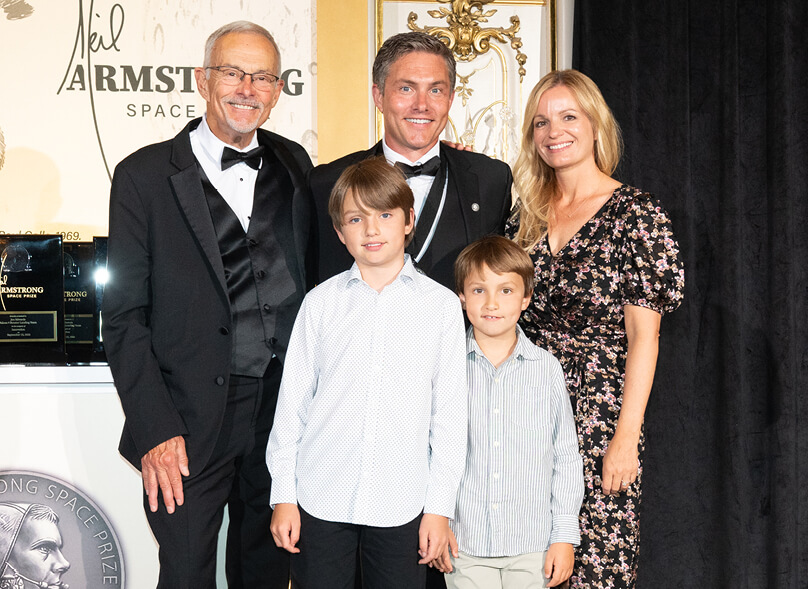
Another was Armstrong. His son Tommy — born in July 2019 as the world celebrated the 50th anniversary of the Apollo 11 mission where the Boilermaker legend took a giant leap for mankind — has the middle name Armstrong.
“We couldn’t decide between Apollo and Armstrong,” Edwards said. “And on our way to the hospital, we drove past Armstrong tree nursery. And my wife and I looked at each other like, ‘Maybe that’s a sign, I don’t know.’ And then we get into the operating room and all the machines in the operating room were from a company called Armstrong. And we said, ‘Well, that’s it.’”
His third hero was another Purdue astronaut: Jerry Ross (BS mechanical engineering ’70, MSME ’72), who just so happened to be the uncle of Edwards’ childhood best friend and next-door neighbor.
“He would come visit once in a while. And whenever he did, he would always make a little bit of time to talk to me,” Edwards said. “He was a hero of mine, too.”
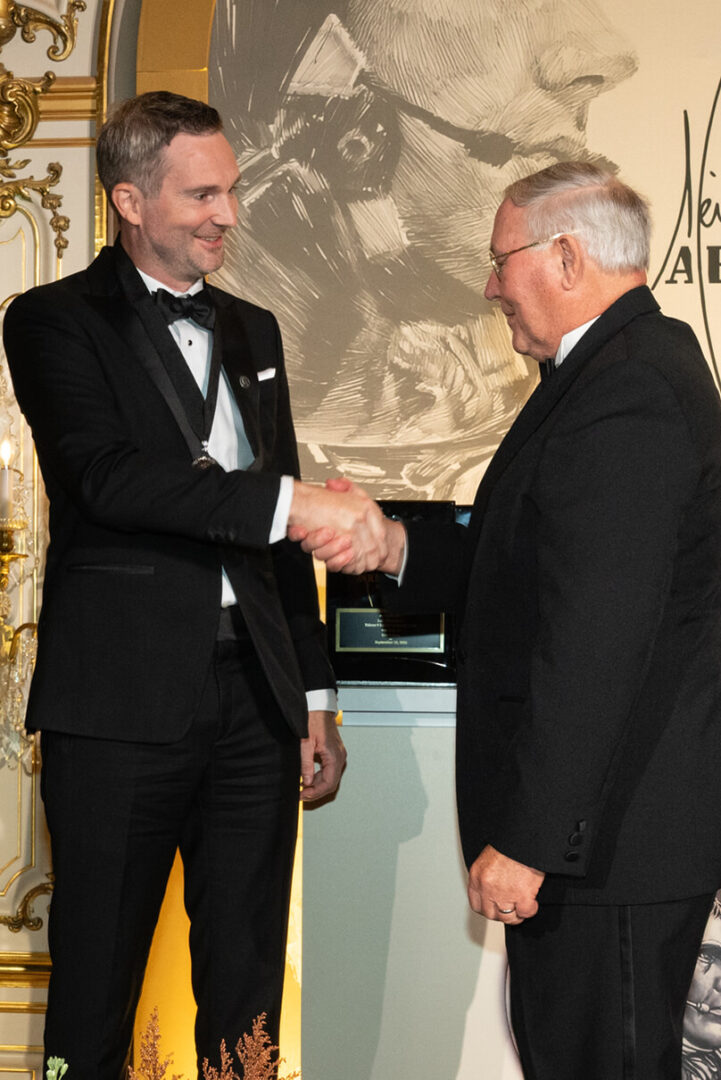
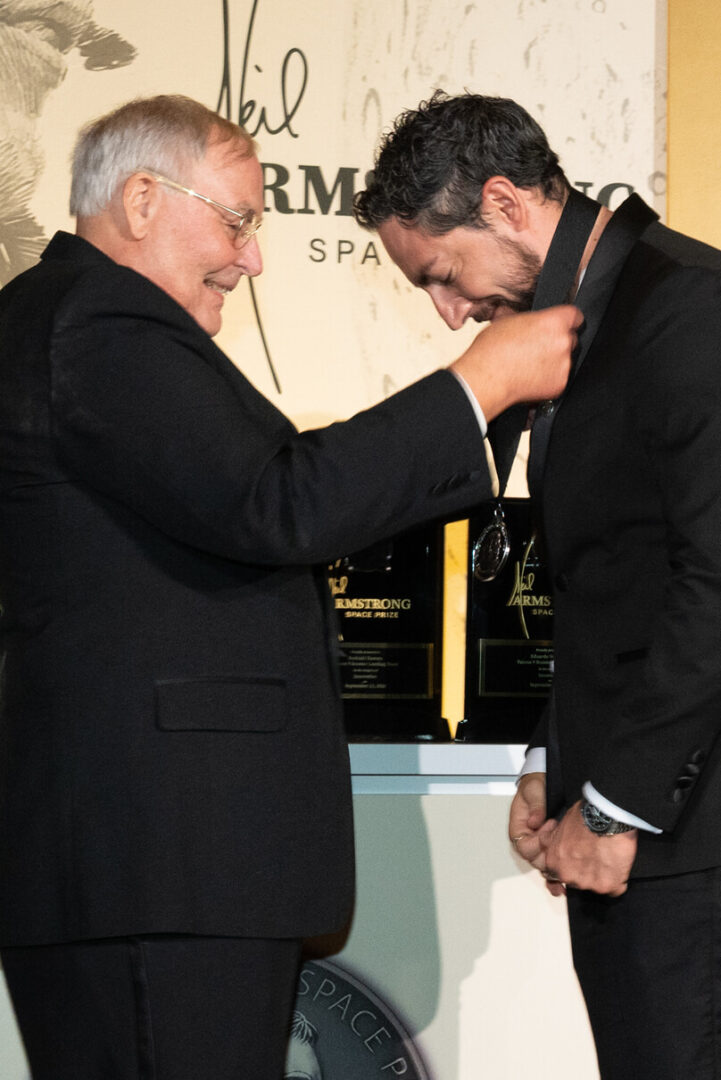
And who was it who placed the Neil Armstrong Space Prize medallion around Edwards’ neck at the awards ceremony? None other than Ross.
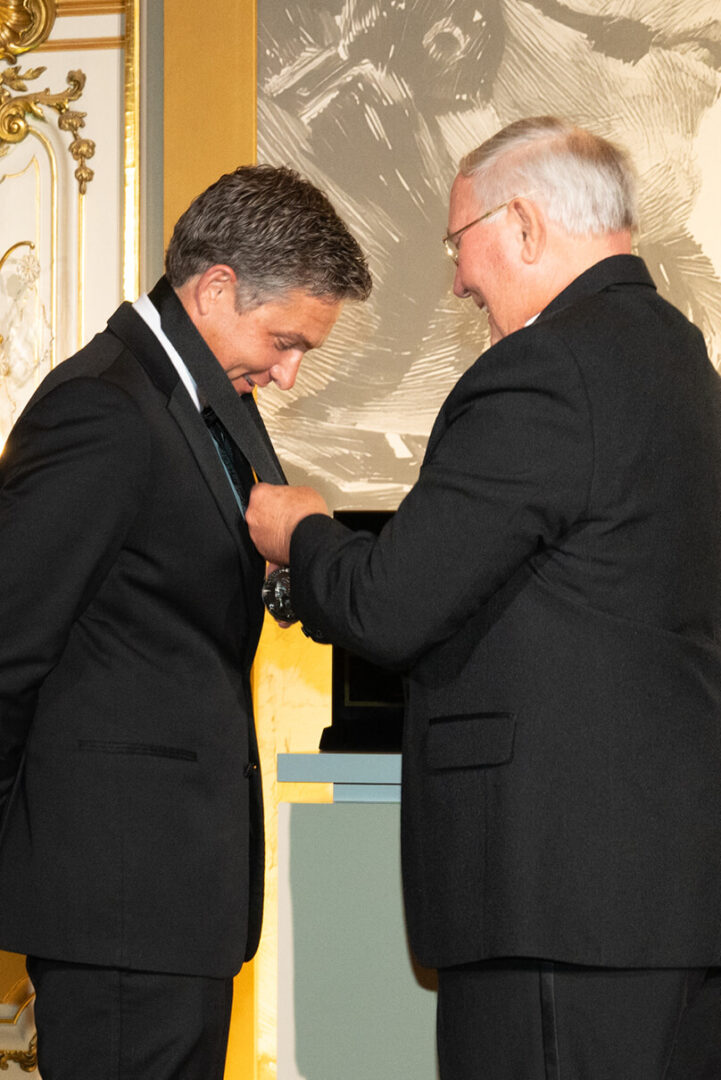
“It’s just fascinating and very rewarding to see young people that you had interfaces with earlier in their lives and their potential careers and maybe you said a couple words that would encourage them to No. 1, go to Purdue and No. 2, to pursue their dreams,” Ross said after the ceremony. “It’s great. Every time you see that, you understand what a teacher must feel like when their students have done a good job in their lives.”
The space-obsessed youngster indeed followed Armstrong and Ross to Purdue, where he studied under professor Steven Collicott and led a student team that earned a chance to conduct an experiment in weightlessness on a NASA test aircraft. The two-time AAE alumnus has been at SpaceX for 22 years since completing his master’s degree in 2004, and now he’s the one a younger generation of space nuts might aspire to become someday.
“The Wright brothers proved that you could fly an airplane. It was much later that Charles Lindbergh crossed the ocean, and then Amelia Earhart. Everyone is riding on the shoulders of others, but everybody gets their chance, I think, to take the next step,” Edwards said. “Some students today might have FOMO (fear of missing out), thinking, ‘Oh, I missed Falcon.’ Don’t worry about it. You’ll have your moment. Just work hard and do something that’s so important that it’s worth failing for.”
The cutest possible way to discover your work is being noticed
Kuwata was fully aware of what it meant that his team successfully landed an orbital rocket — and then repeated it hundreds of times afterward. What he didn’t know was how many people were paying attention outside of the circle of space enthusiasts who cared very much about the Falcon 9 team’s breakthrough.
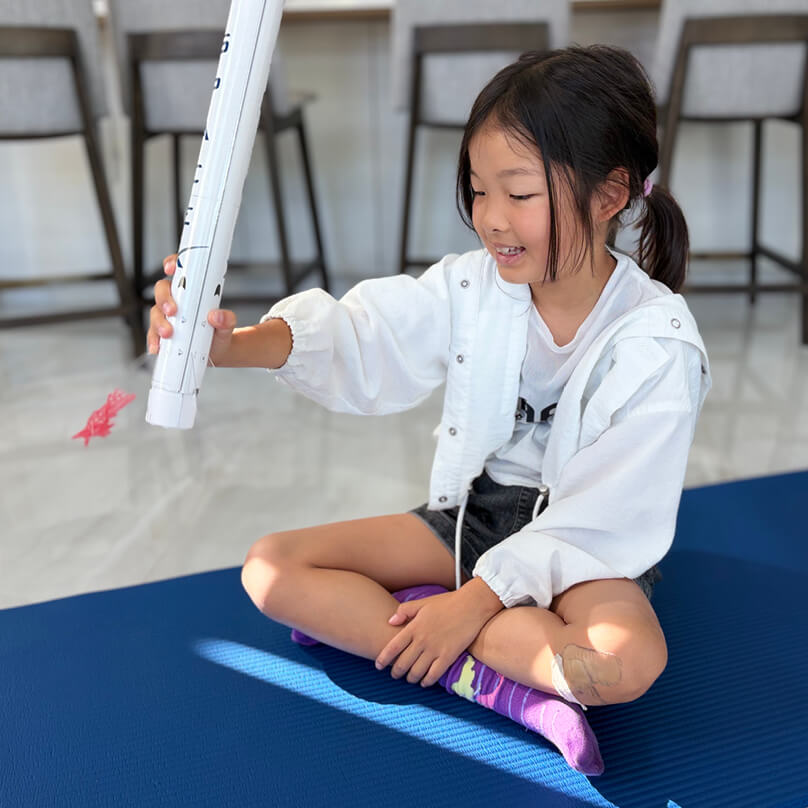
Then one day a few years ago, he got a sign while watching his preschool-aged daughter, Yuri, play with a toy model of her daddy’s SpaceX rocket. As Yuri, now 8, pretended to land the rocket, she simulated the very same vertical landing that Kuwata had developed the algorithms to pull off.
“She was launching it and then landing it vertically, just like it’s just the way it is,” he said. “And that’s when I thought the work that I’ve been a part of actually made a big impact on the general public.”
After Falcon 9, aerospace companies that lack recoverable rockets are viewed as dinosaurs. But not so long ago, conventional wisdom said that vertical landing and reusability were impossible flights of fancy.
NASA’s pioneering engineers faced similar skepticism in the 1950s and ’60s as they pursued space objectives that many believed to be unachievable. The opportunity to follow their example was one of the factors that convinced Kuwata to join SpaceX in 2012.
“Lars was giving me a tour of the factory, and he told me what’s happening here is the 21st-century version of the Apollo program, where young and hardworking people try new things and test and fly and make history,” Kuwata said. “So it’s an honor (to win the Neil Armstrong Space Prize). And I feel that receiving this award, the promise has come true.”
An unforgettable moment — and a very special form of artwork
Diez loves artwork of all types. But she is especially fond of art that doesn’t necessarily fit the traditional definition of the word.
“There’s something about images that are based on something that you know how hard it was to achieve because of physics or engineering that hits me in a different way,” said Diez, whose team specifically focused on making Falcon 9 reusable. “I think that’s art in a different light because it’s based on some engineering challenge that was solved, and it has a different level of meaning if you’ve worked on it or you know what went into making it happen.”
She certainly has a deep personal connection to the overwhelming visual that accompanied the first landing.
It took place at night, so the pitch-black backdrop provided a stark contrast to the bright orange flame created by the kerosene oxygen ignition as the rocket approached the ground.
“You see the plume start and the whole engine turns on and then the landing legs come out. It was so shocking and beautiful, as well as just exciting to see that it was working,” she said. “It’s just something that I think I’ll always have that picture in my head of how amazing it was to see.”
Seconds later came another moment Diez will likely never forget.
The combination of the darkness, the dust Falcon 9 kicked up during the landing sequence and the sonic boom that occurred as the rocket touched down caused some colleagues watching from outside the control room to mistakenly believe it had exploded on the pad.
Diez got to be the bearer of good news.
“You can’t really see it until everything clears out, and then you can see the rocket is still standing there,” Diez said. “So, they were calling me from the field, saying, ‘What does the data say? What happened? Why did the rocket explode? Did it tilt over?’ And I was like, ‘No, you don’t understand. That was the sonic boom. The rocket is still there.’ It was a pretty amazing moment to be able to share with people, like, ‘No, that was OK. That was normal.’”
Especially when she was the one who had talked some of those colleagues into contributing to the project when many at SpaceX preferred that the company focus on profitability instead of what they viewed as crazy side quests.
“Elon and I had talked about how the first Falcon landing was going to be the pathway to getting us to land on Mars, and that’s why I came to work at SpaceX,” said Diez, now the senior director of Starship reliability. “It just felt like it was along the path of what I was here to do, and that’s why I work on Starship now. It’s the same thing. It’s like, what are the things that I’m going to do to help SpaceX land on Mars? I feel like that has just driven my whole career.”
The next step: Turning an out-of-this-world event into a boring one
The way Velazquez sees it, SpaceX will have succeeded in its mission when it makes rapid reusability boring.
Not so long ago, he and his colleagues would gather at the office to watch SpaceX rocket launches, cheering wildly when they succeeded and grieving when they didn’t.
“It was harrowing,” he said.
What he looks forward to now is the day when Starship lands, refuels and quickly departs once more, functioning much like a traditional airline.
“When an airplane lands, you’re very rarely all clapping,” he said. “You want to get to that point where it’s just commonplace. It seemed crazy back then, but I think we’re getting a little closer to it.”
Velazquez, now director of Crew Starship engineering, believes his team will get there using the same approach that helped Falcon 9 succeed. There were no disciplinary barriers preventing the free flow of ideas between functional teams. If his team needed the rocket to hover for a second longer, he could talk it over with guidance and controls expert Kuwata. Or if he had questions about propulsion, he could lean on Edwards, Diez or members of their teams. Same with any other issue he might encounter trying to ensure that the rocket could actually land.
“I think that’s the only way that it worked because it was so new and there was no blueprint to follow. I think it was the secret sauce that made it work,” Velazquez said. “It was really fun at the time to work on it because it was such a big project and it was pretty interdisciplinary. There are so many people that just poured themselves into it.”
Perhaps those words and that sentiment sound familiar.
It’s the kind of thing Neil Armstrong would say.