Meet some of the Purdue alums who have powered NASA’s Artemis program
Boilermakers have taken part in virtually every stage of the program that will bring humankind back to the moon
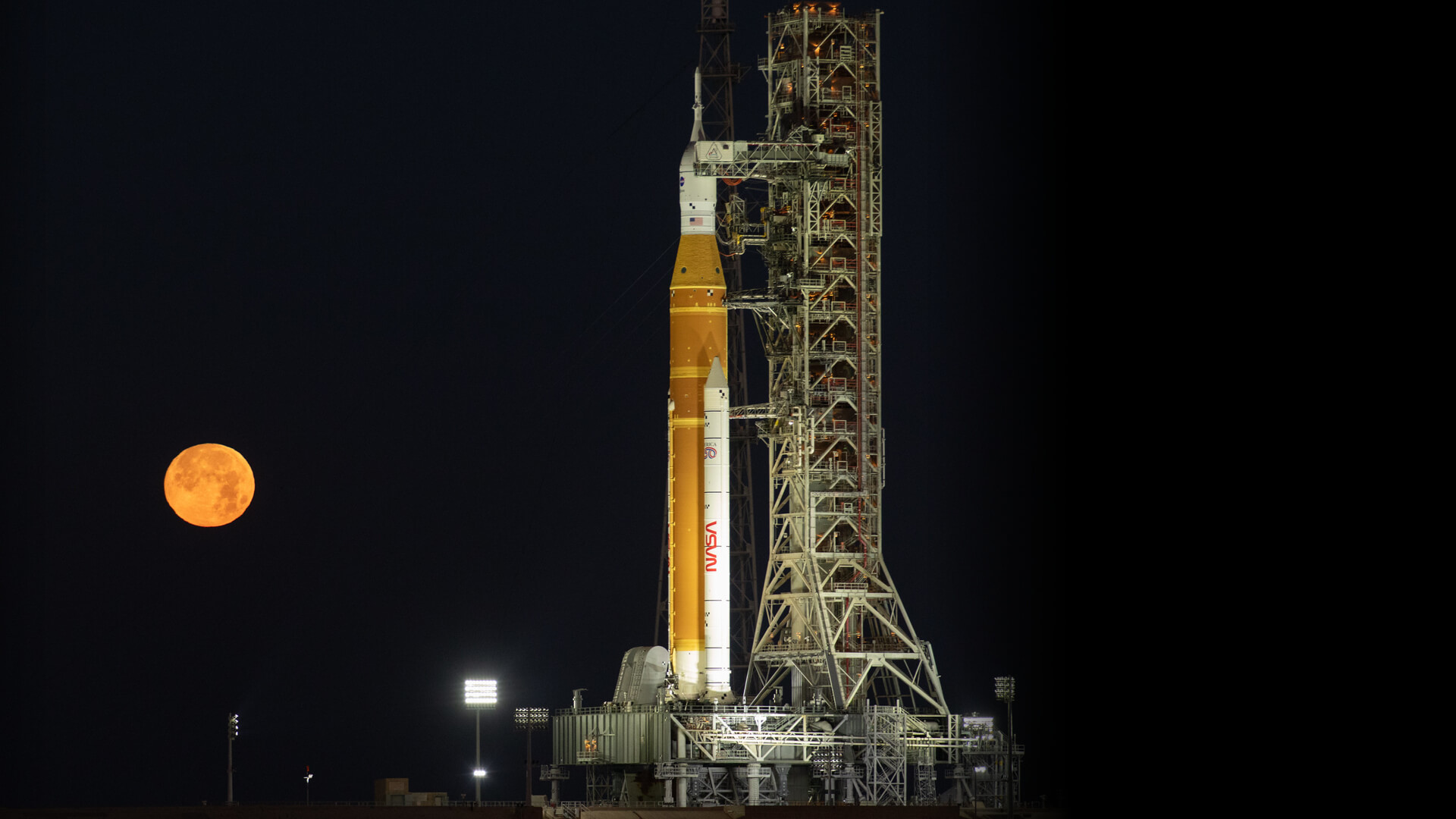
Purdue astronaut Scott Tingle was one of the last people to speak with the Artemis II crew before they embarked on their historic trip around the moon in April 2026.
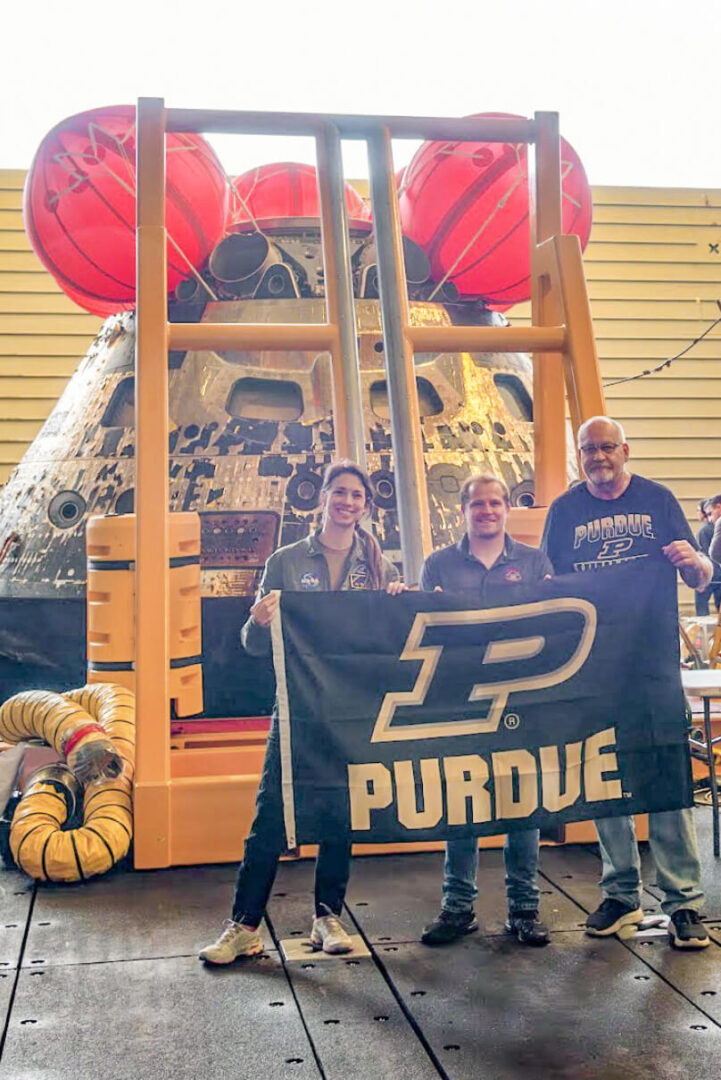
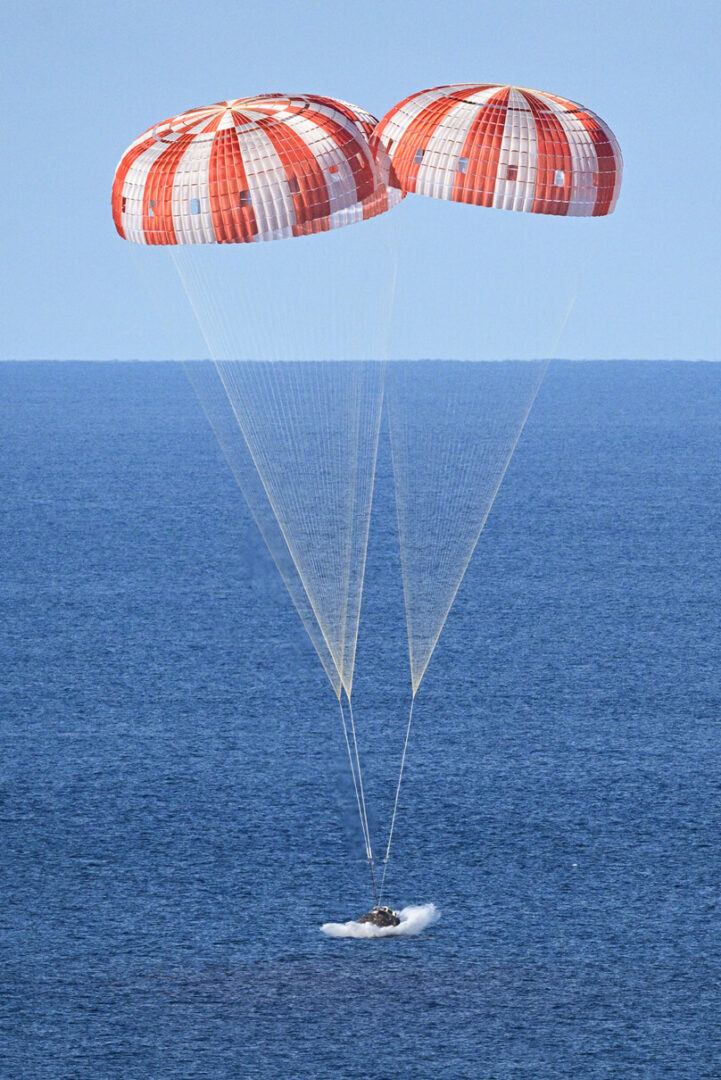
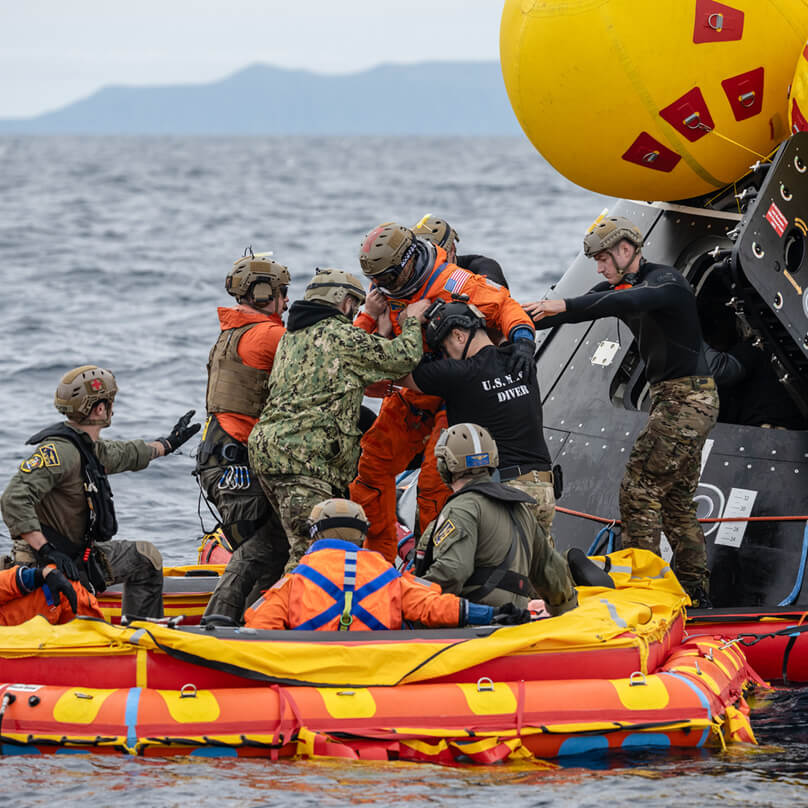
And when the crew splashed down in the Pacific Ocean 10 days later in the Orion capsule, three Boilermakers were part of the team that ensured the space voyagers would return home safely.
That illustrates Purdue’s importance to Artemis — and the university’s influence on American space history. Ever since the United States chose to pursue space exploration in the 1950s, Boilermakers have taken part in every stage of the process:
Building better rockets and more efficient propellants.
Engineering safer spacecraft and more functional spacesuits.
Leading massive strategic teams and planning missions.
And, of course, traveling to space and claiming membership in Purdue’s iconic Cradle of Astronauts.
On and on it goes. Boilermakers have been there for all of it.
And as NASA prepares to send the first astronauts to the lunar surface since 1972, when Purdue grad Eugene Cernan took humankind’s most recent footsteps there, it’s a safe bet that the work of thousands of Boilermaker alums will help these awe-inspiring missions succeed.
Alums like these Boilermakers who have played integral roles in the Artemis program thus far:
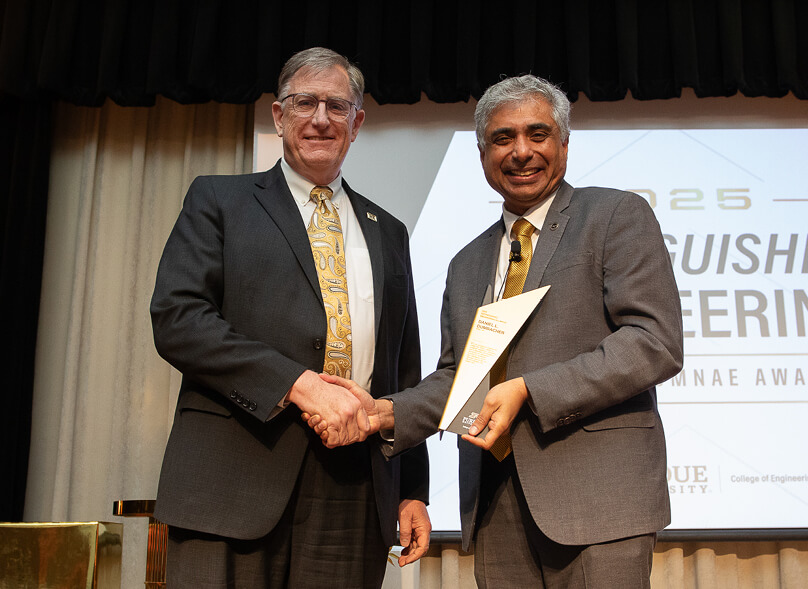
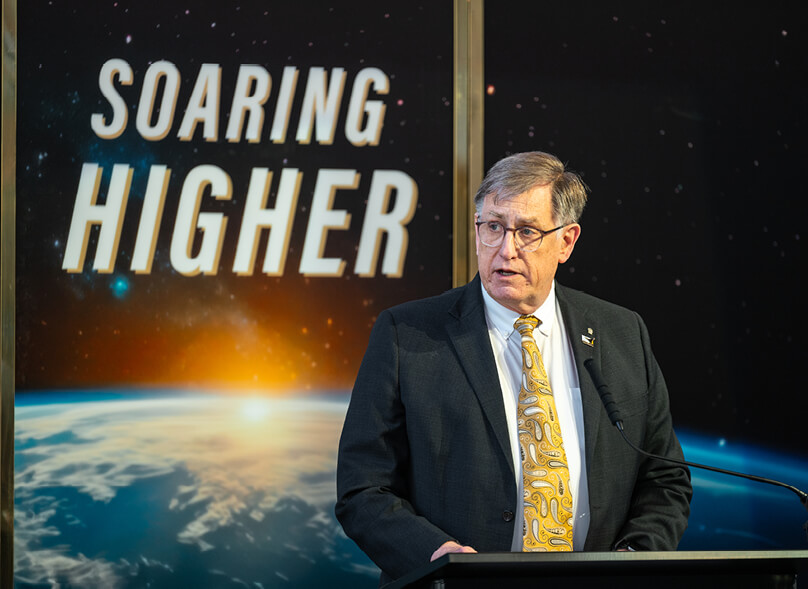
Dan Dumbacher
Dan Dumbacher, serving as deputy associate administrator of NASA’s Human Exploration and Operations Mission Directorate from 2010-14, led a team of 5,000 people and managed a budget of $3 billion to initiate the Artemis campaign. His work developing NASA’s human exploration program to the moon and Mars included overseeing the Space Launch System, ground systems development, and operation and integration efforts.
Dumbacher’s decades-long career at NASA included work on the space shuttle and multiple experimental vehicles, earning NASA’s coveted Silver Snoopy Award and Distinguished Service Medal. He also served as the CEO for the American Institute of Aeronautics and Astronautics (AIAA) and on the NASA Advisory Council.
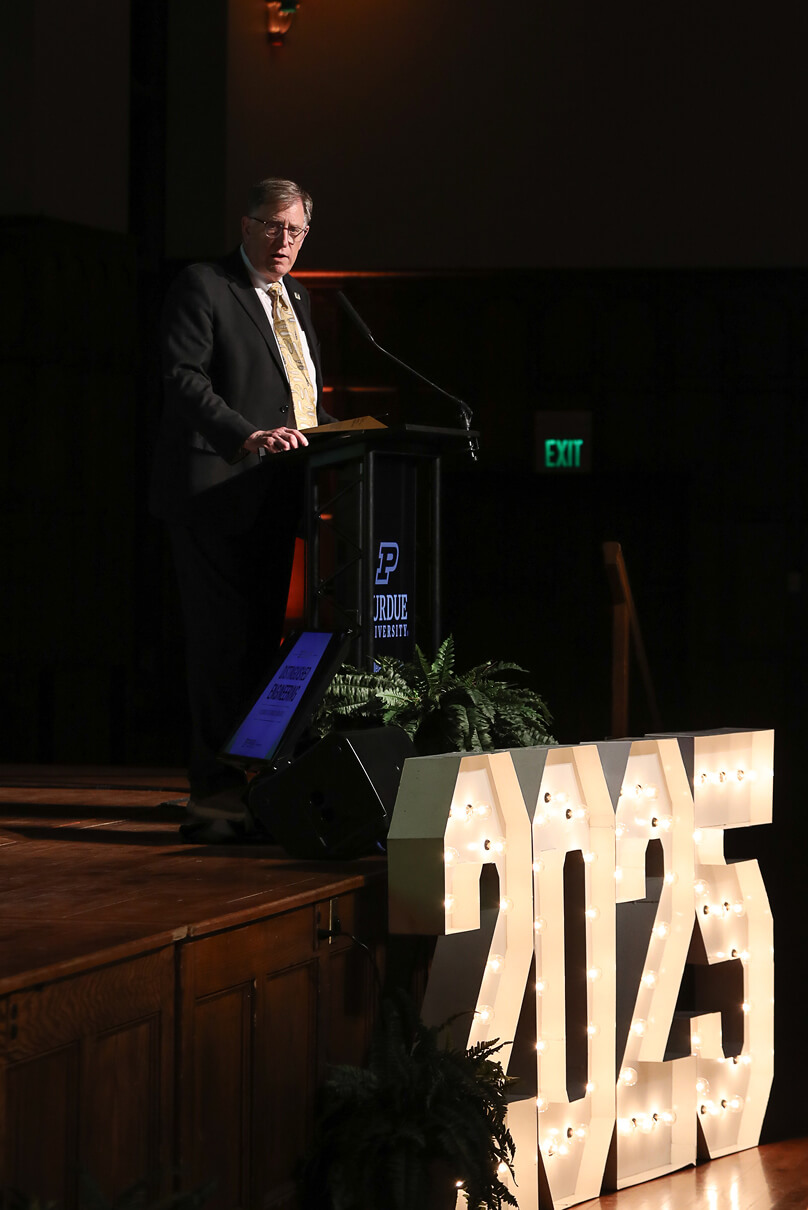
Dumbacher (BS mechanical engineering ’81) is a professor of engineering practice in Purdue’s School of Aeronautics and Astronautics and was recognized as the Purdue Distinguished Engineering Alumnus in 2025.
Julie Kramer White
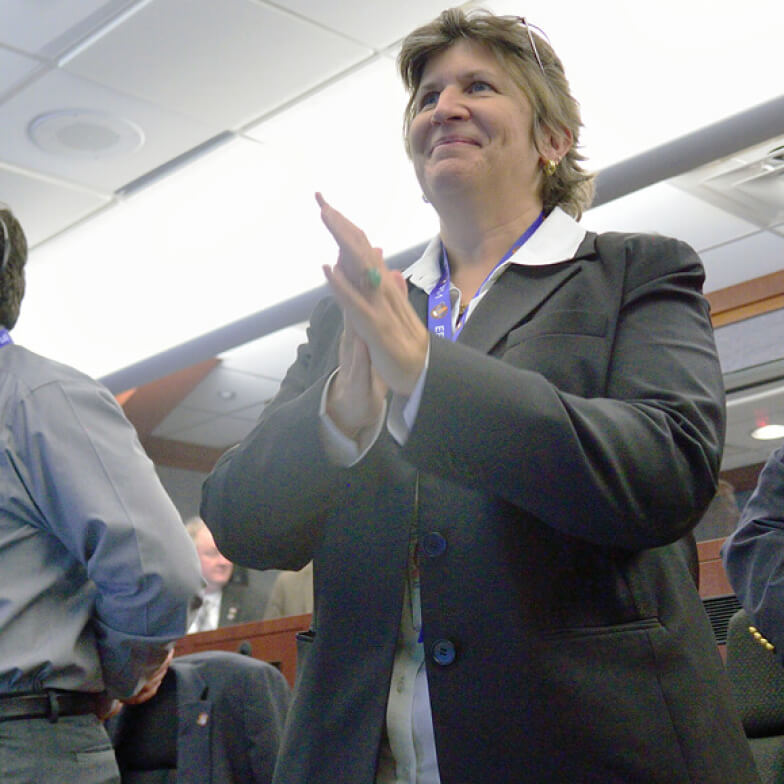
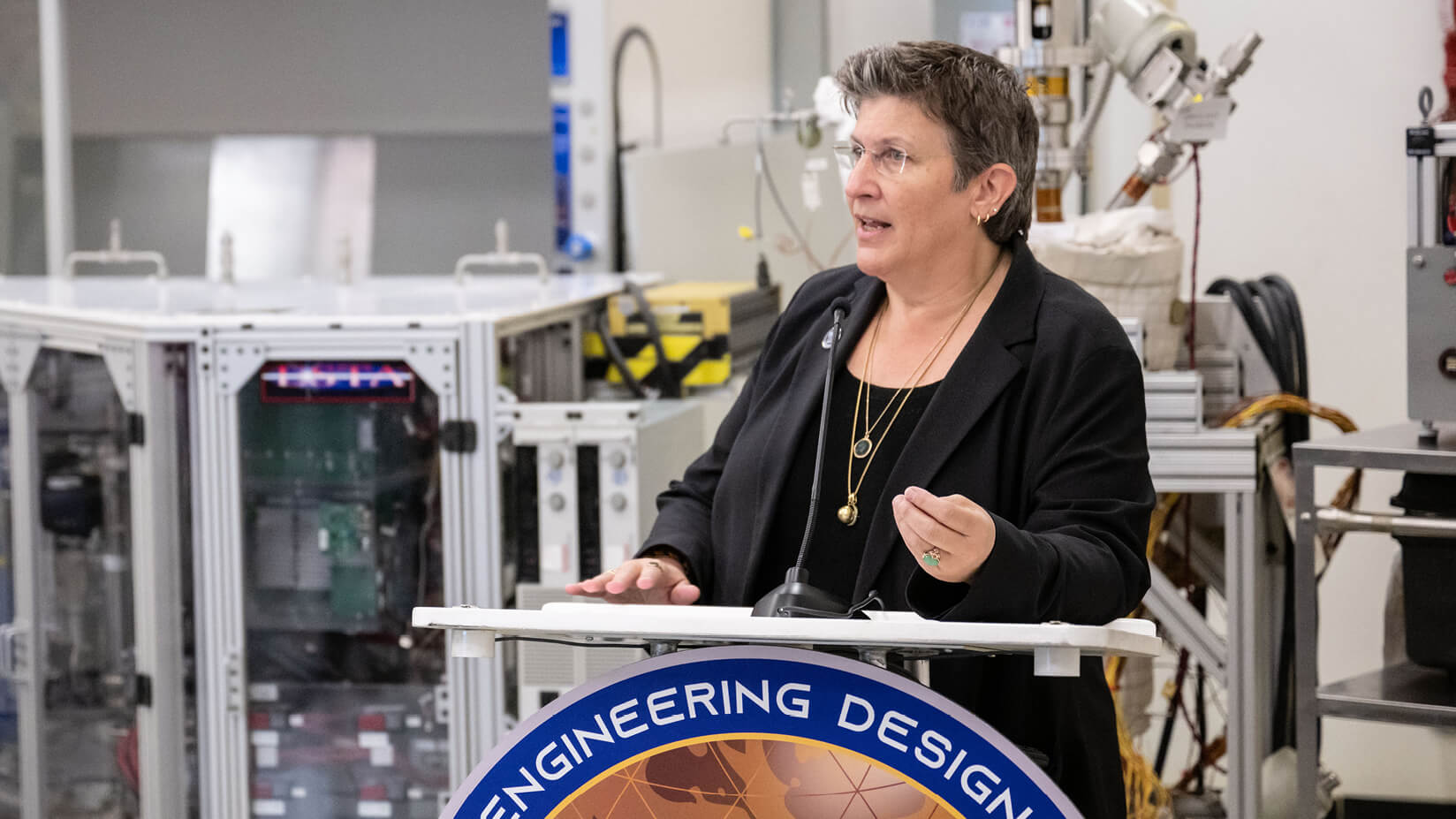
Julie Kramer White was the chief engineer of the Orion Multi-Purpose Crew Vehicle (MPCV) — the cone-shaped crew capsule used for the Artemis missions. President Barack Obama thanked her directly for the vehicle’s development: “Julie Kramer White is helping America launch a new era of space exploration.”
Kramer White (BS aeronautical and astronautical engineering ’90) has worked at NASA since her internship in the post-Challenger space shuttle era, with Apollo engineers as her mentors. As a structures engineer, she made design changes to make the space shuttle more capable as the International Space Station was being built.
Those experiences shaped her decisions when designing Orion. Kramer White’s ongoing career at NASA has spanned more than 35 years. She now serves as engineering director for NASA’s Johnson Space Center. She was recognized as a Purdue Distinguished Engineering Alumna in 2023.


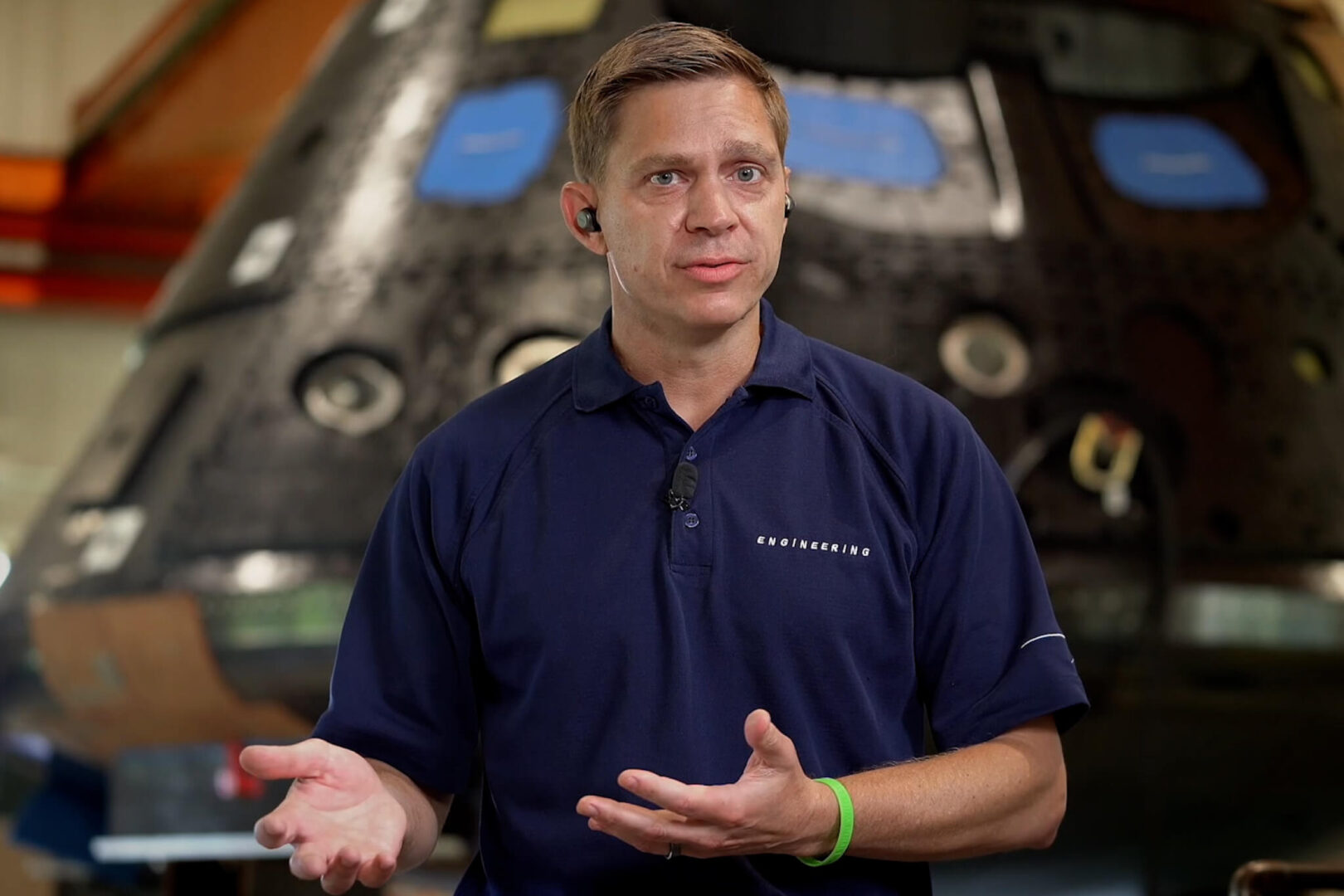
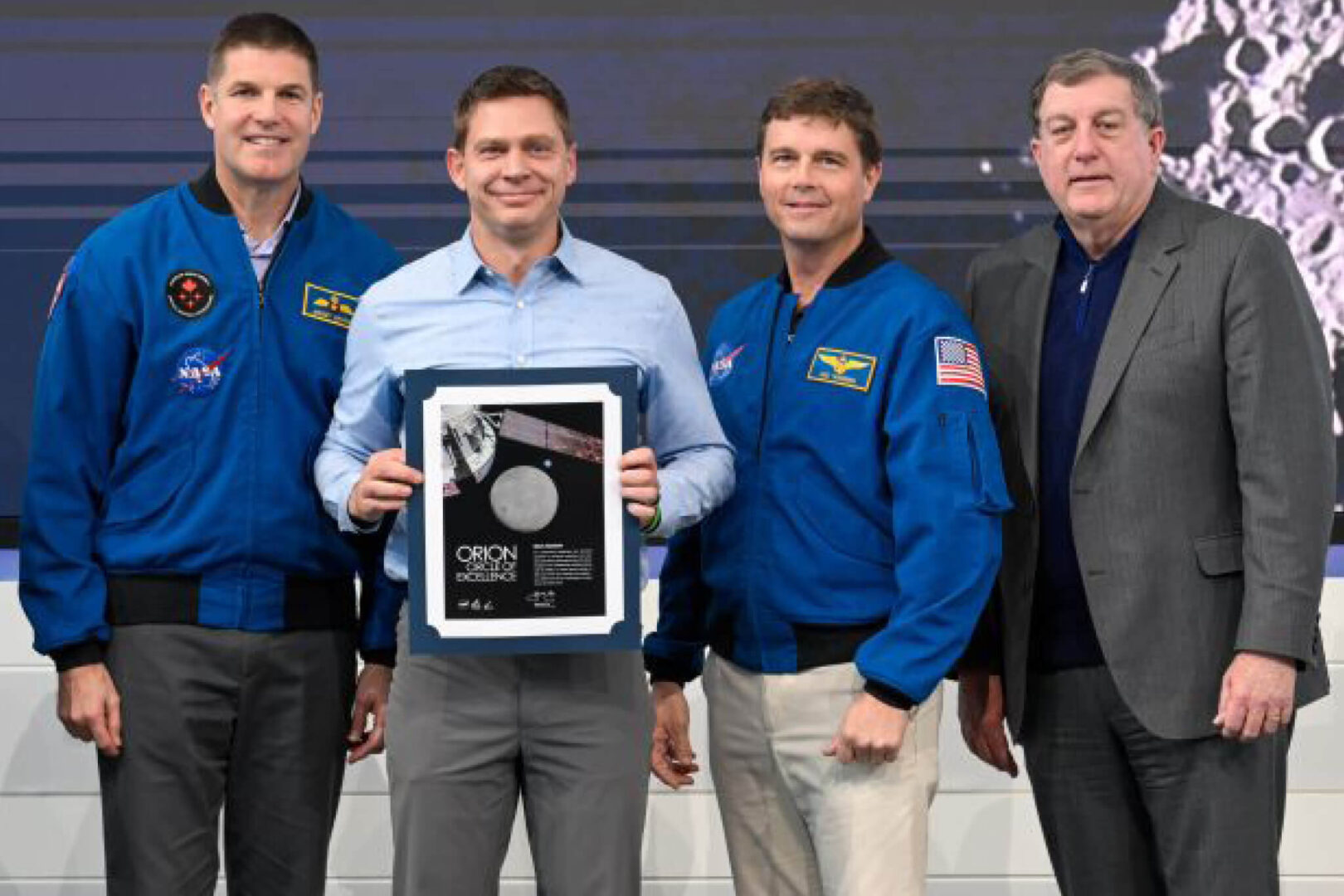
Mark Baldwin
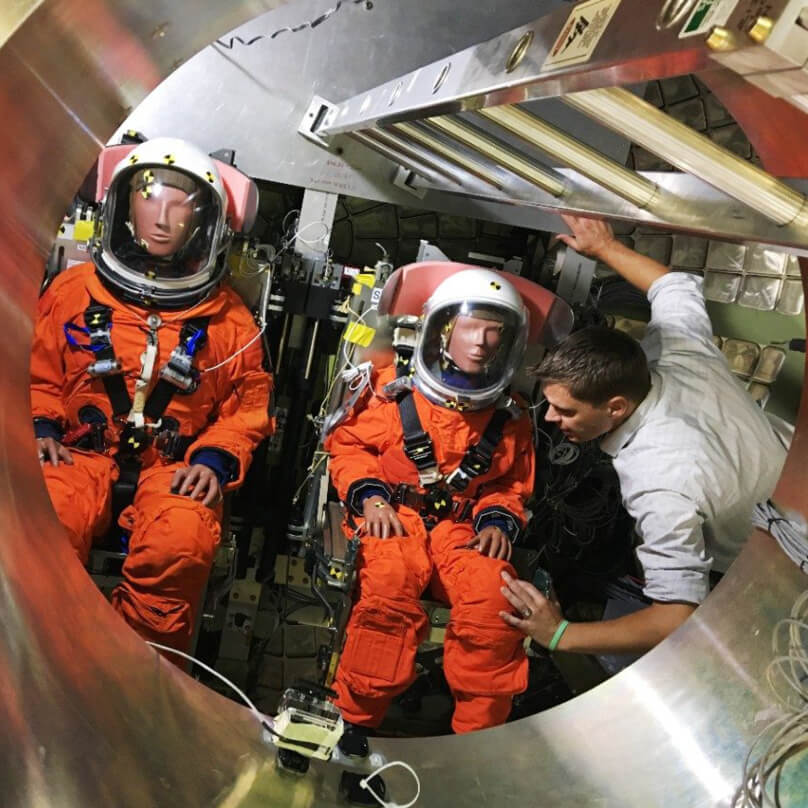
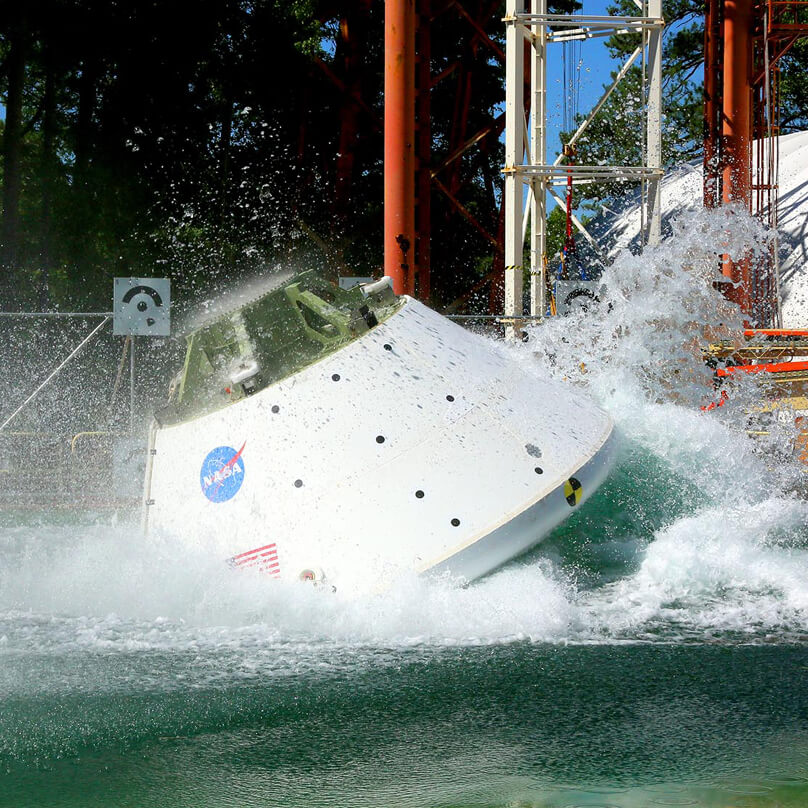
Mark Baldwin has a unique dual background, with degrees in both mechanical engineering and orthopedics. When he joined Lockheed Martin in 2009 as occupant protection lead, he utilized both skill sets working on the Orion capsule. First, he helped to measure the stresses of the vehicle itself, especially during its planned water landing. Second, he worked to secure the safety and comfort of its human occupants, refining the seats, restraints, control panels and more. After an uncrewed mission in 2022, Orion’s full repertoire was finally put to the test on Artemis II in April 2026 — the first crewed mission around the moon in more than 50 years.
Launch and landing are the two most tenuous times during human spaceflight, and Baldwin (BS mechanical engineering ’97) had prepared 15 years for both. The launch of Artemis II went smoothly, with the four astronauts communicating and functioning successfully through the intense vibrations of the rocket. After the astronauts’ mission around the moon, Baldwin watched eagerly as splashdown approached. “I knew if (the capsule deployed) three good parachutes, the injury and structural risks were very low,” he says. “When those three parachutes inflated to full open, 15 years of stress and anxiety was released. The landing was just as we simulated it.”
“Success of this mission was built on solid engineering fundamentals through years of dedication and teamwork,” Baldwin says. “I appreciate all that the Purdue engineering program did for me personally and many of my colleagues who helped put Artemis II in the history books.”
Scott Tingle
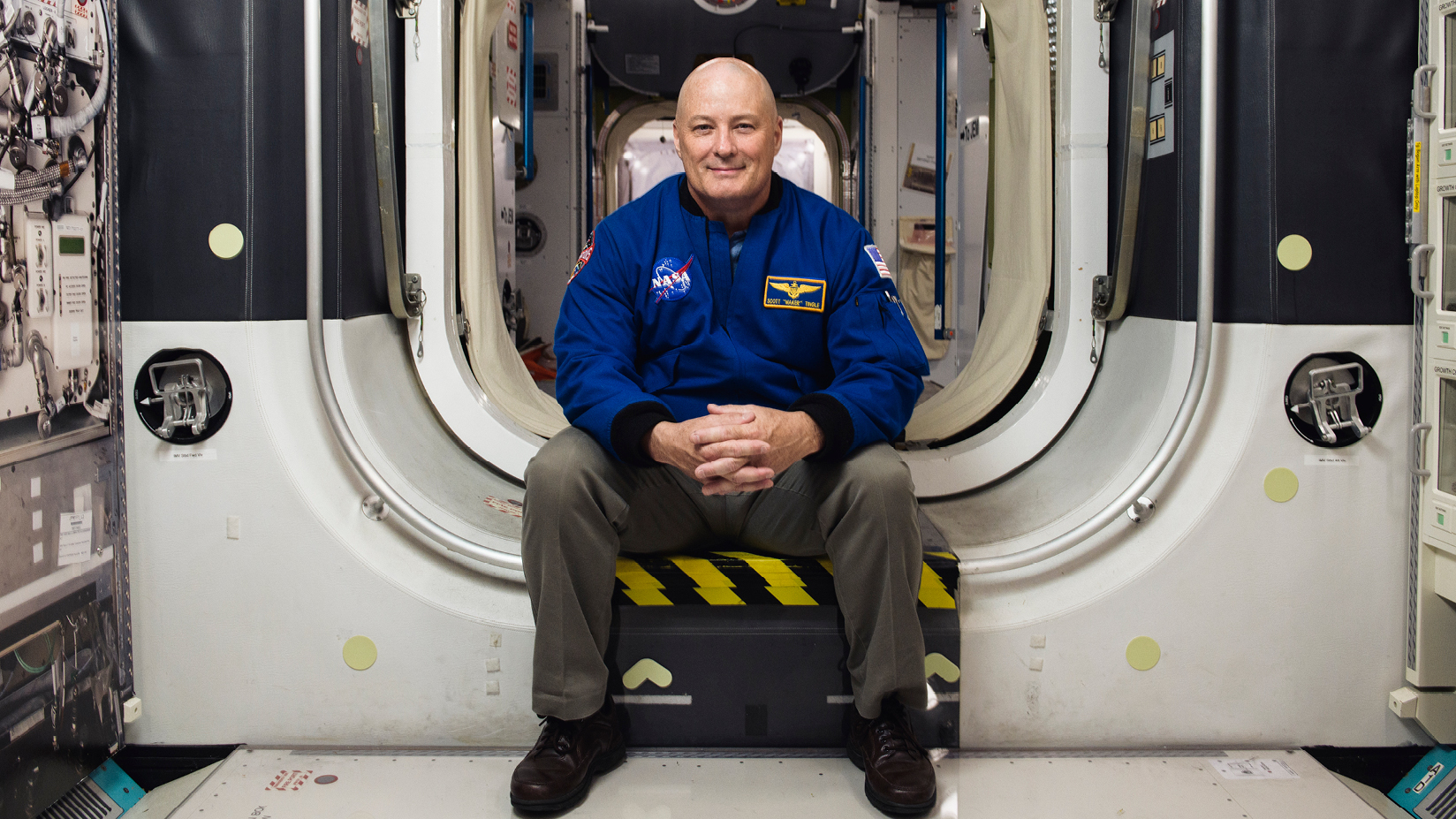
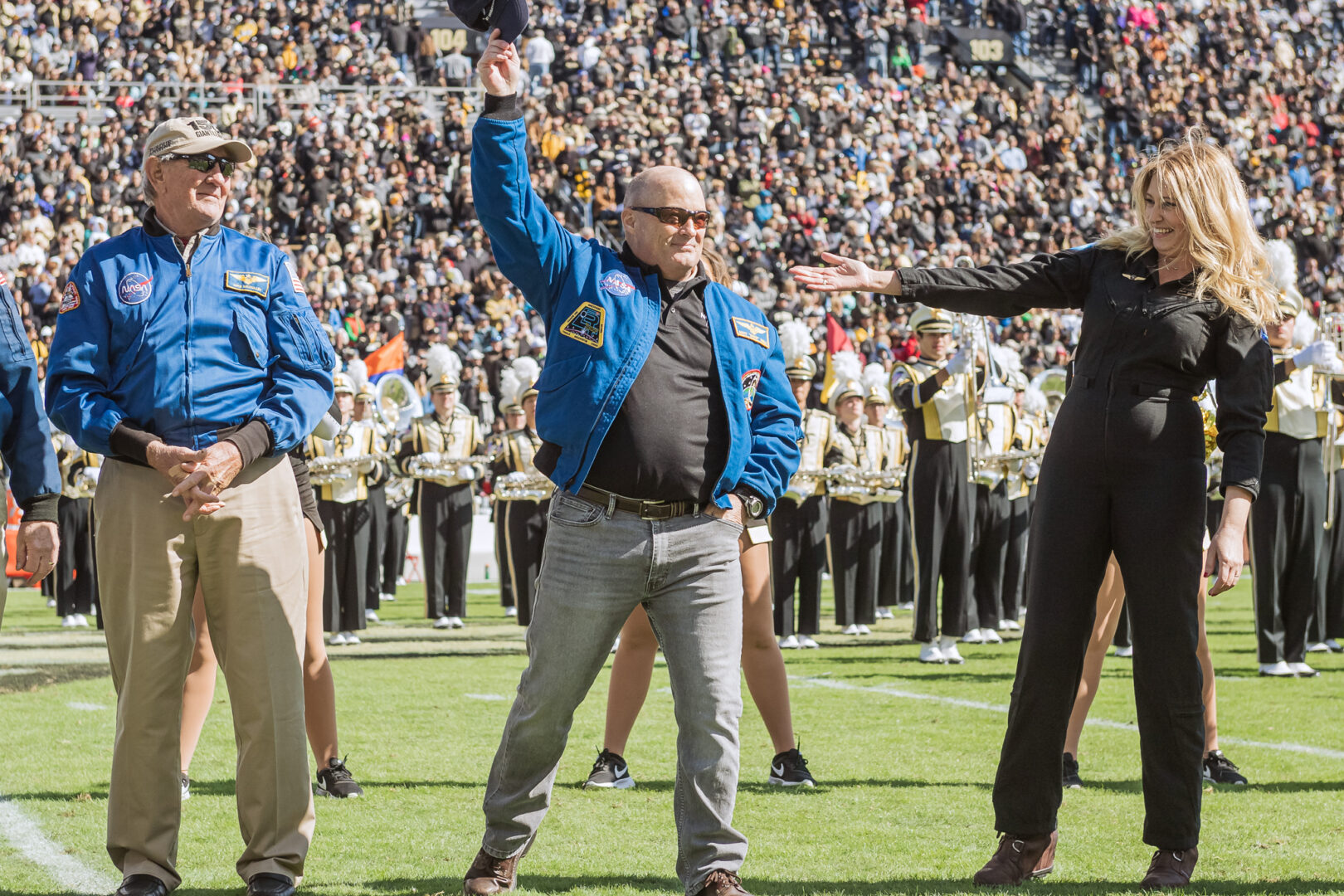
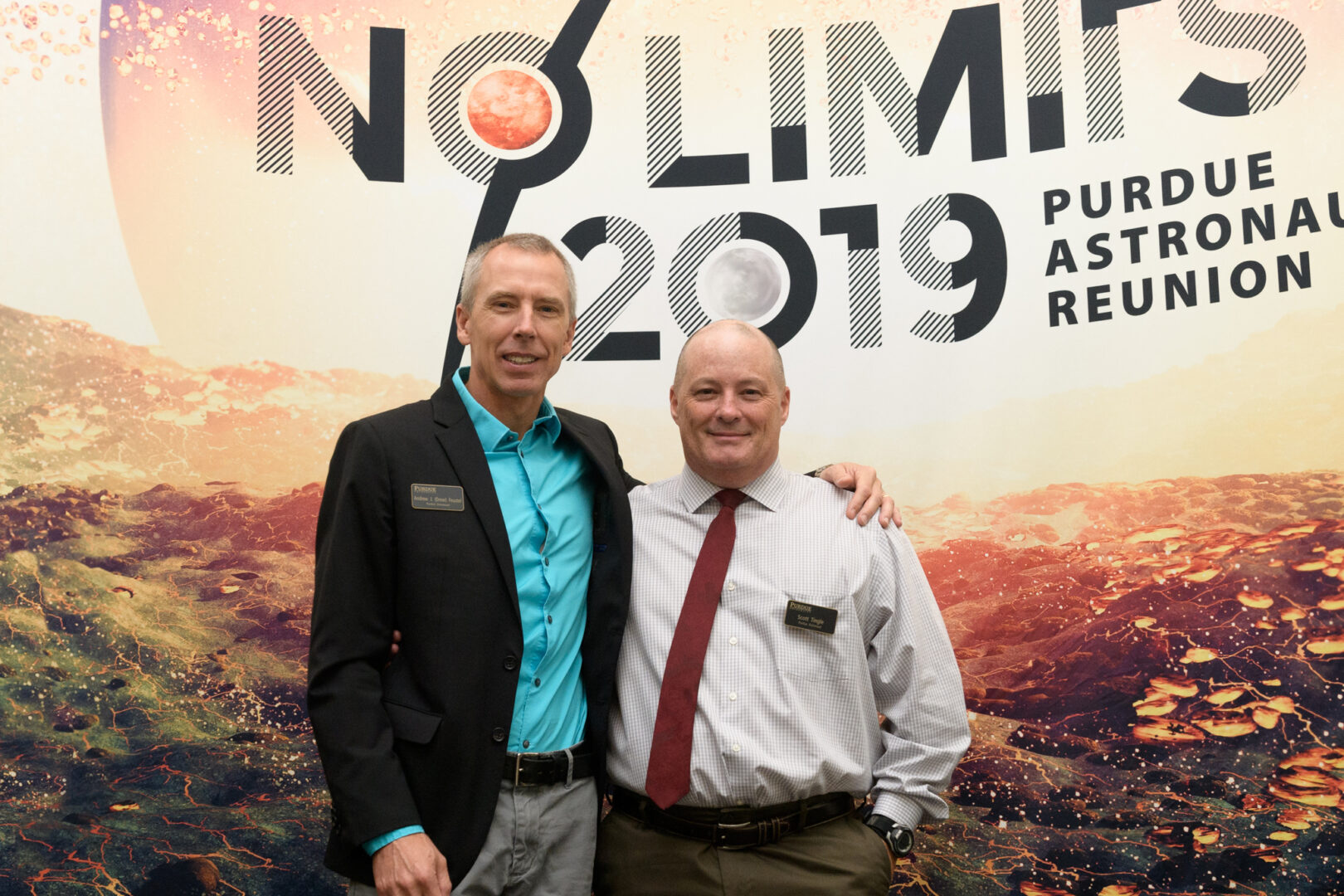
Scott Tingle joined NASA’s Astronaut Corps in 2009 and flew his first mission to the International Space Station in 2017. Today, as NASA’s chief of the Astronaut Office, he is responsible for assigning astronauts to their missions and managing their needs before, during and after the mission.
“It’s a really big job,” says Tingle (MS mechanical engineering ’88). “We need to make sure we’re taking care of our crew, taking care of their families, and making sure our systems are safe, efficient and effective to get the job done.”
For Artemis II, Tingle was one of the last people to speak to the crew before they entered the capsule — and one of the first to greet them once they splashed down two weeks later. Now he’s focused on guiding the Artemis III crew and eventually choosing the next crew, which will feature the first woman to walk on the moon.
“We’ve been trying to do this for 50 years,” he says. “We’re focusing on what it takes to get boots back on the moon — and eventually a permanent human presence on the moon.”
Marie Henderson
Marie Henderson is an assistant research scientist with the Center for Research and Exploration in Space Science & Technology (CRESST), a cooperative agreement between NASA Goddard Space Flight Center, the Southeastern Universities Research Association and four universities.
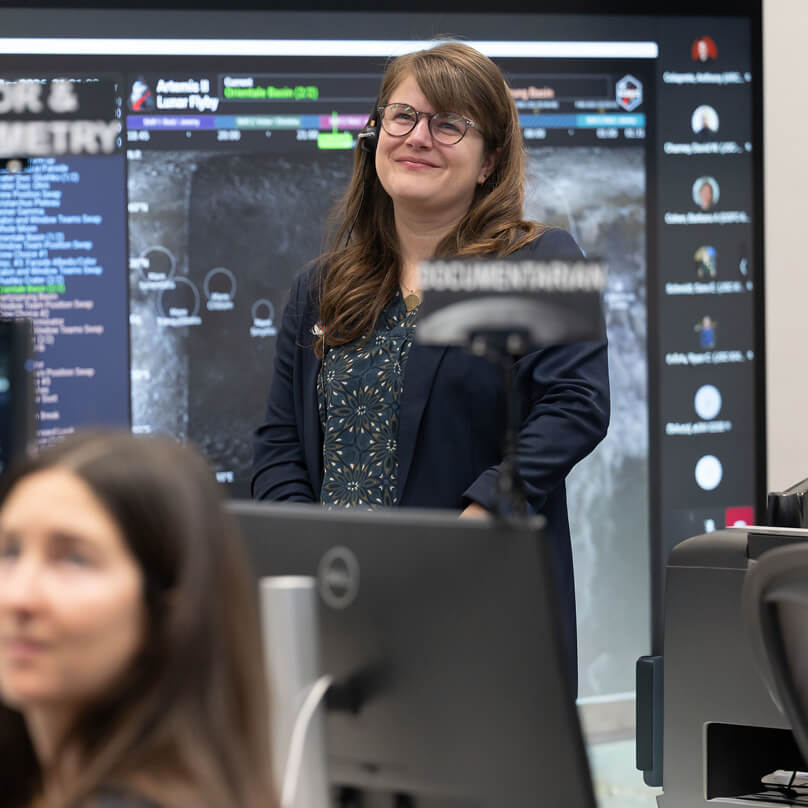
Henderson (PhD planetary science ’21) plays a key role in NASA’s Artemis program, having served as deputy lunar science lead for Artemis II and serving as science officer and science imaging integration lead for Artemis III and as a member of the Artemis Science Operations Team. Her work focuses on science operations and how astronauts use cameras to collect scientific observations from orbit and eventually from the lunar surface. As a science officer, Henderson is responsible for lunar science and geology in the Artemis Flight Control Room.
“It’s amazing to go from the Cradle of Astronauts to working with the astronauts that are exploring the moon with the Artemis program,” Henderson says. “I look forward to putting more boot prints on the surface of the moon.”
At Purdue, Henderson was a student of Briony Horgan, professor of planetary science in the Department of Earth, Atmospheric, and Planetary Sciences, whose research focuses on Mars, the moon and planetary surface processes.
“I’m so proud to see Marie continuing Purdue’s legacy in human space exploration,” Horgan says. “We’ve built an internationally recognized program in planetary science here at Purdue over the past 20 years, and Marie is exactly the type of alumna we hope will shape space exploration and the space industry in the years ahead.”
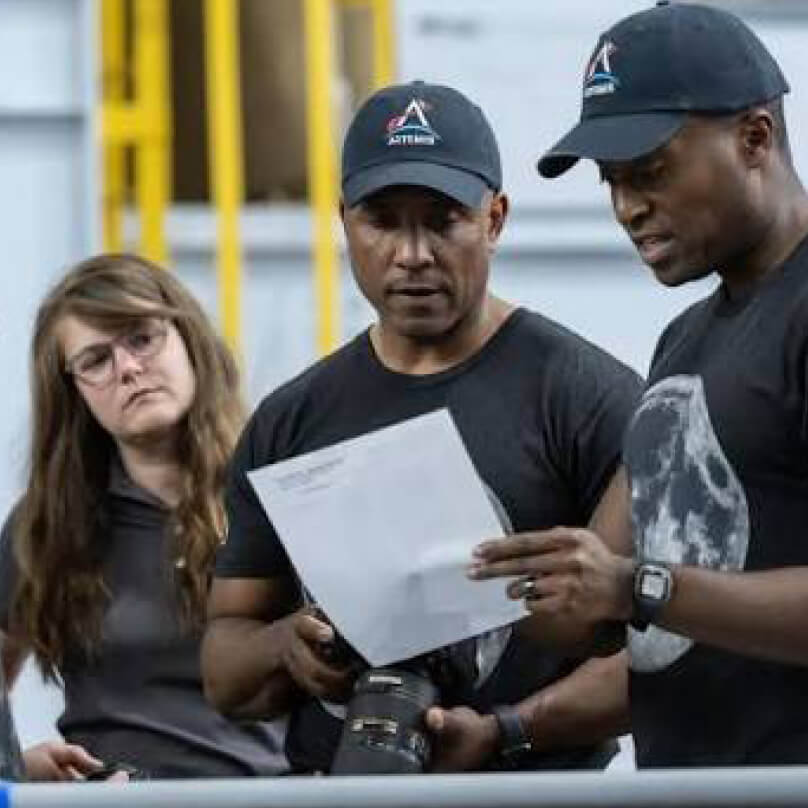

Artemis landing and recovery team: Jason Endsley, Rob Lantz and Emily Spreen
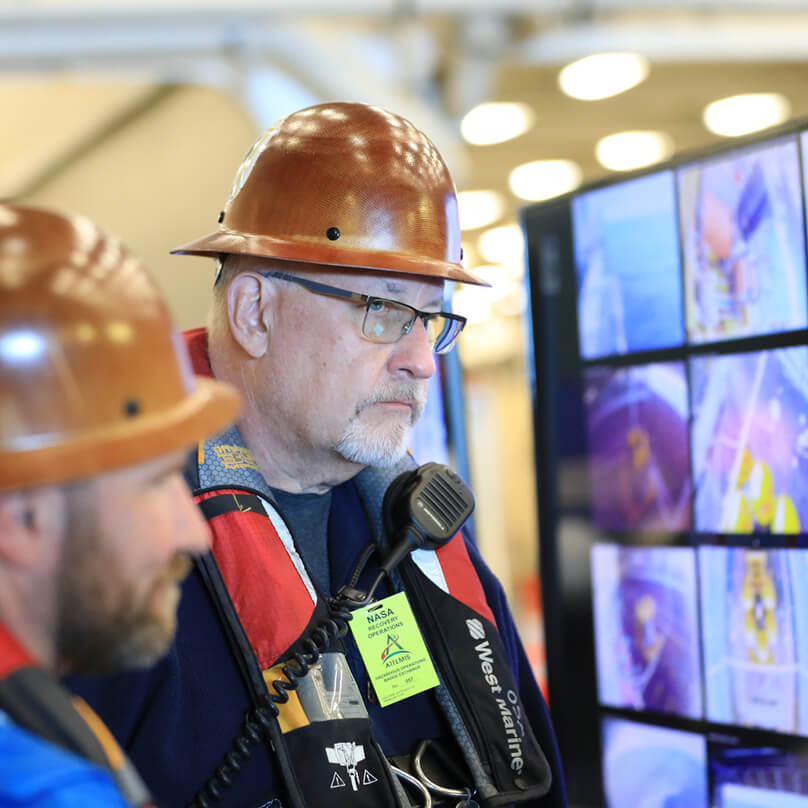
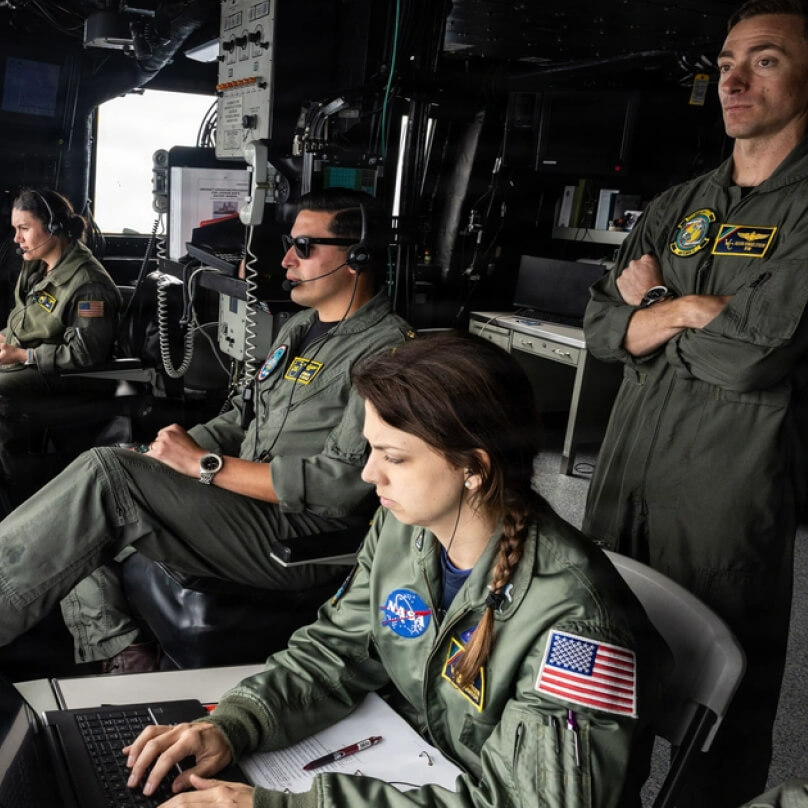
When Artemis II returned from its historic journey around the moon, three Purdue alumni were aboard the USS John P. Murtha in the Pacific Ocean waiting to welcome the crew home. Jason Endsley (BS aeronautical engineering technology ’19, MS aviation and aerospace management ’20), Rob Lantz (BS aeronautical and astronautical engineering ’88) and Emily Spreen (BS aeronautical and astronautical engineering ’15, MS astrodynamics and space applications ’17, PhD aeronautical and astronautical engineering ’21) were all members of NASA’s Landing and Recovery Operations team that retrieved both the crew and the spacecraft.
Their work represented years of preparation and coordination between NASA and the Department of Defense, with Spreen describing their recovery operations as a “carefully coordinated ballet” involving precise timing, real-time data monitoring and complex logistics. Endsley provided critical environmental data to guide decision-making while Spreen led efforts to predict splashdown locations and ensure the safety of both the crew and the waiting recovery team. Lantz and Endsley were both part of the team responsible for recovering the spacecraft and floating it into the well deck of the Navy ship.
As a fascinated viewing public celebrated the return of the first moon mission in more than 53 years, the Boilermakers on the landing and recovery team helped secure the Artemis mission’s safe and successful conclusion.
Campus communicators Alan Cesar, David Ching, Jared Pike and David Siple produced this special series of alumni profiles.