Meet the Purdue Alumna Helping Share America’s Story Through the National Archives
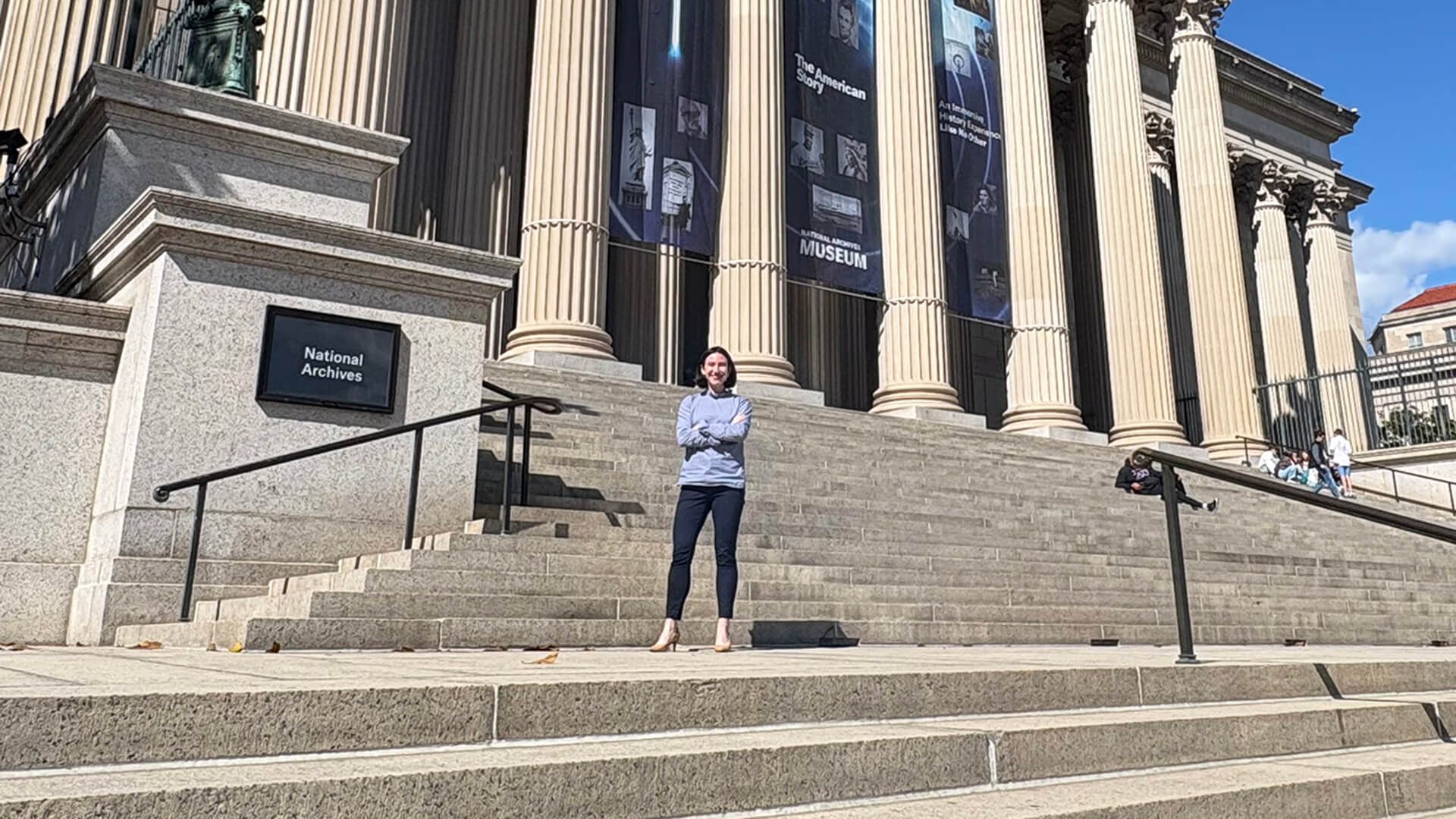
Purdue alum Caroline Shanley and her colleagues at the National Archives Foundation promote the millions of documents and artifacts in the U.S. National Archives and Records Administration’s collection, including the nation’s founding documents. (Photo courtesy of Caroline Shanley)
Caroline Shanley, a communications staffer with the National Archives Foundation, developed a love for history at Purdue
With American tourists expected to flood into Washington, D.C., this summer, Purdue alum Caroline Shanley will have a unique vantage point for the nation’s 250th anniversary celebration.
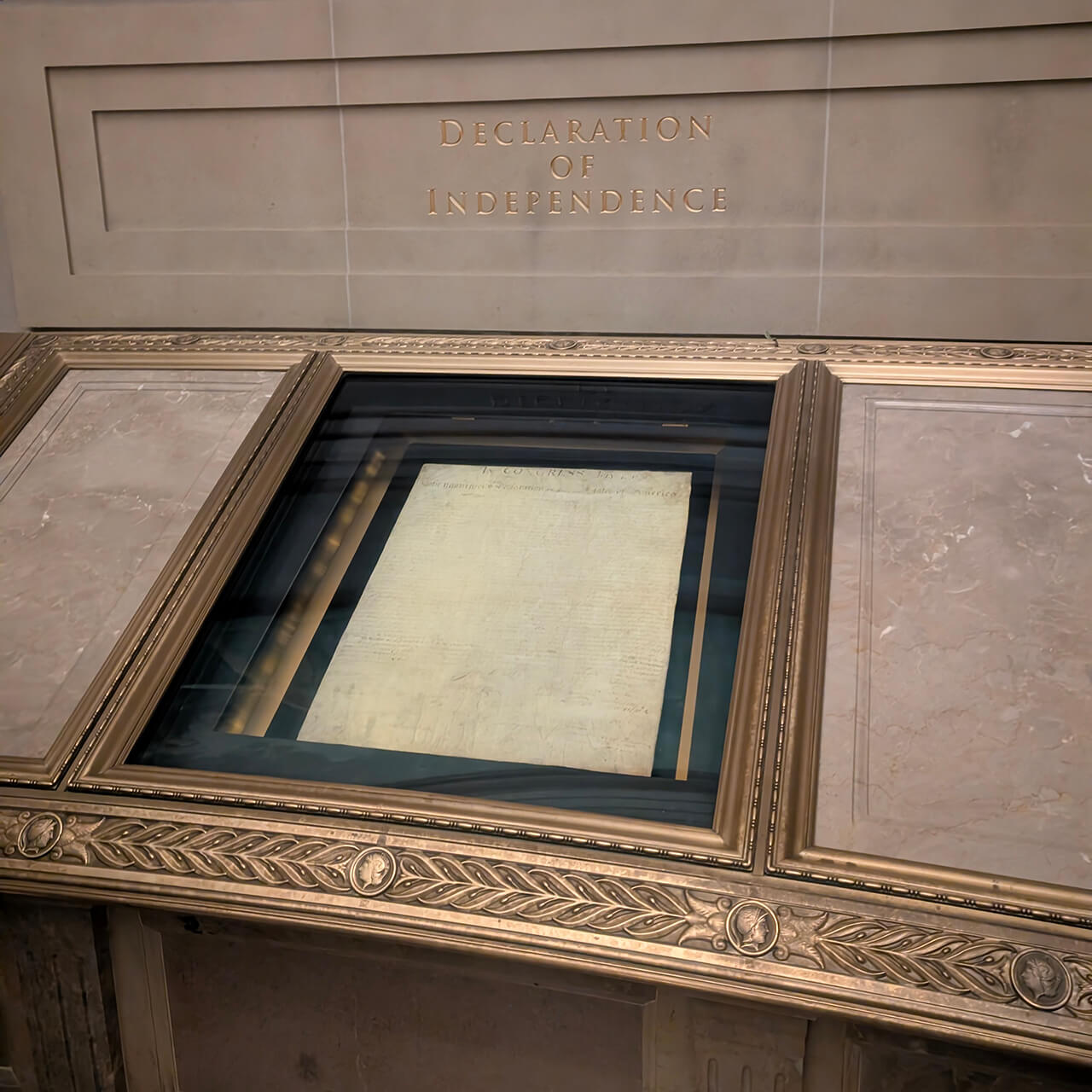
Shanley (BA political science ’19, BA public relations and strategic communications ’19) is a communications and outreach manager with the National Archives Foundation, promoting the millions of documents and artifacts in the U.S. National Archives and Records Administration’s collection — including the nation’s founding documents: the Declaration of Independence, the Constitution and the Bill of Rights.
“We describe the Archives as being the epicenter of America250 because we are the home of the Declaration of Independence, which is the exact anniversary we’re celebrating,” Shanley says of the document, which the Continental Congress officially adopted on July 4, 1776.
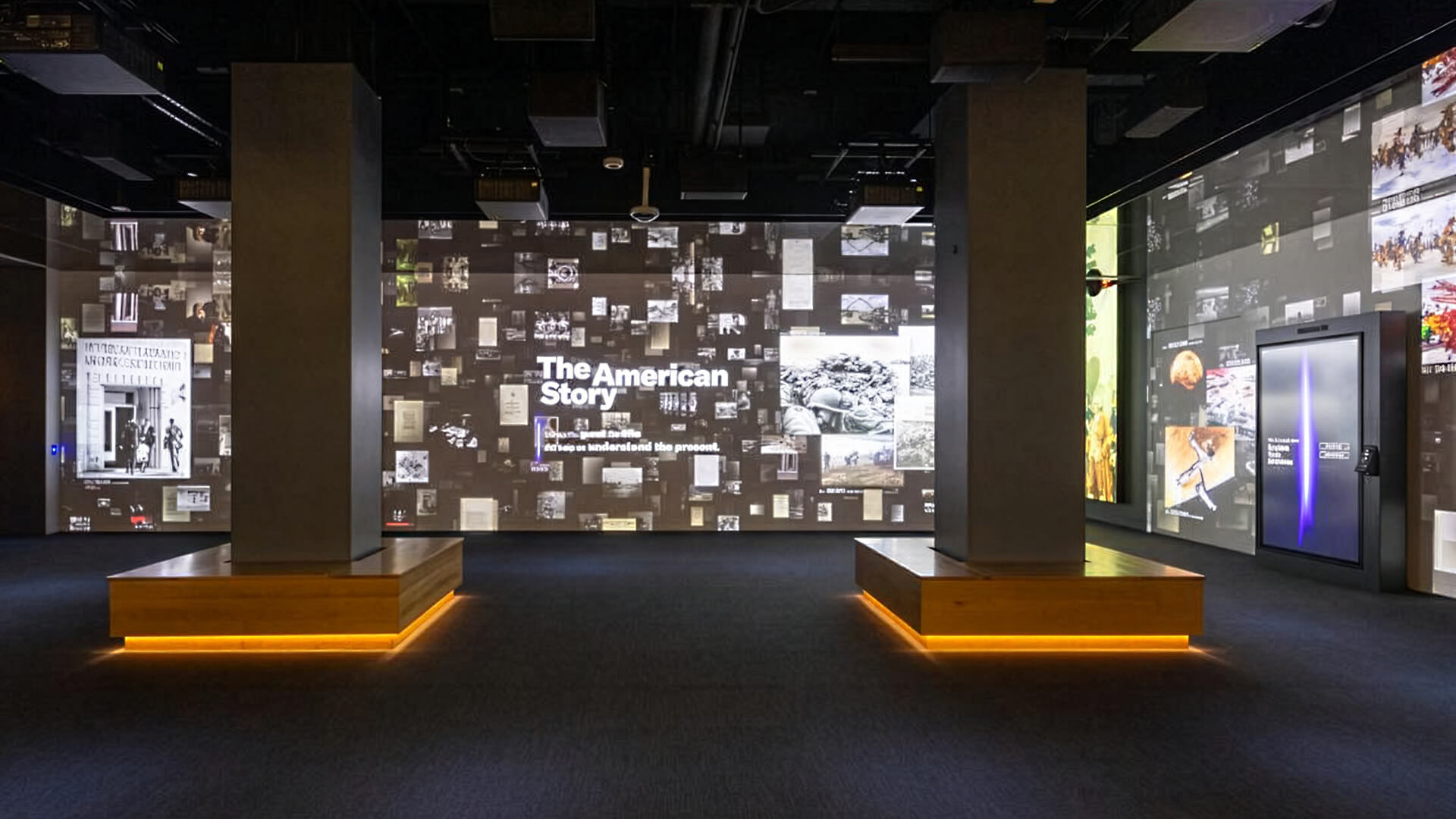
To help celebrate this historic milestone, the National Archives Museum introduced a redesigned permanent exhibit, “The American Story.” The exhibit features documents like those marking the Louisiana Purchase, areas dedicated to the American Constitution and military, and rotating displays of additional holdings that provide insight on America’s historical and cultural evolution.
“All in all, it’s an exhibit that shows the breadth of the things that we hold at the Archives and how these different things, from objects to pieces of paper to film rolls, tell our American story in one way or another,” Shanley says.
That story includes artifacts with distinct Purdue connections:
- Any retelling of American history would be incomplete without mentioning Purdue astronaut Neil Armstrong, who took humankind’s first steps on the moon on July 20, 1969. Included among the space-related items on display is original 70 mm film from Armstrong’s Apollo 11 lunar mission. Shanley describes the footage — some of which is included in the acclaimed 2019 documentary “Apollo 11” — as “one of the most fascinating things we have.”
- There is also the U.S. Coast Guard’s radio log from legendary pilot Amelia Earhart’s final flight, revealing when operators lost contact with the Purdue-funded plane during Earhart and navigator Fred Noonan’s attempted around-the-world flight.
“It shows, minute by minute, a log of them going back and forth with her aircraft,” Shanley says. “Basically you can see where they mark with a line when they stop hearing back from her.”
- In addition, a rotating display in the exhibit spotlights Title IX, a landmark civil rights law that prohibits sex-based discrimination in any education program or activity that receives federal funding.
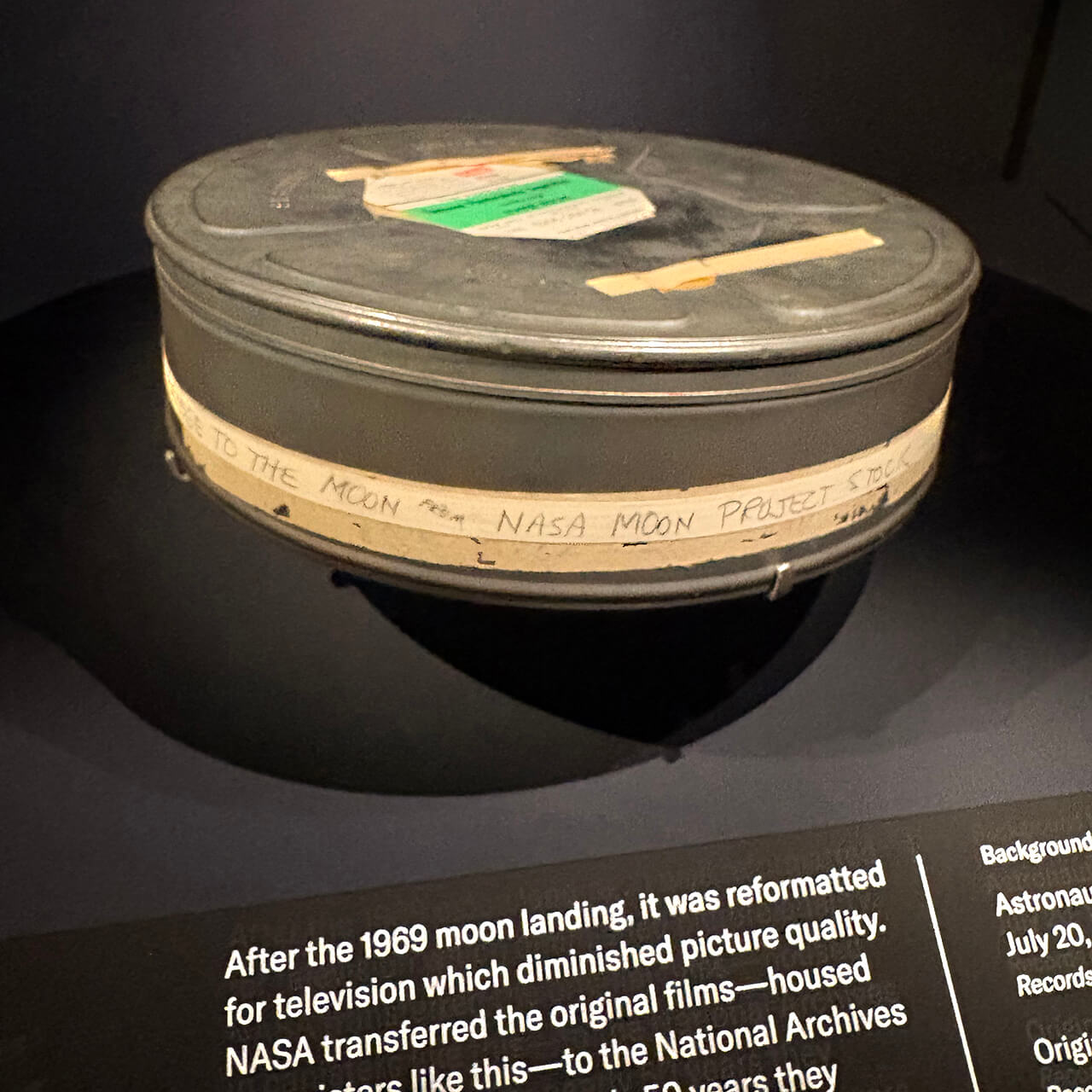
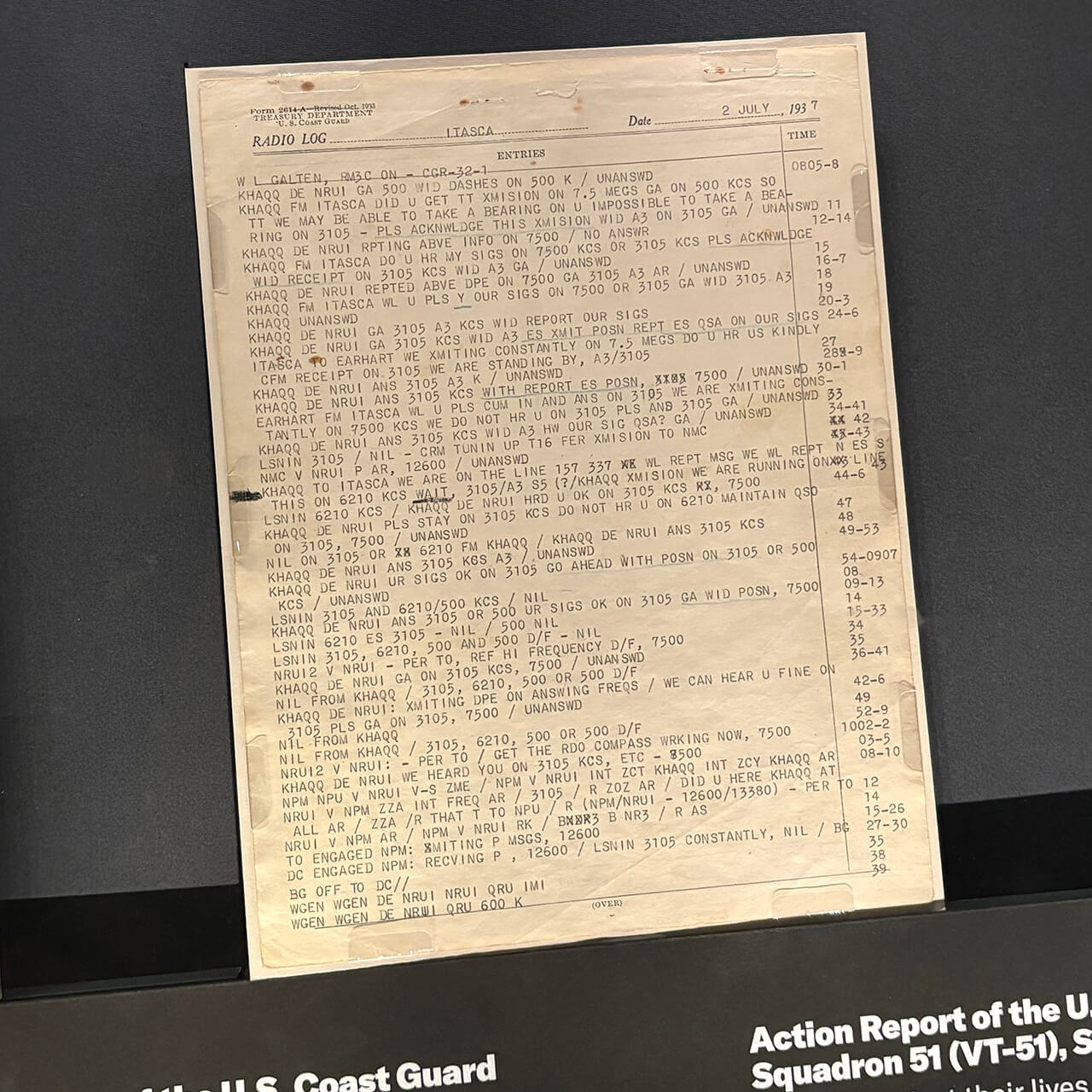
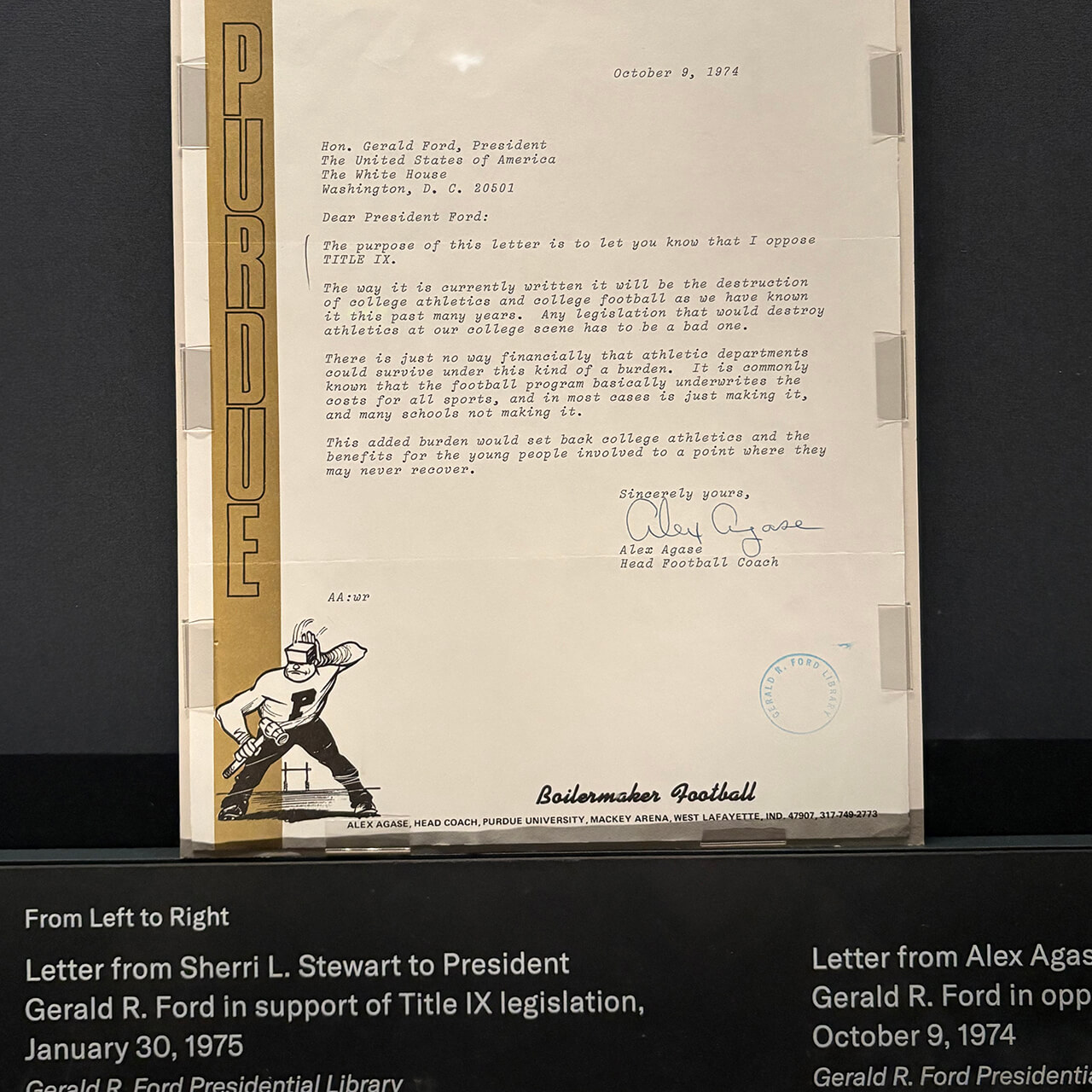
Not only did Purdue alum Birch Bayh (BS agriculture ’51) write Title IX, but the display also features letters to lawmakers from two people in Purdue sports — one writing to support Title IX and one to oppose it.
“That case is always going to rotate with different petitions to show how citizens can use their voices to persuade lawmakers, whether they’re on the side for or against a piece of policy,” Shanley says. “(The debate over Title IX) was a moment in our history, and part of our mission is that we’re not trying to say things are good or bad. We are just trying to show you the history, show you the documents and let you come to your own conclusion.”
Each item in the archival collection has a unique story, which is what initially attracted Shanley to her field. She developed a fascination with the storytelling role historians play while pursuing a minor in American history at Purdue and engaging with professors like Wendy Kline, Kathryn Brownell and Yvonne Pitts.
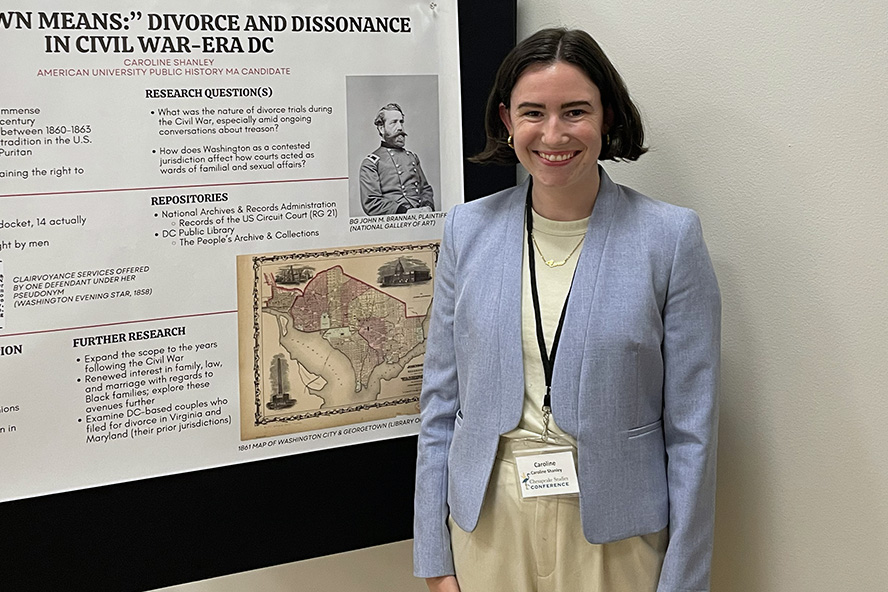
At times, her courses involved research at Purdue Archives and Special Collections — a foundational experience for Shanley, who would eventually elect to attend American University to complete a master’s degree in public and applied history that would help make archival research part of her career.
Shanley describes her role at the National Archives Foundation as “the very traditional nonprofit comms person, where I wear a lot of different comms hats.” A normal day might include leading a tour at the National Archives Museum or contacting media to promote a program or event there. But it might also include reviewing the vast archival collection to produce content for her organization’s social media channels or an item for its newsletters.
“I love finding and digging out these stories of maybe marginalized, lesser-known people, finding the connections in my personal life to these stories,” she says. “There really is something so touching about when you are reading a handwritten note or letter. It doesn’t matter what decade or century it’s from, just knowing that somebody touched that and wrote down their thoughts at that point — it gives you this tangible connection to the past.”
Which, after all, is exactly why the National Archives exist.
We describe the Archives as being the epicenter of America250 because we are the home of the Declaration of Independence, which is the exact anniversary we’re celebrating.
Caroline Shanley (BA political science ’19, BA public relations and strategic communications ’19)
Communications and outreach manager at the National Archives Foundation
This American institution bills itself as “the nation’s record keeper,” providing access to military records, genealogical history and some of the most important documents in human history.
As the nation pauses to celebrate 250 years since its founding, the National Archives collection is arguably society’s most valuable resource to comprehend the story of America.
“Getting to know our past is so critical to understanding our future and what we want out of our future,” Shanley says. “I don’t really subscribe to the ‘history repeats itself’ idea. I don’t always agree that history perfectly repeats itself, since every circumstance is historically unique. But I think it can often illuminate certain forces and why things happen in the sequence that they happen.
“We do what we can do here,” she adds, “which is expand access and preserve our nation’s history, and we will keep doing that.”