Episode 147: The Science Behind Modern Fashion: Engineering, Fabrics and Sustainability

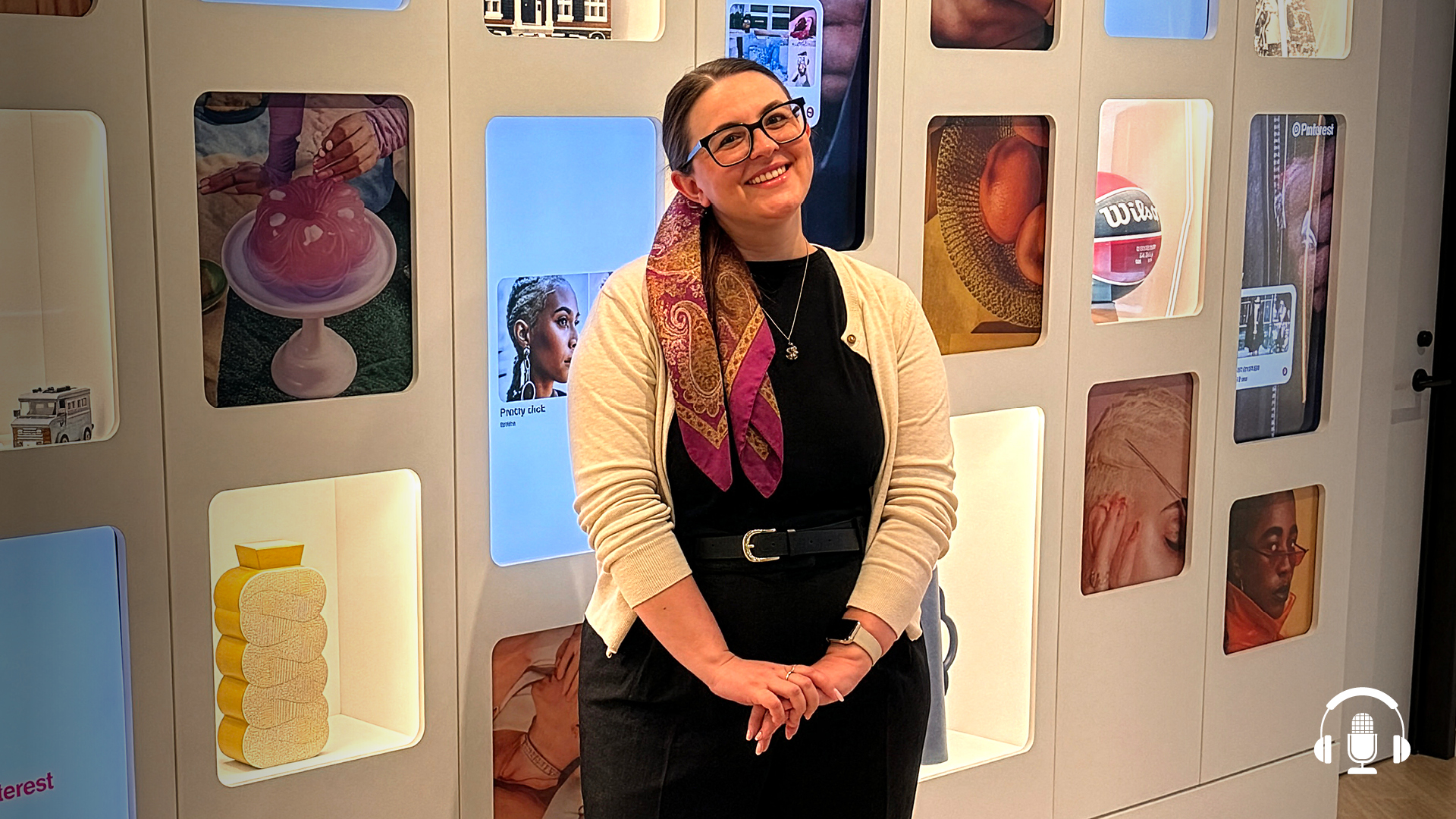
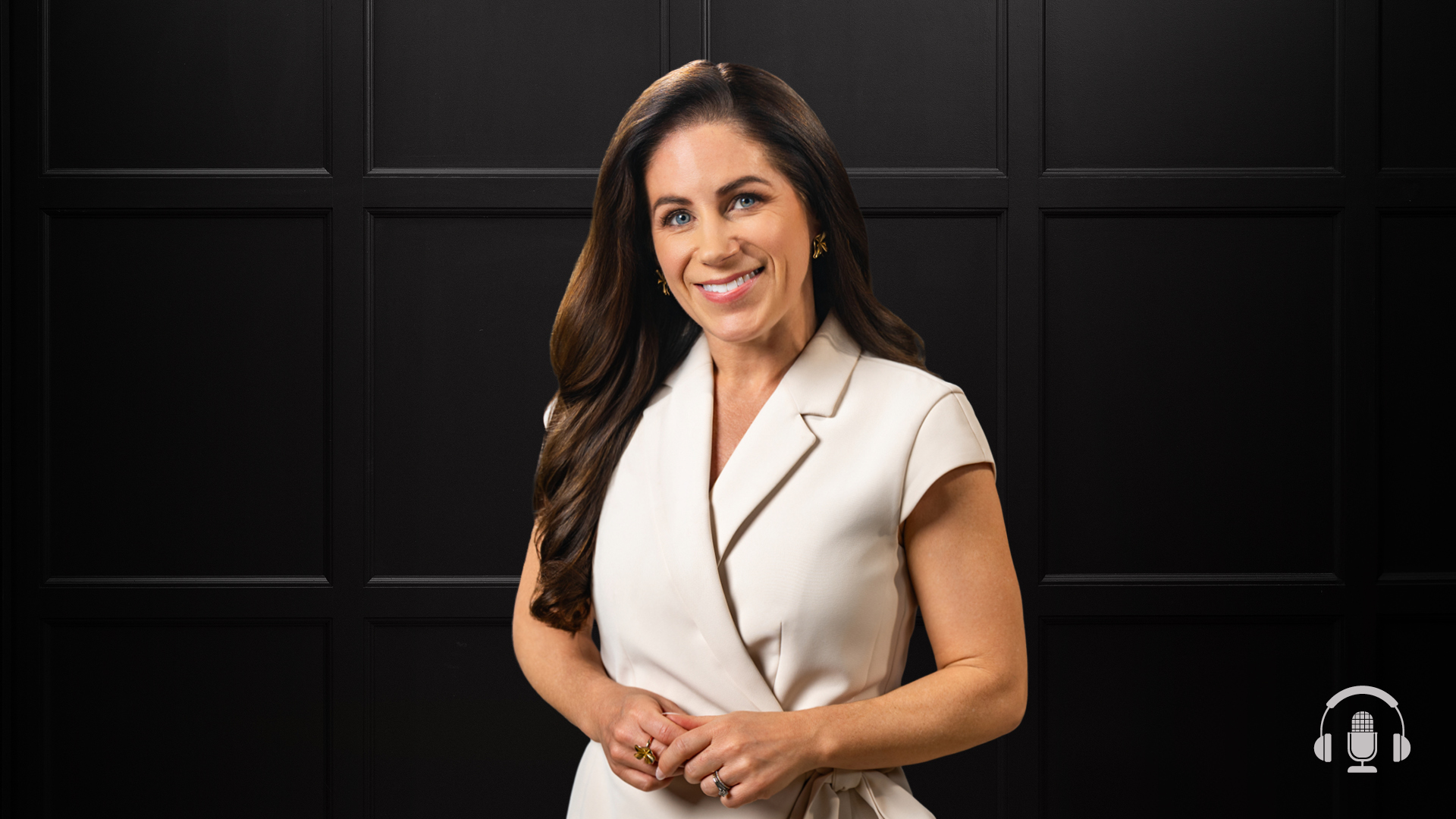
In this episode of “This Is Purdue,” we’re talking to Lauren Bright (BS multidisciplinary engineering ’11), founder and principal consultant of Torus, an innovative textile consulting firm based in Portland, Oregon.
As a Purdue alumna and leader at the intersection of science and art, Lauren has a demonstrated passion for driving change in the global textile industry. She’s diving into how her interdisciplinary background helps her advance sustainability in today’s fashion world.
In this episode, you will:
- Learn more about the fast fashion industry, including what factors set it apart from traditional seasonal fashion, why it appeals to people, and its impact on the environment and our bodies.
- Discover how social media marketing influences our decision-making, especially when it comes to our fashion choices and the counter movement of “slow fashion.”
- Hear about Lauren’s work in the textile industry and how Torus is a powerful platform for systems-level change through research, policy advocacy and partnership-building with nonprofits, brands and more.
- Find out more about her journey in Purdue’s multidisciplinary engineering program and how she gained invaluable skills in STEM and art, which set her up for career success.
- Learn more about Lauren’s background working for elite brands such as Nike, Fiat Chrysler Automobiles, Columbia Sportswear Co. and Gap Inc.
- Explore Lauren’s practical tips for being a more sustainable consumer, like thrifting and creating a capsule wardrobe.
- Gain insights into her hopes for the future of fashion sustainability, including stronger industry regulation.
You don’t want to miss this episode with a STEM and fashion innovator who’s changing what we wear — for the better.
- Learn more about Lauren Bright
- Learn more about Multidisciplinary Engineering at Purdue
- Learn more about Purdue’s School of Engineering Education
- Learn more about Purdue’s College of Engineering
- Learn more about Studio Arts and Technology at Purdue
- Learn more about Purdue’s College of Liberal Arts
- Learn more about Study Abroad at Purdue
- Learn more about TORUS
- Learn more about the Healthy Textiles Coalition
- Learn more about Fashion for Good
- Learn more about The Or Foundation
- Learn more about the Biomimicry Institute
Podcast Transcript
Lauren Bright:
This is Lauren Bright and you are listening to This Is Purdue.
Kate Young:
Hi, I’m Kate Young and you’re listening to This Is Purdue, the official podcast for Purdue University. As a Purdue alum and Indiana native, I know firsthand about the family of students and professors who are in it together, persistently pursuing and relentlessly rethinking.
Who are the next game changers, difference makers, ceiling breakers, innovators? Who are these boilermakers? Join me as we feature students, faculty, and alumni taking small steps towards their giant leaps and inspiring others to do the same.
Lauren Bright:
I think we’ve started getting that dopamine hit from buying more things, whereas we used to get the dopamine hit taking the thing that we loved and cared about and had a story and had a memory around it and maybe was our grandmother’s and wearing that.
I think we’re kind of replacing one thing with another form of satisfaction that is really pushed upon us, but you also see the slow fashion trend starting to really rise up in this space as well as kind of the counterbalance to what’s happening in fashion and ultra-fast fashion. So I’m excited to see where that goes over time.
Kate Young:
In this episode of This Is Purdue, we’re talking to Lauren Bright. Lauren is a proud Purdue alumna and fashion consultant. She’s worked with elite brands such as Nike, Fiat Chrysler Automobiles, Columbia Sportswear Company, and Gap Inc. And today, Lauren leads Torus, an innovative textile consulting firm based in Portland, Oregon. She’s dedicated to addressing the urgent conditions caused by fast fashion, including the impact of synthetic fibers on people and our planet.
In this conversation, we’re diving into fast fashion, what it is and why people are leaning more into this trend-driven way of shopping. Here’s a hint. Dopamine hits and not wanting to be seen in the same outfit twice on social media are factors in this. Plus, we’re talking about the science behind today’s latest fashion, tips on creating a capsule wardrobe that won’t break the bank and what the future of fashion and fashion sustainability holds.
Lauren also shares more about her journey as a boilermaker. See, she was the first student at Purdue to mix engineering and design and graduated with a multidisciplinary engineering degree in 2011. She points to Purdue as one of the reasons for her massive career success, from the quality of the curriculum to the thoughtful professors and mentors who guided her along the way. So let’s get to it. Here’s my conversation with Lauren.
Lauren, thank you so much for joining us on This Is Purdue, the Official University podcast. We’re just really eager to dive deeper into this intersection of STEM and fashion and the science behind today’s latest fashion and talk all about this industry with you. We’re going to dive into fast fashion here first. Right now, fast fashion accounts for 20% of global revenue, so $1 in every $5 spent in the industry is spent on fast fashion. As an expert at the convergence of fashion and STEM, how do you personally define fast fashion?
Lauren Bright:
Thanks for having me here, Kate, just want to say that first. I’m super honored to be here. Definitely been a very interesting trajectory since my time at Purdue. I would say that there are many definitions of fast fashion. I think that’s actually rapidly evolving. In fact, there’s an entirely new category of fashion that we call ultra-fast fashion. Generally speaking, a fast fashion brand would be one that does not produce clothing according to a more traditional seasonal timeline.
So often when you look at fashion brands, in particular, the ones that I’ve worked at, they either have four seasons or two seasons that they’re working to, and generally, they design those products for about a year and a half in advance of them hitting the market. So that includes everything from doing the market development, initial product creation, and then going through all of the phases of development, creating prototypes, all of that stuff, creating all the marketing materials, and then getting out onto the market.
And usually this two to four seasons either looks like fall and winter, summer and spring, or fall, winter, summer, spring. So I would say when we’re looking at fast fashion, you’re looking at brands who operate outside of that sort of timeline. So I guess they’re very responsive to emerging or fleeting trends, maybe you could say, easily inspired by things that are happening so they have the opportunity to be responsive, and I think there’s some technology that enables that nowadays. They also generally produce in really, really high volumes, which also equates to a lot of waste, which we can talk about. They’re often called mass market retailers, and then they often have ultra low or low prices in comparison to what other brands are putting onto the market.
Kate Young:
What do you think contributed to this explosive growth of fast fashion, even in the past few years?
Lauren Bright:
Unfortunately, I think it’s really a consequence of late stage capitalism that’s really focused on the infinite growth of a business to maximize shareholder profits instead of focusing on stakeholders or rights holders, or in general, the full value that is possible in terms of creating value across the system. I really see fast fashion as a beacon for the proliferation of extractive systems and continued colonial rule. Unfortunately, the industry itself really has its origins in colonialism. You see this with the cotton trade, there are many, many books on this.
It’s actually very fascinating to see how cotton was a catalyst for not only colonialism, but in general capitalism and the industry, in particular, the fast fashion side that continues to perpetuate these dynamics, both with the lowest common denominator manufacturing, but also end of life textile waste trade, which is now being categorized as waste colonialism and it’s kind of this new thing that people are becoming more and more aware of.
And I would say the last thing is that I actually really find this growth of fast fashion brands and sort of this tie to capitalism as something that’s painfully uncreative in terms of business innovation and product output. The thing that I think people are starting to miss is that textiles are actually one of the original forms of craft. They were cherished. They told stories of place and time and circumstance. They’re very personal to the people who made them into the regions with which they came, and they really co-evolved alongside humanity in terms of being able to meet our very specific and niche needs in different climate environments.
In general, I would say when we’re looking at the impact of fast fashion brands and how they’ve been able to become more prolific in recent years, it’s made it really difficult for other organizations who are making textiles, so who are not fast fashion brands, but also consumers to make the right choice the easy choice. And some of these mass marketing campaigns, which you often see with fast fashion brands are actually, in my opinion, an abuse of the human psyche. They’re leveraging our inherent, instinctive and tribal natures against us. And I think all of that together is sort of what’s resulted in the trends of today and the desire to acquire fashion at a pace that’s really unprecedented in terms of what’s been possible throughout human history.
Kate Young:
Do you think social media is also impacting all of this?
Lauren Bright:
Oh, absolutely. The thing that’s crazy is that I’m an expert in this field and I am still pulled towards it. I mean, that just shows you the power. I mean, humans are so complex and so are the systems that we’re tied to, both psychologically and ecologically, et cetera. And what’s really fascinating is a lot of these brands who we’ve been working with for many years, they’re not hiring the regular marketing person from 30 years ago, they’re hiring people who majored in psychology. And you see this in AI and those are how the algorithms are feeding us, it’s really something that we’re up against that is, as I stated before, completely unprecedented. And we see this across a lot of industries, of course, this isn’t just fast fashion, but of course this makes fast fashion much more appealing.
And then you also have the inherent dynamic that we’re living in today where there’s pretty vast income inequality, less expensive clothing means that people have more access to be able to maintain their other basic form of care or human needs. This sort of easy access to new products coupled with that desirability that they’re creating are obviously very determinant driving forces in terms of our purchasing decisions.
And then I would argue going back to the previous point about textiles as craft is that all of this, in my opinion, is really tied to what I call, and maybe the industry calls like black box manufacturing, which is where the industry has really moved away from place-based making and heritage and authentic storytelling to create opaque supply chains that really give them higher levels of plausible deniability if something goes wrong. That sort of decoupling of our understanding of where textiles come from in combination with our desire to have more and more of them makes it easier for us to buy into this new model of purchasing.
Kate Young:
Is it appealing to people because you can buy it online quickly? What are some of the other benefits that impact humans and appeal to us?
Lauren Bright:
I would say that’s true. I think we’re also just in a world that demands so much of us, right? And going back to the comment about us being very tribal creatures, there’s always a new event where we need a new thing. And with social media…
Kate Young:
Vacation.
Lauren Bright:
Totally. And now there’s more access to our physical presence online and the desire to look different or new or creative, I think is a really strong pull. I also think, once again, this sort of tech-enabled ability for us to receive things at that pace has done a lot and that disconnection that I was referring to, I think we’ve started getting that dopamine hit from buying more things, whereas we used to get the dopamine hit taking the thing that we loved and cared about and had a story and had a memory around it and maybe was our grandmother’s and wearing that. I think we’re kind of replacing one thing with another form of satisfaction that is really…
PART 1 OF 4 ENDS [00:11:04]
Lauren Bright:
… form of satisfaction that is really pushed upon us, but you also see the slow fashion trend starting to really rise up in this space as well as kind of the counterbalance to what’s happening in fashion and ultra fast fashion. So I’m excited to see where that goes over time. But inherently, I would say that we are so nuanced as beings and the system is also so nuanced and it’s generally trying to drive us toward capitalistic tendencies, and yet we have these inherent desires for belonging and meaning, and it of course is leveraging those while we simultaneously seek to find them in other ways. And I think that level of access in combination with this desirability or need is sort of how the system has manifested in the way that it has today.
Kate Young:
And fast fashion also impacts the environment. It probably impacts our bodies by these poor synthetic fibers, what the clothes are made of. Why do you think there’s this urgent need to take action against this type of clothing?
Lauren Bright:
Oh my gosh, there’s so much to say about this, and I would say this is kind of where my career has evolved into in many ways, really looking at the toxicological impacts of what we’ve been producing, both from a human perspective, but also from an environmental perspective, and in general, like a broader ecological perspective. So I would say in terms of urgency, it’s really important to note that the fashion system really touches almost all aspects of planetary boundaries, and because of that, it’s very intersectional. And these planetary boundaries are… they inform and influence each other. One could create, if we overreach on one, which we have already done says the science, then that can have cascading effects. So the fashion system impacts climate change. Of course, we have an incredible amount of emissions associated with our manufacturing. It impacts land use change. So there’s a lot of deforestation, monocropping, oil extraction, et cetera, that are associated with the raw material phase of production for textile systems.
It is part of disrupting biogeochemical flows which are the natural and cyclical pathways that transport and transform essential elements such as carbon, nitrogen, phosphorus, water between living organisms to the non-living environment. So this has to do with in general nutrient flows and material flows, and we’ve been able to find in recent years in terms of fiber fragmentation and microfiber pollution that a lot of microfibers are disrupting soil microbial pathways which are essential to soil health which are essential to our food systems and our fiber systems. It’s incredible how all these things are interconnected. And then those biogeochemical flows are also associated with the carbon cycle, and the carbon cycle is also associated back to climate change and having carbon in the right carbon pools. And similarly, that’s connected to ocean acidification which is connected once again back to our climate. And then in terms of chemicals, there’s a huge impact of creating new and novel entities, which is another planetary boundary in terms of synthetic chemistries because they’re toxic, they’re persistent, they have largely consequential impacts depending on where they end up.
I would say ignoring it as part of this larger system creates system-wide disruption that ultimately can make life here on earth uninhabitable, and that’s what it means at the systems level. But then we look at these poor quality clothing and their impact on our bodies, which we’re still studying, who even knows all of the impacts that that may cause down the line. It’s something the industry, I would say, for the last many years has been studying presence and pathways. So like how much is there, what is there, and how did it get there, and now we’re starting to go deeper into the science of what does it mean now that it is there, how is that impacting us, and that’s kind of the toxicology side. But aside from that in terms of plastic pollution, I just want to note that we also see this in fiber systems on natural materials because those natural materials are coated in chemistries that are also largely synthetic that have a bunch of consequences as well.
So it’s very complex. I would also say aside from that, there’s a very different somatic experience in wearing plastics versus wearing naturally derived materials, and this goes back to this concept that humans co-evolved with these fiber systems over the course of many thousands, millions, I don’t even know how many, years. We were able to farm the fibers that best suited our specific needs, and it’s no coincidence that cotton which is an incredible material for being worn in warm weather climates is something that can exclusively grow in warm weather climates, and similarly for wool and the inherent performance properties that they have are really… I mean, they’re fascinating, honestly, and they’re also something that we strive to achieve in industry with synthetic fibers.
I don’t know how many times I’ve heard a brand say when we were building our regenerative cotton coalition that I worked in, I heard a brand say, “Well, that’s interesting what you’re doing, but cotton isn’t innovative. We’re not going to focus on cotton as an innovative material.” Their minds have shifted about this dramatically, I can say, over the course of time, especially understanding cotton’s place in regenerative agriculture and in soil health and the carbon cycle and all of these things. But even just as a material itself, it’s actually something that we often try to replicate. So when we have polyester, we often texturize it. We add finishing chemistries that change its ability to wick water. We might add other performance chemistry. So yeah, it’s just interesting to me that we have this concept that it’s not innovative, yet everything we do is try to make a cheaper version of it.
And then on top of that, a lot of the chemistries that have been used to create sort of these performance attributes are now known to be largely toxic, and they’re in our waterways, they’re in our soil systems, they’re in our blood, they’re in polar bear blood on the other side of the world. And these are the things that we now have to reckon with in terms of how we produce things moving forward, what we actually need to produce in terms of very targeted performance needs, and in general, how we can resolve some of the issues that we’ve caused from their historic production.
Kate Young:
And I’ve seen recent documentaries where, “Oh, I’ll just donate this when I’m done with it,” and there’s piles of T-shirts in the ocean floating. They don’t need it. They don’t want it. The effect on the environment is horrible.
Lauren Bright:
There’s a really amazing organization that has, I mean, gosh, I don’t even know, so many podcasts, so many resources now out and available. A lot of different small documentaries, et cetera, have been done with this organization, but they’re called the Or Foundation. It’s just O-R Foundation. And they’ve been working out of Accra, Ghana, and actually one of my projects was the first project to ever fund them after they had been working there for 10 years and working really hard to support the people of Accra as a community that is at the end of the line and highly impacted by waste colonialism.
So what’s really interesting about the things that I think they bring up that are really, really important is that we often look at these countries in the global south that receive our waste and we go, “Oh, that’s really sad. Look at their waste problem,” when in all reality it’s our waste problem that we’ve exported to them. And we say, “Oh, boohoo, they don’t have infrastructure to support dealing with this waste. That’s why it’s polluted.” And it’s like, no, the reason that we exported it there is because we don’t have waste infrastructure to accommodate it, and if we kept all of the waste that we actually generated we would be in a very similar position and it would be very dire.
A lot of these textiles have made their way out into the local oceans. It’s disrupted their fisheries, it’s disrupted their local markets, not even getting into bleaching and water quality. I mean, it’s just absolutely unfathomable to understand, and it’s also important to acknowledge that these are the highest functioning, I’ll say it that way, circular economies in the world. They process millions of products per year and they get little to no investment, whereas you look at businesses that are here on, we’ll just call it in the global north who are getting millions of dollars of investment and they’re going to process a million products in their first five years.
It’s really interesting to see where the capital flows in terms of this system because there’s still a really large disconnect between the reality of the system in itself and how it’s inherently inequitable, and that’s why organizations like the Or Foundation have been very vocal in recent years, especially as the extended textile community is investing in policy and regulation that are centered around extended producer responsibility. So making it such that brands who produce things, who import them into countries, are also required to pay a certain amount that would then facilitate some sort of end-of-life recovery for those materials. And the Or Foundation, along with other organizations that I’m part of are really pushing for global extended producer responsibility, meaning that the money would flow where the textiles flow.
Kate Young:
Let’s dive into your time at Purdue. You were the first student at Purdue to mixed engineering and design together. So now it’s called visual design engineering, but you really have a background with multidisciplinary engineering. What does sustainability and fashion look like to you?
Lauren Bright:
Purdue was a really interesting experience for me. I was at some point either wanted to go to fashion school or design school, or I wanted to go to engineering school which for most people they’re like, “Okay, those things are very, very different from each other.” I’m so thankful for the program at Purdue because it allowed me to really explore the bounds of myself. It was very difficult, I might say, because with both anything in the arts as well as anything in engineering, the more time you dedicate to it, the better you are at that thing. Using both sides of my brain in such a way while I was there was absolutely exhausting.
I remember speaking to my advisor, Chris Pekny, who I adore about this, and there were many times I think I showed up in Chris’s office with tears and I was like, “Oh, I didn’t get into this class. I have to remake my whole program.” And she really stuck with me. So I then studied abroad in Denmark for textile design, and it was there, it was Scandinavian textile design, and when I was there, that’s when I found out that the textile industry was one of the most polluting industries in the world. And one of our teachers there was a textile chemist. We had all these design-
PART 2 OF 4 ENDS [00:22:04]
Lauren Bright:
… and one of our teachers there was a textile chemist. We had all these designers as well. I mean, it was such an incredible program in general. The country of Denmark and Scandinavia at large really cares about sustainability. They care about the future of materials and progress and people. So it was something that was really formative. So then when I came back to Purdue, I was really, really fortunate that the program I was in was so flexible. I mean, to a certain degree, obviously. But it allowed me to come back and then take environmental and ecological engineering, like engineering projects and community service, all of these things that I felt like created this more holistic understanding of not textiles specifically, but just the intersection of the environment and industry and making. So that was really fascinating.
And then when I graduated, I had no idea really how to explain that. It made a lot of sense to me. So I ended up taking a job at Chrysler. The first one that I took, they actually hired me because I had been a statistics TA while I was at Purdue. So the job was actually in what they call advanced supplier quality engineering. So I was going into the factories and doing what they call PFMEA, Process Failure Modes and Effects Analysis, which is also something that we talked about Purdue in my industrial engineering classes. So that was super helpful in getting me that initial job in the industry. We were basically trying to design out issues in production before they could occur. How do we think about all the ways that this could go wrong while we’re designing this process such that it doesn’t go wrong?
I was really fortunate at Chrysler. They gave me a lot of opportunities to lead there. They knew that I was really interested in innovation, so I got to collaborate with the innovation team there. They knew that I was really interested in textiles, so they put me over interior systems. So I got to understand how soft goods intersect with hard goods. I think it was really informative, especially in terms of then going to an outdoor company, because I was then working for Columbia Sportswear where there was a huge focus on performance.
My time at Columbia was really interesting because I did… The team was very small in comparison to most industry innovation teams. So I did anything from working with chemical manufacturers to develop new functional performance chemistries all the way through fiber, like yarn material and finished product design, both on designing the textile and the product itself towards a specific functional performance end, and then also on the side of developing or amending, however you would say it, updating equipment to be able to achieve that outcome. And then anything in between in terms of trying to test that in a real-life environment. So it was a very comprehensive job in terms of the way that I was able to integrate into industry and understand and learn by doing. But I think all of that was only possible because I had a very multidisciplinary background from the get-go, which was made possible to me through my time at Purdue.
Kate Young:
I love that. I love how interesting your career background is. I love that you talked about using both sides of your brain. You don’t normally have someone, like you said, that’s interested in design and engineering, but you made it work. That’s really cool.
Also on the sustainability segment, we’ve talked about how it impacts our lives, the environment. What are a couple tips that you’ve developed? You’re so passionate about this topic. For anyone out there who’s trying to be more sustainable, even when ads are thrown our way or it’s kind of shoved in our face on social media, what are some practical tips that won’t break the bank, but will help us out when we’re looking for certain style pieces to elevate our wardrobe?
Lauren Bright:
I really love the concept that came out many years ago about a capsule collection wardrobe. I know people talk about this often on. I know people have tried to do it, and then eventually they buy more things over time, and maybe it’s not capsulated anymore. I think it’s really interesting. Of course, things have shifted, but when you look at the historic ways that Americans buy clothes versus Europeans, we always think that there’s sort of this elevated sense of style in Europe and whatever else is associated with that.
I remember the first time that I went to Italy on a trip. I was thinking like, “Okay, I’m going to be here two to three weeks, but they have a lot of stairs. I’m going to be walking a lot. How do I make sure that I’m able to have outfits that really work for me?” That’s kind of where the capsule collection came in. It’s like, how do you make sure that there are pieces that are comfortable, that you love, that look great on your body, that work well with each other in different ways? How can you layer effectively with less pieces that then make it look like you have multiple outfits? That’s the thing that I think is probably most effective.
I would also say that it’s just really important to recognize that textiles are the original form of craft. It’s ancient, right? They’re held close to our bodies. They are on our largest organ. So when we think about buying things that are less expensive to maybe hit a seasonal trend, the implications of that are actually vast in terms of how we feel with it on our bodies, not only how we feel about our purchase, but also sort of the long-term consequences. Because obviously if you understood that chemistries were toxic, you wouldn’t be putting them against your largest organ, which is a pathway potentially into your body. So I think that’s a really important aspect.
I would also say I’m personally obsessed with buying secondhand. A lot of pieces, especially I live in Portland, Oregon, so we have a very good thrift scene here. I want to acknowledge that not all thrift scenes are the same, but there’s a culture of that here, which I think is really cool. People feel a big sense of pride in it. When you ask people where they got things, it’s like, “Oh, this is my favorite thrift store. We get in this section, and this is an heirloom piece that I would want to pass down to my daughter or whomever.”
I also think there’s an opportunity. This is another thing that’s culturally really relevant, I would say, specifically here in Portland, but also generally on the West Coast, I’ve seen it a lot, but participating in this sort of trading and sharing culture. So there’s a lot of buy-nothing groups, so groups where people show up, and they’re like, “Hey, here are the things that I’m not likely to wear again or I don’t wear that often, but they’re still of good quality.”
Kate Young:
Absolutely. I think, too, thrifting has become more popular with Gen Z. I’m a millennial personally. Again, in Indiana, I think the scene is a little bit different. But I feel like Gen Zs are very into and prideful about thrifting. So I love that you touched on that.
I think wedding culture has really, really… Between the bachelorette parties and the rehearsal dinners and every event, you have to have something new and then the guests have to have something new.
Lauren Bright:
Oh, my gosh. Don’t even get me started on that. The fact that the wedding industry is an industry at all upsets me. So I totally understand that.
Actually, a number of years ago, when I started my business, when I started my consultancy, I made a promise to myself that I wouldn’t buy any new clothing items at all for a year unless it came from a brand that I really, really, really deeply trusted or I thrifted it. And I ended up not buying anything at all for the year at all, which I was so proud of myself about. And then it was so interesting. There were two things that I noticed. One was that it got way easier over time.
Kate Young:
I bet.
Lauren Bright:
Another was that a lot of it was about dopamine. I found myself even… The reason I ended up not buying anything is because I went to brands that I trusted, and I went on their website. I was clicking through, and I would get to the end, and I would have all these things in my cart. And then I would wait and I would be like, “Okay, I’m going to click yes on this cart or confirm, whatever it says, tomorrow or I’ll come back in a few hours.” Without fail, every time when I came back in a few hours, I was like, “I don’t need it.”
Kate Young:
I don’t need this.
Lauren Bright:
I don’t need it. It was so weird. And that’s not the case today, but I did when I eventually bought something again. I bought a Reformation dress. The Reformation is a brand that I deeply respect. They’ve been a really big part of my personal journey in terms of my understanding of clothing and brands that I wanted to work for. And then at some point was very fortunate to be able to work with, and I consider them a close partner. I bought one dress from them, and I wore it to five weddings.
Kate Young:
I love that.
Lauren Bright:
Every time, people would be like, “Wow, that is so beautiful. It looks so good on you.” And I was just like, “Wow, you’re right.” Nobody noticed. Nobody cared. It was just a thing that I loved. And that dress is infamous in my friend circle. Everybody’s like, “So I have a wedding. What about that green dress?”
Kate Young:
That’s another thing. My group of friends, when it was peak late 20s, early 30s wedding season in life, we would share dresses like, “Hey, you want to wear this one?” Especially if you have different friend groups, nobody notices, nobody cares. So that was my little way of helping the sustainability crisis.
Lauren Bright:
Yeah, I think the culture of sharing is also a culture of community building, which is something that is also really special and something uniquely suited to the textile industry again in terms of its ability to create connections between people.
Kate Young:
I love that. Okay, tell us about your current role in Torus.
Lauren Bright:
So Torus is a collective action consultancy. I founded it because I was working in an industry at the time, and I was always, as I kind of noted earlier, this grassroots activist, and I noticed there were just a lot of barriers to adoption for the types of really meaningful work that I wanted to do within the brands. Of course, I’m not asking by saying that, I would not expect a mass exodus of the grassroots activists from the brands. We really need them in the brands. But what I realized is that there was a huge knowledge gap in terms of how products are made and then the people in sustainability or nonprofits or whatever who were trying to create the direction for the industry to go in. So there was pretty much no adoption on the in between. The industry was really working at a very incremental pace in terms of progress, glacial pace, some might say, and it’s still largely like that.
But I think having a higher level of competency in terms of how things are made and deep empathy in terms of how decisions are made within a business then makes it possible for the organizations who hold a lot of knowledge across these sort of systems change platforms, are able to then integrate into these businesses and then execute on their-
PART 3 OF 4 ENDS [00:33:04]
Lauren Bright:
… able to then integrate into these businesses and then execute on their potential objectives. So my Collective Impact consultancy has generally had what I would call a fiscal sponsor. We’ve been partnering with nonprofits who have a vision or an idea. And I’ve basically just been building a bridge between those nonprofits, brands, innovators, municipalities, government agencies and in general, other rights holders to leverage that sort of collective knowledge, expertise, and infrastructure to move away from these theoretical concepts and really into implementation.
And I would say that’s the thing that I personally love the most that I think is most important. I think there’s been a lot of talk in this industry for many years about what we could do and a lot of work in trying to measure and monitor. And there’s a big conversation now around what amount of measuring and monitoring is needed for us to actually have directionally-appropriate information that would allow us to start to implement things now. So I’m sort of on the side of the equation now, and this is highly debated, just want to say, but I’m on the side now, where I feel like we have, in a lot of ways, enough information to starting even if the data isn’t perfect.
And notably, a lot of the data that the industry has been asking about or asking for or had been asked for in the last many years has to do with lifecycle analysis, which I’m going to guess is probably something that’s spoken about a lot at Purdue now in some of their programs, especially because environmental and ecological engineering really took off as a program within the university, which is really exciting. One of the things that is true about lifecycle analysis is that it’s limited in scope. And the reason that it’s limited, in my opinion, which is maybe not the most gracious interpretation, but it’s that we either measure the things that we know we can measure or we measure the things that we know make us look good. And what’s really interesting is making that specific statement to the head of the Biomimicry Institute many years ago is actually what got me my first ever contract as a consultant with Taurus. And it sort of led into one of my biggest projects, which is called the Nature of Fashion Design for Transformation.
Of course, it wasn’t just myself that did this. Everything that I do is in collaboration with people way smarter than myself. They’re all brilliant. They all have such beautiful things to contribute. And I think the web and the intersectional way that we all think together always manifests into something that’s really powerful. So that turned into, as I noted, the Design for Transformation Initiative, which ended up having a series of global and interconnected pilots, two of them happening in Europe. So one in Berlin, another one in Rotterdam, one happening in Accra, Ghana with the organization that I mentioned earlier, the Or Foundation, and then a few different bodies of research that happened between the University of Leeds in the UK and also Yale’s Green Chemistry Department here in the US.
We were basically just trying to understand more about this concept, like how would we start looking at materials differently? How do we make better chemical decisions knowing that there’s a biological reality for these materials and chemistries? What does it look like to take the most toxic textile waste that the industry is not trying to recycle because it kind of falls out of their recycling parameters and acknowledge that at one point it was just a basic chemistry that was part of the natural material flows of this world? So how do we get it back to that point? So something that is toxic then becomes part of the bio-economy again. And how can we do that leveraging existing infrastructure or easily scalable known infrastructure that’s exploited in a new way to push us towards those biological outcomes?
And how can we do that sooner rather than later such that we don’t get into a technical gridlock that requires us to feed the beast with all these toxic materials that we’ve made historically, but is agile enough for the outputs to shift as hopefully the new materials in the future that come into the system are also shifting towards a healthier materials palette. So it was very complex. It was so hard. It was so beautiful and it was really powerful. I guess basically we were able to turn all of that into meaningful work that then allowed for further rounds of funding so they could scale that up.
And then also we are granted a EPA grant. So the EPA portion has kind of shifted outside of what the Biomimicry Institute is hosting, but I am doing that project now through my consultancy, really leading that work to use biotechnology in the Carolinas, which is a historical textile manufacturing region in the US to do a bunch of very cool stuff. We’re basically recovering complex blended textile waste and returning it into the bio-economy through soil amendments, through agricultural textiles, through pharmaceuticals with one of the largest pharmaceutical manufacturers in the world, and also back into textiles themselves. So it’s very powerful, it’s very inspiring. Some of it is still very much conceptual, but the near-term reality is there and the infrastructure exists and the people are so excited and willing to do it.
Kate Young:
That’s incredible. What do you think the future of fashion, fashion sustainability holds and what are people like you, the innovators doing to take steps to change consumer behavior?
Lauren Bright:
Yeah, I think social media is actually doing a lot of work for us. The level of exposure that is, and thus risk for big brands or small brand, any kind of brands, any manufacturer that’s accessible to people now is historically really unheard of. So I think that, in and of itself, has precipitated so much change in the industry. And I know there’s been an incredible amount of work in the industry around water access and water rights. Of course, the textile industry uses a lot of water, so you’ve seen a lot of investments in that space. You’ve seen governments coming together. There have been organizations like Greenpeace who put out reports on the toxicity of PFAS chemistries used in textiles that created a lot of change in the industry.
There are a lot of nonprofits that focus on different aspects of the supply chain. Some focus on collective de-carbonization, so how can we get a lot of brands together in a specific factory or in a specific region to enable the future of renewable energy in that region or other carbon emissions related projects. This work around renewable energy and electrification, a lot of it’s happening individually at brands, but there’s an organization called the Apparel Impact Institute that’s facilitating that on behalf of brands and doing a lot of partnership with outdoor brands and the Outdoor Industry Association to do that. There’s another organization called Textile Exchange that does a lot at the raw material stage. They do a lot in setting standards, so brands can basically have their supply chains verified through these standards that hold them to a higher level of accountability and assurance in terms of what’s happening all the way back to raw material extraction.
And then you have sort of this global network of organizations that have arisen out of industry need to tackle specific scopes of work. And like I said, I mentioned some of them, but there are other ones like Blue Sign or ZDHC. And then you have a number of organizations who are also popping up on the very front end of materials design and development.
Kate Young:
Thank you so much, Lauren. It was a pleasure. And if you want to learn more about Lauren, about her company, you can reference our show notes.
So thanks again, Lauren.
Lauren Bright:
Yeah, thank you so much, Kate, for having me.
Kate Young:
That conversation with Lauren really got my wheels turning. Between the dopamine hits from buying things to looking more into the thrifting scene, I learned a lot from her insights. We linked more information about Lauren’s company, Taurus, and other resources she discussed in this episode in our show notes, so be sure to check that out. And if you want to watch additional bonus content from this interview, like Lauren’s take on The Devil Wears Prada 2 movie and who actually decides what’s in style, head over to our YouTube page, youtube.com/ThisIsPurdue and hit that subscribe button while you’re over there. Plus, be sure to follow This is Purdue on Apple Podcasts, Spotify, or wherever you get your podcasts.
This is Purdue is hosted and written by me, Kate Young. Our podcast videography for this episode was led by Thad Boone. Our social media marketing is led by Maria Welch. Our podcast design is led by Cheryl Glotzbach. Our podcast team project manager is Rain Gu. Our podcast YouTube promotions is managed by Megan Hoskins. Additional writing and research assistance is led by Ashvini Malshi.
Thanks for listening to This Is Purdue. For more information on this episode, visit our website at purdue.edu/podcast. From there, you can head over to your favorite podcast app to subscribe. And don’t forget, you can also check out all of our podcast content on our podcast YouTube page, youtube.com/@/ThisIsPurdue.
And as always, Boiler Up.
PART 4 OF 4 ENDS [00:42:51]