Episode 143: Bracketology 101: How To Build a Winning Tournament Bracket

In this episode of “This Is Purdue,” we’re talking to Jerry Palm (BS computer science ’85), a nationally recognized bracketology savant.
Jerry was previously the lead bracketologist at CBS Sports and has made countless national media appearances discussing all things college sports. Now he leads his own bracketology website, where he shares his data-driven projections on NCAA Tournament and College Football Playoff team selections and seedings. Jerry breaks down his expert bracket strategy, which is perfectly timed ahead of the upcoming NCAA Tournament that will culminate with the Final Four in downtown Indianapolis on April 4 and 6!
This is also an exciting episode for “This Is Purdue” because, for the first time, host Kate Young is joined by a special co-host: Derek Schultz, Purdue spokesman and Indy sports personality!
In this episode, you will:
- Learn more about Jerry’s trailblazing path to being a leading bracketologist
- Gain knowledge about the art and science behind bracketology, and how Jerry balances both to help make accurate predictions for team selections and seedings
- Hear about the origins of the bracketology field and Jerry’s journey from accessing scores in the library in the ’90s to utilizing cutting-edge technologies and forecasting tools today
- Discover more about Jerry’s ties to Purdue, including his family’s Boilermaker legacy and how being a computer science and “All-American” Marching Band alum shaped his passion for sports and STEM
- Learn more about his seeding predictions for the 2026 NCAA season and how factors like NBA prospects and big wins on away courts can impact bracket performance for experts and fans
Basketball fans –– this is the perfect episode for you! Don’t miss Jerry’s elite bracket and industry insights, just in time for tournament season.
- Learn more about Jerry Palm
- Learn more about Jerry’s bracketology website, palmbrackets.com
- Learn more about Purdue’s Department of Computer Science
- Learn more about Purdue’s “All-American” Marching Band
- Learn more about Purdue’s Master of Science in Sports Management
- Learn more about Derek Schultz
- Learn more about the 2026 NCAA Final Four
Disclaimer: Purdue University prohibits its faculty, staff, students and independent contractors from placing, accepting or soliciting a sports wager (on one’s own behalf or on behalf of others) on any Purdue team, student-athlete, coach, statistical occurrence, contest or event. Click here for more information.
Podcast Transcript
Jerry Palm:
This is Jerry Palm and you are listening to This is Purdue.
Kate Young:
Hi, I’m Kate Young and you are listening to This is Purdue, the official podcast for Purdue University. As a Purdue alum and Indiana native, I know firsthand about the family of students and professors who are in it together, persistently pursuing and relentlessly rethinking. Who are the next game changers, difference makers, ceiling breakers, innovators? Who are these Boilermakers? Join me as we feature students, faculty and alumni taking small steps towards their giant leaps and inspiring others to do the same.
Jerry Palm:
The real winners when it comes to brackets are going to be the ones that can correctly predict upsets. Yeah, I look for teams that have already done that kind of a thing in the regular season, have found a way to beat teams that are thought to be better off their home floor because the is not played on home floor.
Kate Young:
This episode of This is Purdue, we’re talking to Jerry Palm, a nationally recognized bracketologist and owner of Palm Brackets. But what exactly is a bracketologist and how did this boilermaker become one of the first people to get involved in bracketology back in the ’90s before, well, it was ever really even a word? In this interview, Jerry, a former CBS sports lead bracketologist is digging into all things brackets, seedings and selections. We are talking bracket methods from the traditional to the more unconventional plus digging into the more technical aspects of the bracketology field. This one is the perfect episode to listen to ahead of the upcoming tournament that will conclude with the Final Four in downtown Indianapolis this April. But first, a bit more background on Jerry.
Kate Young:
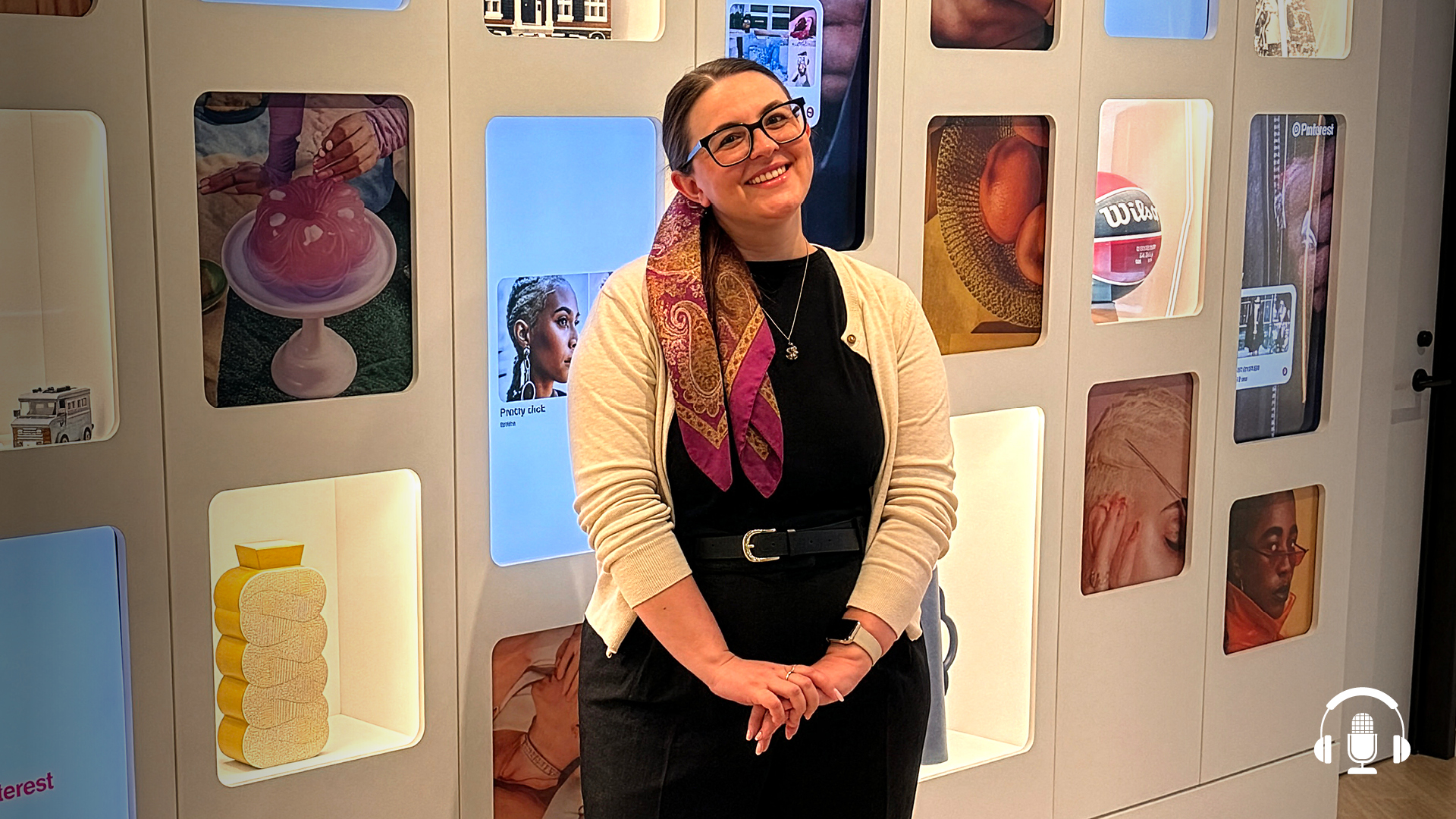
He graduated from Purdue in 1985 with a computer science degree. He’s also a proud alum of the All-American Marching Band. Now, he leads his own bracketology website where he shares his data-driven projections on the NCAA tournament and college football playoff team selections and seedings. Oh, and one last note and a little surprise for our listeners. For the first time, I’m being joined by a special co-host, Purdue University spokesperson and Indie sports personality, Derek Schultz.
Kate Young:
Derek has quite a following in the sports community and is a self-proclaimed sports nerd and as most of you all know if you’ve been listening to this show for a while, I myself am not exactly a sports expert, so he brought the perfect balance to this episode, even if he did laugh at me for some of my more unconventional approaches to filling out my brackets each year. Okay, basketball fans get ready to impress your friends and family this tournament season. Let’s get to it. Here’s our conversation with Jerry.
Kate Young:
Jerry Palm, thank you so much for joining us on. This is Purdue, the official university podcast. You are a nationally recognized bracketologist. You’ve spent many years as a lead bracketologist at CBS Sports. You’ve made countless national media appearances. You’re also a Purdue computer science and All-American Marching Band alum. We’re so excited to hear your tips and tricks on bracket strategy. I think I need them ahead of this March Madness tournament time and we’re just really excited because it’s the perfect time. We’re going to have the NCAA Final Four in downtown Indy and then this is also a very special episode. For the first time, I have a co-host with me, my Purdue colleague and Indianapolis sports personality, Derek Schultz. Derek, thanks for joining us.
Derek Schultz:
Yeah, super excited to be here and even more geeked out to geek out on some basketball with Jerry Palm.
Kate Young:
Jerry, thanks for coming.
Jerry Palm:
Well, thanks for having me on. This is a unique experience for me to do something like this and especially for Purdue. It’s very exciting.
Kate Young:
Yes, we’ve heard you are a huge Purdue fan. Lots of family ties to Purdue, so we’ll get into all that, but let’s jump right into the hot topic that college basketball fans everywhere are eager to hear more about, especially during the month of March, which is tournament brackets. What would you say when it comes to bracketology? Is it more of a science or an art?
Jerry Palm:
It’s a little bit of both. Bracketology itself is trying to predict what the committee is going to do in terms of building the field and setting up the initial bracket. It’s not really about predicting what’s going to happen once the tournament starts. It’s about predicting what the field is going to look like and that’s probably harder than predicting what the tournament is going to do once it starts. Although they’re both obviously a lot of guesswork involved in trying to predict what’s going to happen in a single elimination tournament, but bracketology wasn’t a thing when I started doing it. That wasn’t even a word.
Jerry Palm:
I’ve been doing this since 1994 and I was the first person to do it. Joe and Artie was starting at ESPN at the same time. Joe and I approach it in different ways. I’m much more about the numbers behind the selection of the bracket and Joe really just talks about the bracket itself, but it’s been the two of us since 1994 and now there’s like 200, 250 people doing brackets. It’s really taken off into, if you’ve got a computer and too much time on your hands, this is something you can do.
Kate Young:
You can make dozens of them, right? There’s no limit.
Jerry Palm:
Yeah, that’s right.
Kate Young:
Let’s talk about if you’re a newbie, if you’re a sports expert, someone like Derek, what is your best advice you can give when it comes to the approach of making picks for your bracket this year?
Jerry Palm:
Well, the main thing is trying to where the upsets will be because anybody can fill out a bracket with all of the favorites, the higher seed going all the way through, and then at the Final Four you’ve got all the one seeds and you just, I guess pick the team you think are better. But knowing where the upsets are going to be, that’s a lot more art than it is science because it only takes one bad day for a very good team to be sent home. The best teams in the tournament usually have a dominant player, an NBA level talent on that roster.
Jerry Palm:
This year, there’s a lot of those teams and a lot of those guys are freshmen, but the freshman class this year is full of guys that are probably going to get picked in the first round of the draft and those teams, they can’t all get to the Final Four, but those are the kinds of teams that usually have success getting to a championship and winning a championship. It’s pretty rare that a team wins a championship without a first round NBA player on the roster.
Jerry Palm:
Sometimes you don’t know that that team has got a first round guy until they win a championship and now all of a sudden the scouts are paying attention, so sometimes that happens too, but it’s really, talent wins out. In the end, more often than not, talent is going to win out and teams that could have got one dominant guy especially seem to do pretty well in this tournament.
Kate Young:
It’s interesting that you say that about the NBA’s talent because I just keep thinking about Zach Edey and we had that when we were in the championship, right.
Jerry Palm:
What’s funny about that is when Purdue was going into that tournament, people were still not sure Zach Edey was a first round player. There weren’t debate whether or not Zach Edey could play in the NBA, but he’s the two-time national player of the year. That’s good enough. And of course he’s a top-ten pick and when he’s healthy, he’s been a terror for the Grizzlies. He’s been tearing it up. He’s doing a great job in the NBA and hopefully he can stay healthy and continue to do that.
Derek Schultz:
To bring people behind the curtain, Jerry, there are a lot of factors to weigh when evaluating teams and at the end of the day, these are human beings that are in a room together that are talking about doing this bracket and you’re trying to predict what humans are going to do, which we know is always difficult regardless of what field that you’re in. But what are some of the factors that you weigh the most heavily when you’re projecting your own bracket and trying to also evaluate what these people are going to do on the selection committee with the actual bracket.
Jerry Palm:
That’s the art part of it, right? Is that you’ve got a committee of people who have individually their own ideas of what they like out of a team. There’s a lot of data behind it when primarily the data starts with the net ranking system, which is the NCAA’s creation. It’s a way to rank teams. It’s got some margin of victory type components in it, which the old one, the RPI did not have, so it’s a little more sophisticated.
Jerry Palm:
It actually resembles Ken Pomeroy’s rankings, which are some of the most famous independent ranking system is his, and they’re very similar in a lot of ways, but the numbers don’t make decisions. The numbers help inform the decision makers, but they have quadrants, the quality of your opponent, quad one, quad two, quad three, quad four, so your best opponents are in quad one. So they want to see teams that have been successful against other very good teams, and those are the teams that are going to be the most rewarded. Teams with really good records against really good schedules are always going to be the higher seeded teams in this tournament.
Jerry Palm:
But there’s a lot of, especially when you get to the last few teams into the bracket as that large team, there’s a lot of team 5, 6, 7 that all look the same in different ways, same quality but in different ways. So what is this committee going to favor? Are they going to favor a strength of schedule? Are they going to favor a really good win? And it changes because the committee changes every year. They have three or four new members every year, so that’s the art part. That’s why I always say it’s more art than it is science. The data doesn’t really change in terms of what you’re looking at, but how this committee is going to interpret it may very well change.
Kate Young:
I’m sure a lot of our listeners have the stories of maybe their grandma who doesn’t know anything about basketball wins the family tournament or a coworker who’s never seen a game in their life wins. Any fun unconventional stories you have from all of your years doing this of ways that people choose their bracket that happened to be a success.
Jerry Palm:
There are ways that are not what you call merit based and if those are successful, that’s just happenstance. I’ve seen people pick based on jersey colors. I like blue, so I’m going to pick teams that wear blue, and there’s a lot of teams that wear blue, so you can do that. If you want to pick orange, you’re kind of limited to say Syracuse and Illinois. There aren’t a lot of teams out there wearing orange, but yeah, jersey colors.
Jerry Palm:
There are some that based on the attractiveness of a coach, and that’s about as random as you can be. Some of them pick names out of a hat. If you’re not going to do something merit based, you might as well do something that kind of strange and interesting, but most will try and predict who the actual better teams are. Who’s going to win games even if you’re not the better team.
Derek Schultz:
My buddy’s daughter nailed the Yukon Butler final 15 or whatever years ago because fluffy husky against cute bulldog and that made the final two team standing.
Jerry Palm:
Yeah. There are worst ways to do it probably.
Derek Schultz:
You had mentioned the evolution from RPI to net. How else have you seen bracket selections evolve over the years? I’m old enough to remember when your last 10 games was part of the selection, right? Things like that have changed, but also geography has become a big deal here as opposed to new seeds. And do you believe that even AI could creep its way into this? Certainly when you make your bracketology projection, maybe you could just type that into some sort of an AI algorithm. I don’t know, but you’ve been around this for a long time. What are all the changes that you’ve noticed with this process?
Jerry Palm:
The biggest change obviously is RPI to net. RPI was a blunt instrument and not very sophisticated and the net is much more, so the data that the committee is relying on as sort of a base is a better set of data. Nothing is really perfect. You’re talking about 30-some games per team. I mean, it’s a lot better in basketball than you couldn’t even do something like this in football because you don’t have enough teams playing enough games. But the RPI, yeah, was kind of a blunt instrument.
Jerry Palm:
The committee’s gotten bigger. They have made sure that they are diverse geographically in particular. There’s a lot more responsibility now I think on committee members than there used to be at the very beginning. They’re out watching games. These guys are athletic, they have other jobs. They’re like athletic directors and conference commissioners and they have other jobs to do, but this is now kind of a bigger job, I think, than it used to be for each individual committee member.
Jerry Palm:
The committee itself is bigger, but the actual selection process, I think they’ve given themselves more data to make decisions with and they’ve broken it down differently than they used to. So I think that that helps, but I think in the end, the process is the same. We’ve got all this data that helps us measure the quality of teams. We’re selecting the best 34 at-large teams and we have 31 or 2 conference champions, so I think we’re up to 37 at-large teams, but that’s our job is to select the best at-large teams, feed the teams the best we can and create a bracket that’s as fair as they possibly can. That’s always been the goal.
Derek Schultz:
Kate has had people on this show that have said, “Hey, I grew up and I wanted to be an astronaut,” or, “I grew up and I wanted to be a business leader, CEO type.” I don’t think anybody’s ever said, “I grew up and wanted to be a bracketologist,” notably because like you said, Jerry, that didn’t exist back when you were growing up, but what appealed to you about this field? And you kind of alluded to your origin story in 1994 and kind of starting this up, but what is the genesis of Jerry Palm, nationally respected bracketologist 30 plus years later?
Jerry Palm:
Yeah, so in 1994, I bought a new computer and some new software and I wanted to find a way to teach myself how to use it. Right around that time, I saw an article, I think Mike DeCoursey wrote in The Sporting News about how the RPI formula had changed, and I thought, oh, well, I’ve got this database. I could probably recreate that. Back then, I had to get scores from the library newspaper. We didn’t have team website. In fact, AOL was about all we had, and it was still pretty primitive in 1994, and there were some basic caveman writing on the wall message boards. And it was a lot of hand work to try and put all of this together, but I was teaching myself technology because I was a programmer. That’s what I did.
Jerry Palm:
I shared it, once I got an RPI, I shared it thinking nobody would care, literally enough people to fit in a minivan would care, but I kept getting responses, “Show me more. Send it to my email, blah, blah, blah.” The next year I created … AOL gave us a one-page web page, so I put my RPI up on that one page web page, that was the beginning of what turned … Well, it was eventually going to become collegerpi.com and now palmbrackets.com. But people just kept finding it and they were interested and I kept answering questions that people had and it just snowballed. I could have never predicted this would be my life. When I was a kid, I always wanted to be in sports, but I would’ve never predicted this is how it would happen.
Kate Young:
As I mentioned at the beginning of this episode, we wanted to dig deeper with Jerry into what the term bracketologist really means. What role does he play each March ahead of and during the big tournament and what’s a day in the life look like for him? Here’s Jerry.
Jerry Palm:
This time of year, I start out pretty much every day of the season, I enter scores into my database, I generate data used to create the web pages on my site. I can upload flat files of data for pages that are dynamically generated, and then there are static pages. I just update my website and it takes, I mean, depending on how many games there were the night before, it can take about an hour to do all that. And then this time of year, there’s bracket projections twice a week, that’ll increase. I’m going to start Bubble Watch here pretty soon, and so that’ll be a daily update thing as well.
Jerry Palm:
So the time you spend on it increases as you go on. And then I do other things like this and radio interviews and the occasional TV or video appearance, a lot of media commitments and those also increase over the next month of the season up until Selection Sunday. And it’ll be a little bit different for me this year because I’m not doing things for CBS. So I don’t know if that’s going to mean more independent stuff or maybe just less stuff altogether because obviously when I was working for CBS, they’re the network that broadcasts the tournament, so they’ve put a lot of resources into it.
Derek Schultz:
Jerry, there are metrics and things that we talked about like nets and you had mentioned Ken Pomeroy’s rankings, Torvik has rankings. There are basketball power indexes all over the place. As you said, there are 200-plus people that probably do this now, but if you were to distill this to a level that people can understand in layman’s terms, is the core of the NCAA tournament selection, and I understand that it goes much deeper than this, is it still about who did you play, who did you beat?
Jerry Palm:
Yes, absolutely. Who did you play and who did you beat? They just want to find different ways to measure it. And they’ve got six computer rankings on the team sheets. So they’ve got Ken Pomeroy’s and Torvik’s, two that you mentioned. They’ve got two from ESPN, Kevin Pogge’s rankings, he’s in athletics at Michigan State and has got his own rankings and all of those are very good, and they added wins above bubble this year, which is kind of a known metric among the geeks in the sport.
Jerry Palm:
It’s just different opinions. Now I think the net and Ken Pomeroy’s rankings and Bart Torvik’s rankings are so similar that having all three of them is a bit redundant, but the others, the ones that are especially less margin of victory impacted are going to be more different from each other. But that’s fine. Those are well-known names and I think that’s part of why the committee chose them because it lends credibility to what they’re doing when they have rankings from people like Ken Pomeroy who’s basically the godfather of all of this.
Derek Schultz:
I feel like that scene from the office where Michael Scott says, “Hey, why don’t you explain this to me like I’m a five-year-old?” But there’s another question that sort of deals with that. You brought up the term bubble. There’s always been this fun aspect of the NCAA tournament at the end of the regular season as teams are trying to fight their way into the field and they’re right on the cut line, but what does bubble mean? And when you say, “This team’s bubble burst,” what are we talking about?
Jerry Palm:
There are teams that you would consider locks or near locks for the NCAA tournament already, right? There’s probably at least a couple of dozen of those teams that, even if they go south right now, is probably still going to make the NCAA tournament. Other teams can play their way in or play their way out. That’s the bubble. Teams that can play their way in or out realistically, that’s a pretty big list of teams because there’s so many games left and we’re not even talking about conference tournaments yet. But that’s really what the bubble is, it’s the list of teams that still have some chance of playing their way into an at-large spot if they need it or playing their way out if they’re already in that position.
Kate Young:
For non-experts, what kind of tools, what can we look at to inform our bracket picks? Where should we start?
Jerry Palm:
I would start with some of the rankings. I mean, I did the actual formulas that go into it, if you even saw them. Might not mean anything to you, but there are predictive metrics and Ken Pomeroy’s is one of them. Torvik’s is them where they’re really designed to predict winners, and in some cases scoring margins. So I think it’s more obvious in Ken Pomeroy’s how to predict scoring margin, if you read through it. I mean, you could take a ranking like that and just go with that if you want, but of course the real winners when it comes to brackets are going to be the ones that can correctly predict upsets.
Jerry Palm:
I look for teams that have already done that kind of a thing in the regular season, that have found a way to beat teams that are thought to be better off their home floor because the tournament is not played on home floor. So teams that have been good road teams, teams that have been good on neutral courts and even ones, especially if they’ve been able to beat teams that are thought to be better in those environments are the kinds of teams I think that can do well in an NCAA tournament environment because they’ve already had success against teams in that environment. And I think that teams that have got NBA talent. If you’ve got a first round NBA guy, that helps a lot when you’re talking about going deep into an NCAA tournament.
Kate Young:
Derek and I were prepping for this interview and he was nerding out. But I’m curious your take, Jerry, how does geography, you talked about home court advantage, are teams upsetting teams on different courts? How does geography play into some of these bracket picks and seedings and rankings?
Jerry Palm:
When the committee puts the bracket together, they start at the top with the number one team. That team gets to choose which regional they’re in and which sub-regional they’re in, first and second round site. Everybody else gets placed as close as they possibly can to home, wherever home is for them. But when you get to the fourth number one seed, there’s only one region left. That might not be your best region, but you still get it because you’re the fourth one. So the fourth one on each line sometimes gets a little less geographic preference than they might’ve gotten had they been the first one on the line below.
Jerry Palm:
But anyways, that’s how those decisions are made. They go one through 68 through the field and they put teams as close as they possibly can to what’s available to them. They do want to keep teams as close to home as possible, and there are rules about keeping teams from the same conference separated. That gets into the mix as well. And so that’s why sometimes teams, you think, well, why isn’t Purdue in Chicago? They could have been in Chicago, but another Big Ten team is already in Chicago and Purdue can’t be in the same region with them on a different line because they would meet too soon in the tournament. So there are rules like that to keep teams from the same conference away from each other for as long as possible.
Kate Young:
I think Derek gave the example of Purdue played in Detroit recently, so that’s not too far away for Purdue fans to get to, right?
Derek Schultz:
And Indianapolis before then, the 2024 run-
Kate Young:
Super close.
Derek Schultz:
… played in Indy and then Detroit.
Jerry Palm:
And Purdue was the number one seed that year. So I think UConn was overall number one, but Purdue got geographic preference because they were the second team going into the bracket. So those were the two closest site for people from West Lafayette, and that’s how they determine that.
Kate Young:
So Jerry, we talked about your degree from Purdue, you have a bachelor of science, you have a background in computer science. How did that foundation with the math, the statistics shape your career early on for this career in bracketology?
Jerry Palm:
Yeah. My career early on was a programmer for lawyers and bankers, but before I started doing this, I was always good at math. In high school, I was a state champion in math for whatever that means, but computers in schools were a new thing. I had my honors math teacher in junior high gave us a week in a computer with yellow tape coming out the side, and my class at Purdue was the first computer science class that did not have to use punch cards, but I’m a geek, so I did a program on punch cards anyway.
Jerry Palm:
So I’ve seen a lot of technology changes over the years, but the math background has helped me with this. This isn’t super advanced math, doing what I do, but it’s always been as part of what has made it interesting for me is that I’m dealing with formulas and I can put it into my computer and I can apply the skills that I’m good at to this. And so that’s part of what made it fun for me to even give it a try and really just to do it for my own edification. I never thought it would turn into something like this.
Derek Schultz:
So we learned about Jerry Palm, the math geek, and I say that term lovingly, Jerry. What about Jerry Palm, the sports geek and specifically basketball. We know that you’re a dad and your two sons also are Boilermakers. I believe you were there in the very early Gene Keady years and one of those Big Ten championship teams would’ve been around when you were there in 1984. Did you grow up in a hoops family and is that when the bug bit you?
Jerry Palm:
My mom and dad both were really into sports. They met at Purdue. I was born at Purdue when they were still students. I actually have 10 members of my extended family that have been to Purdue or graduated from Purdue, or currently at Purdue, and six of us marched in the band.
Derek Schultz:
Wow.
Jerry Palm:
Purdue has always been a part of my life. My dad took me to games when I was young. I was always going to go to Purdue. Purdue was good at what I wanted to do, which obviously they were. Purdue’s, I don’t even know what my life would be like if it wasn’t Purdue. I mean, it would be something and maybe it would be good. I don’t know. But Purdue has always been an important part of my life. I was the president of the Purdue Club of Chicago. I got involved as an alumni pretty early on. I’ve always tried to do what I can to help. It’s really been an important part of my life and it will always be an important part of my life.
Kate Young:
We have had married couples, couples who have met at Purdue. We have never had a guest who was born on campus while their parents were at Purdue. I love it.
Jerry Palm:
Okay, technically, I was born at home hospital in Lafayette, which they have since shut down.
Kate Young:
A true Boilermaker. You’ve often said you’re the only media member with a computer science degree. What unique perspective has that background given you in your field?
Jerry Palm:
It means that when I talk to people, their eyes glaze over.
Kate Young:
Hey, we’ve been pretty captivated today.
Jerry Palm:
No, I come at things with a much more analytical mind, I think, than the typical sports writer, but I don’t mean that as a way of denigrating sports writers because it’s not. I think most sports writers I come in contact with are all very good at what they do. I really like the guys that cover Purdue. They do a great job. It’s something I kind of always wanted to do, but I wasn’t really 100% cut out for it. I mean, I was on my high school paper. I was the editor of my high school paper once. I was never going to study journalism. Computers were definitely more my thing, but it’s now funny that I’m in a weird way a journalist and I combined that.
Jerry Palm:
As one of the many things that are passions of mine or things that I enjoy into this job, journalism was one that … I don’t think real journalists would probably think of me as a serious journalist because I don’t do a lot of the same things that they do, and my writing is very focused on one thing, but I get to watch games from press boxes or wherever they have you in a basketball arena. It’s been nice to be able to learn about that part of this job. There’s some really good people that are journalists and some outstanding writers, and I get to learn from some of them, and I’ve always appreciated that part of this job.
Derek Schultz:
How much did your participation in the All-American Marching Band fuel that obvious pride that you have in your alma mater, and how has being part of Purdue’s band impacted your life and career?
Jerry Palm:
Most of my better friends now are Purdue Band. The group that we were with our first year at Purdue was Bill Moffat’s first year as the band director at Purdue. We still refer to ourselves as the Moffat kids. When we come back for alumni band, we’re a big group. For people that have been out of band for 40 years, we’re a pretty sizable alumni group, so it’s always been a close-knit group of people from way back then that we’re still in touch with thanks to social media, that’s easier now than it was when we first started coming out of school. But it’s definitely shaped my life in ways … Well, like I said, six members of my extended family, Purdue All-American Marching Band, including my two sons that are there now. It’s been a big part of my life and I wouldn’t trade it for anything.
Kate Young:
Anytime we feature any part of All-American Marching Band on the podcast, the engagement on social media, the listens, the views, it’s phenomenal. So I love hearing that. What would you say to Purdue students who are interested in using their STEM skills in a sports focused career?
Jerry Palm:
Get involved with the new program they’re starting. There’s going to be a sports management and analytics … I’m probably getting the name wrong. Jeanne Boyd is starting that program and I know her from her days at the NCAA, so I’ve known her a very long time. She’s great. I would start there. If you’re a STEM person and you want to get into sports analytics, if you’re coming to Purdue, I would get into that program.
Jerry Palm:
I don’t know if you can get a degree in it, I’m not sure because it’s all brand new or if you can get a minor or how that works, but I would get involved with that. I wish we had it when I was in school. I might’ve even majored in that or minored in it, something like that, with my computer skills. I may go back and take a class now if I ever have time. I would get started that way right off the bat.
Kate Young:
Friend of the pod, right, Derek?
Derek Schultz:
That’s right. Jeanne Boyd, a former guest here on This is Purdue as well.
Jerry Palm:
I can believe that because her experience with the NCAA, her and Greg Shaheen were kind of running things there for a long time when I first got involved in this, and they’re just two of the best people I’ve ever met in this business.
Derek Schultz:
When we get back to this men’s college basketball season, what do you make of how this season is shaping up? You mentioned the freshmen class. Something else that’s jumped out to me is just the strength of the teams at the top. I think we’re especially seeing it in the Big Ten this year where you might have as many as five true national title contenders just in that league, but what will you be paying close attention to as we approach the end of the regular season?
Jerry Palm:
Yeah, I mean, the Big Ten is really top-heavy. The Big 12 is especially top-heavy because I’ve got six teams in the top 20 from the Big 12, and then only maybe one other team from that league in the bracket. I’ve been going nine or 10 deep with Big Ten teams and five of them in the top 16. So those two leagues have been really dominant at the top of college basketball. But then you still have Duke, you still have Gonzaga, you have some of the names that you’re familiar with in other conferences as well, and I wouldn’t rule out, although I don’t have a lot of SEC teams in the upper part of the bracket, that’s a tough league with some talented people.
Jerry Palm:
The University of Florida, the defending champion is starting to come on strong now. It’s going to be a really competitive tournament at the top of the bracket. I wouldn’t be surprised at all to see a four or five seed win it because they’re not going to be that much worse than the one.
Kate Young:
How do you think the field of bracketology will evolve in the future, Jerry? What do you see for it?
Jerry Palm:
It really is something that you don’t control the source information. So how it can change is the NCAA decides to add more teams to the tournament, which by the way, I could not be more against adding more teams to the tournament. I’m steadfastly in favor of going back to 64. That was perfect. So that’s one of the ways that it can change. They can change the metrics and if there’s more advanced science that’ll help them, they can do that. But I think the biggest change, if it happened, would be expanding the tournament and diluting it further.
Derek Schultz:
Finally, Jerry, we have to ask understanding your job is to project the field, not necessarily what happens after that, but do you have any big predictions for the 2026 NCAA tournament?
Jerry Palm:
Well, I don’t know if it’s considered big or not, but I like the Boilers chances even after that three game skid. I mean, this is a veteran team with an all-American point guard. I talked about needing an NBA type of player. Braden Smith is the best at his position in college basketball. He’s 6-foot, maybe. Guys my size don’t usually play in the NBA because the question is, who do you guard? And the last person we had this size was Carsen Edwards who can just score in buckets, but who do you guard?
Jerry Palm:
So Braden Smith is probably going to get a shot at the NBA. I don’t know if anyone will take him in the first round because of his size, which would be a shame because I think Braden has a chance to be a good player in that league, especially with the way he sees the floor. So for Purdue though, that’s the guy. That’s the guy that a lot of these big time freshmen that you’re going to see their names called early in the draft. I think that Braden will probably get drafted and he may get drafted in the first round, and if he were 6’4″, he’d be a top pick. Just it’s that simple, but anybody in the NBA who undersells him or thinks that he can’t do it is going to be shocked because there isn’t anything Braden can’t do.
Kate Young:
I love it. I always have the Boilermakers winning the bracket just because it’s a matter of principle. You know?
Jerry Palm:
Yeah, I understand that. I have at times not picked them to win it, and it’s usually a little more obvious. I’m sure I will have at least one bracket this year with Purdue winning it. This team is good enough to do that.
Kate Young:
I love it. Well, Jerry, we can’t thank you enough for joining us. It was a pleasure. Anything I missed here? Anything else you want to tell our listeners or viewers today?
Jerry Palm:
No, just come find me at palmbrackets.com and feel free to reach out. There are ways to reach me there. You can always reach me on social media, but I always like engaging with the fans. That’s one of my favorite parts of the job, and even when we don’t agree, and sometimes that could even be more fun than when we do.
Kate Young:
I love it. We’ll link that in our show notes for everyone, and we’ll be tagging Jerry on X as well. So Derek, it was so fun to have a co-host. Thank you so much.
Derek Schultz:
Yeah, my pleasure. And Jerry, we’ll find you at Lucas Oil Stadium coming up in April as well. I’ll give you a high five. How about that?
Jerry Palm:
Yeah, I’m looking forward to Indianapolis for sure.
Kate Young:
That was a fun one. We hope you all learned at least one tip when it comes to filling out your own tournament brackets this year, be sure to check out our YouTube page, youtube.com/@thisispurdue for additional bonus content with Jerry. He discusses the reasoning behind some of those historic upsets between 5 seed and 12 seed teams. Plus he talks about the strategy of going chalk, which is something that I do every year, apparently. Guilty as charged. But hey, after this episode, I’m going to take some of Jerry’s tips to heart and I’m going to change up my strategy a little.
Kate Young:
Also, be sure to follow This is Purdue on Apple Podcasts, Spotify, or wherever you get your podcasts, and if you love this episode, leave us a review. We’d love to hear from you. This is Purdue is hosted and written by me, Kate Young and special thanks to my co-host on this episode, Derek Schultz. He’s also joining me for our next episode on March 19th with sports journalist and author Mark Montieth, so stay tuned.
Kate Young:
Our podcast videography for this episode was led by Thad Boone. Our social media marketing is led by Maria Welch. Our podcast design is led by Cheryl Glotzbach. Our podcast photography is led by John Underwood. Our podcast team project manager is Rain Gu. Our podcast YouTube promotions is managed by Megan Hoskins. Additional writing and research assistance is led by Ashvini Malshi. And our creative production manager is Dalani Young.
Kate Young:
Thanks for listening to This is Purdue. For more information on this episode, visit our website at purdue.edu/podcast. From there, you can head over to your favorite podcast app to subscribe, and don’t forget, you can also check out all of our podcast content on our podcast YouTube page, youtube.com/@thisispurdue. And as always, Boiler up.