The bigger game within the game
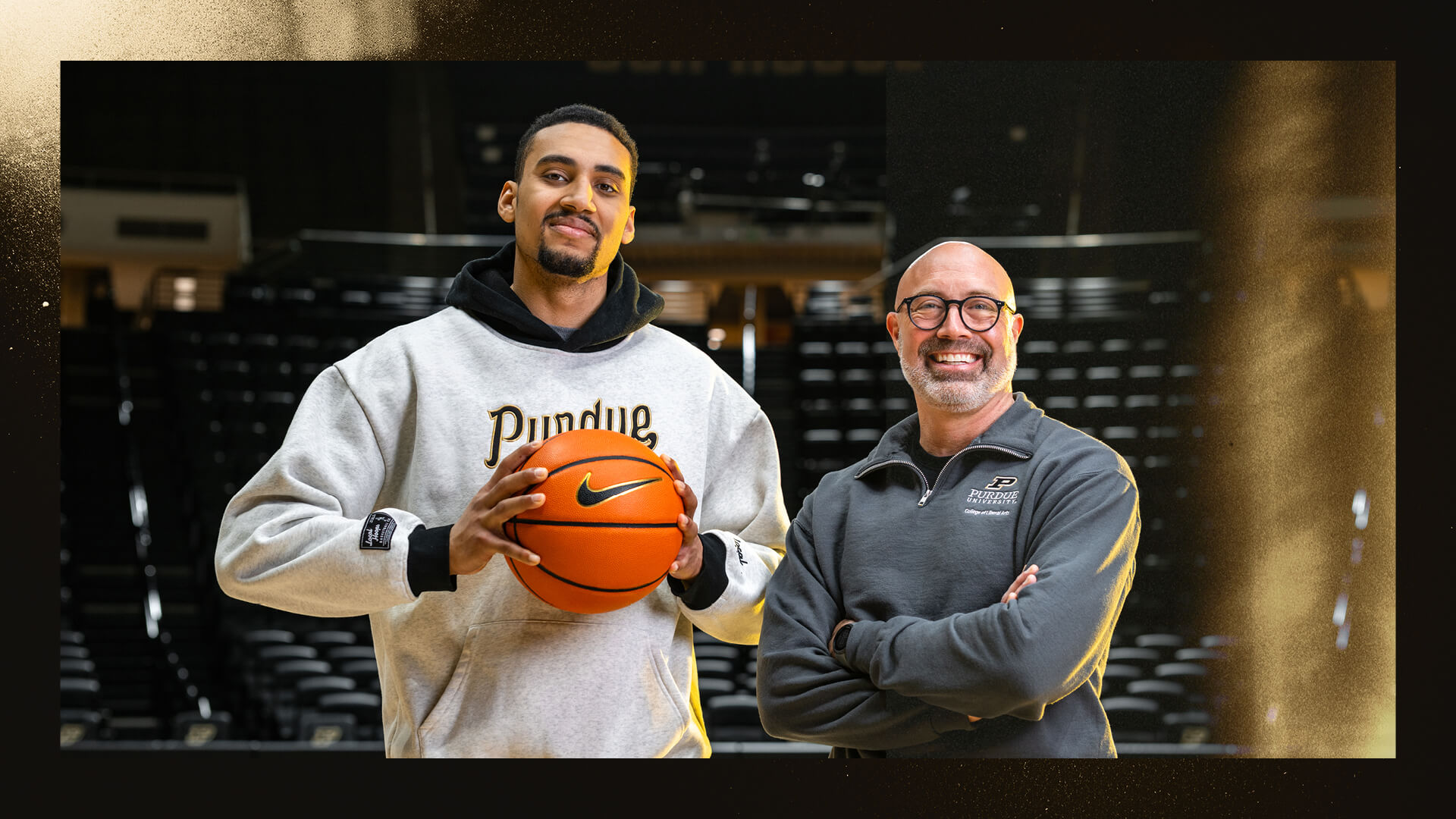
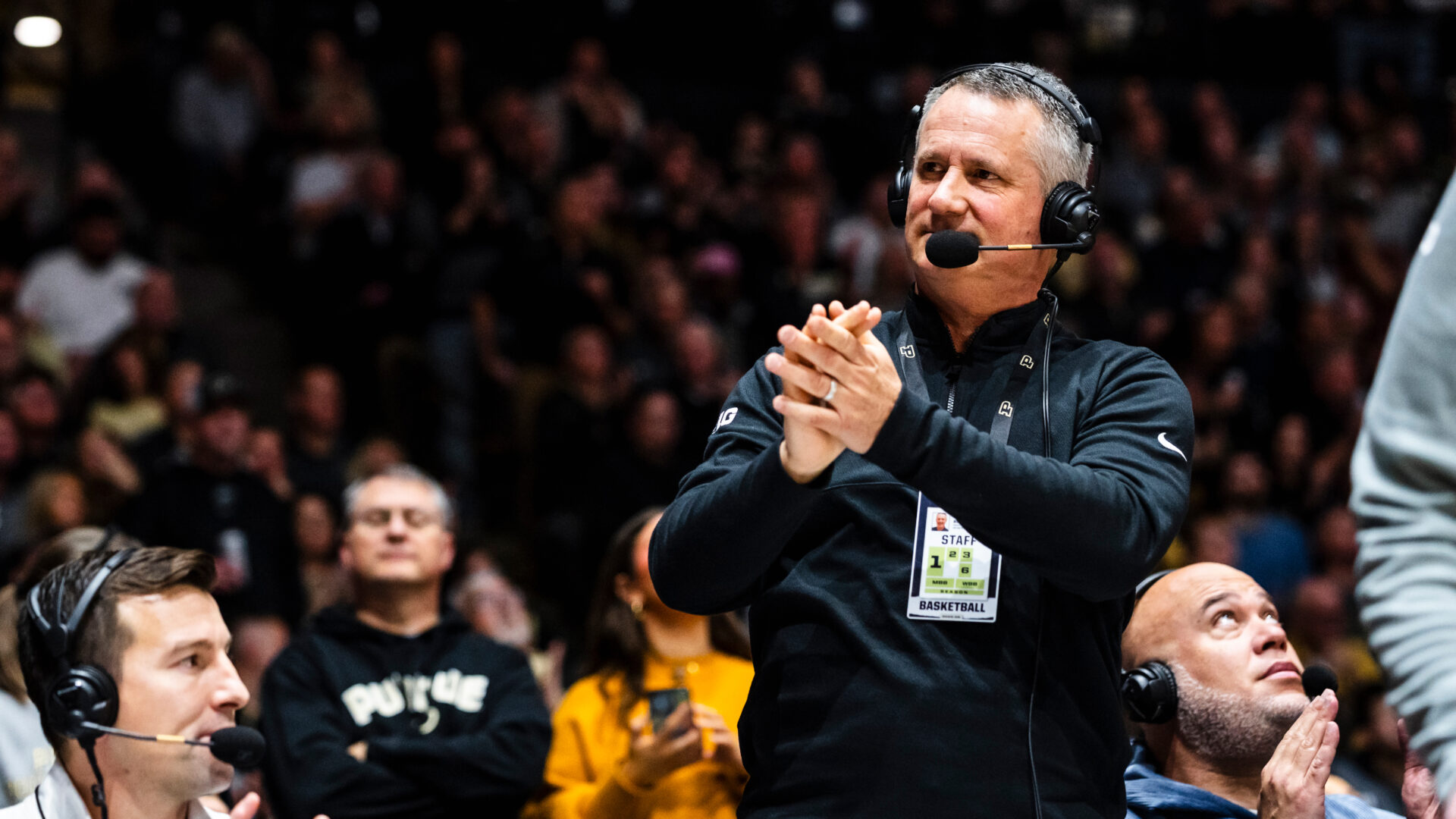
Two men who see sports through a philosophical lens. Purdue basketball standout Trey Kaufman-Renn and Christopher Yeomans, the Justin S. Morrill Dean of the College of Liberal Arts, in Mackey Arena. (Purdue University photo/Kelsey Lefever)
Trey Kaufman-Renn demonstrates the philosophical pursuit of character and meaning beyond the final score
Long before Trey Kaufman-Renn became an All-American power forward for Purdue University, before the cameras and the roar of the fans, he was a kid riding in his mom’s car, headed to his next game.
On those drives, his mother would pose questions.
But they weren’t about box-and-one defenses or shooting percentages. She asked about right and wrong. She’d ask about what makes a good life and about the state of the world.
“We would talk about moral dilemmas,” Kaufman-Renn says. “She’d say, ‘Should the world be this way or that way?’ And we’d just go back and forth.”


A philosophical athlete emerges
At the time, the Purdue philosophy major didn’t know there was a name for that kind of conversation. “I didn’t know philosophy existed,” he says.
He knew basketball. He knew the rhythm of improvement, and he learned to appreciate the quiet satisfaction of seeing a skill sharpen with practice. “I love the growing part of it,” he says. “The idea that I could go in, work on my game and watch myself improve over time.”
That desire for growth — not the desire to dominate — drew him to the sport. Competition, he says, was something he had to learn. It will come as a shock to Boilermaker fans, but intensity is not his default setting.
“I have to put on an act sometimes,” he admits. Before games, he studies rebounding clips of Dennis Rodman, almost like an actor preparing for a role. “I’m naturally more laid-back,” he says.
That self-awareness and innate introspectiveness is what eventually led him to change his major from physics to philosophy. A pivotal class introduced him to Aristotle, deontology, utilitarianism and the big questions he had already been asking in the car years earlier.
“I was thinking, these are the questions that I ask myself all the time, ‘You can major in this?’” he says.
His epiphany was not about studying something abstract; it was about alignment. Philosophy named what he had always felt: that excellence is not accidental, and character matters more than applause.
In Aristotle’s “Nicomachean Ethics,” Kaufman-Renn grabbed onto the idea that human flourishing is worth striving toward. “There is a certain perfection,” he says, “and it’s worthy to work and try to achieve that.”
That is arguably an ideal philosophy for anyone to embrace when pursuing a sport. But sports complicate perfection. Sometimes you play your best and the scoreboard doesn’t match the effort.
“Sometimes you work as hard as you can and you don’t get rewarded for it,” he says. “You can give it your all and you can still lose.” That reality forced a reckoning for him. Why pursue sports if victory isn’t guaranteed? Why give yourself fully when outcomes are uncertain?
Philosophy offered an answer: effort for its own sake. Virtue independent of applause.
Meaning beyond the scoreboard
Christopher Yeomans, the Justin S. Morrill Dean of the College of Liberal Arts and a professor of philosophy, sees that posture as essential to both sport and philosophy. “It’s something that we enjoy for its own sake,” he says of sport. The intrinsic value — not the external reward — is what makes the experience of sports transformative.
That intrinsic value shows up in moments athletes call “flow” or “being in the zone.” Flow is the sensation that time slows, perception sharpens, and you become fully immersed. “You literally see more, hear more, feel more,” Yeomans says.
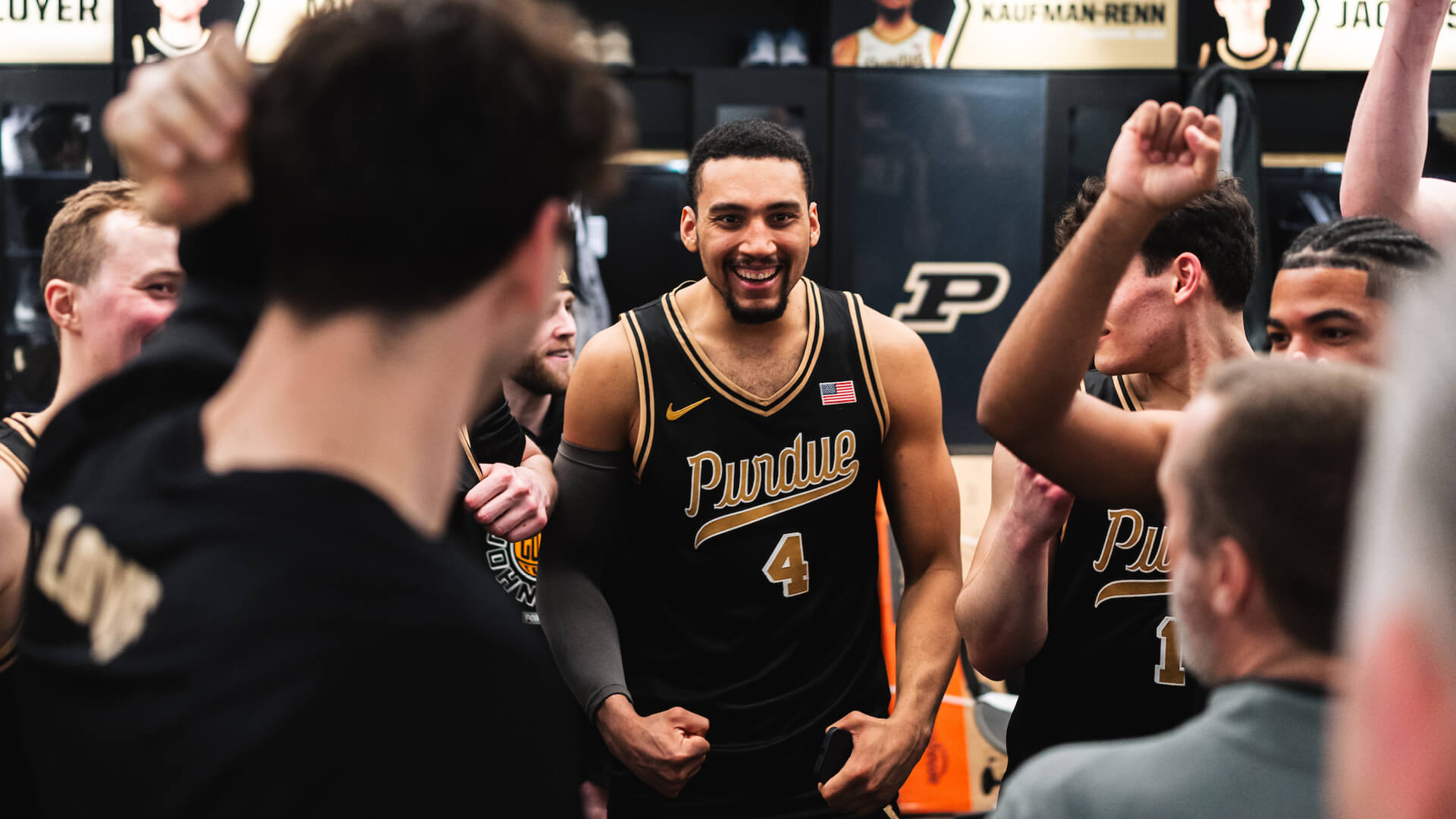
But immersion does not eliminate identity volatility. College athletes live publicly. Kaufman-Renn is still seen as the power forward when he’s having lunch or walking to class.
“When I leave the gym, I’m still TKR outside,” he says. Being seen only as a basketball player can magnify failure. A loss to a rival lingers in the eyes of strangers. Well-meaning comments take on weight. “When you’re living that roller coaster of identity — that’s hard mentally,” he says.
To deal with that mental challenge, he built an anchor. He composed his personal “I am” statement — a practice he recommends to everyone.
“I am one of faith, love, integrity, discipline, intentionality and cherish helping people with personal growth,” he says. It is framed where he can see it. He repeats it daily. It functions as a ballast when emotions spike or weaknesses threaten to overwhelm.
After a win over Nebraska, that statement holds true. After a loss to Indiana, it also holds.
“The scoreboard doesn’t change that,” he says. His identity does not begin or end with a stat sheet.
Yeomans says the balance between competition and cooperation, between self and team, is precisely what makes sport philosophically rich.
“You should respect your opponents, because you’re doing each other a favor by competing,” he says.
In its purest form, there is no malice in sports competition. It is mutual sharpening and the social mechanism that enables potential to be realized.
And team sport teaches something classrooms alone cannot: how to be responsible for others while trusting them in return. Only one player can take the last, often critical, shot. The others must live with the result.
Yeomans says that sports dynamic mirrors citizenship itself — navigating tension between personal ambition and the collective good.
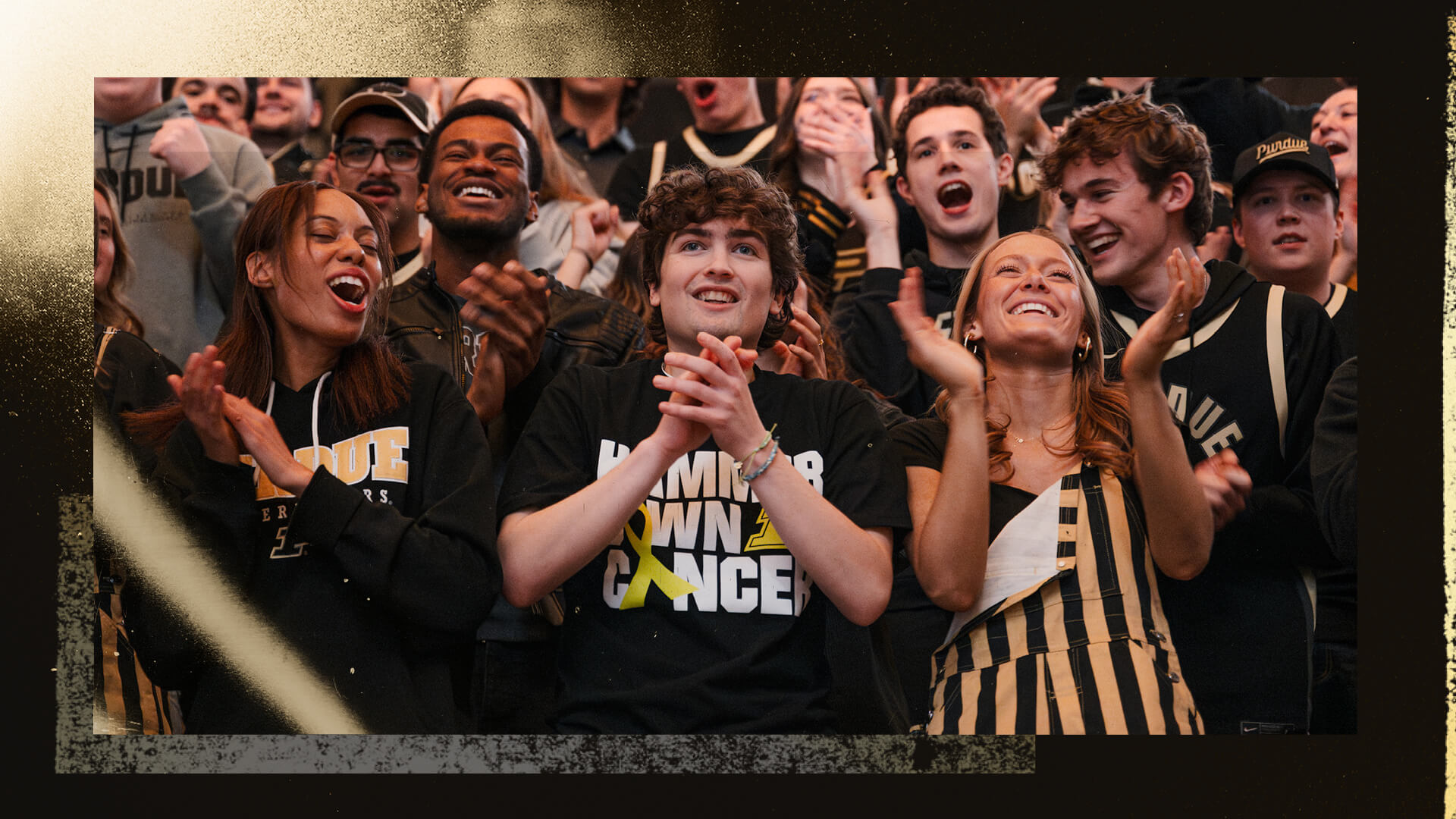
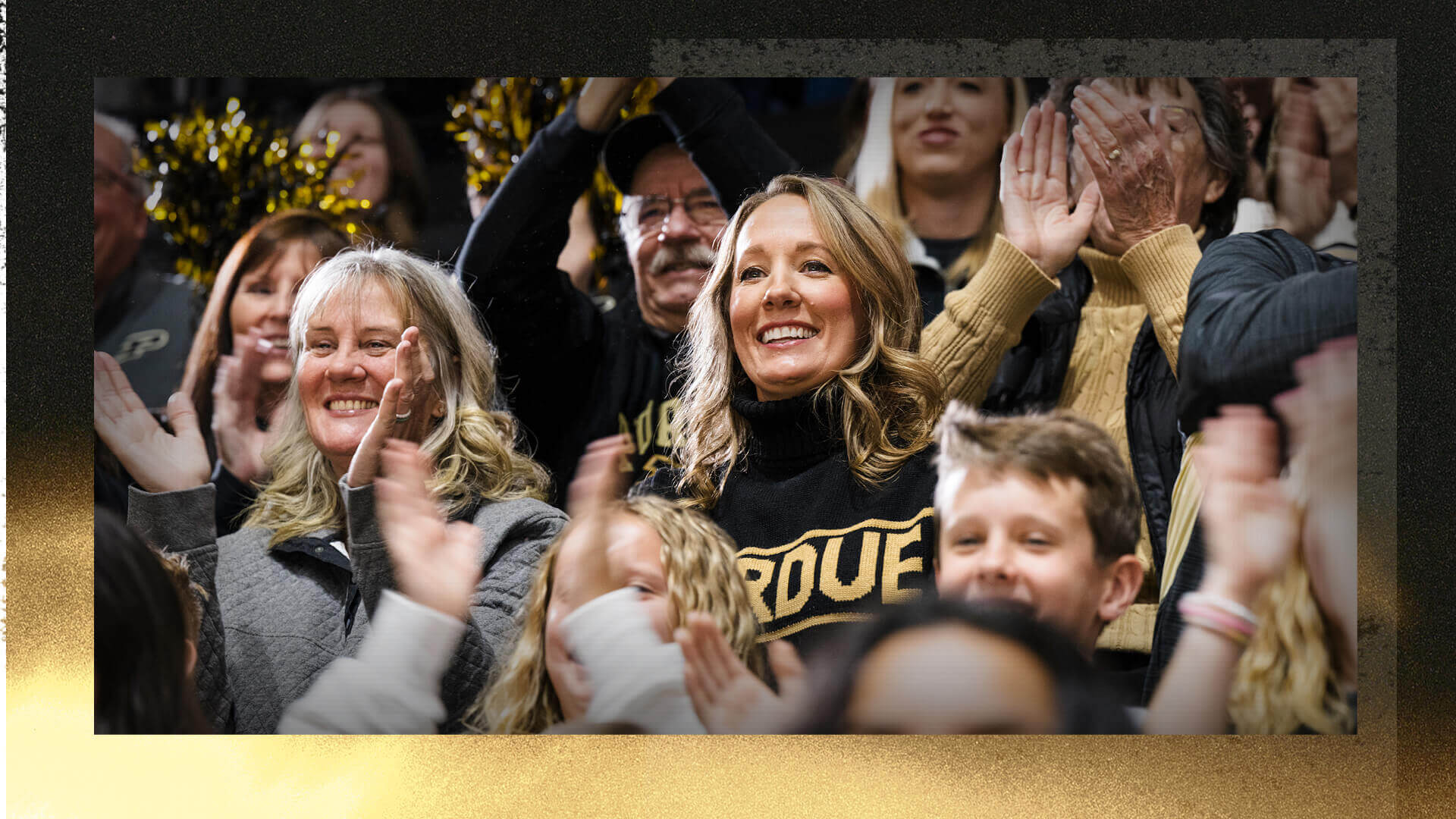
College sports also serve to tether universities to their communities. “The attachment to Purdue cannot be secured by a briefing document,” Yeomans says. “The kind of emotional allegiance that survives a tough season to cheer again next year is forged through shared experience.”
Kaufman-Renn sees that bond most clearly when he meets young fans after games. A homemade friendship bracelet he’s been given. A shy thank-you. A reminder that the arena is filled not just with spectators, but with stories.
“It shows you what really matters,” he says.
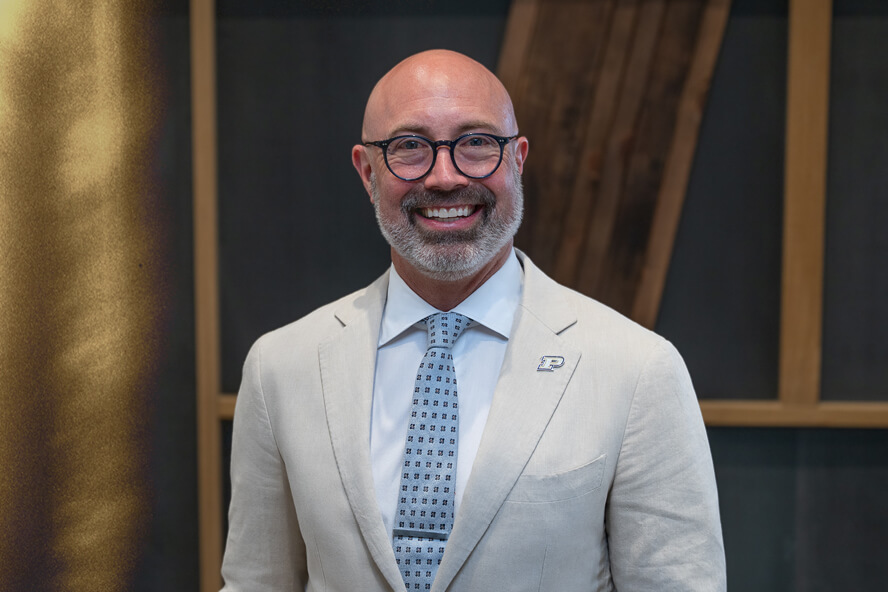
The attachment to Purdue cannot be secured by a briefing document. The kind of emotional allegiance that survives a tough season to cheer again next year is forged through shared experience.
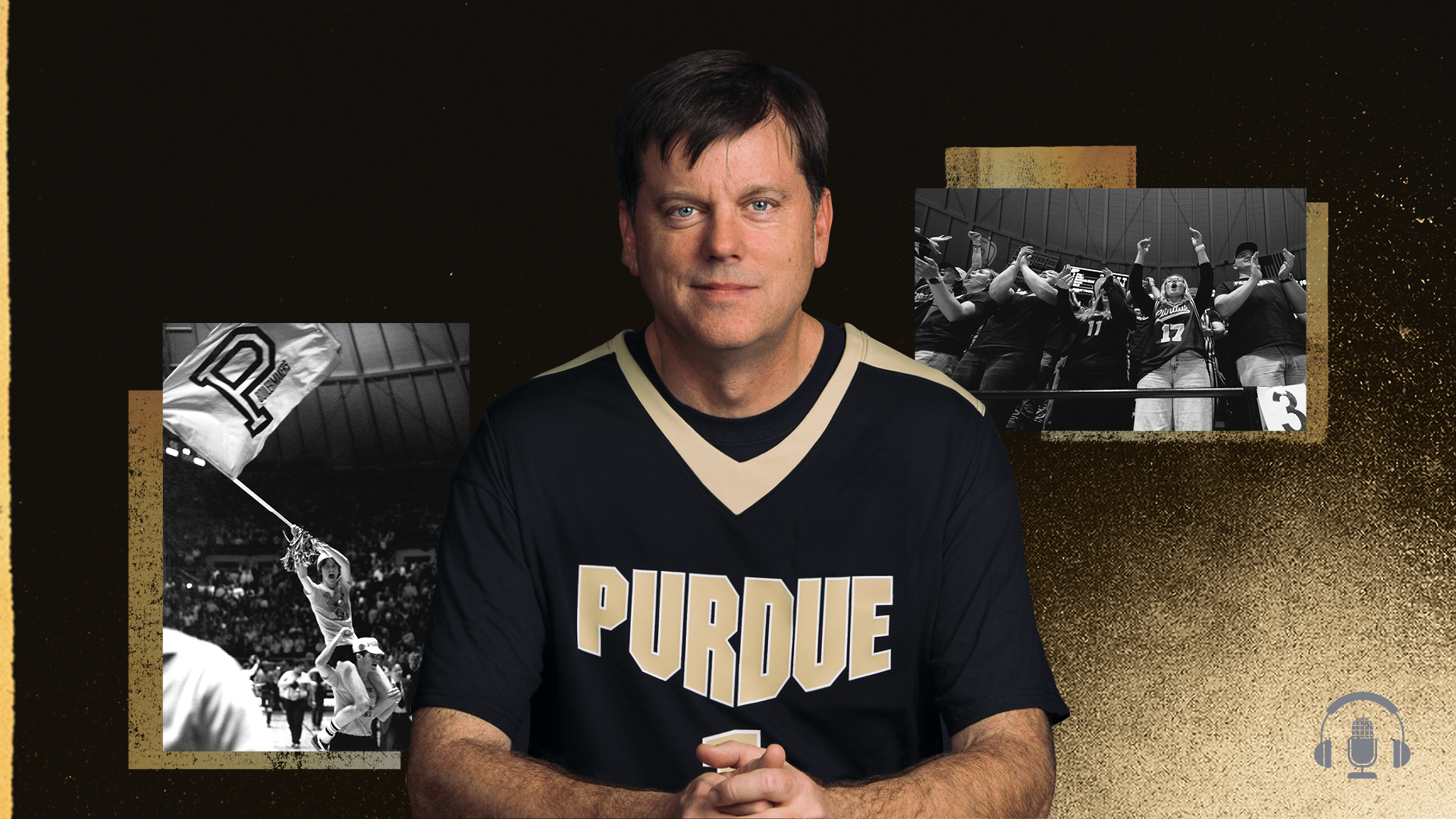
Chris Yeomans
The Justin S. Morrill Dean of the College of Liberal Arts and professor of philosophy
Failure as teacher
Failure, Yeomans adds, is not an aberration, but an instructor. “You don’t get better from winning,” he says. “You get better from losing.” Excellence, then, is never ease. It is sustained commitment. It’s “a long-term commitment to improvement.”
Kaufman-Renn understands and looks forward to embracing life after basketball. Whether in the NBA or after it, basketball will not be the final chapter.
“When the ball stops bouncing,” he says, “I’ll have a lot more time” to study, to reflect, to live the values he already practices.
For now, he plays. He rebounds. He studies Aristotle. He repeats his “I am” statement. And Purdue fans rise and cheer his rebounds and points in the paint.
And whether they realize it or not, they are cheering for a young man who is incorporating his philosophy for life into his sport and learning how to anchor his identity beyond outcomes.
They cheer for a team practicing cooperation under pressure and for a university community bound together by shared striving. Whether the ball falls through the rim or not, the pursuit continues.