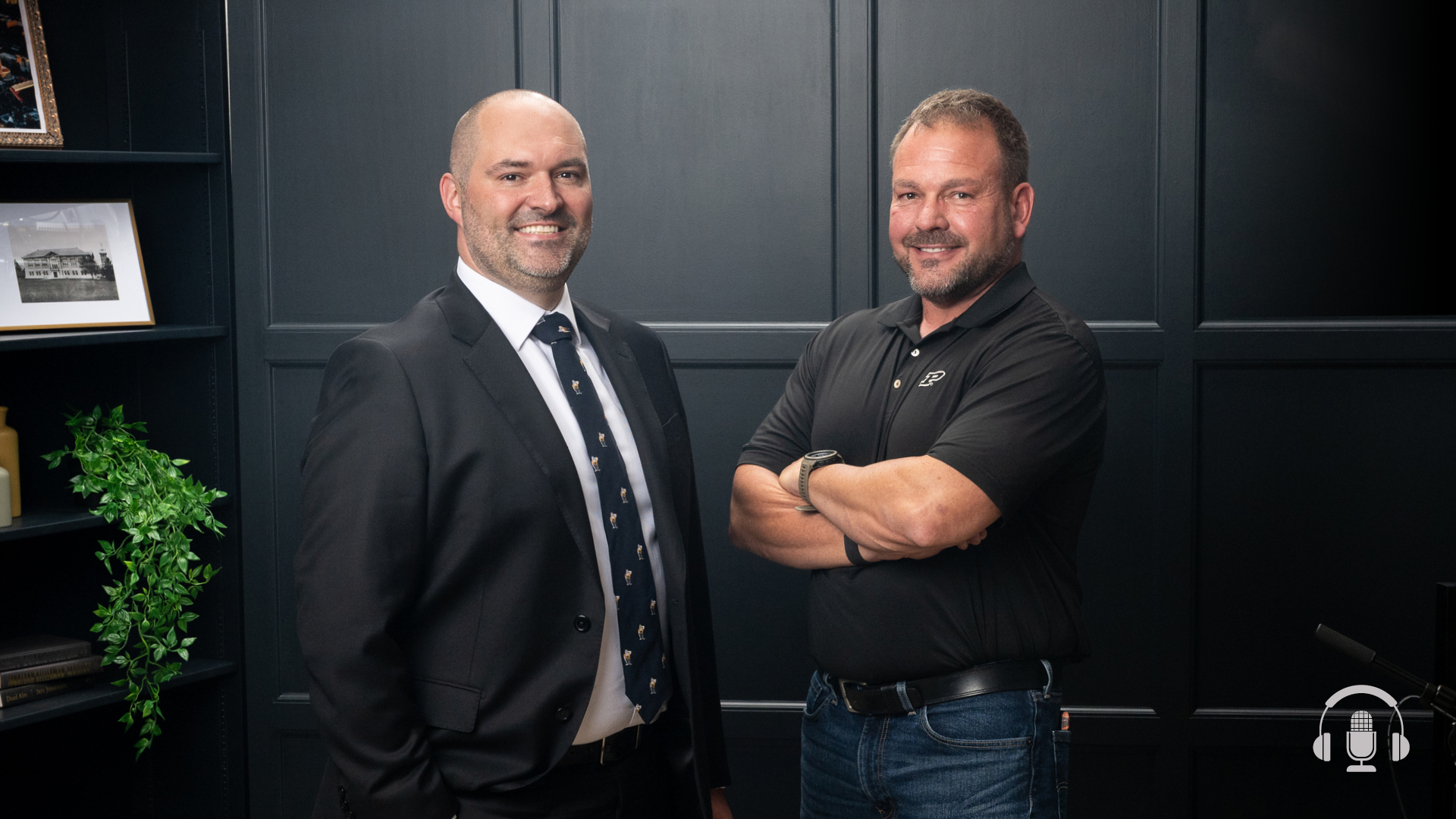
Podcast Ep. 140: AI Expert Discusses Best Practices for Maintaining Your Authentic Voice
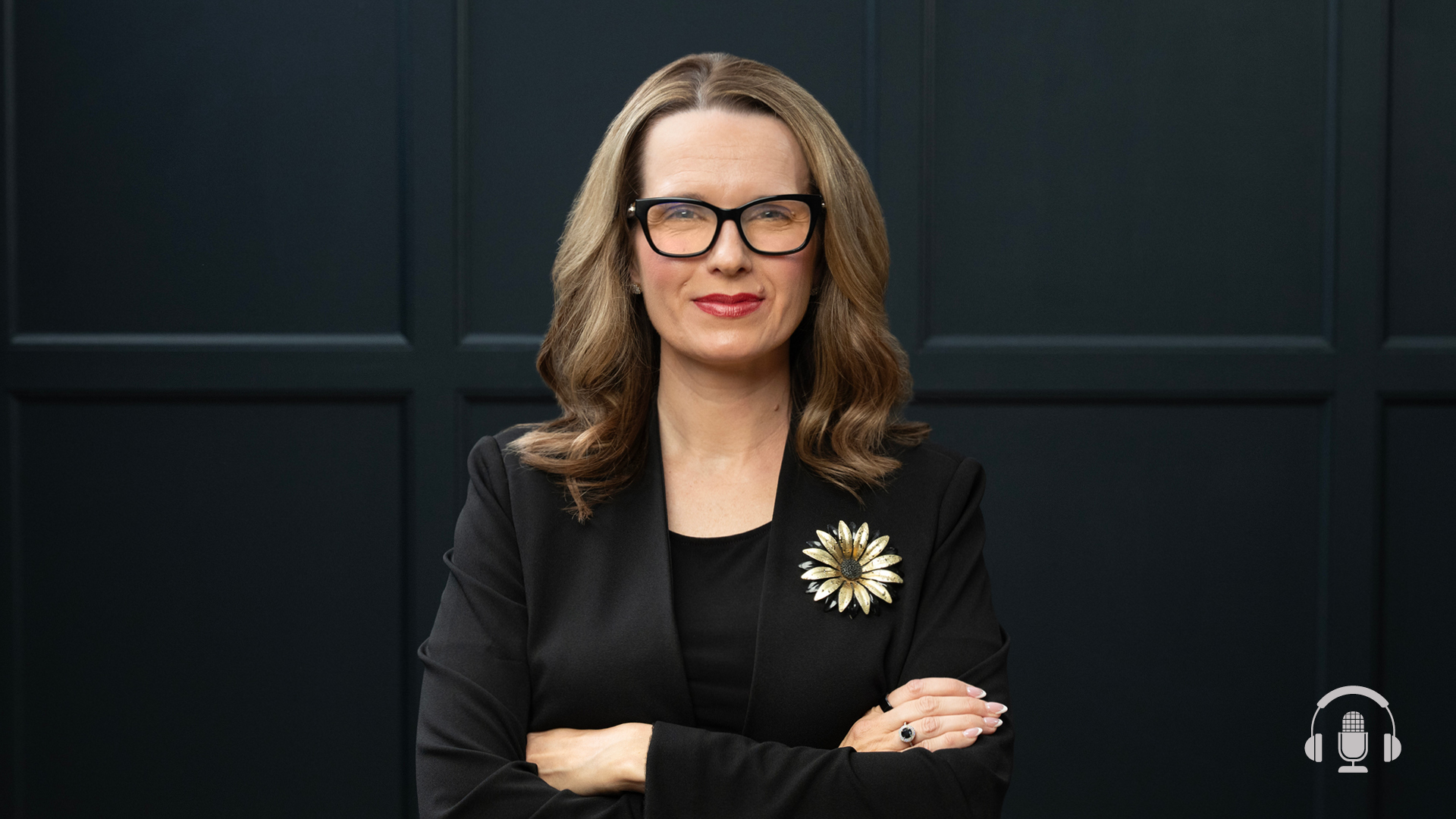
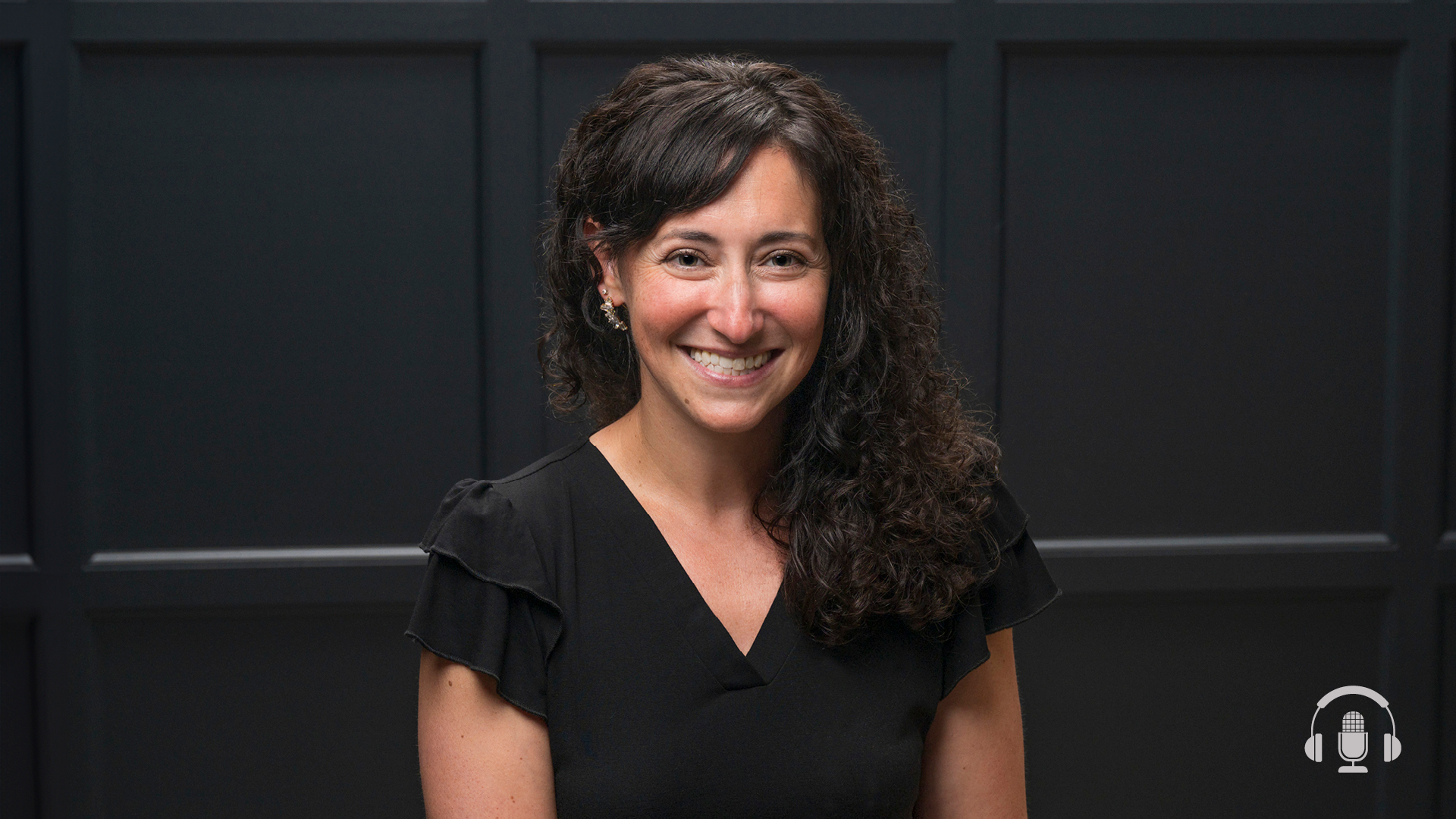
In this episode of “This Is Purdue,” we’re talking to Kasie Roberson, clinical associate professor in the Organizational Behavior and Human Resource Management Department in Purdue University’s Mitch Daniels School of Business and head of the Leadership Coaching Institute in the Center for Working Well.
As a nationally recognized educator and communication and AI expert, Kasie guides undergraduate and graduate students and professionals in topics like critical thinking, emotional intelligence and best practices for using AI as an effective communication tool.
In this episode, you will:
- Learn more about Kasie’s people-first approach to effective communication and using AI as a tool, including five skills that will set you up for success in the real world
- Gain insights into recent data on the realities of Gen Z’s use of and relationship with generative AI and how it’s informed Kasie’s research and teaching
- Hear about Kasie’s exciting and inspiring fireside chat at the inaugural Sunniefest in Dallas and her three-tiered approach for Gen Z and Gen Alpha to navigate AI while maintaining their authenticity and voice
- Discover how adults, including parents and educators, can positively shape younger generations’ experiences with AI, from playing with fun brainstorming prompts to navigating important ethical issues
- Find out about Kasie’s innovative work at the Center for Working Well and the Leadership Coaching Institute as well as upcoming programs for students and professionals seeking to improve their communication skills, based on Purdue principles like grit, persistence and resilience
You don’t want to miss this insightful episode with a Boilermaker and communication expert who’s helping students and professionals become more effective, empathetic communicators and AI users.
- Watch our full video interview with Kasie Roberson
- Watch the fireside chat with Kasie live from Sunniefest
- Learn more about Kasie
- Learn more about Purdue’s Mitch Daniels School of Business
- Learn more about the Center for Working Well
- Learn more about the Center for Working Well’s Leadership Coaching Institute
- Learn more about Purdue’s Organizational Behavior and Human Resource Management Department
- Learn more about AI at Purdue
- Learn more about AI guidance in teaching and learning at Purdue
- Learn more about the Purdue’s partnership with Sunnie
- Learn more about the Purdue x Sunnie AI Playbook for Gen Z and Gen Alpha
- Learn more about Sunnie
- Learn more about Sunniefest
Podcast Transcript
Kasie Roberson:
This is Dr. Kasie Roberson and you’re listening to This Is Purdue.
Kate Young:
Hi, I’m Kate Young, and you’re listening to This Is Purdue, the official podcast for Purdue University. As a Purdue alum and Indiana native, I know firsthand about the family of students and professors who are in it together, persistently pursuing and relentlessly rethinking. Who are the next game changers, difference makers, ceiling breakers, innovators? Who are these boilermakers? Join me as we feature students, faculty, and alumni, taking small steps towards their giant leaps and inspiring others to do the same.
Kasie Roberson:
When we think about AI, and as it continues to evolve into the future, it will get bigger, it will be integrated more. And so the more we can understand how it works and how we can best use it, the better it’s going to be. And I do believe, especially when we think about Gen Z, that if we look at how do we continue to use this with an authentic voice, use it with integrity, so be honest and transparent about how we’re using it, then we’re going to use AI more responsibly.
Kate Young:
In this episode of This Is Purdue, we’re talking to Dr. Kasie Roberson. Kasie is a nationally recognized business communication expert and a clinical associate professor in the Department of Organizational Behavior and Human Resource Management, as well as head of the Center for Working Well’s Leadership Coaching Institute within Purdue’s Daniels School of Business. Kasie also received her PhD in communication from Purdue in 2005 and is a proud boilermaker.
As an educator and mentor, she guides undergraduate and graduate students in developing foundational business communication skills, covering topics like critical thinking, emotional intelligence, and best practices for using AI as an effective communication tool. Recently, Kasie spoke about AI and how Gen Z can embrace it with curiosity and not fear at the inaugural Sunniefest in Dallas, Texas. Purdue’s presence at Sunniefest is part of a larger collaboration with Sunnie, which was announced this summer by Reese Witherspoon at Cannes Lions.
As the exclusive education partner of Sunnie, Purdue is co-developing online curricula, encouraging continued learning for adults, and creating content that helps Gen Z explore how STEM connects their interests and future goals. So in this episode, we’re going to dive deeper with Kasie and learn how students can effectively use AI in the classroom and real world while keeping their authentic voice, values, and ideas at the center. So let’s get to it. Here’s my conversation with Kasie.
Dr. Kasie, thank you so much for joining us on This Is Purdue, the official university podcast. We’ve spent a lot of time together. We were just at the first Sunniefest in Dallas, Texas, where you spoke on a panel, and we discussed a lot of different things at that conference. It’s like the curiosity around AI and not being afraid of it. We have so much to discuss today. Thank you so much for coming.
Kasie Roberson:
Thank you so much for having me.
Kate Young:
Let’s get into it. AI is in the news a lot. Lots of headlines about it right now, right?
Kasie Roberson:
Yes. Yes.
Kate Young:
So we know that younger generations, Gen Z specifically, really started using AI in school and also, though, at work in social situations. But as a professor who’s actually teaching and mentoring this generation, what do you see as far as what their relationship with AI is really like?
Kasie Roberson:
Thank you for that question. It’s such an important one right now. And when we think about Gen Z, we need to think about the age range of what Gen Z is. So Gen Z is ages 13 to about 28. We’re thinking latter part of junior high, all of high school, all of college, and even into early career makes up Gen Z. Gen Z is like what we call digital natives. They grew up really with smartphones and social media platforms being a part of just society. It was something normal for them.
So when we think about how Gen Z and really all of us are really rumbling with artificial intelligence, I think it’s important to think about a couple things. And I do have some anecdotal data that I can tell you from my own experiences teaching over in the Daniels School of Business. Some of the things I’m seeing are actually really tracking with what some big research is showing. And so I’ll mention a few things. Gallup. So Gallup had a study that just came out this past spring, and it was done by the Gallup Walton Family Foundation. They did a big study looking at voices of Gen Z and then how American youth view and use artificial intelligence.
And what I found actually is tracking some with what I see in the classroom. So I’ll just go over a few things for you here because I think it’s really interesting. First, they are talking about in their key findings that most Gen Zers say that they do use generative AI. So things like ChatGPT, or Gemini, or Copilot. So almost like 80% are using it. But something that’s interesting is that they’re saying that those tools are more likely to make them anxious than it is to make them excited or hopeful.
Kate Young:
Wow.
Kasie Roberson:
And I think that’s an interesting thing that we have to look at. I think one of the biggest issues that’s happening is that they don’t feel prepared to use the tool. And whenever you’re not prepared to do something, you’re going to get nervous. I think that’s one of the biggest things we’re seeing right now, where they are using it, they’re willing to learn it, but they want more tools to do that. And we’re doing that over in the Daniels School. We’re providing them with some of those tools.
Kate Young:
Tell us about some of those tools that you all are using.
Kasie Roberson:
I’ll tell you a little story, if that’s okay.
Kate Young:
Yeah.
Kasie Roberson:
We started back in 2021. I developed our strategic business writing course. It’s our core undergraduate business writing course that all Daniels students undergrads take. The course originally started as just a pilot course, one section, and we wanted to see how it went. I started with what I call my people-first framework. And this was, again, spring 2021 before ChatGPT and AI started to make its appearance, which that didn’t happen until November 2022, the very end of November.
So the class started, I had this people-first framework, which I know we may talk about a little bit later. There are people-first skills, things like audience analysis, emotional intelligence, et cetera. And I knew that these people-first skills are things that students need to take into the workplace. So we started that, and then we were talking about different types of business writing and so forth. Well, the class was very popular.
Long story short, today, this year, there are 35 sections of the course being taught across five faculty, and I do teach some of those sections. And so it’s grown substantially. My undergraduate textbook that I wrote that came out in May 2024, we’re using it. It has that people-first framework, but then it also has best practices for using artificial intelligence.
When ChatGPT first came out at the end of November of 2022, I remember I was actually at a dinner party with some colleagues from the Daniels School of Business. Someone said, “Have you heard of ChatGPT?” And they knew I was actually under book contract and was writing a book at that time. I said, “Yes, but I haven’t had a chance to look at it.” I went home, I looked it up more. I didn’t sleep well that night. I woke up the next day, and I turned to my husband, who is also a professor at Purdue, and I said, “I need to contact my editor.” And he said, “What are you going to do?” And I said, “Well, I’m going to pivot. I’m going to talk to my editor, and I’m going to say” … Because I’d already written the first five chapters, which was this people-first framework and it’s a great foundation for anyone.
I said, “We’re going to keep that. But then, when I move in to talk about traditional types of writing, I’m going to learn. I’m going to figure it out, see whatever research is out there, but I’m going to go into ChatGPT, and I’m going to figure out what are best practices.” I contacted my editor. We had a meeting. And so my editor at Kendall Hunt Publishing was just incredible. I said, “I think we need to have one of the first books to market to talk about best practices in AI, and I’m going to figure this out.” He said, “I love this. Let’s do this.”
By fall 2023, less than a year after ChatGPT came out, we were already teaching best practices in the undergraduate business core writing class. And then my book came out in May 2024, and now it’s available where people and students across the country can do it and use it, but we were already putting into place some of the best tools that they could use. So that’s the story of the class. And I think the evolution of it really speaks to the boilermaker spirit of let’s be one of the first to do something. We are a flagship in so many ways, and I think we are a flagship when it comes to artificial intelligence, not only in the Daniels School with what we’re doing, but across the university.
I’m a boilermaker myself besides being a faculty member. I graduated with my PhD from Purdue in 2005. It was in me that we have to do this. I’m so glad that we did because I know it’s making a positive impact for our students.
Kate Young:
With your experiences with students, you also have Gen Z children.
Kasie Roberson:
I do, yes.
Kate Young:
What are some of the questions that students have about using AI as a tool?
Kasie Roberson:
Yes, absolutely. So a lot of the criticisms and even some of the things the Gallup study was saying was that some of the criticisms are they’re afraid that it’s going to hinder their critical thinking. And some people have said, “Well, we can’t use artificial intelligence in the classroom because then they’re not going to know how to write.” And the same argument was actually made about the calculator when it first came out. If we use calculators, no one’s going to know how to do math. Well, we all know how to do math to some degree, right?
Kate Young:
To some degree.
Kasie Roberson:
To some degree. So when we think about this, any tool can be used for good or bad. AI, absolutely. If you just plug in what you want and just say, “Write this essay for me,” or “Write this for me,” and you don’t do any really human thinking and put any of yourself into it, then it will. It will hinder your critical thinking. And that’s not what we teach. That is not a best practice.
In fact, what we do is we provide opportunities for our students to … When they turn in an assignment where they use AI, they turn in like a packet. And so they turn in a first draft that is their original thoughts, no AI at all. Then they have to turn in their prompt that they use to edit or revise, and we teach them prompt engineering. They turn in their prompt, they turn in a screenshot of what AI provided back. So whether it’s ChatGPT, Gemini, Copilot, whatever it is. The next thing they provide is their revision that has some of the AI incorporated, but they can’t include everything that AI gave back to them.
And then the last thing we have them do is write a reflection on it. And the reflection is, what did they find helpful about using AI for this task? What did they not like about it? How do they envision using AI in the future for something like this? So the students, the first time I did this assignment back in the fall of 2023, I was so surprised at how critical the students were of the AI. And now I’ve seen it every semester. They find some things to be really helpful, but there are some things they don’t like, and they do not want it to take over their authentic voice, which I love that.
And that’s something about Gen Z is that they really do care about having their voice heard, which is important because this generation, when you’re this young, you are still finding your voice. And so the fact that they don’t want to let it take over means that they’re more likely to not let it take over their critical thinking, too, which is a very good thing.
Kate Young:
During Kasie’s fireside chat with Gen Z AI activist and researcher, Neha Shukla, at Sunniefest, she explained the three pillars of AI. And when it comes to Gen Z, we know this generation craves authenticity. So how is Kasie teaching and mentoring younger students when it comes to using AI? And how does she guide the conversation around using it from the classroom to their future careers?
Kasie Roberson:
When we think about AI, I think there’s a few different things we can think about. Mindset, authenticity, and integrity are three really great ways to look at AI, but also look at your life, too. They definitely apply in lots of ways. So, mindset, when we think about, just like we talked before about how AI, because it’s new, can be a little scary for people. Whenever we think about our mindset, our mindset is something that we can choose. So we can have a growth mindset, we can have a fixed mindset.
And so if we are thinking, “I don’t want to try something new. I just want to do what I’ve always done,” that’s more of a fixed mindset. It can keep us sometimes from really being able to pursue some of our goals if we are not willing to try new things. We can also sometimes find ourselves getting into a negative mindset, especially when we’re afraid of something. If anyone has ever thought about like, “What if this happens? What if that happens?” You immediately go negative. That negative mindset, we can flip it. What if something good happens? What if this turns out really well?
Sometimes with AI, it’s easy to get into more of a negative fixed mindset like, “I don’t want to try this. I’m scared of it.” Especially given the fact that there’s still a lot of places in schools, whether it’s a certain classroom or K-12 education, where they’re like, “You cannot use this. You cannot use this,” because they’re still honestly grappling with how to integrate it into education. And that’s something I think that we do need to talk more about just as a society of where do we go with that. But the mindset’s important.
So let’s try to look at it from a growth mindset, from a positive mindset, understand that there are limitations, not be blind to those, but how do we move forward in a productive way? That’s the first one. But then authenticity. We talked a little bit about that authentic voice and how important it is. I mentioned at Sunniefest that your authentic voice is like your fingerprint. And your fingerprint’s unique, it’s different, no one else has it, and that’s the same thing with your voice. And so you want to make sure that no other human intelligence and no other artificial intelligence is quieting that voice that’s yours because it’s unique, it’s special, it needs to be heard, it needs to be at the table.
So then we also have integrity. And integrity is how do we use AI ethically? And I think the biggest thing is, let’s just be honest and transparent about how we’re using AI. If we’re doing that, then there shouldn’t be an issue. It’s not like you’re hiding something and so forth. And I think integrity really ties back into authenticity because I feel like if we’re showing up authentically, we’re going to be showing up with more integrity.
Kate Young:
How can adults, parents, educators, mentors, coaches, anyone who interact with children, how can they positively shape a student’s experience with AI?
Kasie Roberson:
I think if we go back to that growth mindset, that positive mindset, let’s look at this as a tool. It’s just another tool that we can use. There’s absolutely nothing wrong with having healthy boundaries and healthy parameters around how we use AI. And I do think that we should be clear about that like, “Hey, we’re only going to use AI in this capacity.” And that’s exactly what we do in our strategic business writing classes. We’re going to use it here, here, and here, but we’re not going to use it over here because we have different learning objectives for this assignment.
And so I think when we explain that to them, which Generation Z is a why generation, they want to know why. And I love that about them because I want to know why about a lot of things, too. And so I think it’s really healthy to just be able to say, “Here’s how we’re using it. Here’s why we’re using it this way.” And people can then buy into it because no one, and this is something I talk about in my people-first approach and framework when I talk about emotional intelligence, is that we want to look towards buy-in and not compliance.
And so if we can get anyone to buy into something like, “Hey, we’re going to use AI this way. It’s going to help you in certain ways and so forth,” people are going to be more likely to follow those rules instead of if you just say, “You have to use it just like this, and I’m not going to explain why.” Then people, even children, are going to push back on that because there’s a universal truth about people. It’s an old communication theory, it’s a politeness theory, where people want to be valued, respected, and they want to have some autonomy. And so if we’re explaining and getting buy-in with that, then they’re going to be more successful.
Kate Young:
Let’s talk about your people-first approach because in your teaching, you advocate for this strongly when it comes to both communication skills and using AI as a tool. So talk a little bit about this approach.
Kasie Roberson:
Anyone who knows me knows that I really love my people-first approach. And it really consists of five big skills. And they are audience analysis, emotional intelligence, critical thinking and problem solving, building connection and trust, and communication ethics. They’re the first five chapters in my textbook. We walk through those, and I give actually a lot of talks on this. I call it the communicating well at work using five people-first skills.
This resonates with every audience I talk to, whether it’s undergraduate students, it’s staff here at Purdue, it’s executive audiences at organizations where I’m doing workshops or keynotes. These really resonate with people because the hardest part of anyone’s job is usually working with other people. And so it’s not in terms of like if you’re technically trained well, you’re going to go in and, in a silo, you can do your job well. But that’s not the way most companies and organizations work. You are going to be working with other people, and there’s going to be conflict sometimes. There’s going to be miscommunication. And these five people-first skills are going to help set you up for success, and it’s going to help you to communicate well at work.
So when we think about audience analysis. So like if you and I were going to be having a one-on-one meeting, I would go in, and I would have some talking points, but I would be thinking about not just what I want out of the conversation, but what do you want out of the conversation? So who are you? What do you care about? What’s the best way to communicate with you, et cetera? And then there’s emotional intelligence, which is the second one. And emotional intelligence is getting really curious about the emotions that you’re experiencing and thinking about them before you respond. And then also trying to understand and be empathetic about where other people are coming from when they’re communicating with you.
And then we also have critical thinking and problem solving, which is a lot of core competencies of what you do in your job and how you communicate, building connection and trust, which has a component of authenticity, strategic thinking, et cetera. And then communication ethics, which is really about like a personal standards of ethics. So being honest, being fair, being transparent, being responsible, et cetera.
Kate Young:
So a lot of institutions, especially in education, are trying to develop these policies around Gen Z and Gen Alpha’s AI usage. I know you just said K through 12, they’re like, “Whoa, we don’t even want to get into that yet.” What should these organizations consider when they’re creating policies?
Kasie Roberson:
I do think a lot of K-12 are talking about it. They just haven’t implemented anything yet. And so I do believe Purdue is, again, a flagship for, we already have some AI policies, we’re currently building more. I’m currently serving on an AI task force in the Daniels School of Business. We’re looking at new things to recommend to the university, et cetera. It’s definitely evolving because AI is evolving.
But I do think that in higher education, it’s important for us to pay attention to what’s happening in K-12 education because those are the students who are coming to us. And I know K-12 educators want to prepare students for the world, whether it’s education or going straight into the workforce, they want to prepare them as best they can. And I have the highest respect for K-12 educators.
And so when we think about the K-12 education, I think there are a couple things that I dream about. I dream that as we start to develop artificial intelligence and put it into curriculum, which I think will eventually happen, I hope that we will also run a parallel path that will be connected of putting more emotional intelligence into the curriculum as well. Because if we can do a blend of that people first, that emotional intelligence, and helping people to navigate and understand their voice, their emotions, their feelings, while we’re also bringing in artificial intelligence, I think that could be a game changer in a lot of ways. I think that as K-12 educators start thinking about this more, I hope that they’ll think about both of those and how that could fit into curriculum.
Kate Young:
As a strategic communications expert, you also help students think through foundational skills, emotional intelligence. We talked about critical thinking, problem solving. How do you think all of those play a role, that people-first approach, when it comes to using AI?
Kasie Roberson:
I think that if you are using a people-first approach, then you are going to show up more authentically. You’re going to remember AI does not know the person that I’m writing this email to. Only I know …
Kate Young:
That’s a great point.
Kasie Roberson:
… this person, right? Because AI really can only work with the situation context that you give it. We think that AI knows everything, and it knows a lot, but it does not know as much as we know. We have to make sure that when we use that people-first approach that we keep in mind that AI is limited. We also have to keep in mind a couple things about AI, that AI can be wrong, just flat out wrong.
Kate Young:
Yup.
Kasie Roberson:
You cannot trust it. You have to fact-check it. You have to go and make sure, because it can hallucinate and make up things. It also can have biased information. It also can … When we think about AI, we want to make sure that we never put anything confidential into AI. If I’m writing an email to someone and maybe I want to revise it or something and polish it, and I’m trying to be more efficient because I have a lot of emails to return, I make sure that, first of all, there’s nothing confidential in here. I take out any names, I redact those, and I keep it like a basic structure.
And then that way, you are not providing it with too much detail. So I think that it’s healthy to use in certain ways, like brainstorming, outlining, maybe revising something, but you also want to keep control of what information you’re putting into, like ChatGPT and so forth.
Kate Young:
I know I have personally used it. At first, I had a little bit of a negative mindset. I’m like, “I want to be true to my voice and stay creative.” But it’s very helpful for little either combining certain sentences into one thought. I’ve found that that’s very helpful, but then also, oh, can you make this email a little bit more firm in a polite, professional way, right?
Kasie Roberson:
Yes.
Kate Young:
But there’s so many uses for it that do make sense and it does really help, especially in a professional setting, I think.
Kasie Roberson:
Yes, absolutely.
Kate Young:
So what advice do you have for students who are curious about using AI but may not have used it yet?
Kasie Roberson:
If they’re brand new, just try something easy. If you want to use it for brainstorming, just pick a topic that you’re interested in, maybe you know a little bit about, and then just see. And you can test the waters with it to see like if I ask it, “What is the date next Friday?” Sometimes it gives you the wrong date. It’s not the correct day. And so I’m like, “Hmm, that’s not right.” But then it also can provide really helpful information very quickly.
Just take something you know something a little bit about, maybe do a little brainstorm with it, or maybe take some writing again that is not confidential, nothing like intellectual property or something. When I write, I’m writing a book right now, I would never put that in ChatGPT.
Kate Young:
That’s a good point. Yeah.
Kasie Roberson:
I don’t want to know what it has to say. I am not interested in that. And so I wouldn’t put anything that you feel like I own this, but maybe put like, “Hey, I had this one paragraph and I felt like it wasn’t exactly where I wanted.” So ask it to help you to revise it, to make it maybe a little bit more concise or something like that. So I would say just play with ChatGPT a little bit to just see what it can do and where your comfort level is. And I think that would be a good start.
Kate Young:
Let’s dive into some of the fun things that you can do with AI. I know people we were traveling with to Dallas for Sunniefest used it to book restaurant reservations to look up things to do. You and I talked about, “Hey, I have this, this, and this in my fridge. What can I make with it?” Tell us about a couple of fun things that you can do with AI that might be outside the box.
Kasie Roberson:
So I can tell you a couple things. Definitely one of the ones we talked about before was, and I’ve used this recently on more than one occasion, where I have limited amount of ingredients in my fridge and in my pantry because I need to go to the grocery store. I was working from home, and I thought, “What are we going to do for dinner tonight?” And I want to do something in slow cooker so I can be productive with work. I plugged that into ChatGPT and said, “Here are these ingredients because I thought they made sense to maybe go together, but I wasn’t sure what to do.” And absolutely, it came out with three different recipes. I picked which one I wanted, and I threw it in there, and everyone was thrilled with dinner, and they were like, “What is this new recipe?”
I mean, it impressed my teenagers, which was great. So that’s a fun thing. One thing I did over the summer … Because I don’t always keep everything in ChatGPT. I’ll erase things occasionally and so forth because I don’t want to have a whole bunch of stuff there, but I asked it to vision board with me a day in the life of what I would be doing five years from now. And I listed out some of the things that I envision for myself five years from now, and things that I want to be doing with my work and so forth as a faculty member here at Purdue. The way it approached my day, I was like, “I like this. This is good.” So I think it can help you with imagining things and looking at things in maybe a different way. And so I think it just depends on how you want to use it.
Kate Young:
We talked a little bit about this with the comparison of the calculator and not being able to do math. The late ’90s, early 2000s, Wikipedia, using that as a source. What are some of those common ethical questions that come up with students using AI in the classroom?
Kasie Roberson:
I remember the days in the early 2000s when I was a graduate student here at Purdue, and students would turn in something, and it had Wikipedia as a source. I was like, “This is not a legitimate source. You cannot use this.” When we think about AI … So the latest version of ChatGPT in particular has gotten much better at this, where now it’ll provide a link, and you can go to a primary source. And that’s something we’ve said for a long time. Wherever you get information, the best information is always a primary source, where you’re citing something exactly from where it comes from.
Now, as we mentioned, ChatGPT can still be wrong, and if it doesn’t cite something, you should definitely be skeptical, but you want to click on that. If it provides a source, click on it, go to it, make sure that it’s correct. If you go to the primary source, then I think you’re probably going to be okay. And that’s actually one of the biggest developments that they really tried to address some of those hallucinations that are happening, but they do still exist.
Kate Young:
What do you think the future of AI looks like for students and younger generations overall?
Kasie Roberson:
AI is just going to continue to grow and get bigger and bigger, and we’re going to see it in more and more places. Of course, I look at AI from a communication lens, like how do we use it to help improve communication? And there’s lots of other people here at Purdue and other places who are looking at AI in lots of different ways, in lots of different industries. I’ll stick to my wheelhouse.
When we think about AI and as it continues to grow, and I do believe that I felt this even in December 2022, which is why I made a pivot in my book, that I was like, “Ugh, I don’t want to write a book that’s just going to be automatically outdated.” I want it to be something that’s really helpful and impactful for students. And that’s why I’m a professor is because I care so much about helping people to develop really important skills like communication that I know can make such a difference in their life. But when we think about AI, and as it continues to evolve into the future, it will get bigger, it will be integrated more.
And so the more we can understand how it works and how we can best use it, the better it’s going to be. And I do believe, especially when we think about Gen Z, that if we look at how do we continue to use this with an authentic voice, use it with integrity, so be honest and transparent about how we’re using it, we’re going to use AI more responsibly, and I think that that’s an important part of the future of AI.
Kate Young:
I love that, being honest and authentic about how you’re using it. And speaking of the future as well, you’re the head of the Leadership Coaching Institute within the Center for Working Well in the Daniels School of Business, but you all have some exciting things coming up. So I want to give you an opportunity to talk about that and tell us what the latest news is.
Kasie Roberson:
Thank you so much for asking about that. We’re very excited about the new Leadership Coaching Institute, which is housed in the Center for Working Well in the Daniels School of Business. The Leadership Coaching Institute, one of the things that we are so excited about that we’re going to be piloting in the spring, due to a just incredibly generous donation, is that we’re going to start to offer undergraduate executive coaching. And we’re going to start on a small scale. So we are going to be one of the first in the country to be able to offer this to undergraduate students.
Most people, when they get executive coaching, it’s not until mid-career, and if they’re lucky. So we are going to help students start their careers with a coaching mindset. So we’ll be talking about things like communication and grit and resilience and persistence. So we’re very excited about that part of it. Also in the Leadership Coaching Institute, we are developing right now, with Executive Education that’s going to launch later this spring, an asynchronous program that’s going to look at working well and leadership topics. But then we’re also going to have a synchronous component, where once a week, because it’ll be about six weeks, in their cohort of about 40, they’ll get to meet with their faculty expert on that topic and participate in a leadership lab.
So what’s great about this is that it will be like a small grouping of 40. It’ll be very convenient. People can do it from wherever. So if we have any boilermaker alums who want to come back and do something, they will be welcome, too. But it’s going to be something that I think is going to be really meaningful for people and we’re very excited about that. We also are currently continuing to work with companies on Working Well journeys where we develop customized programming for them and that all runs the Leadership Coaching Institute.
So we talk about things like managing stress, burnout, motivating employees, communicating well at work, et cetera. We have a number of topics that we talk about and people have found it really impactful for them. And we, again, love helping people. And so the Leadership Coaching Institute has a lot of great things happening, and we are so grateful for all the support, really, from the Mitch Daniels School of Business on this.
Kate Young:
That is so exciting and congratulations.
Kasie Roberson:
Thank you.
Kate Young:
Thank you again for joining us. Is there anything else that I missed that you want to talk about when it comes to AI or anything in the future coming up for you?
Kasie Roberson:
I just want to say … Well, first of all, thank you so much for this opportunity. And I do want to mention just really briefly what an incredible event Sunniefest was when we went. It was so inspiring. And to be on that stage and to be able to talk about AI, to see it resonate with the young people in the audience, I think that we need to have more conversations like that and like this because when we think about AI moving into the future, just like when we think about, I think, emotional intelligence, too, there’s so much opportunity for growth and there’s so much that we can do to improve people’s lives.
That’s why I do what I do is because I truly just want to help other people. And I know that when people develop their communication skills, it is going to make a positive difference in their lives. For me, I feel really lucky and blessed to be able to do that and to be able to do that here at Purdue in the Daniels School of Business. It’s really just an amazing opportunity, and it’s a dream come true for me.
Kate Young:
It was so special seeing all of the young people listening to you at the panel, and they’re so excited, and they have so many ideas. It was just a great experience.
Kasie Roberson:
It’s amazing. When you work with young people that were there at Sunniefest, and I’m so lucky to get to work with our students here at Purdue, the energy that is on a college campus. Because I write a lot in the summer and then I come back. I’m always ready to come back in the fall and I love the energy of when the students are on campus. And I like to walk around campus and just see the buzz. And there’s something so special about Purdue.
And I know I’m biased because I’m an alum, too, but there’s something so special about this place and the students. And even though we are a big university, this is a place where people can find their place and find belonging. And I think that is so unique and special, and I just love being a part of that.
Kate Young:
That’s a theme of this podcast. So I appreciate you hitting on that.
Kasie Roberson:
Absolutely.
Kate Young:
It was so fun getting to know you, and this conversation was incredible. So thank you for coming.
Kasie Roberson:
Thank you so much, Kate. I really appreciate it.
Kate Young:
That was an incredible chat. I hope you all learned at least one thing you can take away and utilize in your own AI experiences. We have more fun clips from Sunniefest with Kasie on our This Is Purdue podcast YouTube channel. She talks about a few common misconceptions when it comes to AI and much more. Be sure to check it out.
And if you’re interested in learning more about AI, the Sunnie and Purdue playbook from AI to IRL offers guidance and prompts on how students can use AI with confidence. We’ll link that in our show notes for you as well. This Is Purdue is hosted and written by me, Kate Young. Our podcast videography for this episode was led by Thad Boone in collaboration with Jon Garcia, Alli Chaney, and Zach Mogensen. Our social media marketing is led by Maria Welch. Our podcast design is led by Cheryl Glozbach. Our podcast photography is led by John Underwood and Rebecca Robinos. Our podcast team project manager is Rain Gu. Our podcast YouTube promotions is managed by Megan Hoskins. Additional writing and research assistance is led by Ashvini Malshe. And our creative production manager is Dalani Young.
Thanks for listening to This Is Purdue. For more information on this episode, visit our website at purdue.edu/podcast. From there, you can head over to your favorite podcast app to subscribe. And don’t forget, you can also check out all of our podcast content on our podcast YouTube page, youtube.com/@thisispurdue. And as always, boiler up.