Helping a toddler hear for the first time

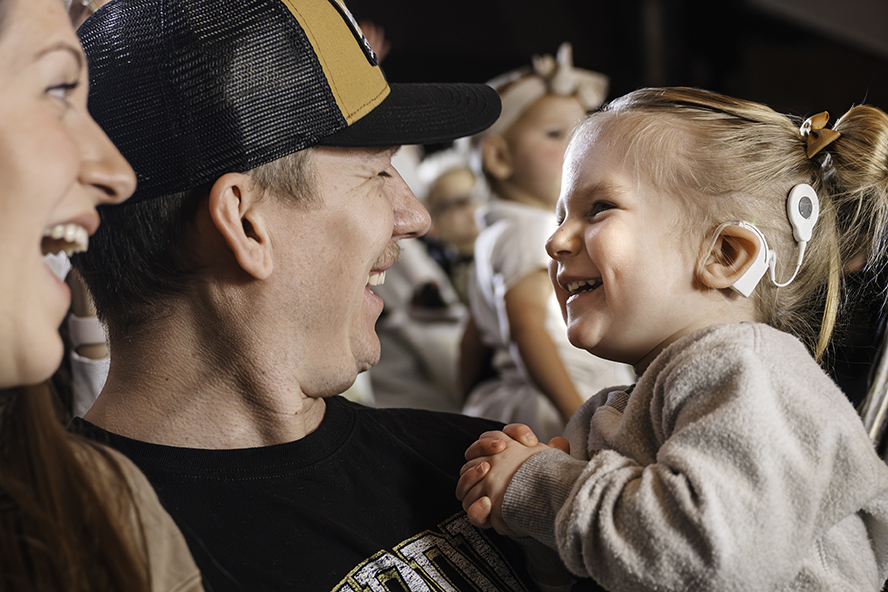
Callie Cochran is cradled in her dad’s arms. The 2-year-old received life-changing cochlear implants thanks to Purdue’s audiology department. (Purdue University photo/Rebecca Robiños)
2-year-old Callie’s life has changed thanks to cochlear implants from Purdue’s audiology clinic
Callie Cochran’s world was mostly quiet for the first two years of her life.
The 2-year-old has struggled with hearing loss since birth –– likely worsening after her first birthday due to a string of ear infections –– and was diagnosed later than most children her age, according to her mother, Kayla Cochran.
“We didn’t really have a blueprint of what to expect in comparison to other families and other kids because we don’t really know when exactly she became as deaf as she was,” says Kayla, a Purdue alumna (BA sociology ’19).
But after getting connected with Purdue’s cochlear implant clinic last year, Callie was able to receive transformative cochlear implants. And now for the first time, she can hear her parents’ voices clearly. She’s also starting to talk, saying “Mama” and “Dada.”
Thinking about her daughter’s journey, amazing progress and Purdue’s vital intervention makes Kayla emotional.
“You could just tell the world was quiet for her before that, so everything just got brighter for her. She was much happier,” she says. “She woke up to the world.”
Callie’s journey to Purdue
Since Callie was 1, Kayla and her husband, Jackson, have tried to understand their daughter’s hearing loss. This was initially difficult, however, because her hearing loss wasn’t caught at birth.
Callie technically passed her infant hearing test but was still falling behind on important speech milestones.
For months after Callie turned 1, her parents searched for answers and ways to help her. In June 2025, she was seen by a specialist at Lafayette ENT, where she was diagnosed as deaf in both ears. She was then referred to an audiologist at Riley Hospital for Children in Indianapolis who conducted a sedated auditory brain stem response test — a standard test that identifies hearing loss — which confirmed the diagnosis.
Due to the severity of her hearing loss, Callie needed cochlear implants, or surgically placed electronic devices that enable critical improvements in hearing. But first, she would need to be fitted for hearing aids to be eligible for implants.
The audiologist, a Purdue graduate named Theresa Nelson, referred Callie and her family to Purdue’s cochlear implant clinic in West Lafayette.
Kayla and Jackson also attended Purdue, so they knew that they could trust the institution in their family’s time of need.
The parents were happy to connect with something familiar. “They are willing to spend as much time with you as possible in your appointments until you feel comfortable and ready to go,” Kayla says.
Working with Riley, Purdue’s audiologists fast-tracked Callie, who got her first hearing aids in August –– her first access to sound –– and then cochlear implants in October, to accelerate her development. The implants were activated a week after the surgery.
And in just two months of working with Purdue and a listening and spoken language-focused speech therapist, Callie went from a newborn level of expressive speech and communication to a mastery of 12-to-15-month skills.
She woke up to the world.
Kayla Cochran
Callie Cochran’s mother
North central Indiana’s audiology hub
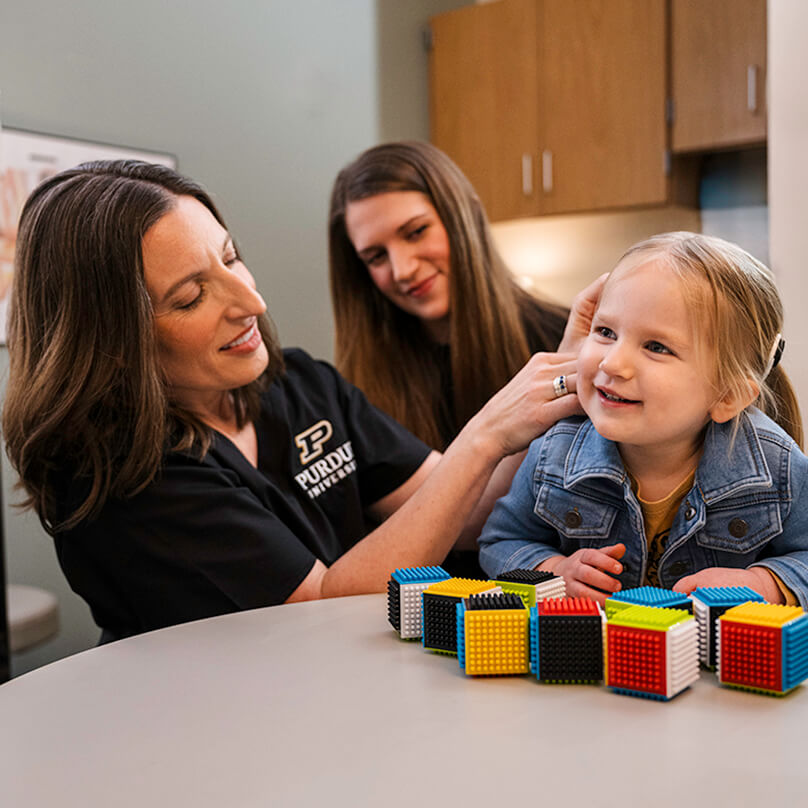
Callie’s progress excites Jillian Hubertz and Shannon Van Hyfte, clinical faculty in Purdue’s Department of Speech, Language, and Hearing Sciences — the audiologists who changed the Cochrans’ lives for the better.
They’re passionate about leading Purdue’s cochlear implant clinic, which is unique to the area as it provides evidence-based care to people throughout north central Indiana.
Van Hyfte established the clinic in 2016, with Hubertz joining in 2020. They see patients ranging in age from infants to adults. They confirmed that Callie’s deafness was diagnosed at a later age than usual. Hearing loss in infants is usually identified by six weeks old.
They also provide clinical education to Purdue audiology graduate students, who assist with hands-on care to patients and utilize the latest intervention methods and industry innovations.
Cutting-edge technologies are particularly important to Van Hyfte and Hubertz because they can improve the quality of care. This was especially true in Callie’s case and part of the reason her progress was so rapid. She benefited from new cochlear implant technology called the Cochlear Nucleus 8 Nexa implant system.
And with advances in clinical practice, Callie’s implants could be activated sooner.
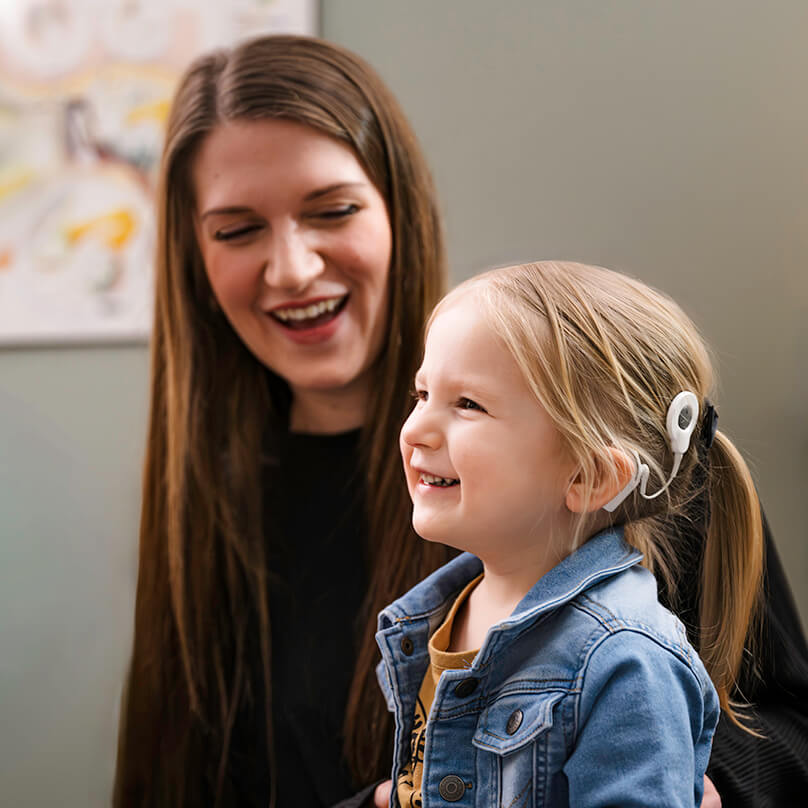
Cochlear implants work by sending an electrical signal that stimulates the cochlear nerve –– the auditory nerve that essentially tells the brain to process sound. This process bypasses the inner damage to a patient’s ear and enables hearing.
Beyond their roles at Purdue, Van Hyfte, Hubertz and their colleagues present their clinical findings at conferences across the country. They’re dedicated to sharing their model, patient protocols and benchmarks for success with other universities, especially those without access to an in-clinic surgeon.
It’s this engagement, and patients like Callie, that drive their work.
“When you identify hearing loss, it’s a very hard day for those families,” Van Hyfte says. “What’s rewarding about cochlear implants is that there are more tears shed — happy tears in this specialty clinic –– than in the majority.”
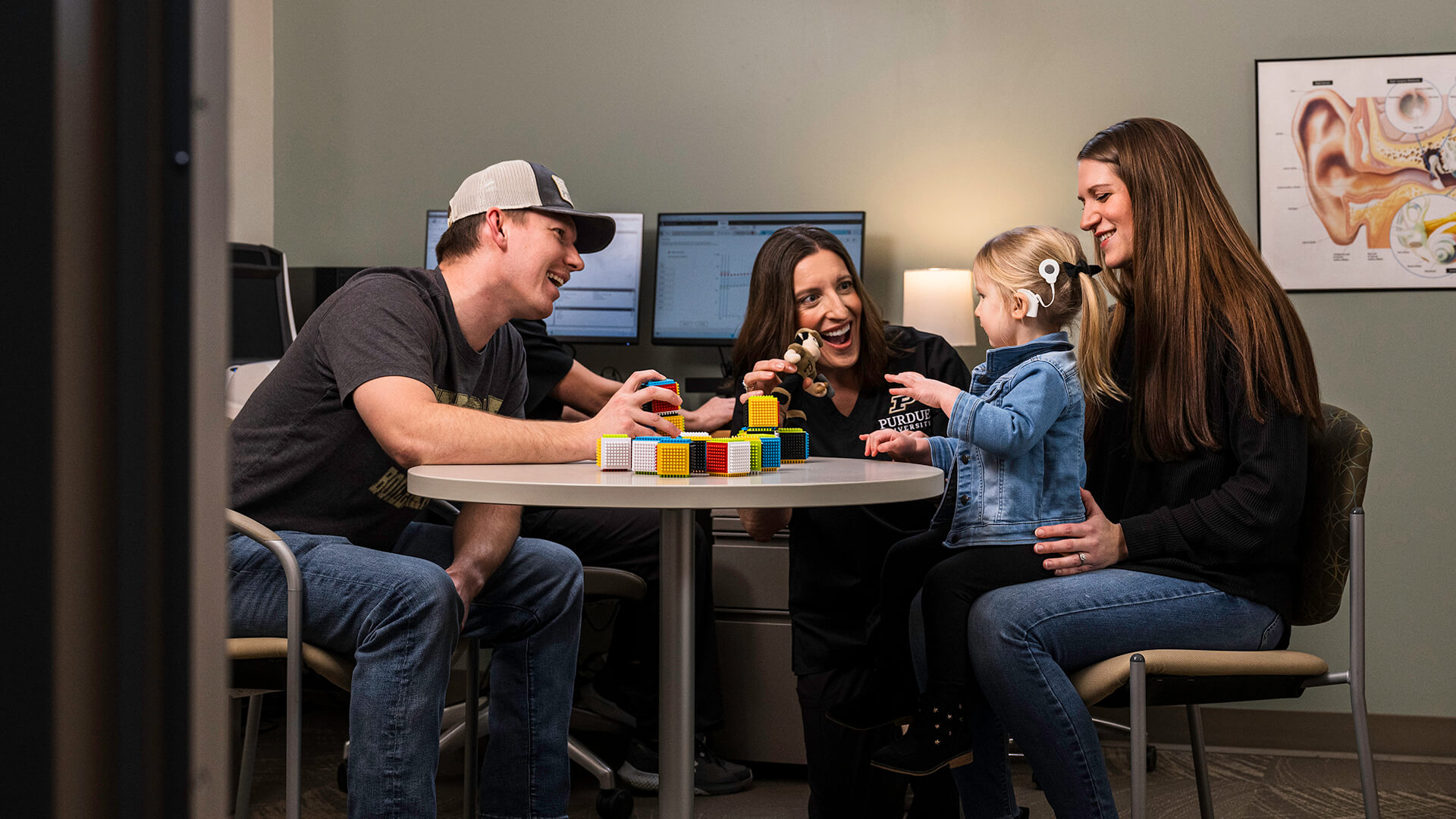
Hubertz says, “Callie’s mom would send us little videos, and that was pretty special of her, like clomping in the leaves because she was hearing leaves, and saying ‘apple.’
“We don’t ever ask for that. But oh, that just makes you smile,” she says.
Callie’s progress
Van Hyfte and Hubertz continue to support Callie and collaborate with her speech therapist and implant surgeon as she hits development milestones. This is key to her success.
Callie now runs up to the audiologists whenever she sees them. “She loves talking to them so much. It’s so cute,” Kayla says.
Four months after receiving cochlear implants, the 2-year-old is making rapid progress and catching up on milestones. She’s advocating for herself and doesn’t shy away from telling her parents and older brother, Beau, “yes” or “no.” She also loves to listen to music and sing.
Kayla is forever grateful for Purdue’s intervention because it finally gave her daughter the gift of sound.
“It felt like we were in the right place from the get-go,” she says. “And just the kindness and atmosphere –– it makes a world of difference.”
At Purdue, we tackle the world’s toughest challenges through timely research and innovation. Callie’s story is just one of many incredible examples of how this pursuit continues to enhance the lives of those in our community and beyond.
Learn more https://www.purdue.edu/campaigns/next-giant-leap/