A Purdue professor helped legitimize sports history as a serious topic
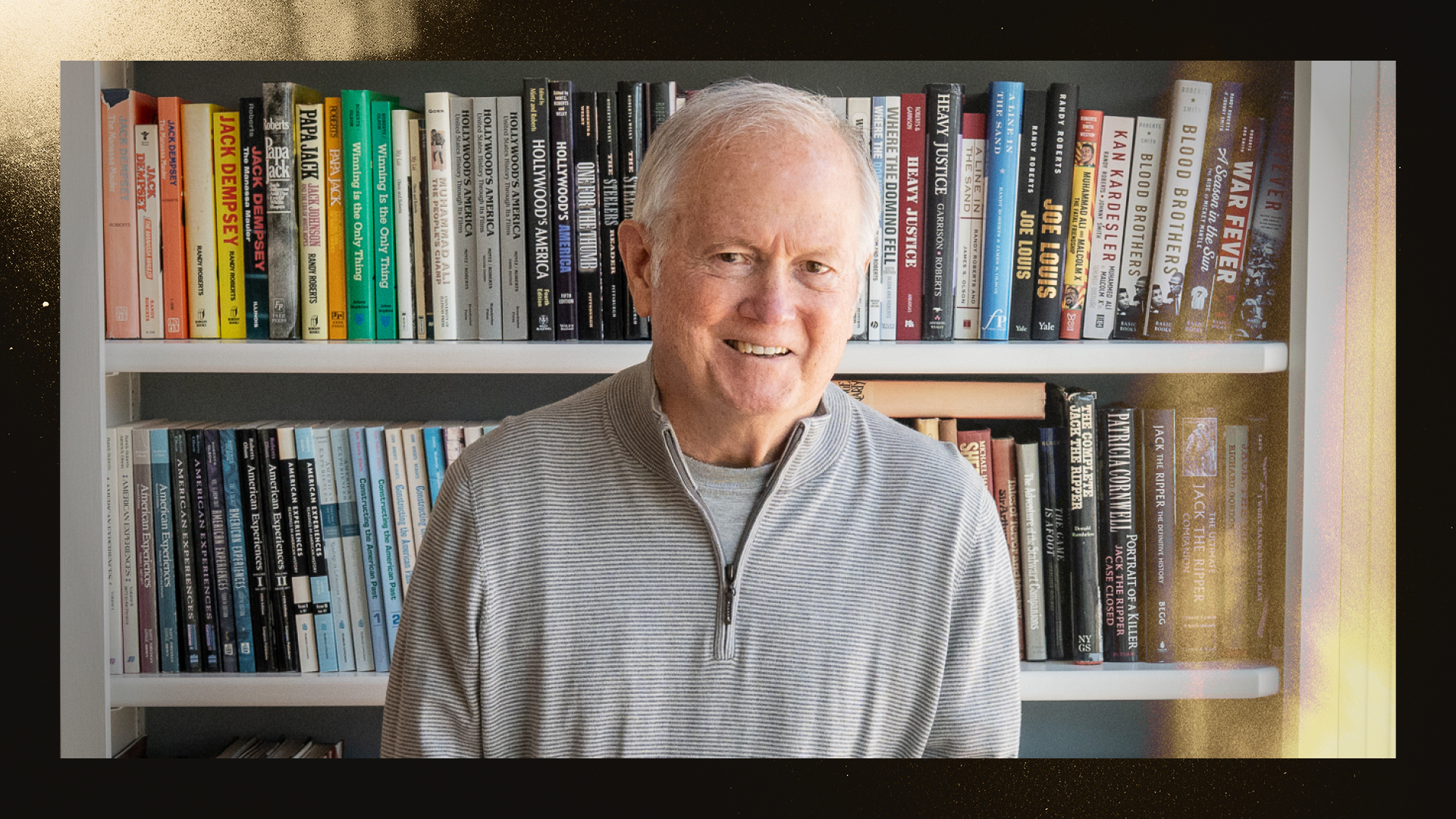
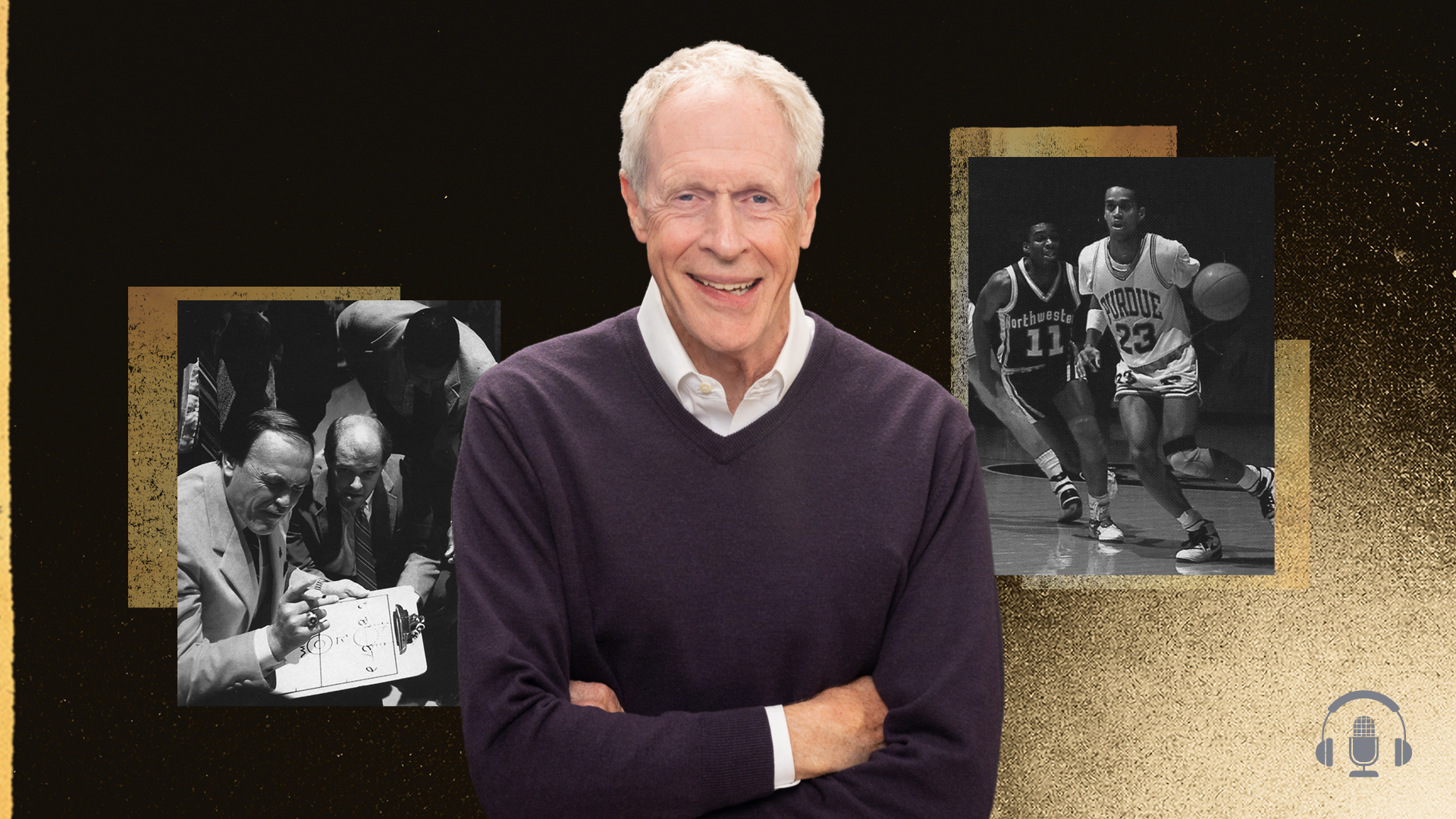
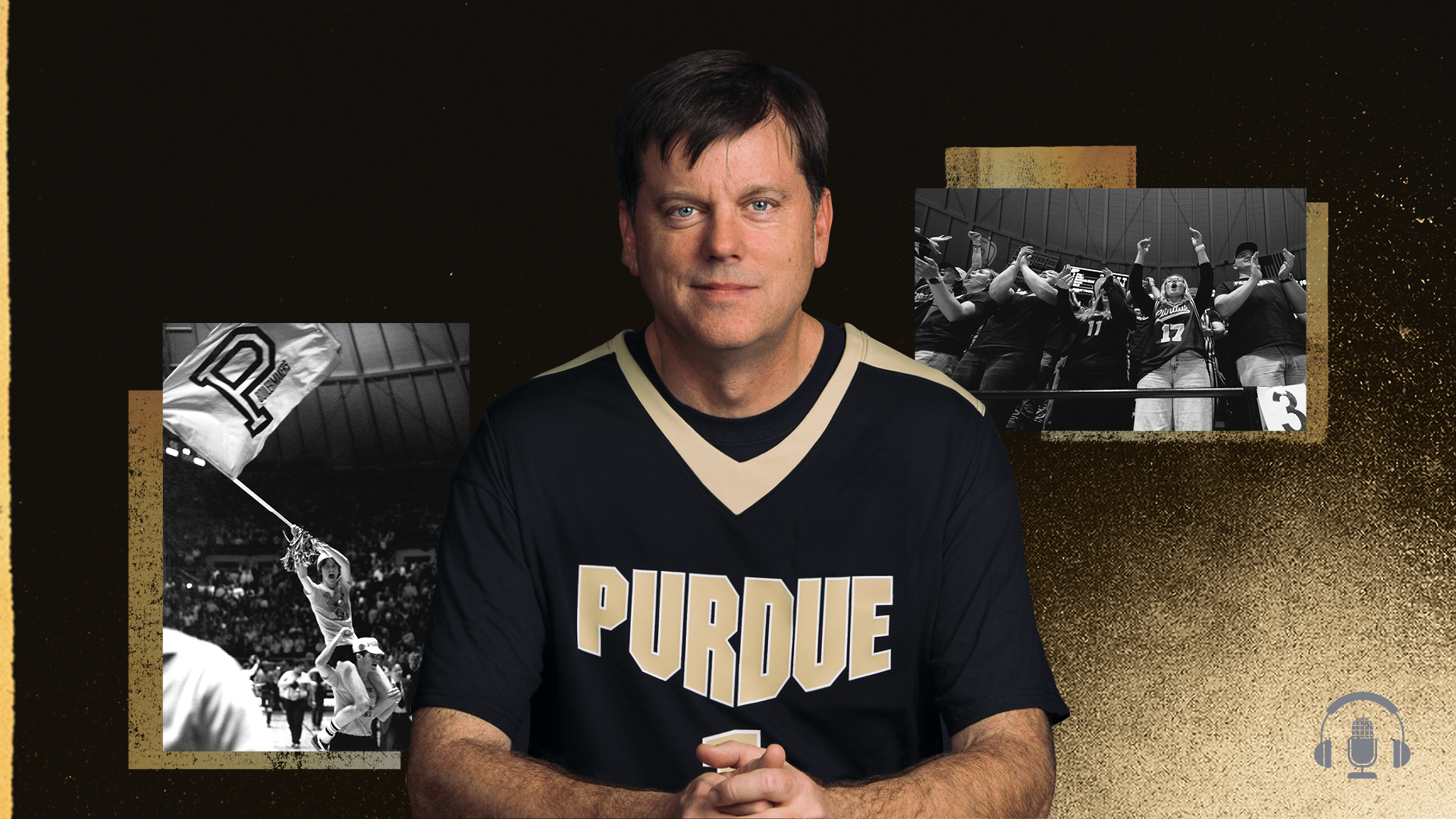
By teaching and writing about sports in ways that revealed its societal significance, Purdue professor Randy Roberts helped establish sports history as a topic that merited serious academic focus. (Purdue University photo/John Underwood)
Through his teaching, writing and research, Randy Roberts helped pave the way for more historians to specialize in sports
As a documentary film crew set up around him in an abandoned Los Angeles warehouse, Johnny Smith paused briefly to look around and take in the moment.
“There’s just crew and lights everywhere, and all these people,” says Smith (PhD history ’11), the Julius C. “Bud” Shaw Professor of Sports History at the Georgia Institute of Technology.
It was exhilarating, as everyone had gathered that day to help convert Smith’s book, “Blood Brothers: The Fatal Friendship Between Muhammad Ali and Malcolm X,” into a feature documentary for Netflix. And it was simultaneously cause for sentimental reflection because Smith had written the book with Randy Roberts, his Purdue advisor, mentor and trusted friend.
“I thought for a moment, ‘Man, all these people are here because of the work that Randy and I did, because of the book we wrote.’ I tried to soak in the moment because I knew this experience would probably never happen again,” Smith says. “It was the highlight of my career in many ways because it’s a great complement to my collaboration with Randy.”
The film shoot for the 2021 “Blood Brothers” doc was a new experience for Smith, who never imagined such hoopla would surround their first book project, which won the 2017 North American Society for Sport History Book Award. But it was old hat for Roberts, who has appeared in dozens of documentaries during his pioneering career as a sports historian, contributing to projects from Ken Burns, HBO Sports, ESPN and the History Channel.
It served as yet another example of the mentorship Roberts has provided to many former pupils since helping to establish sports history as a topic that merited serious academic study. Many of those who studied at Purdue under his guidance — some zeroing in on sports, some on other historical specializations — are decades into their own distinguished careers as educators and authors. But even now they admit it’s easy to identify Roberts’ influence on how they approach their work.
“I recognize a lot of Randy in me. Not just when I write, but when I teach,” says David Welky (MA history ’96, PhD American history ’01), professor and interim chair of history at the University of Central Arkansas. “I’ll catch myself doing certain mannerisms of his, for example, or telling stories that I remember him telling me or telling a class. I want to give myself some credit for developing and having my own career, but a lot of who I am in the classroom and on the page is totally reflective of his influence.”
I recognize a lot of Randy in me. Not just when I write, but when I teach.
David Welky (MA history ’96,
PhD American history ’01)
Professor and interim chair of history, University of Central Arkansas
‘He has a gift for taking fun things seriously’
When Roberts started his career in the late 1970s — and even when he arrived at Purdue in 1988 — sports history was virtually nonexistent within college course catalogs and publications.
“I think for a lot of people, it was trivial and frivolous and really not important enough to study seriously,” says Roberts’ friend and contemporary, David Wiggins, professor emeritus of sports studies at George Mason University.
But Roberts was fascinated by what sports reveal about culture.
“I felt to really know America, you have to know something about sports,” says Roberts, a distinguished professor of history who in 2019 was among 10 Purdue faculty members to receive a 150th Anniversary Professor designation. “There’s a great writer, professor and intellectual historian at Columbia, Jacques Barzun, who one time said, ‘Anyone who wants to know America should start with baseball,’ meaning that baseball tells us something about America.
“Virtually nobody academically was writing anything remotely like sports history, but I believed in my topic. I believed that sports are important, I believed that sports played an incredible role in American society and I wanted to write about it. And I think I’ve been vindicated.”
Indeed he has, and he helped accelerate that vindication.
Roberts’ early biographies of legendary boxers Jack Dempsey and Jack Johnson helped open doors for academic writing about sports, revealing how engaging scholarly work could also appeal to a mass audience.
“I read those books while I was in graduate school and preparing to apply for PhD programs, and I was really taken with both of them,” says Aram Goudsouzian (PhD history ’02), the Bizot Family Professor of History at the University of Memphis. “They’re written in a way that was really vibrant and colorful and appealing to the general reader, but also with this deep level of research — and at the same time circling back to the big questions about why it mattered: what these stories of these boxers could tell us about the patterns of American history.”
As Wiggins puts it, “For my money, there’s no one who does sport history that tells better stories than Randy Roberts.”
Roberts also applied those storytelling skills when examining other areas of American culture that might fall outside the traditional boundaries of historical study. Roberts’ lengthy publications list includes titles about the Vietnam War and the battle of the Alamo — subjects one might naturally expect an established American historian to cover — alongside his many books about sports topics. But there are also titles about actor John Wayne and 20th-century American film.
“He has a gift for taking fun things seriously,” Welky says. “Whatever he’s writing about, he’s making that connection between an individual subject and the broader context to really illuminate these corners of American history that other people had just looked at and said, ‘Oh, that’s cool.’”
Roberts and Wiggins also helped build platforms for other academic writing on sports, whether through leadership in professional organizations or through editorial roles with university press series dedicated to sports history. The University of Illinois Press’ “Sport and Society” series that Roberts co-founded with University of Nebraska professor Benjamin Rader became the gold standard, creating a model that other university presses have since emulated.
“In my day, in the ’90s and early 2000s, if you were looking for serious work in sport history, 90% of that work, the best work, was done in the ‘Sport and Society’ series,” says Goudsouzian, who took over as a series co-editor upon Rader’s retirement. “And now other university presses have launched sport history series, and some of them are quite good. The field is growing in a lot of ways. But the ‘Sport and Society’ series set the foundation.”
It also helped reveal the possibilities available for others who were interested in sports scholarship.
“He got me to understand that this is a real thing that people do, and people can respect you for writing about sports, and you can write about sports in an intelligent way that actually says something — not just about who had the longest hitting streak, but that actually speaks in some way to American history and global history,” says Welky, who has written or edited more than a dozen books on a variety of historical topics.
Mentorship in many forms
For his former students, Roberts’ mentorship revealed itself in various forms through the years.
Goudsouzian was inspired by Roberts’ command of gigantic Purdue lecture halls, engaging spellbound audiences with narrative stories about presidents, warfare and popular culture that made the historical tales come alive.
“I learned a lot about how to teach through Randy and, in particular, the way that he can hold a class with the way that he tells stories and the way that he connects with the class, even in a big auditorium setting, which he does better than just about anybody else,” he says.
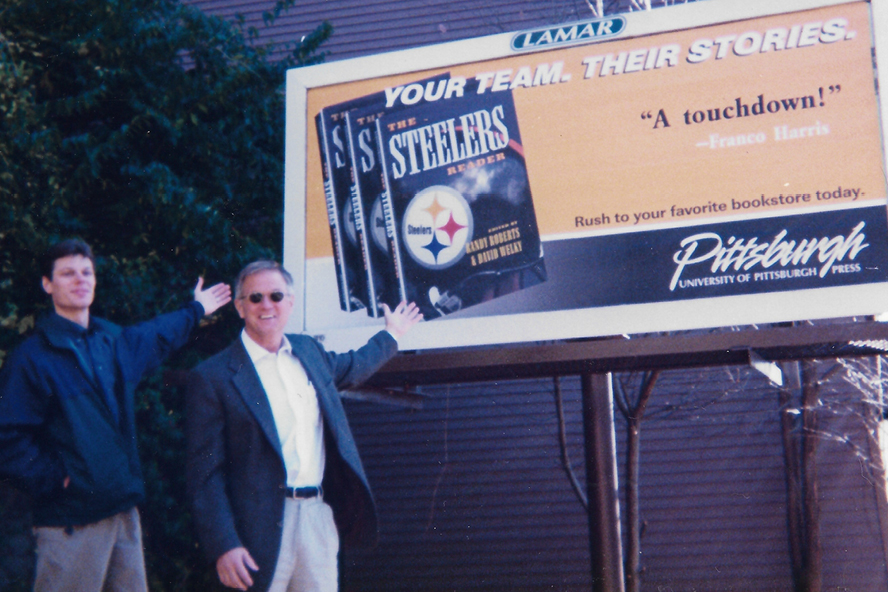
Welky once tagged along on a trip to and from Canton, Ohio, where he and Roberts visited the Pro Football Hall of Fame — and wound up unexpectedly contributing to research that resulted in Roberts inviting him to co-edit “The Steelers Reader” in 2001.
“Still to this day, I don’t start any significant project without talking it through with him,” Welky says.
For Chris Elzey (PhD American studies ’04), who played basketball at the University of Pennsylvania and overseas as a professional, frequent conversations in casual environments — maybe after a pickup game of hoops or in a chat at Roberts’ home office — provided invaluable insight that shaped the direction of his career.
“Sports played such a huge role in my life,” recalls Elzey, director of the Sport and American Culture minor at George Mason. “And at that time, Randy and I did a lot of things together: playing basketball, playing tennis, running and so forth. And just in talking to him, it seemed to me that my direction really should go toward what my interest really is, and that was sport.”
And for many former pupils — especially Smith, with whom Roberts has written four books — maybe it became most evident during the research and writing process while teaming up on a publication.
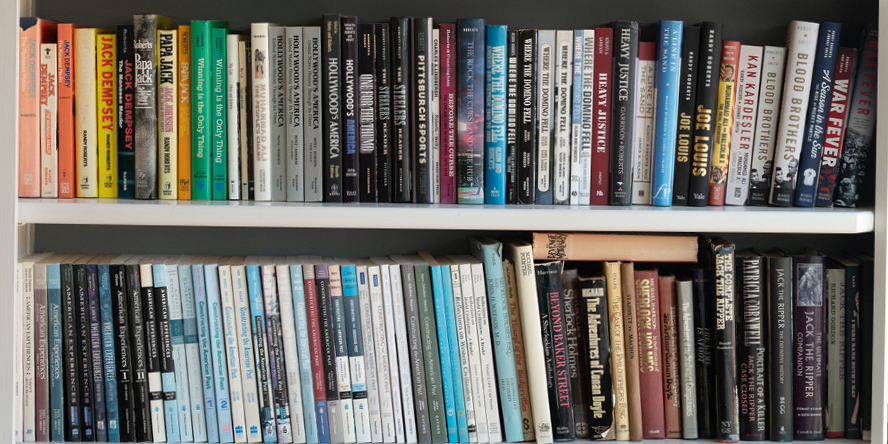
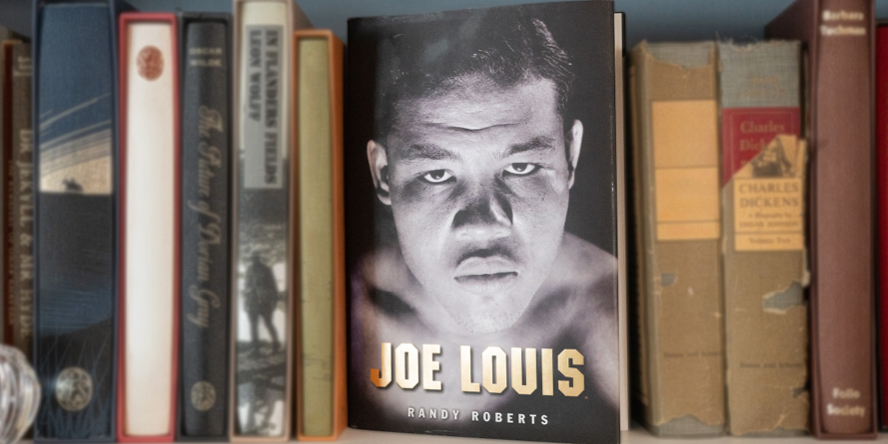
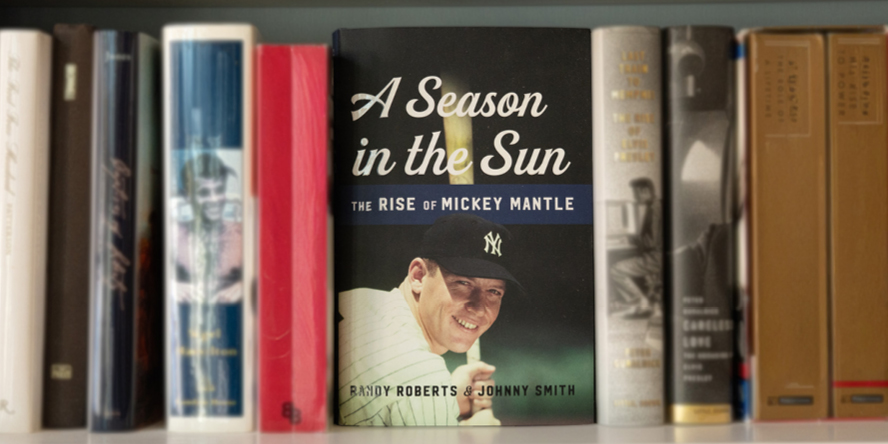

“Randy has this great philosophy about our collaboration. He says 1+1=3,” says Smith, whose most recent book with Roberts, “The Fight of His Life: Joe Louis’s Battle for Freedom During World War II,” published in 2025. “What he means by that is Randy could write the book by himself, or I could write the book by myself, but the best ideas come out of this synergy between us. And he’s right. We’re always able to help improve or polish the ideas that one of us might suggest. After writing four books together, he and I talk in a shorthand essentially. He can start developing an idea and say, ‘You know, Johnny, what do you think of this?’ and I’ll know where he’s going with it.”
Roberts’ intentions behind collaborating on writing projects are not entirely selfless, however. Conducting research and writing books is a lonely process, he says. But it’s much more tolerable — and exciting — when a teammate comes along for the ride.
“When you’re doing a book with somebody and you go on research trips, they turn into adventures,” Roberts says. “They’re fun. They’re enjoyable. You finish your day at the archive, and you’re psyched about what you’ve read. You sit down at dinner, and you talk with your coauthor, and all you talk about is the subject.
“We authors write books and we have families and we have friends, but your families and friends only want to hear so much about what you’re writing before you become really boring,” he adds. “But when you’re coauthoring a book, you know at least one other person is as interested in that book as you are interested in that book and can talk about it endlessly.”
Lasting influence
While Wiggins’ and Roberts’ generation of scholars played a major role in bringing wider acceptance to sports history, Wiggins is quick to point out that it remains an underappreciated niche within some corners of their field. That’s largely why Roberts has advised some graduate students to write dissertations on nonsports topics, noting that doing so might make it easier to land jobs after Purdue.
At the same time, far more opportunities are available today for those who wish to specialize in sports history than when Wiggins and Roberts started their careers.
“There are some lights going on in different parts of the country, but it’s still not at the center of American history. And that’s OK,” Roberts acknowledges. “You don’t have to be sitting in the main seats at the table. As long as there is a seat at the table, it doesn’t have to be at either end.”
The seat is firmly in place thanks to veteran scholars like Roberts, and it’s poised to remain there as Roberts’ former students carry his influence into their own work educating and informing a new generation of sports enthusiasts.
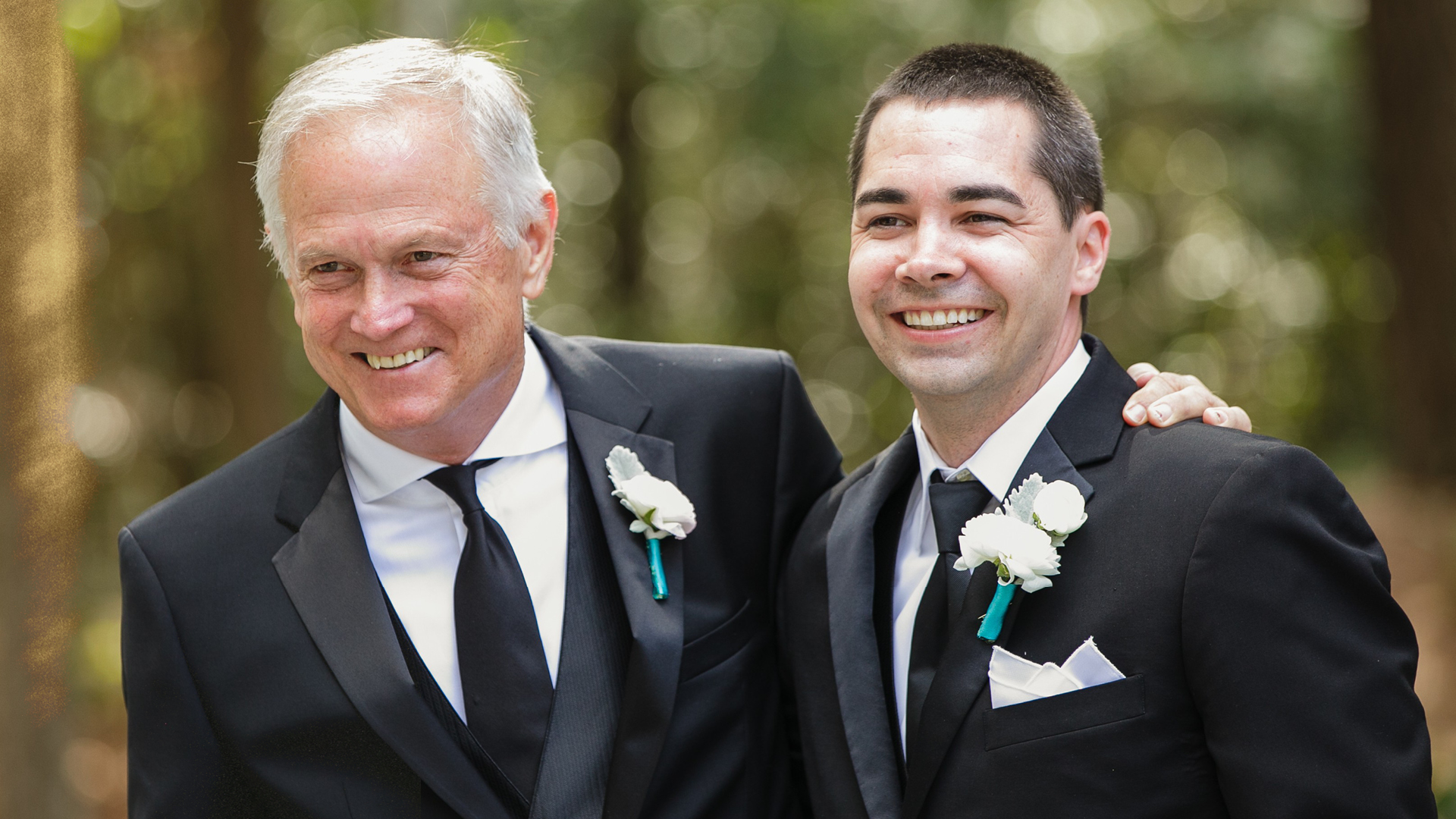
“We have an enduring bond there that goes beyond him just being my mentor. I consider Randy to be part of my family, and I mean that. After all, he stood up at my wedding.” Smith says. “I’m very proud of this relationship. It was life-changing, there’s no question about it. Randy helped me fulfill all my dreams and my professional goals — and I know I couldn’t have done it without him. I don’t think I would have had anywhere near the success that I can say that I’ve had if I’d gone to another program.”
And he’s not alone in that opinion.
When Welky contemplates his relationship with Roberts that now stretches across three decades, he feels a mix of emotions.
He feels fortunate, of course, for the guidance Roberts provided and the example he set. And he’s nostalgic about the countless unforgettable experiences, like the time Roberts led a group of Boilermaker students on an impromptu tour of the Louvre Museum when the group’s paid tour guide left a lot to be desired. But he also feels sorry for colleagues who did not connect with their college advisors like he did with Roberts.
“My colleagues are bewildered when I talk about Randy. They’re like, ‘You still talk to him?’” Welky says. “I tell them that we collaborated on projects, we taught a class together, I went to Europe with him, and my wife and I stayed in an apartment with his wife in Paris. I rented a house that he owned for two years.
“My father died while I was in graduate school and I always joke that I became the son that Randy never wanted,” Welky adds. “Without getting too sappy, that really was — and to an extent, is — how I view him. My father died relatively young, and Randy was there. I glommed on to him, and I still value him. The kicker that I always tell people is this: There’s a reason that my son’s middle name is Robert.”